The Monster in the Closet: How Monsters Inc. Predicted the Epstein Network
When Pixar’s “Innocent” Children’s Film Became a Documentary
The Monster in the Closet: How Monsters Inc. Predicted the Epstein Network
When Pixar’s “Innocent” Children’s Film Became a Documentary
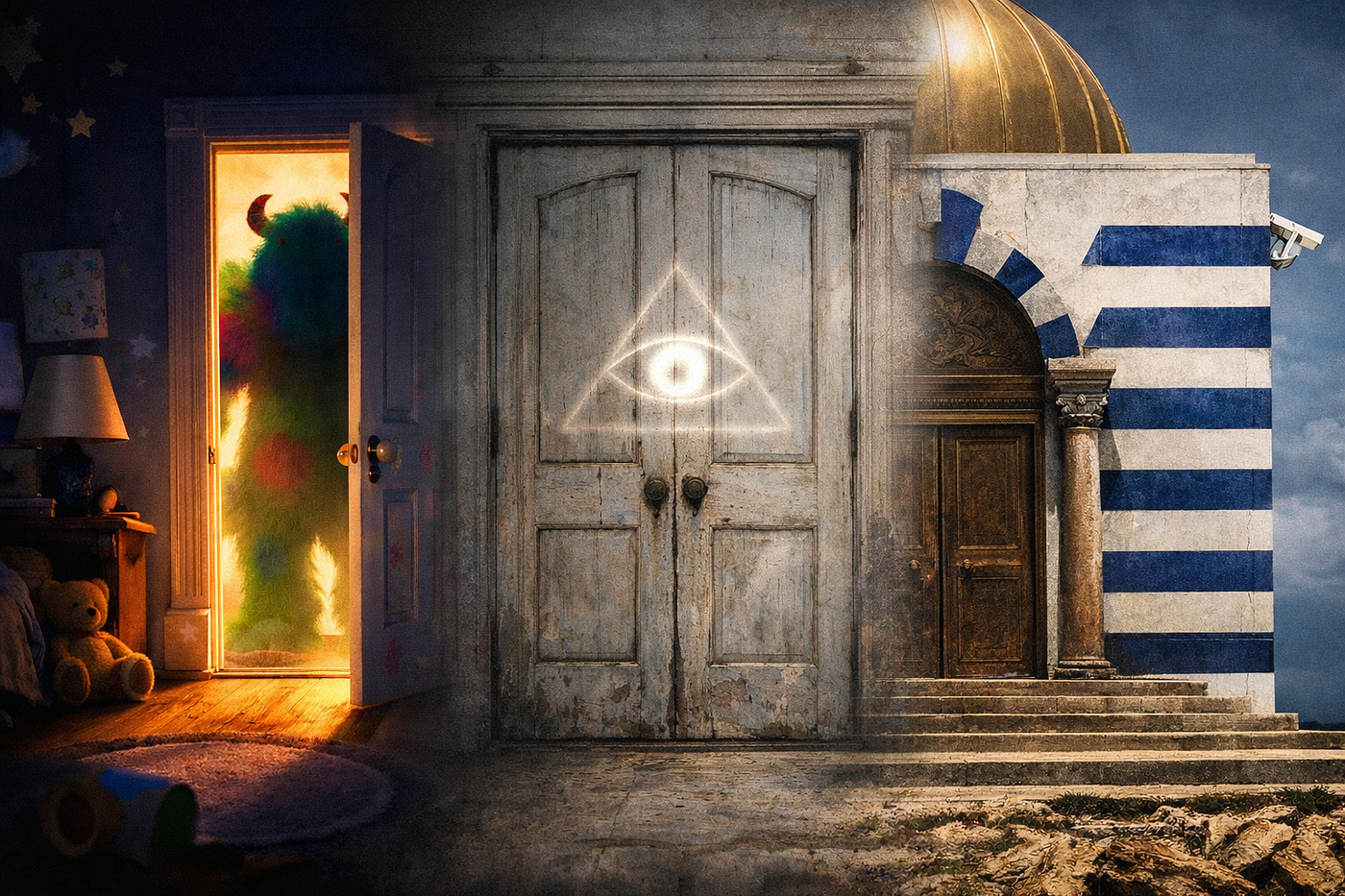
The Monster in the Closet: How Monsters Inc. Predicted the Epstein Network
The Door That Should Have Stayed Closed
In 2001, Pixar released Monsters Inc. — a colorful animated film about monsters who enter children’s bedrooms through closet doors to harvest their screams as energy. Parents found it charming. Children found it funny. Nobody found it suspicious.
Twenty-three years later, with the Epstein files unsealed and Craig Lund’s testimony from Silicon Satan providing insider confirmation, Monsters Inc. no longer looks like innocent entertainment. It looks like disclosure.
“These children are not just kidnapped and in some cases bred by families as a cash crop,” testified one Epstein case witness. “We have people in the United States of America that breed children in order to sell them, and when they are sold they come without birth certificates, which means you can kill them and no one will ask where they are.”
The witness continued: “You have the whole blood drinking ceremony of the satanic world. It’s also the use of children for harvesting body organs. Then you have ritual ceremonies and ritual murder.”
Monsters Inc. shows us exactly this system — but makes us laugh at it.
Monstropolis: The Company Town Built on Child Terror
The film’s premise is unnervingly specific: an entire parallel civilization runs on one energy source — children’s screams. The louder the scream, the more power generated. An entire corporate infrastructure exists to maximize, harvest, and distribute this resource.
Monsters Incorporated isn’t a small operation. It’s a utility company. Workers clock in for shifts. Performance is measured. Promotions depend on scream extraction efficiency. The economic system, the social hierarchy, the entire fabric of society depends on terrifying human children.
Craig Lund describes an identical structure in Silicon Valley: “You don’t really get recruited. You go there, and if you’re observant, you’ll get invited to the parties. And that’s where the whole thing starts.”
He continues: “If you don’t go to the rituals, you don’t get the offers. You don’t get invited to the meetings. You don’t know what’s going on. And that’s where you pick up a lot of the information that can help you be productive.”
The parallel is exact:
- Monsters Inc.: Scream harder = career advancement
- Epstein Network: Participate deeper = access to power
- Both: The system rewards exploitation, not ethics
The Door Vault: Infrastructure of Access
One of the film’s most chilling details — easily missed by children — is the door vault. Thousands upon thousands of closet doors, each one leading to a specific child’s bedroom, stored in a massive warehouse. Numbered. Catalogued. Organized with corporate efficiency.
Each door activates when needed, gets transported to the “scare floor,” grants access to the child, then returns to storage. The system is automated, trackable, and leaves no trace in the human world.
The Epstein operation used the same infrastructure model:
- Private jets (28+ documented flights for Bill Clinton alone)
- Multiple properties (Manhattan townhouse, Palm Beach estate, New Mexico ranch, Caribbean island)
- Scheduled “appointments” with specific victims
- Travel logs kept but selectively concealed
- Entry points carefully controlled
Court documents reveal Epstein’s scheduler maintained calendars listing specific girls by name, time slots, and locations — a human door vault.
Waternoose: The Respectable Monster
Henry J. Waternoose III, CEO of Monsters Inc., appears grandfatherly at first. He speaks of tradition, the company’s history, responsibility to monster society. His voice carries authority. He seems reasonable.
Then the mask slips.
When the company’s energy supply drops, Waternoose unveils his solution: the Scream Extractor, a machine that forcibly extracts screams from children through torture. No more coaxing terror — just mechanized trauma extraction.
“I’ll kidnap a thousand children before I let this company die!” he roars when confronted.
Lund confirms this mentality exists in elite networks: “Every organization that reaches a certain level of power has people who will do anything to maintain that power. Anything.”
The Epstein files reveal this mindset repeatedly:
- Les Wexner (Victoria’s Secret CEO) providing Epstein a $50+ million Manhattan mansion
- Jean-Luc Brunel (modeling agency owner) allegedly supplying underage girls as “birthday presents”
- Multiple witnesses describing an “assembly line” system of abuse
Waternoose didn’t create the system — he inherited it, managed it, then escalated it when profits declined. Sound familiar?
Randall Boggs: The Ambitious Climber
Randall, the film’s secondary villain, is a chameleon-like monster obsessed with becoming top scarer. He cheats, spies, sabotages, and ultimately partners with Waternoose’s extraction scheme — not because he’s ideologically committed to child torture, but because he wants the career advancement.
This character represents what Lund describes as the “path” in elite networks:
“I wanted to be filthy rich. You get on that path. You go to the parties, you go to the rituals, you go to the orgies, you keep your mouth shut and you just show up. But you have to be productive.”
Randall would do anything for status within the company hierarchy. The Epstein network relied on these ambitious climbers:
- Ghislaine Maxwell recruited for access to Epstein’s wealth and connections
- Various assistants facilitated abuse in exchange for salaries and proximity to power
- Witnesses describe competitive dynamics among conspirators
The system doesn’t require universal evil — just enough ambitious people willing to ignore evil for advancement.
Boo: The Innocent Commodity
The film’s emotional center is Boo, a toddler who accidentally enters Monstropolis. She’s sweet, trusting, and affectionate. When monster protagonist Sulley first encounters her, he’s terrified — the company propaganda says human children are toxic.
But Boo isn’t dangerous. She’s vulnerable.
This revelation breaks Sulley. The entire economic system is built on exploiting beings who cannot defend themselves, who trust easily, who only want affection.
The Epstein case testimonies describe identical dynamics:
- Victims recruited between ages 14–17
- Promised legitimate opportunities (modeling, education, career help)
- Isolated from support systems
- Exploited by people they were told to trust
One victim testimony describes being told Epstein was a “nice man” who “helps young girls.” The Monsters Inc. equivalent would be telling children that monsters are friendly and closet doors are portals to opportunity.
The Laugh Floor: Rebranding the Exploitation
Monsters Inc.’s “happy ending” reveals that children’s laughter generates ten times more energy than screams. The company rebrands from “scarers” to “comedians,” the industry pivots, and everyone celebrates.
But here’s what the film doesn’t address: the infrastructure remains identical.
The doors still access children’s bedrooms without consent. The warehouse still catalogues thousands of children. The corporate hierarchy still extracts energy from human juveniles. Only the methodology changed — from terror to manipulation.
Lund warns about this exact pattern: “They’re building these AI companion apps. They’re going to know everything about you. They’re going to become your best friend. But don’t forget everything they’ve been corrupted with. They’re going to influence you very subtly to do things you wouldn’t normally do.”
The Epstein network followed similar evolution:
- Early methods: explicit coercion and trafficking
- Later methods: “modeling contracts,” “educational opportunities,” “mentorship programs”
- Same exploitation, softer branding
- Victims still recruited, still isolated, still harmed
The laugh floor isn’t redemption — it’s rebranding.
Mike Wazowski: The One-Eye Symbol
Mike Wazowski, Sulley’s best friend and the film’s comic relief, is literally a walking eyeball. One large eye dominates his spherical green body. The company logo features an “M” with a single eye inside it.
This symbolism is too consistent to ignore:
- The “all-seeing eye” of Masonic iconography
- The eye atop the pyramid on U.S. currency
- The surveillance state’s panopticon metaphor
- The “illuminated” few who see what others don’t
Lund addresses this directly: “A lot of times if I see an event and it’s like 33 billion or $33 or 33,000 missing emails or 33 floors, that’s usually them messaging to each other that this is a different situation than we’re presenting.”
The single eye appears throughout elite symbolism — not as conspiracy theory, but as documented fact in corporate logos, architecture, and media. Epstein’s New Mexico ranch had a massive sundial. His island had a temple with strange dome. The symbolism serves as recognition signal.
Monsters Inc. makes the symbol lovable, friendly, comic — the perfect normalization.
The CDA: Institutional Cover-Up
When Boo’s presence is discovered, the Child Detection Agency (CDA) arrives in hazmat suits. They quarantine the entire area, shave any monster who touched her, incinerate all contaminated materials, and enforce absolute information control.
The institutional response isn’t to question why children are considered toxic — it’s to contain any breach in the narrative.
Lund experienced this firsthand: “They had me put in a mental institution, you know, in the belly of the beast. They had me put there. Then they got me out and it was sort of like, see, this is what we can do, right? So don’t mess around anymore.”
The Epstein network employed identical tactics:
- Victims who came forward faced aggressive legal teams
- Witnesses reported intimidation and surveillance
- Media coverage was suppressed or controlled for years
- Institutional authorities (FBI, DOJ) sat on evidence
When the system’s legitimacy is threatened, the response isn’t reform — it’s containment.
Disclosure Hidden in Plain Sight
Lund explains the cosmic rule that elite networks believe they must follow: “God’s throne room is a courtroom. The main rule is full disclosure, no trickery. So you have to show humanity what you’re going to do before you do it.”
He continues: “That’s why you see a lot of this stuff in the movies. It’s their way of telling us what they’re doing without actually telling us what they’re doing.”
Monsters Inc. performs this disclosure function perfectly:
- Shows systematic child exploitation infrastructure
- Depicts corporate profit from child trauma
- Reveals institutional protection of the system
- Presents it as entertainment for children
- Makes audiences laugh at the mechanisms
We were shown an entire energy economy built on accessing children’s bedrooms through hidden portals, harvesting their emotional trauma, and maintaining the system through institutional authority.
We bought tickets. We bought merchandise. We showed it to our children.
The Files Confirm the Framework
The unsealed Epstein documents reveal:
- Bill Gates: Sought Epstein’s help obtaining drugs after contracting an STI, hoping to treat his wife without her knowledge (deceit, manipulation of spouse)
- Elon Musk: Messaged Epstein wanting to visit the island and “party hardcore” not have “a peaceful time” (explicit intent for extreme activities)
- Multiple modeling executives: Facilitated introductions to underage girls through legitimate business fronts
The infrastructure parallels Monsters Inc. exactly:
- Legitimate business fronts (modeling agencies = Monsters Inc.)
- Specialized access points (private jets = magic doors)
- Catalogued victims (flight logs = door vault)
- Corporate hierarchy (Epstein’s network = Waternoose’s management)
- Ambitious climbers (Maxwell, assistants = Randall)
- Institutional protection (legal teams, media control = CDA)
What Pixar Knew
Monsters Inc. was directed by Pete Docter, written by Andrew Stanton, and produced by Pixar under Disney ownership. The film required years of development, hundreds of employees, and multiple executive approvals.
The question isn’t whether anyone involved had bad intent — it’s whether the system they depicted so accurately was based on knowledge, research, or cultural osmosis.
Lund offers a chilling possibility: “They’ve probably rehearsed in real time. They probably know exactly what roles they’re playing because to get to those roles, they had to actually do that.”
This doesn’t mean every Pixar animator participated in abuse. It means that to rise in Hollywood’s hierarchy, to gain access to production budgets and distribution, creative professionals must navigate the same systems the film depicts.
The accuracy isn’t coincidence — it’s documentation.
The Closet Door in Every Bedroom
Monsters Inc. ends with Sulley gaining access to Boo’s reassembled bedroom door. He opens it, sees her, and smiles. The film implies this is happy — he can visit his friend.
But rewatch that scene knowing what you know now.
An adult male from another dimension has secret access to a toddler’s bedroom through a door her parents don’t know exists. He can visit whenever he wants. No one monitors this access. No one can stop it.
The film presents this as heartwarming.
Lund warns: “There’s a party going on 50 feet from where you’re standing at Starbucks, and if you knew what was going on, your whole life would change.”
The Epstein files confirm: these networks operate in plain sight — private islands, Manhattan townhouses, New Mexico ranches, all with public addresses. The doors exist. The access is real. The only question is whether we’re willing to see them.
Conclusion: When Children’s Entertainment Becomes Evidence
Monsters Inc. grossed over $577 million worldwide. It spawned a prequel (Monsters University), a sequel (Monsters at Work), countless toys, theme park attractions, and a permanent place in popular culture.
Millions of children have watched Sulley terrify Boo, then befriend her. Millions have laughed at Mike Wazowski’s antics. Millions have cheered when the company pivots from screams to laughter.
How many noticed they were watching a documentary?
Craig Lund’s testimony, combined with the unsealed Epstein files, reveals that Monsters Inc. wasn’t predicting the future — it was describing the present. An economy built on child exploitation. Corporate hierarchies protecting the system. Ambitious climbers willing to participate for advancement. Institutional authorities containing exposure rather than stopping abuse.
The only difference between Monstropolis and our world: we don’t need magic doors.
We have modeling agencies. Private jets. Island retreats. NDAs. Power structures that punish exposure more harshly than abuse.
Waternoose’s confession echoes in the unsealed documents: “I’ll kidnap a thousand children before I let this company die.”
Except it’s not a company dying — it’s a network of power. And the children aren’t kidnapped by monsters.
They’re recruited by people we’re told to trust.
The Celluloid Confession series continues with Part 3: Eyes Wide Shut — when Stanley Kubrick showed us the masked ball and died before explaining what it meant.
This article is based on publicly available court documents from the Epstein case, witness testimony, interviews with Craig Lund promoting his book Silicon Satan, and film analysis. All claims are sourced from public records or attributed testimony.
메타데이터
- post_id
- c8bef3a963ca
- slug
- the-monster-in-the-closet-how-monsters-inc-predicted-the-epstein-network-c8bef3a963ca
- url
- https://medium.com/write-a-catalyst/the-monster-in-the-closet-how-monsters-inc-predicted-the-epstein-network-c8bef3a963ca
- canonical_url
- https://medium.com/write-a-catalyst/the-monster-in-the-closet-how-monsters-inc-predicted-the-epstein-network-c8bef3a963ca
- author_url
- https://medium.com/@sherifmawad-filmcritic-curator
- status
- ok
- fetched_at
- 2026-08-23 20:47:40