Siri, Google How to Humanely Kill a Rat
I. Пусть ничто не вечно под луной / И сколько лет Deep in June, as the gloom began to creep deep into the warm, dank San Fernando Valley…
Siri, Google How to Humanely Kill a Rat
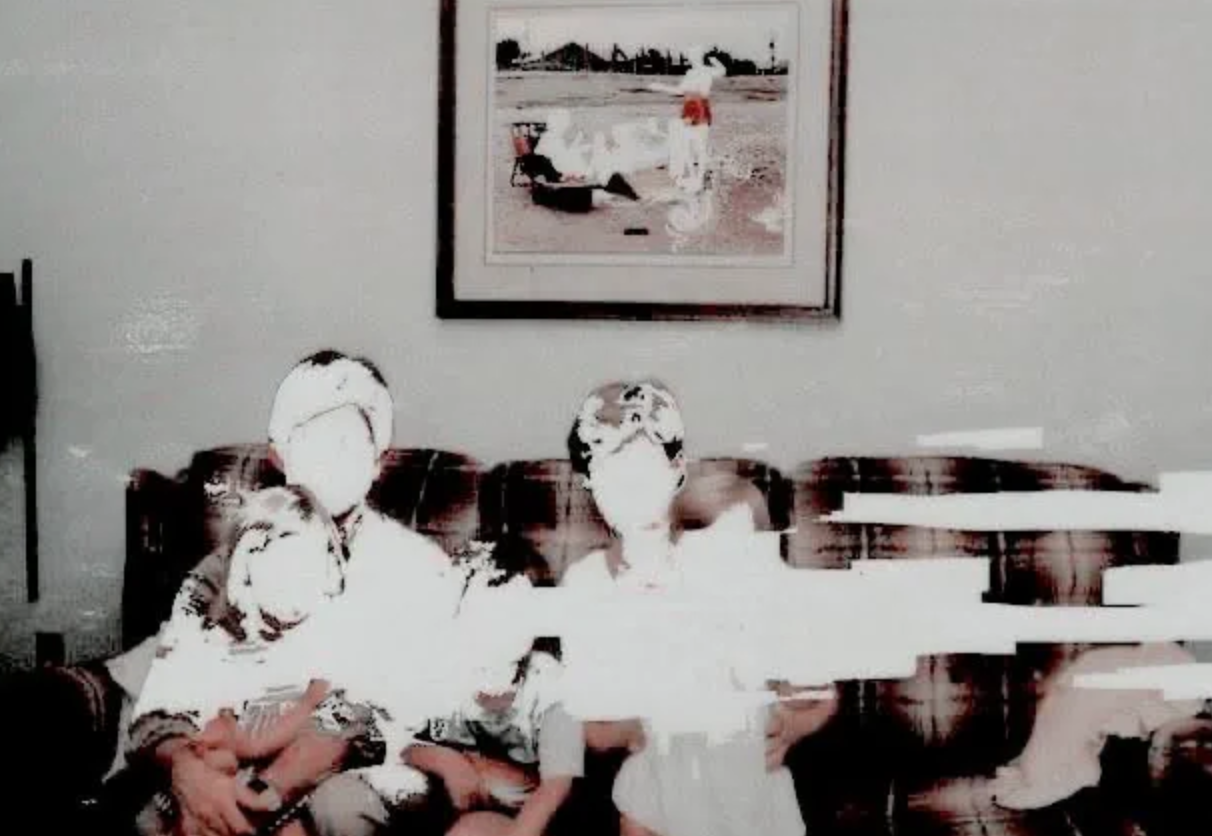
I. Пусть ничто не вечно под луной / И сколько лет
Deep in June, as the gloom began to creep deep into the warm, dank San Fernando Valley, I had a dream about my older brothers. It was a memory from the summer I turned sixteen. My second-oldest brother, Mason, used to drive this deep blue ’94 Ford Aspire without air conditioning. We, my older brothers and I, drove through Downtown Los Angeles, sweltering, listening to the mixtapes he used to thrift down at Deelux, where so many were donated by lover boys, who kept getting their hopes up. One of the tapes I distinctly remember was a bootleg recording of Muzykalny Globus by Via Vesyolye Rebyata, a Soviet-era band founded in Moscow in 1968, that somehow had a chokehold on us.
In my dream, it was the time we all went to the Japanese market in Little Tokyo to find out all about the newest food trend — matcha. We strolled through the Marukai, tucked away on South Onizuka street, to end up spending over a $100 on everything, but the matcha kit-kats we saw on Buzzfeed. We were so livid about how much we spent, but forgot that Mason and Thomas snuck single-serving sakes into the bill and tried to blame everybody else for them. Andre and I were doubled over each other, laughing and recording the receipt to prove to our parents the trouble our brothers put us through.
I woke up that morning, ten years older, to the disturbing sounds of a distinct skittering in my bedroom of my grandparents' two-story home. It was not a pretty sight to see us, my partner, César, and I, half asleep, not showered, and absolutely raging at the rummaging occurring at the other half of our makeshift room.
Stunned, I turned to my partner, sleeping so blissfully unaware with a gentle smile on his face as if this was the best rest he had gotten in the four years we’ve been together, and I shook the Hell out of him. I mean, I was thrashing him back and forth, nearly yelling, “César! There’s a rat! I think it’s a rat, but it’s a rodent all the same! Maybe it’s a mouse, but that’s a later problem! It’s definitely something!” All of this occurred at the tender hours of 4:30 in the morning, right on the dot, as I checked my phone.
He groaned awake, “It’s just a rat. Probably. If you’re unlucky, it’s several rats. Let me deal with it in the morning.” His thick Tijuana accent stated sleepily, but firmly.
I whimpered in protest, “But why can’t we just scare it away now? I don’t want to go back to sleep thinking about it. Can you please just take it outside or something? I don’t want to kill it.” I begged genuinely as he looked at me, bewildered.
“When we have a rat in my home, we don’t think about the most ethical way to end things. We just end them. Usually, with a knife. If we stop to ask why, we get shit like the Hantavirus, the plague, or whatever other animal disease we could get.”
With that, I felt myself starting to well up with tears, a few leaving my eyes — “I don’t want you to kill it with a knife. That’s so mean. If you’re going to end things, make it quick and painless. Don’t let it suffer.” The sight of me crying shocked him, holding me in his arms. I couldn’t hold it in. Perhaps it was the sleep deprivation from long hours teaching; packing up for my international move; or the fact that I felt so safe with him, but I couldn’t stop crying for a few minutes.
“Honey,” César said, rubbing my back, “I won’t kill it with a knife, but I’m worried about you. You normally don’t take things this much to heart. I think,” he sighed with trepidation, “that you need to see somebody for this. You’ve been off since you heard Mason was returning to town.” It slipped my mind in those early hours how my older brother was coming back to town the following week. I shook my head, “I don’t need it. I can take care of myself. Don’t worry about me. I can do it all myself.”
II. Быть может я смогу быть счастлива с другим / А, может, нет.
At the time of writing, I had been a private school teacher for English, Social Science, electives, and so forth in what some consider the Hamptons of the West Coast. Santa Barbara, a place where everybody has at least one beautiful, yet visceral memory of, remains a graveyard of memories for a younger me. It was the only place I had left where I could find some peace with what I was left with.
After waking up that morning, fully this time, I carefully made my way into the bathroom, making enough noise to perturb any rodent in my grandparents’ home.
When my grandfather was diagnosed with stage four lung cancer, there wasn’t much hesitation in my mind to live in the home made for his family to spend what time remained with him. This transfer from Mission Viejo to Santa Barbara was nothing I had anticipated because this effervescent beach town, architecturally stuck in the Spanish Mission era, was filled with a kinder version of myself. Before my first day of work, I walked on the pier, where the ocean water hits sea-salt taffy and fresh waffle cones. At the end, just past the Natural Sea History Museum that my sweet grandmother broke into several times by accident, the overpriced Moby Dick restaurant, and the clam chowder restaurant that I was convinced didn’t have clam in it, you could find the phantom of my five-year-old self looking at my brothers, fishing with my grandfather. You could hear my brothers laughing as the Pacific Ocean splashed against them, talking about who caught the bigger fish, and I was just standing there, watching them from afar, holding my grandmother’s hand.
I had known I was not her favourite. Alzheimer’s is a painful, degenerative, and loveless illness that takes everything away, much like lung cancer. It strips away the kindness of grandmothers, who favour their middle grandchild, seeing themselves in him, and the first grandchild, who defines her as a grandparent. She had not loved me any less, but I was, ultimately, different and distinctly bland compared to my siblings. There was nothing quirky and unique about my existence except the fact that I was born with two X chromosomes.
Similar events, throughout my life, occurred. I was simply adored for being the only girl and the youngest — my existence hinged on this fact since I was old enough to remember. I was picked up often by family members as the trial kid, I was often referred to, but then subsequently placed back down within months to years when they began to have their own families. I wasn’t upset, but rather, a bit lonely playing a temporary role. To be seven years away from the next eldest and nine from the next youngest. I was perpetually in-between worlds, experiences, and realities as I navigated the Brave New World.
So, I sat on the bench on the Santa Barbara Pier, as I did almost every morning, and found myself searching for available therapists the same day through my insurance’s app. Thanks be to the powers of Blue Cross Blue Shield of Michigan, I found my way into Jeanette’s office not much later. Thank you, PPO, for only being $20 more than HMO for times of emergency.
As one naturally does, I picked the therapist with the cutest office space for optimal vibes. It had to have this combination of what was in the Black Lodge from Twin Peaks meets Millennial Beige. Specifically, I know, however, I was finding every reason to avoid coming in that day. I’d even blame it on the Feng Shui being off to cancel the whole thing.
This is how I found myself at Dr. Jeanette Jalovoi’s office that evening. It’s some cute kitschy space off Cochran, though it feels like everything is in relation to this singular road. An odd feeling comes from Los Angeles, where it feels any road can bring you from Downtown to The Row or from East Los Angeles to Santa Monica. Jeanette, it appeared, is an older woman, professional, and incredibly gentle. In so many ways, she reminded me of my Auntie Paz from the Philippines, a thin, yet emotionally sound Filipino woman with long, thick salt and pepper hair.
Mrs. Martha, her mother and receptionist, whom I cannot find it within me to call just “Martha”, greeted me at the door with water and hot green tea. I had forgotten it was a question on the intake paperwork and was just pleasantly surprised. Here I was, all anxious, but still hoping to sit in this massive velvet red chair that would make me want to take the most luxurious nap of my life. Instead, I was greeted with a default seating set from Ikea, which is incredibly comfortable, yet equally as beige as I sat, leaned over, thinking about what I wanted to say.
As I finally was able to calm my nerves, Jeanette called out to me with a strong voice and holding a beige clipboard. This impressed me even more because how does one procure a beige clipboard? This is an actual question for some interior decorating friends I know.
We made our way to the two chairs placed in front of these bay windows looking out onto one of the two main streets in Simi Valley. There was even a shared coffee table with snacks laid out — there were matcha kit-kits there.
“Why are we in today?” Jeanette’s voice called out to me, breaking my concentration.
I inhaled once. Then a second time. A third time. Before settling on a, “I think there’s something wrong, perhaps wrong is the wrong word, but there is something off with me in a traditionalist sense. I suppose I was genetically predisposed for it. My father has clinical depression, though I am uncertain if that’s the correct term, and my mom has a slew of things wrong with her from being bipolar, but also anxiety, severe depression, and so on.” Though professional, she raised an eyebrow. “It could be genetic in this case, but tell me more. How do you think this began?”
I think for a few moments. “I had a dream about my brothers that I wish I had never had.”
III. Я не забуду дня, когда ты был со мной
Jeanette hummed for a second before continuing, “That’s oddly specific. I thought you got along after you got to try those matcha kit-kats with them?”
I hummed, opening the packaging to see the familiar bright, vibrant matcha green. “I did, but not with them. Eventually, we all got too busy, and I tried them with my friend, Dean. We’ve been friends forever — practically like siblings.”
“How did you all get so busy?”
I snapped the Kit-Kat between my teeth, tasting nothing. “Thomas, the youngest of the brothers, moved to New Mexico for a job opportunity. Amar, the next one, got married and moved upstate to San Francisco. And Patrick, the oldest, moved all the way to Maine to be with his partner, but I’m still waiting on the wedding news after five years.”
“And Mason? You forgot about him.” She reminded me.
More cars passed us by as I watched each one. Again and again, I focused on the minute details from the license plates, whether the car had pearl mixed into the paint, and even if their tags were outdated. I could even hear a rendition of “Posledniy Raz” playing softly in the back of my head.
She repeated the question.
“He left when I was in my freshman year of high school to move to Coeur d’Alene to follow somebody he met while working at Starbucks. Since then, I never really saw him again in the same ways we had when I was a kid. He’d pick me up and drop me off after getting some boba, watching a movie, or talking about the same things we had over a decade ago, like video games, memes, or even…” I trailed off as she finished.
“Music tastes?”
“Absolutely,” I remember feeling the laugh in my throat. “I remember how we had this collection of cassette tapes that only Mason’s car could play. We had stacks, on stacks, on stacks of everything from Lady Gaga to these bootleg Russian tapes that were never officially published — like the one I told you about. We spent so many summers just listening to them, and then we just stopped.”
“Because Mason moved away?” She inquired, and I shook my head.
“Because there’s nothing left to listen to. Nobody made tapes anymore. Most stores near us stopped selling even the remaining copies because the craze died, I assume.” I shrugged, “I can’t deny Mason leaving also had an impact on us being together like old times, but we all had to go some day. It’s inevitable.”
“It’s inevitable? That’s rather definite. Why do you think it’s that way?”
I continued staring out at Cochran, “Isn’t it natural to disappear and walk away from people’s lives?” I thought for a few more seconds. “Once Mason disappeared, we each just stopped calling like before. Or, at least I stopped calling like before. They wouldn’t pick up, but as I said, they were busy, and I was just avoiding homework for high school or college or even just work.”
Jeanette put the clipboard down, and I could feel her staring at me. Either I felt that or, quite frankly, I’m deeply paranoid. If it was the last one, at least it was solvable with a good dosage of lithium.
“Then, I’m still curious about one specific thing from your intake form — why did that rat make you cry that night?”
IV. Время пройдет и ты забудешь все, что было
Returning to that vibrant, verdant two-story house, deep in the recesses of Sylmar, that felt like it was constantly being added to by my grandfather. My grandfather was never one to sit at home and enjoy the air conditioning. No. Instead, he was always wondering what he could do to expand, such as adding a gazebo to the backyard, tearing that down, and then filling the void with chico tree samplings or placing the sampugita bushes in the sun, the ones that needed just a little extra time. It was my room, wide and marbled tiled, which was technically the family room, that was created to house my mother when she returned with Mason and Amar from Tennessee. Much of the house was built around her and my brothers. There are ephemera covering the walls from my mother’s art projects, while in psychiatric treatment to my brothers’ baby photoshoots.
It was in this space, looking out at the empty backyard with the rising sun, that I pressed down the power button, causing the familiar pop-up of Siri, Apple’s intelligence assistant, to ask if I needed anything. I thought for a few seconds before settling on, “Siri, Google how to humanely kill a rat.”
A few seconds of searching on her end, she responded with “snap traps are considered the most ethical way to kill a rat. Do you want me to recommend brands or a local exterminator?”
“No, but thank you, Siri.” There was a sigh from my chest that left me, drawing me to consider the day ahead once more. I looked over to César, “While Mason is at your house next week, let’s just head out and pick up some rat traps.”
I remember crumpling my face at the mention of his name, “I think it would be good. My mom won’t be happy, but she’ll be okay with it if it’s about these rats. I just feel so bad about it all, Chaín.”
He continued, “But why do you feel so bad about it? I don’t get it.” He continued to roll back into my bed, setting an alarm for a few hours after I began working.
I remember looking at my hands, thinking about how many years it’s been since I’ve driven with Mason in our clown car. I thought about how far we’ve all been since then. “If you’re right, and there are at least several in this house, I’d feel miserable knowing I took somebody away, y’know? My friend, Utah, always said how rats are deeply empathetic, and I don’t want them to experience rat grief in a sense.”
His eyebrow raised at this suggestion, but he simply wished me well on my way to work as he rolled back for some sleep.
I remember wearing my grandmother’s jade bracelet that morning, something I rarely took off since her passing, and dressing as if I was on my way to the funeral parlour — something my students often joked with me about. They’d say I’m one of the funniest funeral directors they've ever met.
I don’t think I’m funny.
I don’t think I’m much of anything anymore.
V. Нет, я не жду тебя
As I walked back into Jeanette’s office the following week, saying hello to Mrs. Martha at the front desk, who had tea waiting for me again. I remember holding the warm ceramic cup in my hands as I stared at the beige walls, thinking all about César, Mason, and this damn rat.
Jeanette smiled at me as her previous patient left with red eyes — I was not hoping for one of those resolutions for today. I don’t think I could ever handle that.
We stared back out to Cochran after the usual pleasantries, the gentle rain still lingering as drivers didn’t know how to act — though, I don’t think any Southern Californian knows how to react to the rain.
“Has graduate school been on your mind? You mentioned leaving your job as a teacher and wondering what this transition will be.” Her voice broke through the silence once more.
I hum along, sipping my tea. “I’m moving to St. Petersburg at the end of July for a Master's in History before hopefully returning to England, where my dad’s from, for my PhD in History as well. I delayed it for long enough — working to help out my parents, getting some experience, and dealing with losing my grandparents almost back to back.”
“You’re rather close to your family. How have they responded to your big leap? St. Petersburg is pretty far from here.”
“Nobody but my parents and César knows. I’ve kept it on the low this entire time.” I confessed.
She looked, if I could assume, confused at my answer — “What about your siblings, cousins, uncles and aunts, or grandparents? Wouldn’t you want them to celebrate or give you the traditional farewell gifts?”
“We aren’t close.”
“Well, why aren’t you close to your family?”
I stared at my phone screen, which was still an old photo of me and my grandfather at my college graduation, the only grandchild to walk with a cap and gown. The first woman to graduate in thirty years. I wish I could have felt anything about the accomplishment.
After a few more moments of silence, “things just happen. We all just fall apart if there’s nothing to hold us together.”
“You mentioned your grandparents' passing — was that what kept you all together?”
“They mostly were. We weren’t the kind of family to do mushy sentiments or hold onto things too long. So, when they went, there was nothing to hold us together, not even the siblings. We just, mostly I, just stopped trying.”
“You’re specifically highlighting how you stopped trying.”
“As I said, we all went so far away from each other. I just wanted to be done trying to hold everybody together — it’s exhausting, you know? It was always my job to remember the birthdays, the anniversaries, funerals, and so on. When Mason and I just fell out, I didn’t try anymore.”
A sharp inhale, as if I repeated this a million times before, “we don’t speak anymore. I don’t speak to any of my siblings. There’s nothing left to talk about anymore.”
I raised my hand to pause her next question, already anticipating — “Mason and I just fell out because we didn’t agree on something. It was something small. It was something that could have been avoided. It was so insignificant that it’s still insane to me that this is what caused me to say — This is it. I’m done.”
Jeanette looked up briefly before writing on her matching beige clipboard, which, for the record, I would still like an Amazon link for.
She didn’t respond, though. Instead, Jeanette waited for me in this uncomfortable silence.
“It’s petty, I admit; however, he disappointed me. I grew up idolising Mason — it’s seen in everything about me, but he cheated on his partner. Ophelia was a sister to me and really brought me under her wing, where my brothers couldn’t — wouldn’t really. I thought at least my favourite big brother was different from all other men, but he wasn’t. Amar, Thomas, and Patrick all defended him, saying it wasn’t my place to say anything.”
I sighed, “From there, I didn’t want to make my brothers choose, so I just left. I didn’t say a damn thing. I just disappeared one day, and I don’t think they miss me very much.”
Another beat before I continued — “We weren’t very close. We didn’t even get to have those matcha kit-kats. Dean had to try them with me. That’s okay, and I’m okay. It’s just something residual within me that won’t disappear.”
Without missing a chance, Jeanette responded with — “Perhaps, we need to reframe how you’re viewing disappearing.”
I could feel myself scoffing instinctually when she said this. “If it’s not disappearing, it’s a responsibility nobody would own up to. All I’ve ever known is how to be the best me there could be and to self-sacrifice. Mason and Amar used to read me all about these mythologies when I was a kid, as my bedtime stories — our mom did the same with them. I remember how in Orestes, where Pylades, Orestes’ cousin, says that, in essence, nothing is rotten work. Not if it’s me. Not if it’s for you. I think the same of my family, where I’ll make it my problem to care a little extra.”
“You just said you don’t speak to them anymore.”
The cars passed by once more. Instead of waiting for me to respond, Jeanette continued, as if letting me in on a secret only known to her and Mrs. Martha — “I’ve thought about this a lot since we met, but did I ever tell you how my mom actually raised me in Moscow because she was a British literature professor. Not too far from where you want to be. When you brought up Muzykalny Globus, it reminded me of being a kid in the late 80’s to early 90’s — we had a smuggled copy that we listened to on repeat when we could.”
She coughed before continuing, “Sorry. I got ahead of myself. Do you know what ‘V Posledniy Raz’ means in English?” I shook my head no.
“It means ‘for the last time.’ The song is saying how time will pass and erase everything between the singer and their partner, but there’s nothing to come back to… Is that why you cried about the rat?”
VI. но знай, что я любила
If you’ve ever been inside a Walmart, you’ll remember the harsh, cold white lighting reflecting off the grey walls. Employees, underpaid and overused, look at you with a mixture of exhaustion, dread, and, dare I say, frustration. The Walmart right off of Bouquet Canyon Road in Valencia, only minutes away from the perpetually on fire mountain side town that is Santa Clarita, personifies, actually exemplifies, every one of these traits.
My partner, César, stopped offering to stab the rat with a knife after I began to cry at the idea of it. Until this moment, I couldn’t bring myself to kill the creatures. We debated between starvation and trapping it — this in turn, we believe, made the rat suicidal and cried out at three am after ramming into wooden planks. Have you ever heard a rat cry? The whimpers have not left me, and I still feel something stir within me as I remember the rat’s pain. Instead, we drove to Walmart and stood in front of the various rat traps and poisons. The glue traps felt torturous and like a violation of some form of rights. Poison felt too painful, and it broke my heart to realise they exploded from the inside.
César drove us early in the morning, before dropping me off at work in Santa Barbara, to find these rat traps, asking, “Is this what adult date nights are supposed to look like?” We laughed, wondering if we had finally grown up properly.
We settled on Victory-branded snap traps. Victory, if you’re reading this, please don’t sponsor me or sue me. In fact, we purchased every available one they had on the shelves, which just happened to be two. As we crossed through the threshold of the store, I realised I hadn’t eaten since I had lunch in Santa Barbara, on the roof of my campus’s building, alone and in silence. My stomach gurgled with the ferocity of a five-year-old getting picked up from school, forgetting all about his lunch, asking why he was so hungry. César laughed at me, kissed my forehead, and said, “Let’s go get something from Whole Foods. I feel like fancy grocery store buffets will hit lugubriously right now.” My eyebrow was raised as I asked, “That’s not how you use the word.” He sighed, “Well, it’s not my first language. Give me a break.” Very fair.
As we exited Bouquet Canyon, my mom called me, an anomaly, “Where are you? Mason’s looking for you at home. He brought his new girlfriend over to see you.” A knot in my stomach grew as we continued driving, “I’m in Santa Clarita. I’ll likely be back late because César left his phone somewhere and we can’t find it. We’re going to Walmart to check.” She sighed, “he came looking for you while he was busy with all of his stuff. Couldn’t you guys be a little more responsible?” We looked at each other as César reached for his phone. “We’ll be more careful and get there when we can.”
VII. В последний раз
And as I sat in the driveway of Whole Foods, avoiding my older brother, my responsibilities, and my needs, I began to dissociate underneath Jeff Bezos’ green neon lights. It was not a cry nor a gentle murmur, where I could pretend I looked as graceful as a Disney princess who threw herself onto her bed. Instead, it was a pathetic and long-lasting reflection in the mirror, where I wished so desperately that I could feel anything in that moment.
As fucked up as this sounds, I related to the rat, bleeding out somewhere in this 1950’s rendition of the Winchester mansion, holding a whimper in its throat. I wondered if it blamed itself for being the way it is — it’s not its fault for being born unclean, incomplete, and as not lovable as other rodents are, like chinchillas, dormice, or hamsters. And here I am, stuck in the Whole Foods parking lot with Victory Rat Traps in my trunk, which is such a painful reminder of the act that I am supposed to take pleasure in the death of this goddamned rat. This goddamned rat that could kill me with the Hantavirus, Bubonic Plague, or Weil’s Disease, which I just learned about, but it terrifies me too!
I wondered if the rat had siblings. If it did, had they grown up happily together? Had they played in the warm Southern California, soaking in the Santa Ana winds as they wandered through the grass? Did each sibling, of which there are many, know the similarities and differences between each one, noting their favourites? Were rat siblings capable of having favourites, or did they simply exist together in an inherently cruel world, wishing nothing but violence upon them? And if they had grown up, I wonder, did the rats still love each other in measures humans cannot fathom? I don’t know a single answer about my brothers, one of whom I avoided in the neon lights of Bezos’ chapel to organic and healthy living.
When I set the traps that night with César, I could feel the tears slowly going down my cheek for each one we placed. I thought about the division of their family and how each one, including the one we heard last night, was subject to knives, glue traps, dog bites, and snap traps. As I thought about the intake forms that were hastily filled in, discussing thoughts of never wanting to see my brothers again or thinking about that stupid rat. I was certain that nothing I said made sense, knowing the therapist would just ask me why I was even in for the first point.
What was the point of intake paperwork if the most rational version of myself isn’t clear enough? Can’t we begin where we are now instead of looking backwards?
VIII. А ты нигде
In my last appointment for the time being, Jeanette asked me if I would ever return to my siblings again. Truthfully, she asked, in more honest and brutal terms, “Will you stop running away from your siblings and let them back in?” The phrasing was harsh, but necessary because what else could I have said in those moments? I wasn’t playing the part of a petulant child, but instead a rational grown woman, who moved jobs to chase down a memory and hides from the reality in take-out boxes? How could I pretend to be more than I was?
I looked at her, in her all-blue, almost Hillary Clinton-esque, outfit, responding with, “I don’t think it’ll ever be the same. I don’t think I’ll ever return to being the same sister. I don’t know how to be a sister anymore. I don’t know how to be a fraction of the woman I was, who planned every last thing; comforted all the brothers to tell them nothing is their fault; or even would tell them about my wedding. César and I don’t even think it’s right to tell them about our kids.”
She raised her eyebrow at my decision, “That’s rather resolute. Why not about your family or kids?”
I looked at her before quietly saying, “I don’t think they deserve to know about them. Truly. I don’t want her to grow up, asking why her uncles are so far and so distant and why others deserve to be with them. In exchange, I don’t think they deserve to know a single thing about me, César, or my children, and that’s the last act of love I can give them. There is nothing more I could give than that.” With that, Jeanette sits for a few minutes and says, quietly, “Why do you call your child ‘she’?” I sighed, looking at my hands, the ones that had set those damn traps.
“Because I don’t want her to be disappointed in all the ways I had been disappointed. I don’t want her first heartbreak to repeat mine in any way, shape, or form. I worry so much about these children that aren’t real that I’m already taking preemptive measures to save them, protect them, but I know it’s just me. It’ll always be just me, alone, and looking from the inside, and I can’t handle watching another little girl do the same.”
Jeanette continued, “Returning to this rat, why did it matter that the rat was put down humanely?”
“Because I want somebody to put me out of my misery! That’s the truth of it all. It’s not romantic. It’s pathetic that I am here, crying over a rat, thinking about how everything originates from the simple fact nobody chose to eat strawberry ice cream with me or tried those matcha Kit-Kats first. I had to beg my friends to do an ounce of what my family hadn’t done. Is that not painful enough?” I remember heaving in her office at the answer I had finally needed to hear —
“It’s so painful,” I said between breaths, “knowing you’ll never have what you want, and it takes a damn rat to remind me of it all.”
We sat in silence for the rest of the appointment.
I haven’t seen Jeanette since.
As of writing, I’m sitting in Skuratov Coffee on Konyushennaya Street, St. Petersburg. The locals here simply refer to it all as Piter. It’s beautiful, yet cold somehow this summer. I’ve been brought back to this story because of my Humanities student that I tutor, Lyla. Lyla, a young college student where I teach, recently asked me about Nietzsche and all of his absurdities.
Lyla discussed the concept of a dead God, an Übermensch, and even the concept of slave vs master morality. I allow her to prattle on, practicing her English with me, yet I recently stopped to ask if she knew about Nietzsche and his horse dilemma of 1889.
As we sat in this exact coffee shop, she laughed at Nietzsche. It seemed ridiculous to Lyla that this man in his 40’s related to an animal, who just collapsed in exhaustion. How ridiculous he looked in that winter storm of Turin, on his knees, sympathising with an animal that was bred to die. She explained how these animals and beasts cause illnesses like MRSA, rabies, and anthrax! “Why would he lower himself to the street, to cry, and to mourn?” She asked.
I thought about the rat that I once prayed that in the mess of the move, it snuck outside somewhere far and sunny. I like to imagine it’s far, far, far away, where it doesn’t speak the same language as her. Even the little squeaks have a little accent that is foreign and fun. Maybe it ran away so far that she doesn’t have to miss its siblings anymore.
Instead, I found her curled up next to her siblings on the glue traps my aunt had laid out for them, next to my teenage cousin’s matcha kit-kats I’d picked up from Walmart. Not a single one was breathing. But they looked content, all together, one last time.
I told Lyla to wait for an answer — it will catch her somewhere warm and sunny.
메타데이터
- post_id
- c8d4ae8c0896
- slug
- siri-google-how-to-humanely-kill-a-rat-c8d4ae8c0896
- url
- https://medium.com/@clarevdv/siri-google-how-to-humanely-kill-a-rat-c8d4ae8c0896
- canonical_url
- https://medium.com/@clarevdv/siri-google-how-to-humanely-kill-a-rat-c8d4ae8c0896
- author_url
- https://medium.com/@clarevdv
- status
- ok
- fetched_at
- 2026-08-09 23:09:26




