Second-Hand Self: Adoption as the Ultimate Reuse
Tray at the Counter
Second-Hand Self: Adoption as the Ultimate Reuse

Tray at the Counter
Every corner store keeps a small dish near the register. Customers short a coin take one. Customers with an extra coin leave one. The tray holds no judgment. It simply facilitates the flow of extra coins from hands that have too many to those that need one more.
The adoption system operates on a similar principle. Children move from mothers who cannot or choose not to keep them, to strangers who want them.
The transaction, like the spare coin tray, appears simple, functional, even generous. No one asks where a penny came from originally. No one tracks its path before it landed in the dish. The tray only cares about the moment of transfer.
The coin feels nothing. The child feels everything.
Thrift Store Aisle
Thrift stores arrange their merchandise with care. Donated items get sorted, priced, and displayed. Shoppers browse aisles seeking something that fits, catches the eye, or can be cleaned up and made their own. The previous owner remains anonymous, their story reduced to a price tag and a donation receipt.
Adoption agencies perform this same sorting. Infants get categorized by health, age, race, and perceived desirability of their features.
Prospective adopters browse profiles, seeking a child (or pregnant birth mother) who fits, catches their eye, can be given a new name and story. The real family’s identity vanishes into a file. History becomes irrelevant to the transaction. The child becomes merchandise arranged on an aisle.
Some thrift store items carry visible wear. Some carry damage no one can see. The shopper chooses anyway, believing they can restore what was worn, repair what was broken.
Adoption markets itself with this same promise: love will fill the gaps, care will erase the damage, the new family will overwrite the old.
Blue Bin
Recycling bins collect what households no longer want. Plastic, glass, paper, aluminum, all destined for processing, melting down, and transformation into something new. The original form disappears, and first purpose becomes irrelevant. What emerges from the recycling plant looks nothing like what entered it.
The adoption process follows this cycle. Original birth certificates go into the bin, and amended certificates emerge, crisp and new, showing no trace of what came before. Authentic names melt away, and new names appear, chosen by adopters.
The child’s history undergoes processing, stripped of identifying details, rendered safe for public consumption. What emerges looks nothing like what entered. That is the point.
Recycling promises sustainability. It assures resources aren’t wasted, old materials can serve new purposes, and the cycle of consumption can continue without end.
Adoption makes the same promise: children need not be wasted. A mother’s loss becomes the adopter’s gain. The cycle continues and the system persists. No one asks what the material loses in processing.
Donation Box
Churches and community centers place boxes where people can leave what they no longer need. Coats, shoes, canned goods, toys. The assumption is simple: excess in one household can meet lack in another. Givers get gratitude, receivers get goods. The transaction satisfies everyone involved.
Adoption fills a similar function for a society uncomfortable with poverty, single motherhood, and the messiness of families that do not conform. A mother with too much burden donates her child. Infertile couples with too much desire receive what they lack.
Society congratulates itself on the efficiency of the arrangement. Everyone gets what they need…yet no one looks too closely at what the child needs.
Donation boxes ask nothing of the coat. Whether it wants a stranger’s shoulders, or remembers the closet where it hung. These questions never arise. The box assumes objects carry no preference, memory, or claim on their own future. Adoption assumes the same about the child.
Hand-Me-Down
Families pass clothing from older children to younger ones. The garment carries the memory of the first wearer. The grass stain on the knee, frayed cuffs, button sewn on by a grandmother’s hand. The second child wears it differently, adding their own stains and wear. Garments accumulate history rather than shedding it.
Adoption refuses this accumulation. The child must arrive blank, unstained, free of the first wearer’s history. Adopters want a garment with no grass stains, frayed cuffs, or hand-sewn buttons by a grandmother the child will never meet. A real mother’s touch must be erased. Her love, loss, and hope must vanish before the new ‘family’ can claim ownership.
Hand-me-downs carry stories forward. Adoption seals stories away.
Garage Sale
Families lay out their unwanted goods on tables in driveways. Neighbors arrive with dollar bills, scanning for treasures, negotiating prices. Popular items change hands. The original owner pockets the cash and watches the stranger carry away what was once theirs.
The garage sale asks nothing of the object. The coffee mug does not consent to its sale. A lamp doesn’t choose its new owner. Books won’t wonder whether their new shelf will hold them kindly. These questions seem absurd because objects have no interior lives, capacity for longing, or need for continuity.
Adoption asks the same questions of real live children. It assumes they have no interior life that matters, no capacity for longing that should be honored, no need for continuity that outweighs adult convenience.
The mother and father who sell their child at the garage sale of the system pocket their freedom. Adopters carry away what they purchased.
The child, unlike the coffee mug, will remember. The child, unlike the lamp, will wonder. The child, unlike the books, will spend a lifetime asking what they were worth and why they were sold.
Return Counter
Stores accept returns within a window. The item goes back, money returns, and the transaction reverses as if it never happened.
Some adoption agencies kept a similar window open during the Baby Scoop Era. Catholic Charities and others held infants in foster care for weeks before finalization, testing the product, ensuring compliance, offering buyers an exit before the sale became permanent.
The child who cried too much, failed to thrive, showed signs of damage, that baby could be returned, exchanged, or kept in the system until another buyer came along.
Even after finalization, the return counter stays open in practice if not policy. Facebook groups host children for rehoming. Strangers trade them in comment sections as casually as used furniture.
A child who proves too difficult, too much for the family that chose them goes back into circulation. The system built on the premise that every child deserves a ‘forever’ home reveals its true logic: every home deserves the right child, and the child who fails that test can be replaced.
Real parents who change their minds find a different counter. Mom’s window closed the moment she signed the TPR. Her child now belongs to the system, the new family, anyone but her.
The return counter that exists for buyers has no equivalent for the one who gave birth. She cannot browse listings, submit a request, or post her child’s name online and ask to be reconsidered.
The system protects itself against some returns while enabling others. Buyers get options, sellers get silence. The child remains, moving from home to home, name to name, story to story, carrying the weight of choices made by everyone except themselves.
The Landfill
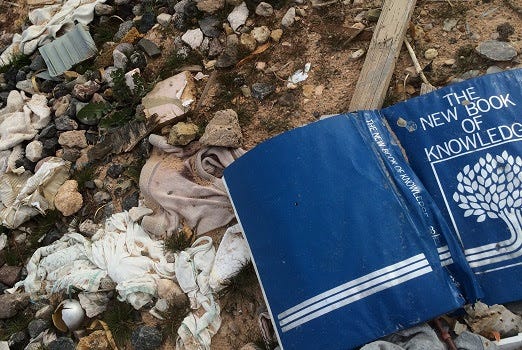
Everything eventually reaches the landfill. Items that could not be recycled, clothes that could not be resold, goods that outlasted their usefulness. The landfill accepts what no one wants, burying the evidence of consumption. It closes the loop.
Adoption buries its own evidence. Sealed records, amended certificates, missing medical histories, erased names. All disposed of, rendered inaccessible, placed where no one can find them.
The system cleans up after itself. Parents with regrets, who might have wanted their children back, cannot find them. Children who might have wanted their real moms and dads cannot locate them. The landfill of secrecy accepts what the system cannot afford to keep visible.
The landfill does not ask what was lost. It simply covers it over, lets the grass grow, pretends nothing lies beneath.
Adoption does the same. It tells a happy story, celebrates a new ‘family,’ frames the original loss as a gift. The burial remains hidden. The grass grows green and the child walks on it, never knowing what lies under their feet.
What Trays and Bins Hold
The coin tray holds pennies, nickels, and dimes. It does not hold the story of the hand that placed it there, or the need that drove the hand to take one.
Thrift stores hold merchandise. They don’t hold the memories that clung to the garment, or reasons it was given away. Recycling bins hold materials, not the form they once had, or purpose they once served.
Adoption holds children. It doesn’t hold their stories or their deepest longing. It refuses to hold the mother who still dreams of the child she lost, the father who never knew of his child, or the siblings who grew up wondering.
The system processes what is handed in and distributes what is requested. It keeps its shelves stocked, its transactions moving, and its cycle turning. What it cannot hold, it buries.
An adopted child carries what the system discards. The longing for a face that resembles theirs, questions about a story they were never told, and grief for a bond severed before memory began.
They carry what the system could not recycle, resell, or bury deep enough. They carry it their whole lives…and they are the only ones who do.
메타데이터
- post_id
- c8da51a8fc38
- slug
- second-hand-self-adoption-as-the-ultimate-reuse-c8da51a8fc38
- url
- https://medium.com/@ms567/second-hand-self-adoption-as-the-ultimate-reuse-c8da51a8fc38
- canonical_url
- https://medium.com/@ms567/second-hand-self-adoption-as-the-ultimate-reuse-c8da51a8fc38
- author_url
- https://medium.com/@ms567
- status
- ok
- fetched_at
- 2026-06-27 18:20:27