Making sense of the Cyclospora outbreak(s)
The CDC has been silent for more than a week
Food & Health Safety Alerts
Making sense of the Cyclospora outbreak(s)
The CDC has been silent for more than a week
The **CDC* has been silent for more than a week now on the status of the Cyclospora* outbreak linked to lettuce supplied by Taylor Farms de Mexico.
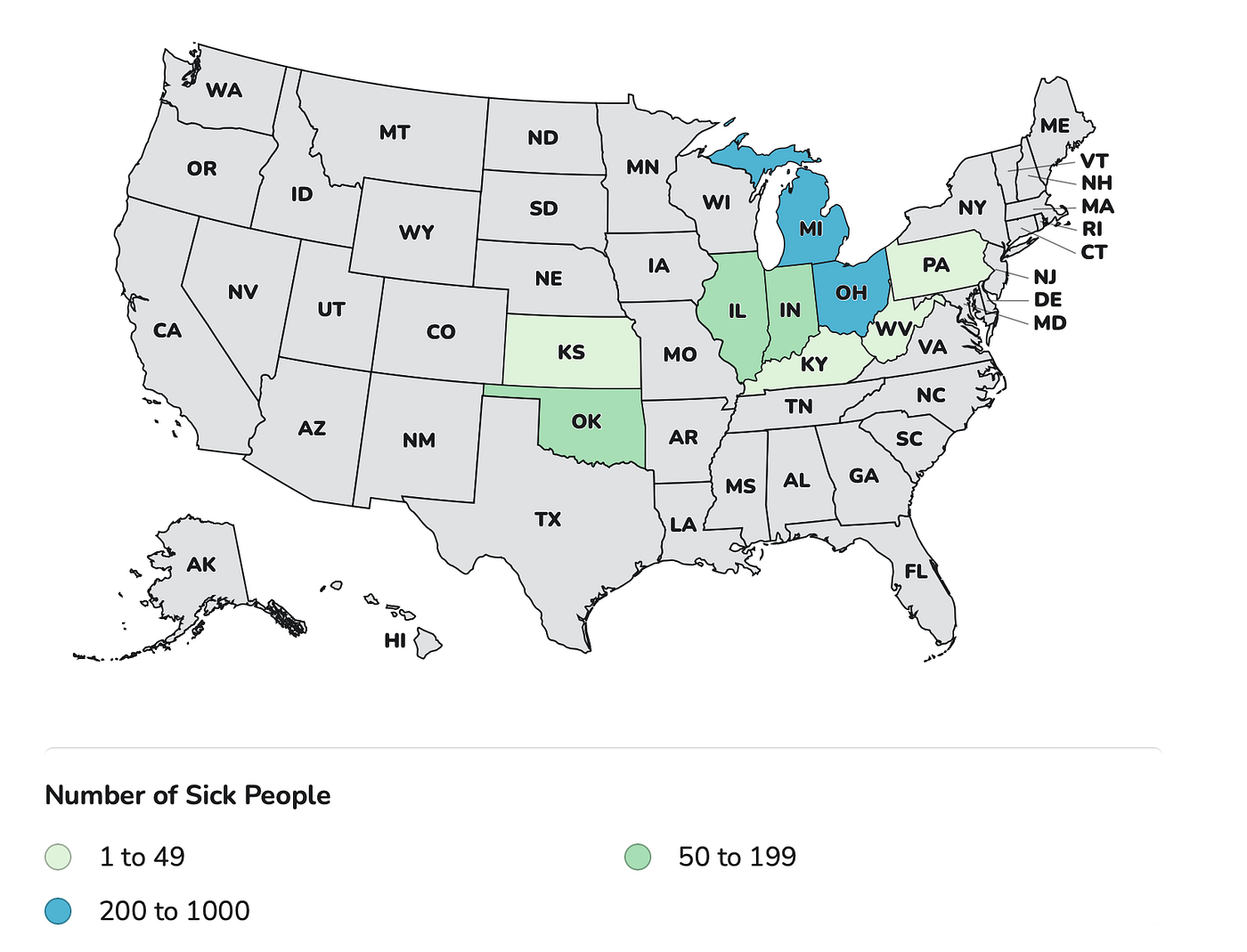
As of July 24, 2026, the agency has confirmed what it describes as “at least 1,947” cases, including 98 hospitalizations, in nine states.
It’s still unclear when this outbreak actually began. In its initial announcement on July 14th, the CDC cited an onset date of June 22, 2026. That onset date was changed three days later. It was pushed back almost six weeks to May 13, 2026.
On July 24th, the CDC quietly changed the onset date back to June 22, 2026, removing more than 200 Michigan cases from its total in the process.
As a result of the CDC having cut six weeks from the front end of the outbreak, the agency’s timeline curve (the Epi Curve) took on a very unusual appearance. Instead of a typical build-up of cases, the outbreak appears to begin two days before the daily case count reaches its peak, tapers off, and then builds a second wave.
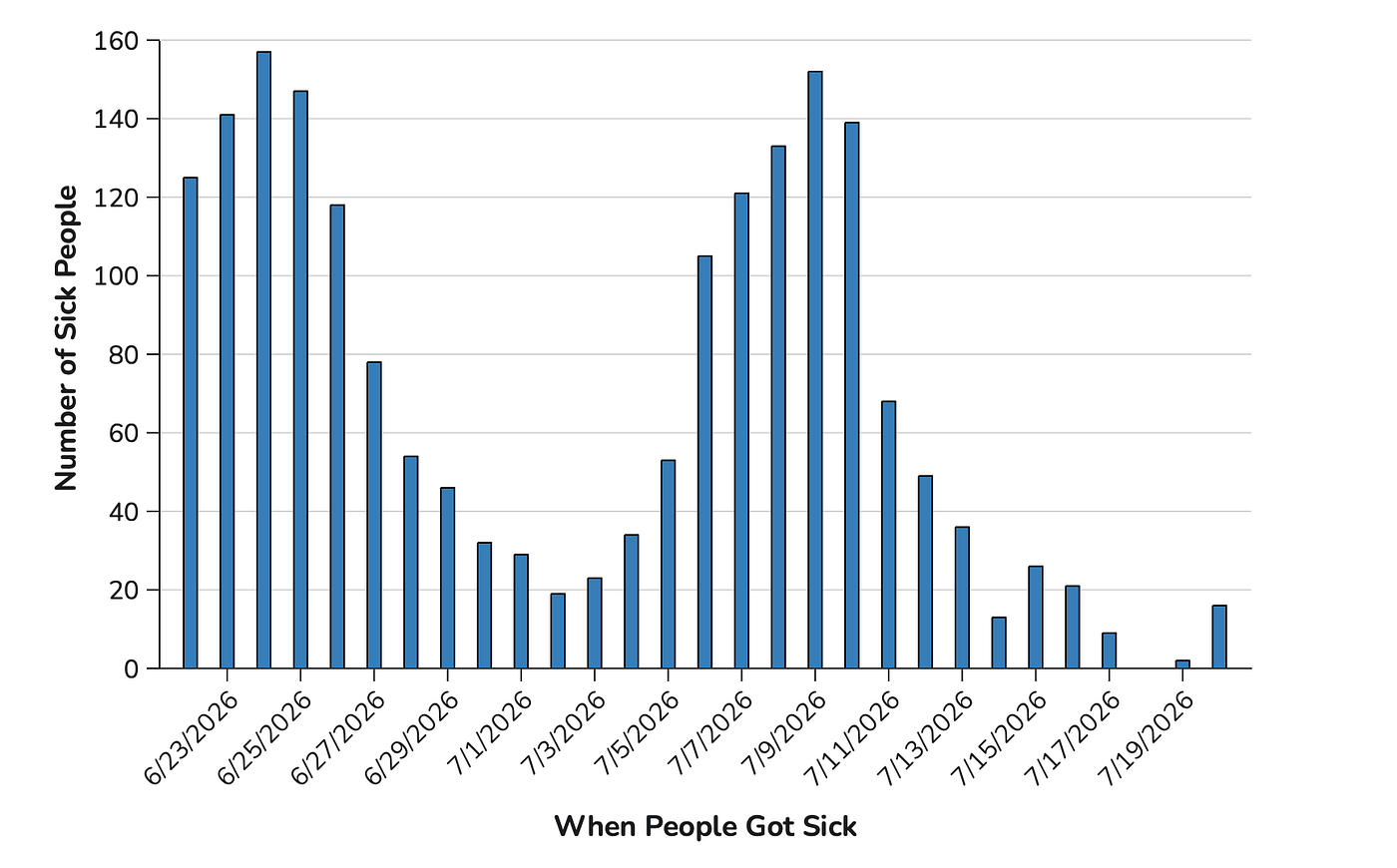
Outbreak timeline versus lettuce distribution
On July 17, 2026, **Taylor Farms de Mexico** recalled all iceberg lettuce sourced from central Mexico. The shredded lettuce was distributed from June 29th thru July 16th to 27 states.
On average, it usually takes about a week (range of 1–14 days) for someone who has been infected with Cyclospora to show symptoms. Any illness arising on or before July 1st (to use a very conservative timeframe) would not be due to consumption of the recalled shipment.
**Bill Marler** did some excellent reporting on just this point earlier today in his post on Food Poison Journal.
The CDC versus the states
In the absence of frequent and substantive updates (and explanations) from the CDC, it is helpful to turn to the various states for more information.
In his weekend wrap-up, **Marler* reports just under 21,000 total Cyclospora cases, based on data supplied by individual states. This number includes both domestic cases and those acquired as a result of international travel. Because various states report at different intervals and some do not differentiate between confirmed and probable cases, it is difficult to correlate the state numbers directly with CDC Cyclospora* surveillance totals.
What is more instructive in understanding the timeline of the outbreak are the Epi Curves posted by a few states. Again, these curves do not differentiate between cases linked to Taylor Farms lettuce and other cases, nor do they always differentiate between domestic and international cases or between confirmed and probable cases.
Nevertheless, one thing stands out clearly. Every single one of these state charts show a slow build-up to a peak. Not one of them starts at the peak of the outbreak.
Iowa
The Iowa chart presents lab-confirmed cases only, by week of onset. Notice the number of cases start to climb around mid-May. As of July 24th, the CDC has not included Iowa in its Taylor Farms lettuce outbreak data.
New York City
New York is not one of the states that received the recalled lettuce. However, Taylor Farms supplied that lettuce to consignees in New Jersey, just across the river. New York City has experienced 511 cases of Cyclospora infections since May 1, 2026 (as of July 27th). This chart is based on date of diagnosis (rather than onset of symptoms) and displays the data by week.
North Carolina
The source of North Carolina’s 718 Cyclospora illnesses is still very much a mystery. Parsley and cilantro consumption have been mentioned as possible factors.
Oklahoma
Oklahoma is one of the nine states identified by the CDC as being part of the Taylor Farms outbreak. The state’s Epi Curve is color-coded to differentiate between domestic and international cases and is accompanied by a table that provides some demographic depth to the state’s reporting.
West Virginia
Also one of the nine Taylor Farms outbreak states, West Virginia’s outbreak onset was later than the other states, starting in the latter part of June 2026 instead of in May.
The unanswered questions
When will the CDC next update its outbreak reporting? Will it change the starting date for the Taylor Farms outbreak yet again?
Where did the prior shipments of Taylor Farms lettuce go? The recalled product was not the first shipment of lettuce to reach the United States. This is the sort of question the **FDA’s Traceability Rule **was meant to answer. That rule was due to come into force on January 20, 2026. It would have required companies to maintain and share the sort of records that are critical to tracing contaminated product both to its source and to its destination. Enforcement of that rule was put on hold by Congress until July of 2028.
Where did the Cyclospora contamination originate at Taylor Farms de Mexico? Was it in the irrigation water? The processing water? How did it enter the water supply?
Cyclospora can remain viable in the environment for weeks or even months under the right conditions. Can the wastewater treatment facilities in the various cities and rural areas affected by the Cyclospora surge handle the pathogen load? Are municipal water treatment facilities able to ensure safe drinking water in the affected parts of the country?


WE PAW Bloggers Publication
메타데이터
- post_id
- c8ea4eb56766
- slug
- making-sense-of-the-cyclospora-outbreak-s-c8ea4eb56766
- url
- https://medium.com/we-paw-bloggers/making-sense-of-the-cyclospora-outbreak-s-c8ea4eb56766
- canonical_url
- https://medium.com/we-paw-bloggers/making-sense-of-the-cyclospora-outbreak-s-c8ea4eb56766
- author_url
- https://medium.com/@phyllisentis_26960
- status
- ok
- fetched_at
- 2026-08-03 08:30:38