Everyone Wants to Learn AI. Almost Nobody Learns How to Think With It.
A student I know was cramming for an exam a while back. He opened ChatGPT, typed the topic, and got a full, tidy explanation in under a…
Everyone Wants to Learn AI. Almost Nobody Learns How to Think With It.
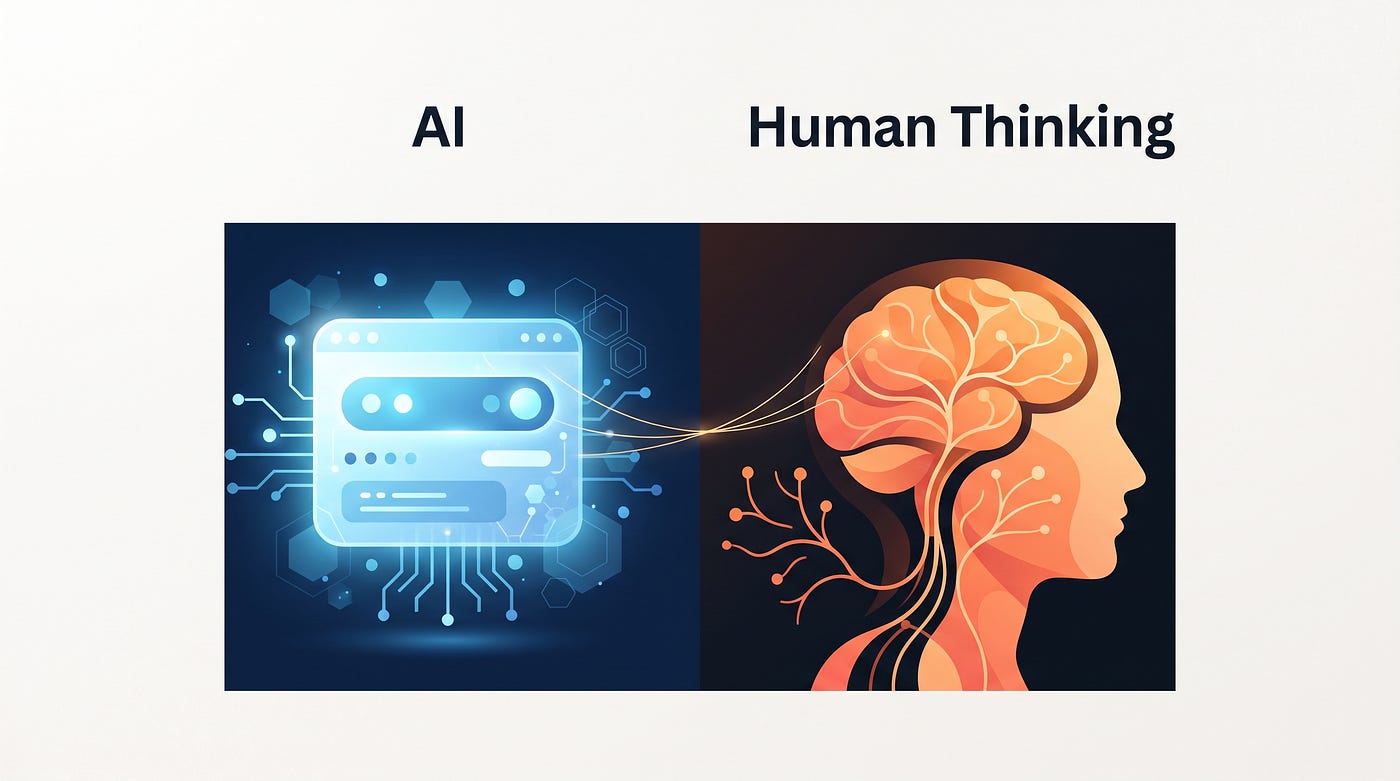
A student I know was cramming for an exam a while back. He opened ChatGPT, typed the topic, and got a full, tidy explanation in under a minute. Read it once. Wrote down a few bullet points. Closed the laptop.
I asked him to explain it back to me in his own words.
Silence. Then: “Uh, give me a second.”
He never got there. The explanation had been perfect. His notes were neat. But somewhere between reading the answer and calling it studied, nothing had actually landed in his head.
That’s the trap a lot of us are walking into right now, and most people don’t even notice it’s a trap.
Knowing the Tools Isn’t the Same Thing as Knowing How to Think
Ask most people what “learning AI” means, and they’ll talk about prompts, shortcuts, which app does what, which YouTuber has the best tips this month. Fair enough — that stuff has value.
But it dodges the actual hard question: when should you even reach for AI, what should you hand it, what should you keep for yourself, and how much should you trust what comes back?
Take two people writing an article on the same topic. One says: “Write me 1,000 words on remote work.” Done, in ten seconds. The other writes a rough take first, then asks the AI to poke holes in it — where’s this weak, what am I missing.
Same software. Totally different relationship with it. One person outsourced the thinking. The other used the tool to sharpen their own thinking.
The Struggle Was Never Just Friction — Sometimes It Was the Point
Before all this, if you didn’t get something, you had no choice but to sit with it. Search, read, get it wrong, try again. AI can now skip that hour and hand you the answer in thirty seconds. Genuinely useful, a lot of the time.
Except — not always. A student who has AI solve the math problem never finds out exactly where their own logic falls apart. A junior developer who pastes in generated code ships the feature but couldn’t tell you why it works if you asked. A writer who lets AI draft every paragraph never quite finds their own sentences.
So the question isn’t always “how do I make this faster?” Sometimes it’s “which part of this do I actually need to stay hard, because that’s where I learn?”
Maybe the Skill Worth Building Is Knowing When to Close the App
Translate every sentence when you’re learning a language, and yeah, homework gets easy. You also never learn to build a sentence on your own. Same story everywhere: try the code before you ask for the fix. Form an opinion on the historical event before asking AI to argue with you about it. Write the ugly first draft yourself.
You need something of your own on the table before AI is actually useful to you. Otherwise you can’t tell the difference between learning something and just being told something.
Stop Asking for Answers. Start Asking to Be Pushed Back On.
Small change, big difference. Don’t ask “give me the answer” — say “here’s my answer, tear it apart.” Don’t ask it to write your essay — ask for the three strongest objections to what you’ve already written. Don’t ask to be taught a topic — ask to be explained it, then quizzed on whether it actually stuck.
Used this way, AI stops being a vending machine for answers and starts acting more like someone in the room arguing with you. And honestly, a good argument teaches you more than a clean answer ever will.
This Cuts Both Ways, Especially Here
For a student in Pakistan or India or anywhere tutoring isn’t cheap or easy to find, having AI on a phone is a genuinely big deal — help with a chemistry concept nobody explained well in class, someone to practice English conversation with, an explanation of that one error message that’s been stuck for an hour.
That access is real, and it matters. But it’s the same access that quietly builds a habit of never sitting with a hard question long enough to actually work it out. The tool doesn’t decide which way this goes. Our habits do.
Tools Will Keep Changing. Judgment Won’t Go Out of Style.
New models, new agents, new apps — there’s no keeping up with all of it, and honestly, you don’t need to. What doesn’t expire is the ability to weigh information, poke at your own assumptions, and explain your reasoning to another person without a screen in front of you.
The real edge was never “I can get AI to do everything.” It’s knowing exactly what’s worth asking it for in the first place.
Let It Make You Bigger, Not Smaller
Nothing wrong with using AI to summarise a long report, untangle a confusing idea, catch a grammar mistake, or throw out ten ideas when you’re stuck on one. That’s just using a tool well.
The trouble creeps in quietly — when it always writes your opening line, always hands you the conclusion, and you stop bothering to check whether that conclusion actually holds up.
So go ahead, learn the tools, play with all of them. Let them carry the boring parts. Just don’t hand over the part of the work that’s actually supposed to make you better at thinking. That was never the assignment. The real goal was never learning how to ask AI for everything — it’s learning what’s actually worth asking it for.
메타데이터
- post_id
- c8eaedcef341
- slug
- everyone-wants-to-learn-ai-almost-nobody-learns-how-to-think-with-it-c8eaedcef341
- url
- https://medium.com/@hamzasgr1/everyone-wants-to-learn-ai-almost-nobody-learns-how-to-think-with-it-c8eaedcef341
- canonical_url
- https://medium.com/@hamzasgr1/everyone-wants-to-learn-ai-almost-nobody-learns-how-to-think-with-it-c8eaedcef341
- author_url
- https://medium.com/@hamzasgr1
- status
- ok
- fetched_at
- 2026-08-18 11:15:32