Luna Abyss Review: Worth Playing Even If You’re New to Bullet Hell
A friend gifted me Luna Abyss without much explanation. Just a Steam notification and a follow-up text with his name on it. I sat on it for…
Luna Abyss Review: Worth Playing Even If You’re New to Bullet Hell
A friend gifted me Luna Abyss without much explanation. Just a Steam notification and a follow-up text with his name on it. I sat on it for two days.
I’ve tried to get into this corner of gaming before. Returnal was the obvious entry point, and I bounced off it hard. Not because of the bullet hell stuff, which actually interested me, but because dying meant losing everything, and losing everything stopped feeling like a challenge pretty fast. It felt punitive. I put it down and more or less moved on.
Then Saros came out and I gave Housemarque another shot. They’d dropped the roguelike structure and kept the part I actually wanted: reading bullet patterns, finding the space inside them, figuring out how to move smarter instead of just faster. I finished it and came away thinking maybe I’d been too quick to write the genre off.
So when the notification came in for Luna Abyss, I figured why not. I’m glad I did.
The Part Where You Have to Trust It
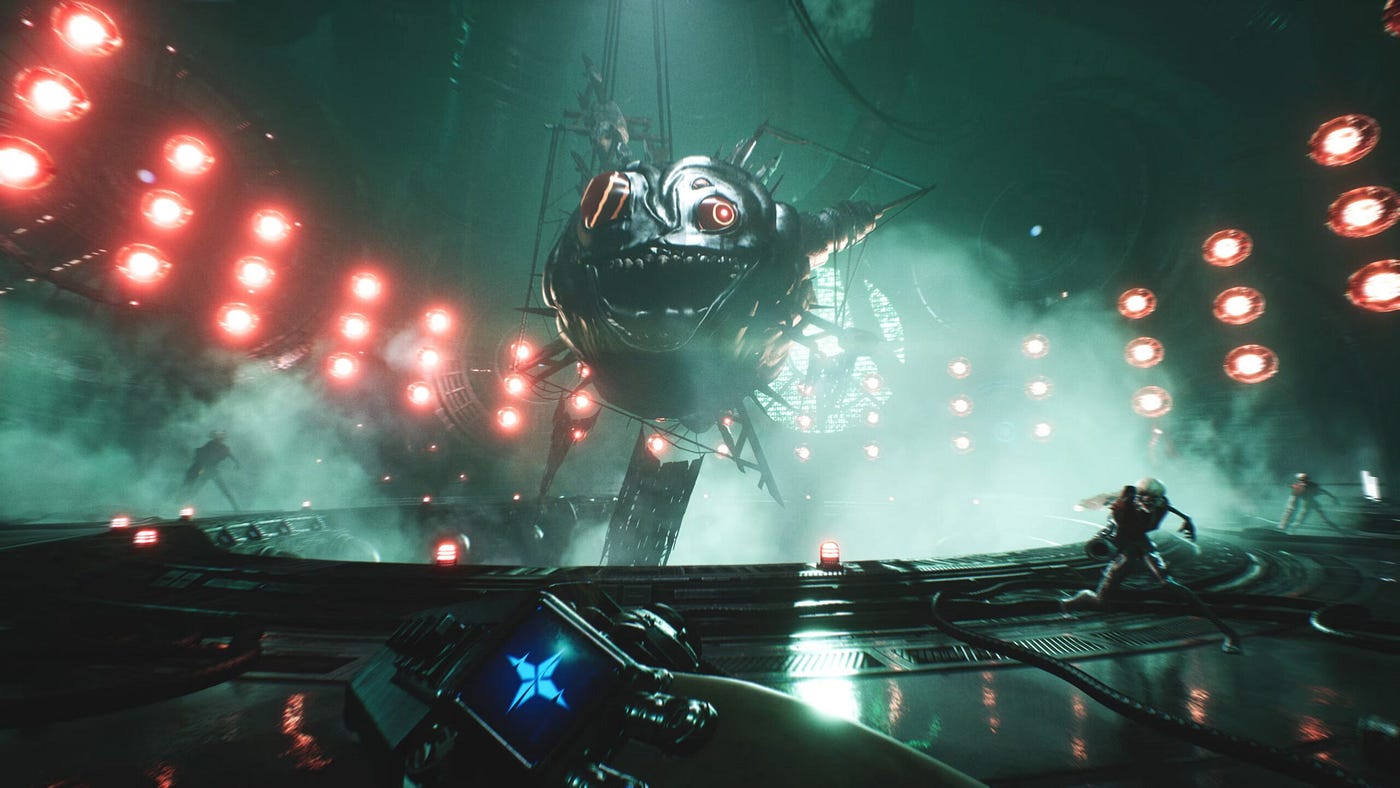
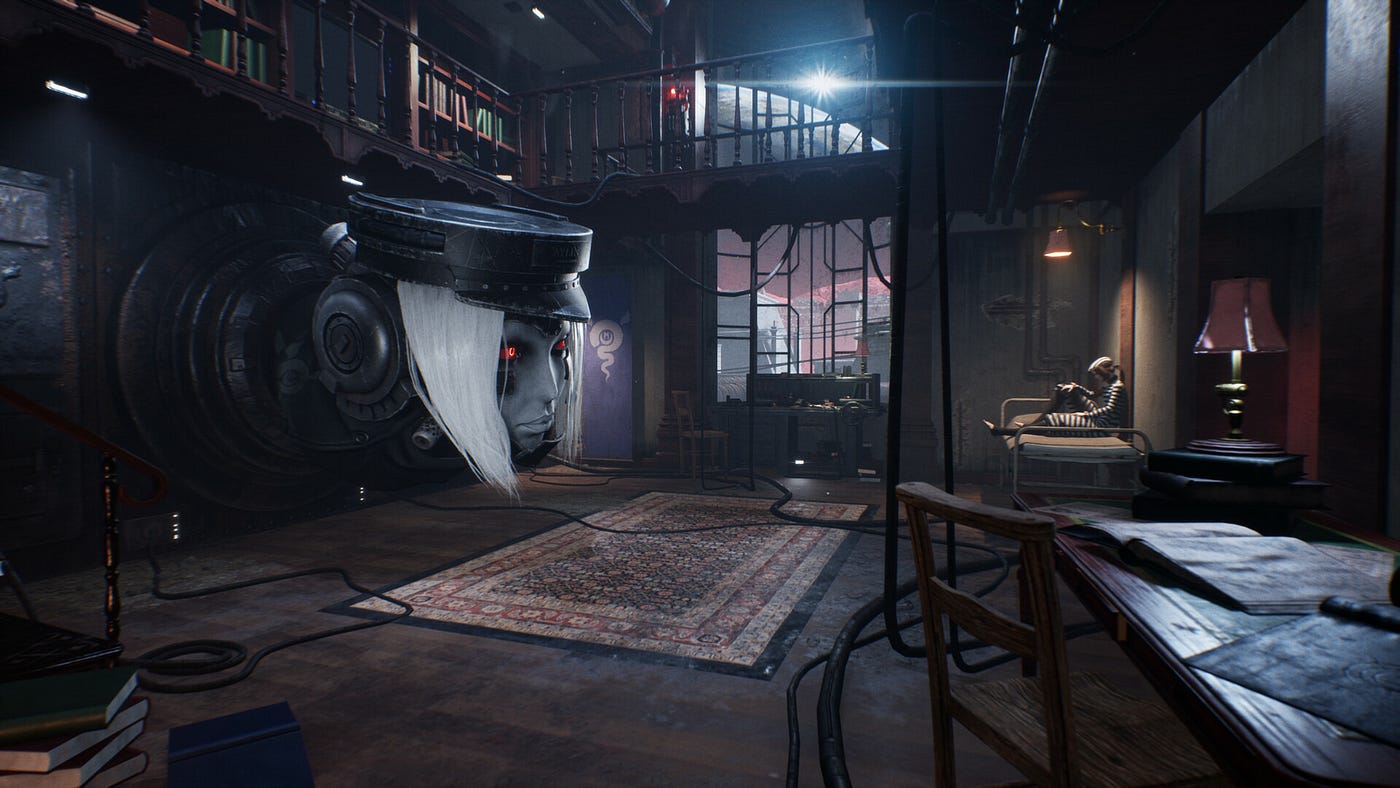
Luna Abyss puts you in a prison on a mimic moon. Your sentence is 9,000 days. A giant AI head named Aylin lives in your cell wall and supervises you. To reduce your sentence, you pilot a remote body into something called the Abyss, a massive decaying megastructure buried beneath the prison colony, and complete missions down there. The game drops all of this on you and then more or less keeps moving.
The first couple of hours feel like arriving late to something. The visual world, all dark corridors and red light and creatures that are half-human and half-something without a name, is drawing from specific sources. Other reviewers have flagged Tsutomu Nihei’s manga Blame! as the main one, and even without knowing that work you can feel the influence. The game is clearly fluent in something. The issue is it doesn’t stop to translate.
Combat in those early hours doesn’t help. You get one gun that overheats if you hold the trigger too long, a few basic enemies, and none of the movement tools that define the experience later: no dash, no double jump, no slide. Those get parceled out as mission rewards over the first few hours. The thinking behind it is clear enough in hindsight. By the time things get hard, you know every tool because the game made you earn each one. But while it’s happening, it just feels like the game is making you prove something before it opens up.
I nearly quit here. Not because it was too difficult. Because it felt like a prologue that didn’t know it was a prologue.
What kept me going was the world itself. At some point the underground industrial darkness gives way to an outdoor section with pale blue sky and red-leafed trees, and it’s genuinely disorienting in the best way after hours spent underground. The NPCs are strange in a way that takes some getting used to, half-mechanical, deeply weird, not always easy to read, but the game keeps asking you to care about them and it usually works. There’s a character who speaks like a sweet elderly grandmother and wants to talk about family. It shouldn’t land. It does.
What the Game Is Actually Asking You to Do
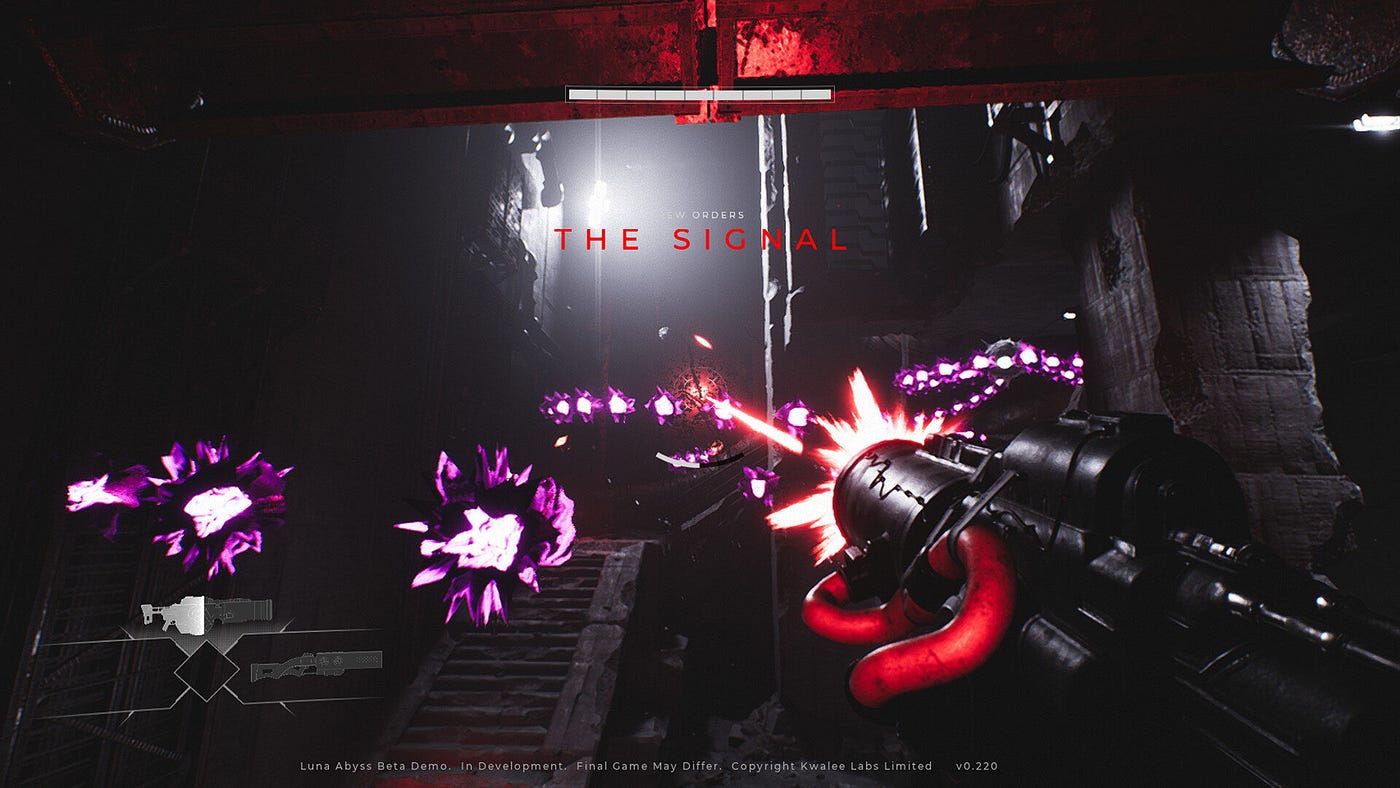
Once you have the full kit, Luna Abyss clicks into place. The combat runs on one idea: guns don’t run out of ammo, they overheat. So you’re constantly cycling through your weapons, not because you’re out of shots but because you need to manage heat and because each gun has a specific job. The shotgun breaks blue shields. The sniper takes out purple ones. The rifle handles everything else reliably. You’re never scrambling for resources. You’re just reading what’s in front of you and responding.
My time with Saros made this click faster than it might have otherwise. I already knew how to look at a spread of projectiles and find the gap. I already knew that moving smart mattered more than shooting fast. Luna Abyss rewards both of those instincts, and the boss fights are where it makes that argument most clearly. The first major one floods the arena with spiraling red and purple orbs in patterns that feel genuinely designed, like someone sat down and choreographed them. I died several times and didn’t mind once.
Here’s the thing I kept coming back to though. Some of what made this work for me was baggage I brought in from other games. The spatial awareness, the pattern reading, knowing to move toward the gap instead of away from it. If you’re coming in without any of that, the game’s slow opening might read less like patience and more like indifference. It’s asking you to pick up a language it isn’t really teaching. That’s a real limitation worth knowing about going in.
But the payoff is real. Kwalee Labs is a team of under twenty people who spent seven years building something genuinely strange, and the ambition shows in the right ways. The world feels like it has actual weight to it. The boss encounters are worth every failed attempt. And by the end, the story earns more than you’d expect from a game that spent its first hour barely explaining itself.
The slow start is real and worth knowing about going in. But so is everything that comes after it, and for a game built by under twenty people over seven years, that’s not nothing.
메타데이터
- post_id
- c8fbeea7a22a
- slug
- luna-abyss-review-worth-playing-even-if-youre-new-to-bullet-hell-c8fbeea7a22a
- url
- https://medium.com/@spencer2457/luna-abyss-review-worth-playing-even-if-youre-new-to-bullet-hell-c8fbeea7a22a
- canonical_url
- https://medium.com/@spencer2457/luna-abyss-review-worth-playing-even-if-youre-new-to-bullet-hell-c8fbeea7a22a
- author_url
- https://medium.com/@spencer2457
- status
- ok
- fetched_at
- 2026-06-22 19:40:15