Swift 6: Modern Syntax Explained (Guard Simplification, Some vs Any, #repeat, Noncopyable Types)
Discover Swift 6’s new syntax improvements: simplified guard, some vs any, #repeat loop, and noncopyable types. Includes practical examples
Modern Syntax in Swift 6 (Part 1)
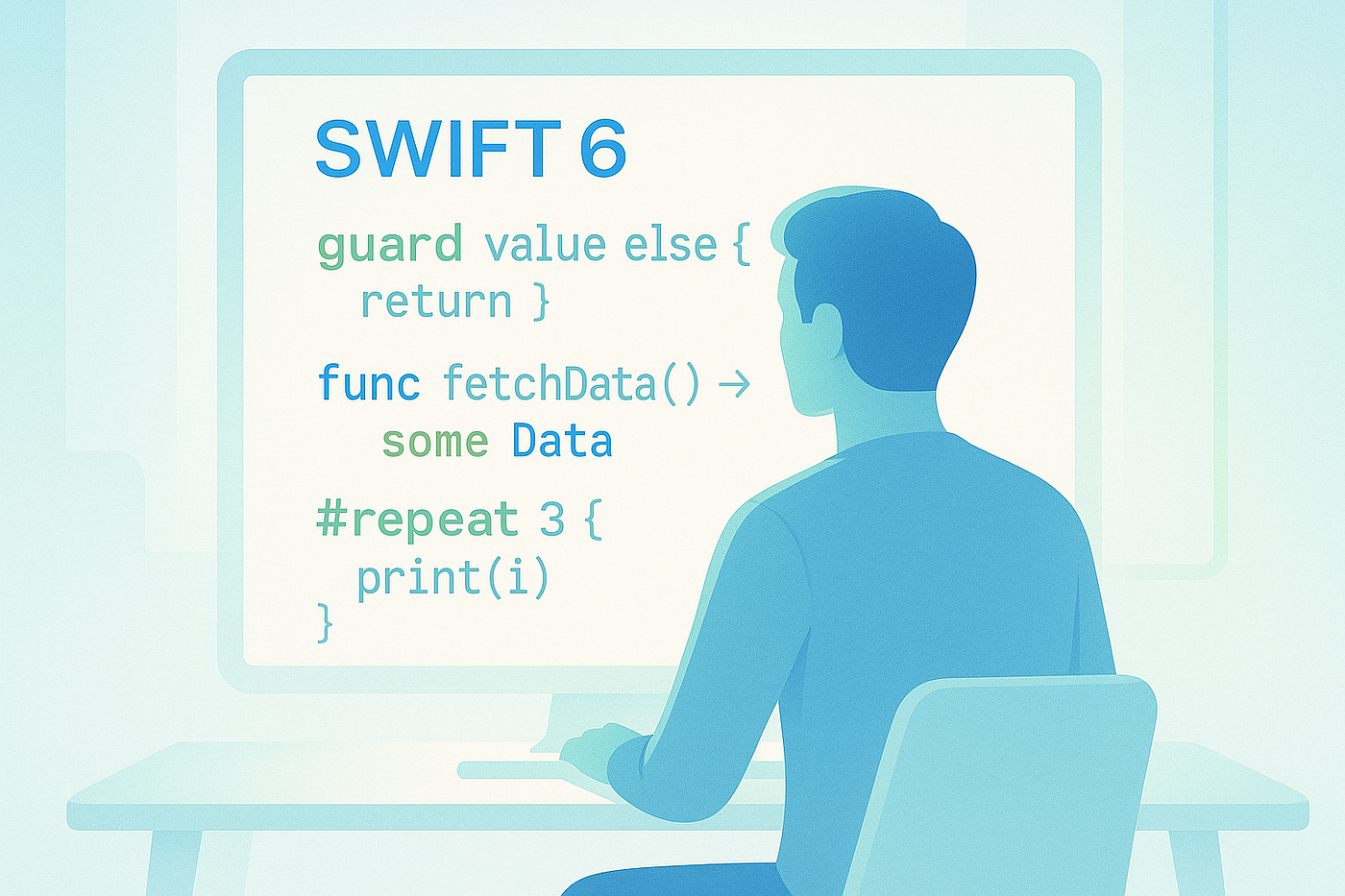
Made in Sora
Swift 6 has arrived, bringing improvements that directly target what developers value most: clarity, safety, and expressiveness. Today we kick off this series with a theoretical and practical overview of the most exciting syntax updates.
📖 Theoretical Summary
Swift 6 introduces features that, while small in appearance, have a big impact on how we write code:
- Enhancements to
ifandswitch→ more expressive and safer. - Simplified
guard let→ less boilerplate, more readability. - Opaque types (
some) → hide implementation details without losing safety. - Advanced type inference → fewer explicit annotations needed.
- Noncopyable types (
noncopyable) → better control over unique resources. - New
#repeatloop (experimental) → clean syntax for simple repetitions.
💻 Swift 6 Examples Explained
1. Simplified guard let
Before (Swift 5.x):
guard let name = name else {
    return
}
Now (Swift 6):
guard name else {
    return
}
✅ Swift automatically infers the unwrap if the variable is optional.
2. some for opaque types
func makeView() -> some View {
    Text("Hello Swift 6")
}
✔️ some is ideal for designing public APIs where you want to hide the concrete type.
3. New experimental #repeat loop
#repeat 3 {
    print("Iteration")
}
⚠️ Still experimental, but useful for simplifying short iterations.
4. noncopyable types (preview)
noncopyable struct FileHandle {
    let fd: Int
}
✔️ Useful for resources that must not be duplicated (e.g., file descriptors, pointers).
❓ Interview Question
What are the differences between some and any in Swift 6 and when should you use each?
Expected answer:
some→ opaque types in function returns, hides concrete implementation, better performance.any→ existential types, allows multiple implementations, more flexible but less optimizable.
📝 Practical Exercise
Instructions:
Create a function that returns a some View and uses the simplified guard syntax to validate a name.
Base code:
func welcomeView(for name: String?) -> some View {
    // Your implementation here
}
✅ Commented Solution:
import SwiftUIfunc welcomeView(for name: String?) -> some View {
guard name else {
return Text("Unidentified user")
}
return Text("Welcome, \(name!)")
}✔️ guard name handles the optional binding.
✔️ some View hides the concrete view type.
⚡ Interview Tips
- Use
somefor cleaner, more optimizable APIs. - Explain how simplified
guardimproves readability. - Avoid
force unwrapsin production (shown here only for simplicity).
⚠️ Common Mistakes
- ❌ Using
somein stored properties (not allowed). - ❌ Using
guard namewhen the variable is not optional. - ❌ Mixing
anyandsomewithout understanding their differences.
🔄 Update Notes
- Simplified
guard letis only available in Swift 6. #repeatis experimental and may change in future releases.noncopyableis still in early stages; more support expected in upcoming betas.
메타데이터
- post_id
- c93fecbbaef1
- slug
- swift-6-modern-syntax-explained-guard-simplification-some-vs-any-repeat-noncopyable-types-c93fecbbaef1
- url
- https://medium.com/@mrhotfix/swift-6-modern-syntax-explained-guard-simplification-some-vs-any-repeat-noncopyable-types-c93fecbbaef1
- canonical_url
- https://medium.com/@mrhotfix/swift-6-modern-syntax-explained-guard-simplification-some-vs-any-repeat-noncopyable-types-c93fecbbaef1
- author_url
- https://medium.com/@mrhotfix
- status
- ok
- fetched_at
- 2026-07-16 15:57:00