Why Communication is Harder Than We Think
We live in a time when we can connect instantly with almost anyone, anywhere. A message can cross the globe in seconds, yet in our daily…
Why Communication is Harder Than We Think
We live in a time when we can connect instantly with almost anyone, anywhere. A message can cross the globe in seconds, yet in our daily lives many of us still find it difficult to truly connect with the person sitting right across from us. And, that’s true not just at the office, but in our homes.
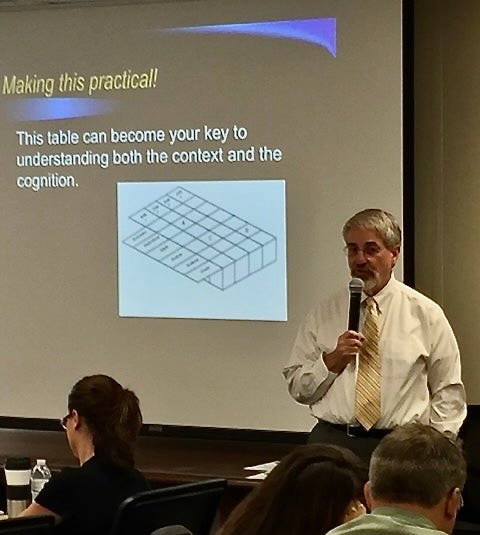
As an educator and leader and sadly perhaps most often as a professional learning workshop facilitator, I’ve experienced how often communication becomes the stumbling block in our work. The challenge is rarely that people don’t want to communicate. More often, it’s that:
- We think we’re being clear when we are the only one who has clarity.
- We assume others see the world as we do.
- We rush to respond rather than pausing to understand.
The results? Misunderstandings that spiral into conflict or even worse result in active withdrawal, decisions that don’t hold because assumptions weren’t shared, or students and colleagues who leave a conversation feeling unheard.
The Illusion of Clarity
One of the hardest lessons I’ve learned as a leader is that clarity is not automatic. As hard as I work to craft a message that doesn’t guarantee that the person on the other side has received it in the way intended. I remember leaving a meeting convinced that we all had agreed to curb issues that arise at the end of the lunch period with every teacher being at the classroom door when the bell rang rather than using the bell as a signal to head to the classroom. Except that the first time the bell for the end of lunch rang everyone was still in the faculty room.
Clarity, I’ve come to believe, requires humility. It means asking, “What did we agree to?” It means stripping away the qualifiers and filler words that cloud meaning. And it means slowing down enough to check whether the picture in my mind is the same one in yours.
The Challenge of Perspective
Equally hard is perspective-taking. Every conversation offers us a choice: defend our position or open ourselves to another’s. That second option is risky. It requires us to admit we might not have the whole story. Yet it is only when we step into another’s frame of reference that new solutions appear.
In my career, some of the most important shifts have come from moments when I realized that what I believed strongly was incomplete — and that someone else’s experience filled in what I could not see. Once when discussing various approaches to “try” with a young Hispanic superintendent he pointed out that I as a white male could get away with “trying things,” but there were people in the community waiting to pounce on any perceived failures.
Why We Built reFramed
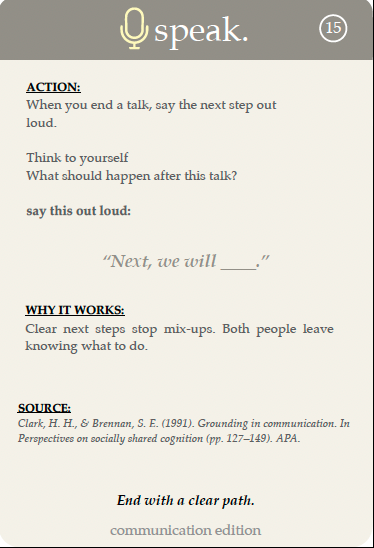
These challenges of clarity and perspective-taking are exactly why my son scott manthey, his business partner, Ariel Tourner, and I created reFramed. They are simple card decks with a serious purpose: sparking conversations that cut through assumptions and invite us to listen, reflect, and connect more deeply.
A card might ask, “What’s a belief you once held strongly that you’ve since changed?” or “What’s the hardest part of really listening to someone?” Questions like these open the door to reflection — and to dialogue that is less about winning and more about understanding.
I don’t believe any single tool can solve the human puzzle of communication. But I do believe that small prompts, offered at the right time, can change the way we show up for one another. The cards provide a different kind of pedagogy: practice a small skill, apply it, later learn why it works.
A Call to Conversation
Whether you’re leading a school, mentoring a colleague, teaching a workshop, or talking with your teenager, communication will be your greatest challenge — and your greatest opportunity. We won’t always get it right. But we can get better at naming the challenge and framing the conversation in ways that create possibility.
That’s the invitation behind reFramed. Not to make communication easy, but to make it intentional.
Learn more here: https://reframedgame.com/
메타데이터
- post_id
- c972e2dec28f
- slug
- why-communication-is-harder-than-we-think-c972e2dec28f
- url
- https://medium.com/@gmanthey/why-communication-is-harder-than-we-think-c972e2dec28f
- canonical_url
- https://medium.com/@gmanthey/why-communication-is-harder-than-we-think-c972e2dec28f
- author_url
- https://medium.com/@gmanthey
- status
- ok
- fetched_at
- 2026-06-09 15:37:30