Iranian Agriculture: An Industry Living in the Past
By Mojtaba Razmi | June 18, 2026
Iranian Agriculture: An Industry Living in the Past
By Mojtaba Razmi | June 18, 2026
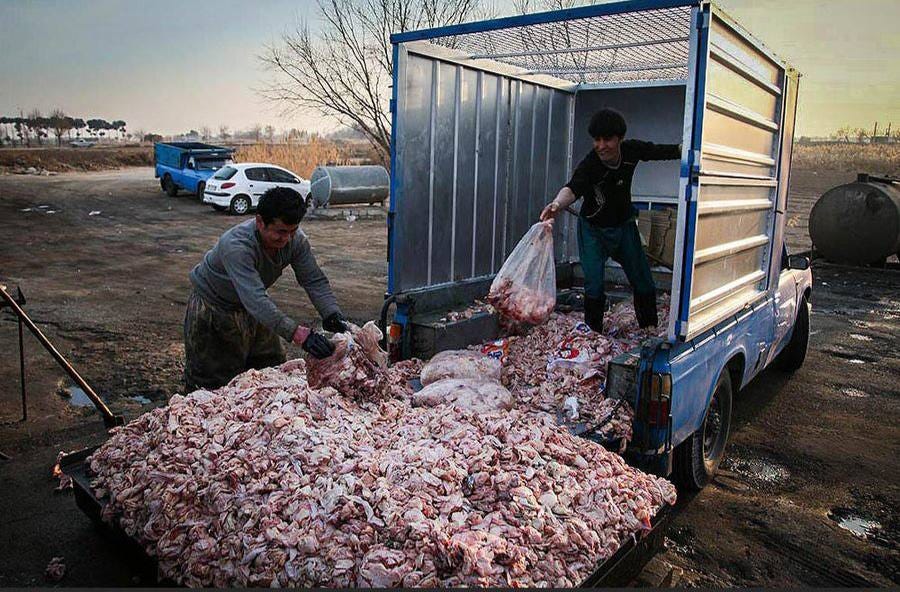
The bitter truth is that Iranian agriculture, unlike almost every other sector, has not yet distanced itself from a very distant past. In an era of rapid technological advancement, a significant portion of our food production still relies on the same “Mesopotamian logic” of several millennia ago. If an ancient Egyptian farmer were resurrected today and traveled to modern-day Iran, he likely wouldn’t be all that surprised by our fields. He might find tractors curious, or water pumps unfamiliar, but the core of the story would be entirely recognizable to him: land, water, seeds, and a passive wait for the harvest.
We have merely swapped tools. The tractor has replaced the ox-plow, and chemical fertilizers have replaced ancient methods, but the fundamental nature of production remains stagnant. The result of this approach is an insistence on production at the cost of destroying underground aquifers, soil erosion, and an absolute dependence on the climate. After thousands of years, the same story continues.
While the world has transitioned from the age of steam to the era of Artificial Intelligence, Iranian agriculture remains a prisoner to the logic of ancient civilizations. We have witnessed revolutions in mobile technology, the internet, medicine, transportation, and industry, yet when it comes to food production, it is as if time has stood still. We still believe the solution to increasing production lies in consuming more water, digging more wells, and expanding cultivated land. This is a recipe that has been followed for decades, and its results have been nothing but dried-up rivers, soil degradation, and land subsidence.
Our greatest mistake is perceiving traditional agriculture as “natural,” “sacred,” and “irreplaceable.” In reality, much of what is called traditional agriculture today is a high-consumption, subsidy-dependent, and inefficient industry that hides its true costs.
We imagine we are producing cheap food. We buy a kilogram of cucumbers for 500,000 Rials -0.36 dollars- and feel we have made an affordable purchase. But the reality is that a significant portion of the price of those cucumbers never appears on the store’s price tag. This hidden cost is reclaimed from the people years later through medical prescriptions, laboratory tests, lifelong medications, and hospital beds. Food that appears cheap is often the most expensive commodity a society consumes.
In a production system where quantity overrides quality, and where there is no transparent monitoring of pesticide use or nitrate accumulation, the consumer pays for “affordability” with their health. The paradox is that while people will analyze dozens of technical specifications before buying a mobile phone, they have almost zero information about the quality of the products entering their own cells. The truth is that the cost of producing healthy food is never as high as the cost of treating a sick society. A society that refuses to pay for healthy food will inevitably pay for the treatment of its diseases. This is an economic law from which no country has escaped. Yet we continue to prioritize low prices over health, measuring agricultural success by yield tonnage rather than by the nutritional quality that enters people’s bodies.
The crisis of Iranian agriculture is not confined to the farm. The inefficiency of this structure has taken the country’s transportation and energy networks hostage. Today, thousands of trucks traverse long distances, day and night, to deliver low-value products from production hubs to consumption centers.
Onions travel from Ilkhchi to Tehran, garlic journeys from Hamedan to Isfahan, and vegetables are transported hundreds of kilometers, burning millions of liters of diesel just to bring food to cities, food whose shelf life is sometimes only a few days.
The cost of this movement isn’t just fuel. Roads are worn down, transport fleets are depleted, air pollution rises, and a significant portion of the pressure on national infrastructure stems from this very model of food distribution. Yet, none of these costs are reflected in the final price of the product. We only see the price on the board and imagine that the food is cheap.
Is it logical to consume vast amounts of subsidized fuel, destroy tires and roads, and increase air pollution and road accidents just to bring a kilogram of greens to a consumer’s table? These are hidden costs paid from the pockets of the entire society and national infrastructure. We are essentially burning strategic capital oil, and roads to move products that could be grown just steps away from where they are consumed.
Perhaps it is time to ask a simple question: If we were to calculate the true cost of water, soil, fuel, transportation, health, and the environment, would traditional agriculture still be considered the “cheapest” method of food production?
Technologies such as Plant Factories, Vertical Farming, and Controlled Environment Agriculture (CEA) were born exactly from this question. These technologies are not merely a method for growing lettuce; they are an attempt to redefine the very concept of food production in the 21st century. This is food produced close to the point of consumption, utilizing significantly less water, requiring fewer pesticides, offering controllable quality, and minimizing dependence on climate and logistics.
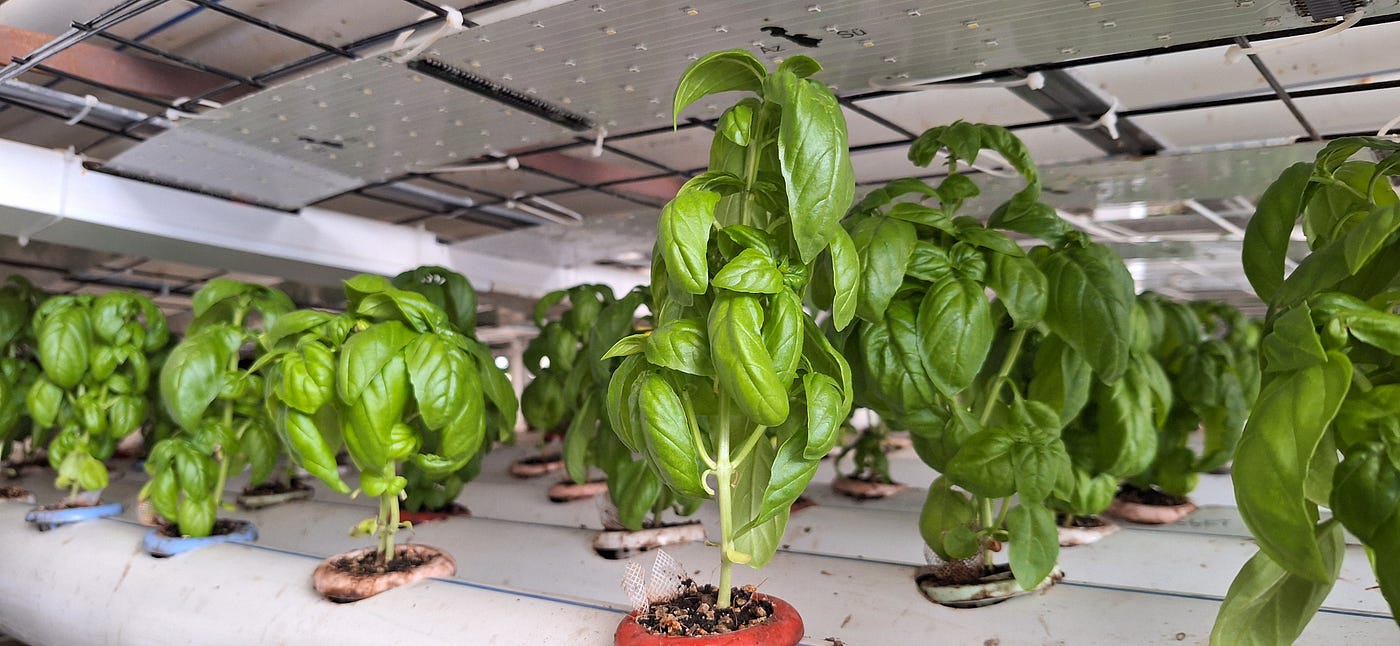
Where light, water, and expertise converge to shape a healthier future for Iran. An inside look at the iYashil Plant Factory.
21st-century agriculture must bring the product to the consumer, rather than forcing the consumer to pay for the cost of transporting food over thousands of kilometers. Technologies like Urban Farming and Plant Factories are no longer a luxury choice or an industrial showcase; they are the only logical response to this historical inefficiency.
By eliminating the distance from “farm to fork,” these technologies remove the need for extensive transportation, reduce water consumption by up to 95%, and enable the production of crops with minimal pesticide use and more precise quality control. Producing food near urban centers means eliminating waste, reducing pressure on the national road network, and delivering fresh produce directly to the people.
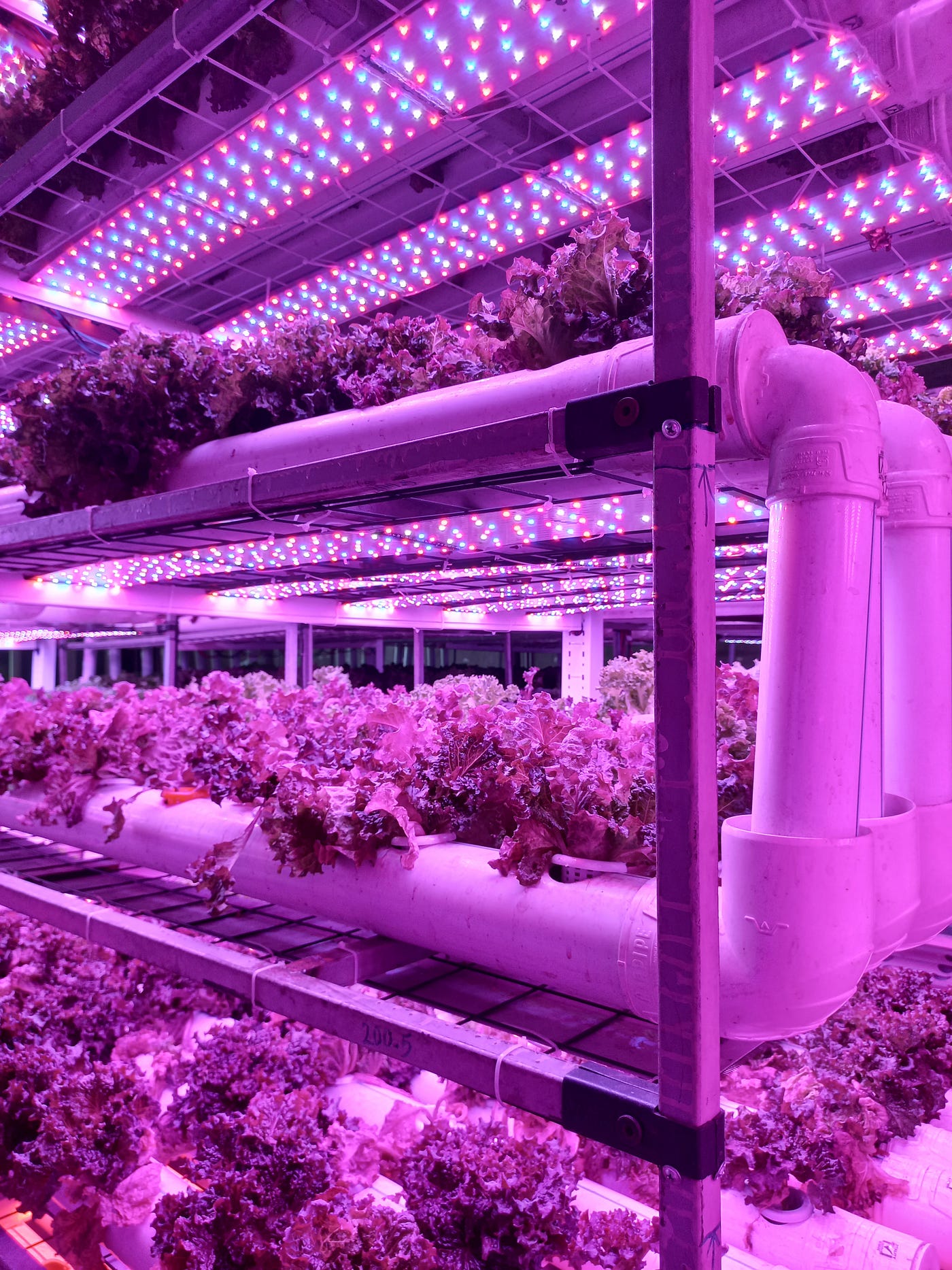
The Purple Revolution in the heart of Iranian Azerbaijan: Leveraging customized light spectrums for optimal plant growth at the Yashil Kesht Fanavar Sahand complex.
Today, the more critical question is: how much water does traditional agriculture consume? How much soil does it destroy? How much does it receive in subsidies, and what hidden costs does it impose on society? For years, we have debated the “setup costs” of new technologies, but we remain silent about the cost of destroying resources that are no longer replaceable.
The core issue is not whether technological agriculture is “expensive.” The issue is that traditional agriculture is far more expensive than we imagine, and we have passed a massive portion of its costs on to future generations.
Perhaps the greatest crisis of Iranian agriculture is not a water shortage, but rather an insistence on a production model that belongs to the past yet continues to dictate the country’s future.
The water crisis, soil erosion, and the alarming rise in chronic diseases all stem from an obsolete mindset. We cannot secure our civilizational future with formulas from thousands of years ago. The transition to technological agriculture is an urgent necessity to prevent resource collapse and protect the nation’s health. It is time to accept that Smart Agriculture is not an expense — it is the most vital investment for Iran’s survival.
The history of civilizations shows that no society has ever become wealthy by consuming its vital capital. We are burning our groundwater, exhausting our soil, wearing out our roads, and endangering public health to produce food that is “cheap” only on paper. Iran’s problem today is not a lack of technology; it is a lack of courage to move past failed patterns. The future of agriculture lies not in deeper wells, but in deeper technologies.
About the Author
**Mojtaba Razmi** is an entrepreneur and journalist specializing in agricultural technology and sustainable development. He is the founder of Yashil Kesht Fanavar Sahand (iYashil), focusing on the future of food security through innovation.
메타데이터
- post_id
- c987104cd423
- slug
- iranian-agriculture-an-industry-living-in-the-past-c987104cd423
- url
- https://medium.com/@mojtaba.razmi/iranian-agriculture-an-industry-living-in-the-past-c987104cd423
- canonical_url
- https://medium.com/@mojtaba.razmi/iranian-agriculture-an-industry-living-in-the-past-c987104cd423
- author_url
- https://medium.com/@mojtaba.razmi
- status
- ok
- fetched_at
- 2026-06-20 20:29:01