The Silent Accumulation Behind Sudden Cardiac Death
Sudden cardiac death is a misnomer. It is rarely sudden. It is a collapse that has been planned for years. The fatal seed was likely…
The Silent Accumulation Behind Sudden Cardiac Death
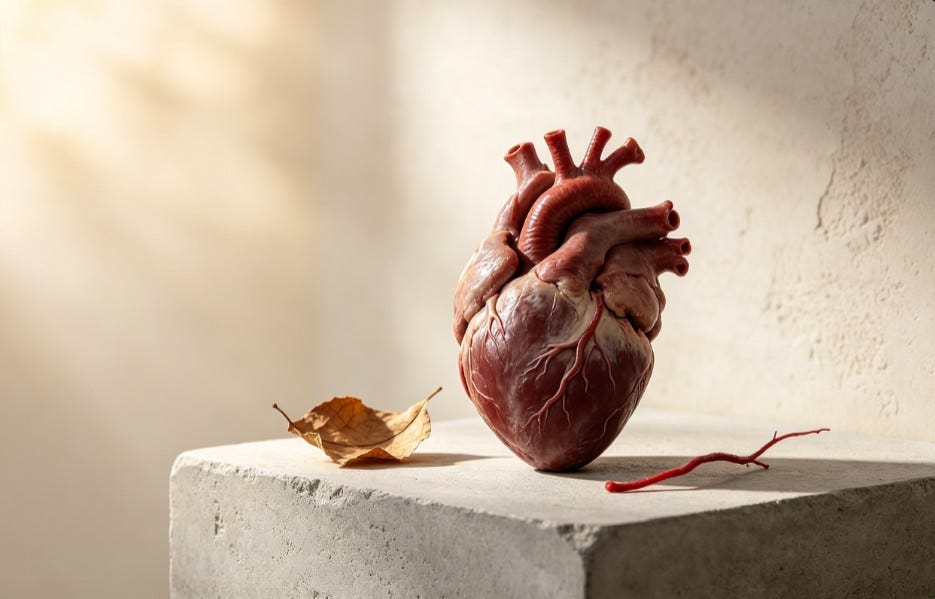
Sudden cardiac death is a misnomer. It is rarely sudden. It is a collapse that has been planned for years. The fatal seed was likely planted three, five, or even ten years ago. Western medicine often labels these events as unpredictable tragedies. But if you look closely, this is not a random accident. It is the final receipt for a long-term debt of biological capital. The body does not fail without notice. It sends signals that are systematically ignored until the system shuts down completely.
Modern wellness culture has created a paradoxical environment where health-seeking behaviors become destructive forces. We treat our bodies like machines that can be optimized indefinitely. We believe that more output equals better performance. This linear thinking ignores the cyclical and finite nature of human vitality. The path to cardiac failure is paved with habits that society celebrates as discipline. These habits act as silent accumulators of physiological stress. They do not kill immediately. They erode the foundation slowly.
Sleep deprivation is the first and most common accumulator. In contemporary society, staying awake late is often worn as a badge of productivity or resilience. Biologically, this is a form of self-sabotage. Sleep is not merely a pause button. It is the primary window for cellular repair and energetic restoration. Chronic sleep loss forces the heart to operate in a perpetual state of emergency. The body’s restorative mechanisms are severed. This damage is cumulative and largely irreversible. Each hour of lost sleep is a withdrawal from a bank account that cannot be replenished by caffeine or willpower. The heart eventually runs out of reserves because it was never allowed to refill them.
Dietary choices play an equally significant role in this slow erosion. The consumption of ice-cold beverages is a standard practice in many modern cultures. From a thermodynamic perspective, this habit imposes a massive tax on the body’s internal furnace. The heart is considered the engine of circulation and thermal regulation. Introducing freezing liquid into the core requires the body to expend precious energy to warm it up. This process directly dampens the metabolic fire that drives circulation. Over decades, this constant cooling effect weakens the pump’s efficiency. The heart struggles against a self-imposed thermal deficit. What feels like refreshment is actually a suppression of vital function.
Sedentary behavior acts as a mechanical brake on the cardiovascular system. The human body was designed for movement. Stagnation is antithetical to biological flow. When a person sits for extended periods, blood viscosity increases and circulation slows. The heart must work harder to push fluid through a sluggish system. Nutrients fail to reach the tissues effectively. Waste products accumulate in the vascular network. This stagnation creates a breeding ground for dysfunction. The heart muscle itself becomes deprived of the very nourishment it needs to sustain its rhythm. Stillness is not rest. It is a form of suffocation for the circulatory system.
Emotional toxicity is perhaps the most underestimated factor in cardiac decline. Psychological states are not separate from physical reality. Chronic stress, repressed anger, and persistent anxiety manifest as tangible physiological burdens. These emotions create internal turbulence that disrupts the smooth flow of energy and blood. The heart bears the brunt of this emotional friction. Every unprocessed feeling adds resistance to the system. Over time, this emotional load calcifies into physical pathology. The heart does not just pump blood. It processes the somatic weight of a life lived in tension. Ignoring mental health is essentially ignoring cardiac maintenance.
The most counterintuitive accumulator is excessive exercise. This challenges the dominant fitness narrative that more is always better. High-intensity endurance training and extreme gym sessions are often glorified as the pinnacle of health. Yet, marathon runners and elite athletes frequently suffer cardiac events. The explanation lies in the concept of energetic expenditure versus conservation. Vigorous activity is inherently depleting. It consumes vast amounts of biological fuel. When the intensity exceeds the body’s capacity to recover, the deficit compounds. The heart is forced to overwork beyond its sustainable limits. This is not strengthening. It is borrowing energy from tomorrow to pay for today’s performance. Eventually, the loan comes due. The engine burns out because it was run at redline for too long without adequate cooling.
This phenomenon explains why the victims are often those who appear the strongest. They have trained their bodies to ignore warning signs. They have conditioned themselves to push through fatigue. Their discipline has become their blind spot. They mistake depletion for progress. They confuse exhaustion with achievement. The very traits that make them successful in fitness make them vulnerable to collapse. Their hearts did not fail because they were weak. They failed because they were overdrawn.
The body communicates its distress long before the catastrophic event. These signals are written in a language that modern diagnostics often overlook. Discoloration of the lips indicates deep-seated circulatory blockage. Prominent veins under the tongue suggest stagnant flow rather than simple inflammation. Aching along the inner arm is a referral pattern of cardiac strain. Coldness in the upper back reflects a deficiency in warming energy. Nighttime palpitations signal that the heart lacks the stability to maintain rhythm during rest. Profuse sweating with minimal exertion points to a failure of containment mechanisms. Shortness of breath after activity reveals a fundamental lack of endurance capacity.
These symptoms are not isolated anomalies. They are chapters in a coherent story of decline. They are the body’s desperate attempts to negotiate a ceasefire. Most people dismiss them as minor inconveniences or normal aging. They medicate the symptom instead of addressing the cause. They continue the same behaviors that created the problem. The tragedy is not the suddenness of the death. The tragedy is the deafness to the warnings. The collapse is merely the final punctuation mark in a sentence that has been writing itself for decades.
True health requires a shift from exploitation to stewardship. It demands an understanding of limits. It involves recognizing that preservation is as important as performance. The goal should not be to extract maximum output from a finite vessel. The goal should be to maintain the vessel’s integrity over a lifetime. This requires listening to the subtle feedback loops that govern biological existence. It means respecting the need for warmth, flow, rest, and emotional balance. It means understanding that the heart is not an infinite resource. It is a precious trust that must be managed with wisdom.
The illusion of invincibility is the most dangerous risk factor. Believing that youth or fitness grants immunity is a fatal error. Biology does not negotiate with ego. It operates on principles of balance and conservation. When these principles are violated repeatedly, the outcome is inevitable. The seed that was planted years ago will eventually germinate. The only variable is whether we choose to water it with neglect or prune it with awareness.
A note beyond the headlines
I write about global politics, but not just the news —
the human choices, moral trade-offs, and life lessons behind major events.
More reflections here:
메타데이터
- post_id
- c9d00bb77d10
- slug
- the-silent-accumulation-behind-sudden-cardiac-death-c9d00bb77d10
- url
- https://medium.com/@nanmoon/the-silent-accumulation-behind-sudden-cardiac-death-c9d00bb77d10
- canonical_url
- https://medium.com/@nanmoon/the-silent-accumulation-behind-sudden-cardiac-death-c9d00bb77d10
- author_url
- https://medium.com/@nanmoon
- status
- ok
- fetched_at
- 2026-07-16 22:36:45