The Overdose Crisis Changed in a Way Most People Never Really Noticed
The Overdose Crisis Changed in a Way Most People Never Noticed
I thought overdoses were usually caused by one drug. The truth turned out to be much more complicated
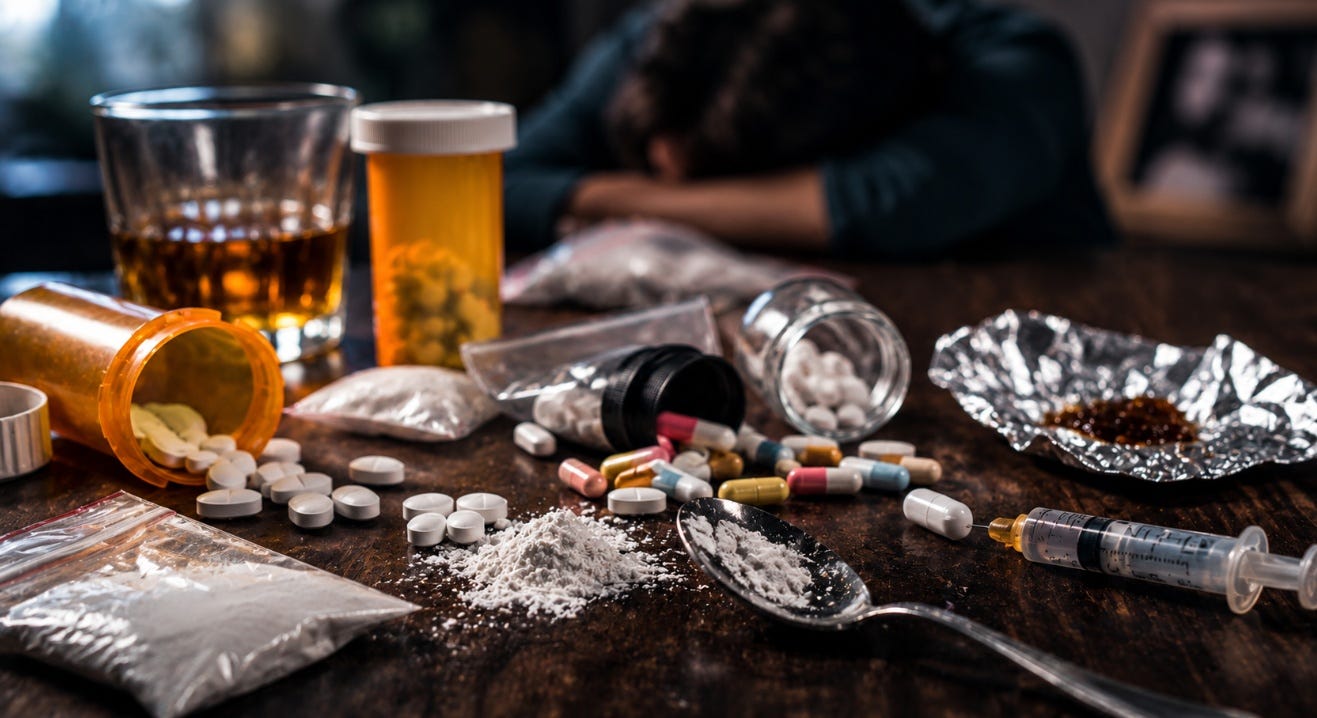
Image created by author using ChatGPT
Like most people, I assumed I understood how overdoses happened.
One person took too much heroin. Someone else accidentally swallowed too many prescription pain pills. Another drank far more alcohol than their body could handle.
It was tragic, but it seemed fairly straightforward.
Then I started reading about the modern overdose epidemic and realized I had been looking at it the wrong way.
Many fatal overdoses today aren’t caused by a single drug at all. They’re caused by several drugs interacting inside the same body.
That discovery completely changed the way I think about today’s overdose crisis.
More Than One Drug Changes Everything
Before researching this topic, I’d never even heard the term Polysubstance Use Disorder (PUD).
Once I understood what it meant, I couldn’t stop wondering why we don’t hear more about it. The answer, I realized, is that it changes almost everything we think we know about overdoses.
The name sounds intimidating, but the concept is surprisingly simple. Polysubstance use occurs when two or more drugs are taken within a relatively short period of time. Sometimes people knowingly combine substances. Other times, they have no idea they’re doing it.
Someone might drink alcohol while taking a prescription anxiety medication. Another person may use cocaine early in the evening and opioids later that night. Others unknowingly consume drugs contaminated with fentanyl or other powerful synthetic substances.
Once multiple drugs begin interacting inside the body, predicting what happens next becomes far more difficult. The danger isn’t simply that more drugs are involved. It’s that each drug can change the effects of the others, sometimes producing consequences that are far more dangerous than anyone expected.
Why Would Anyone Mix Drugs?
That was my first question. The answer turned out to be much more complicated than I expected.
Some people combine drugs hoping for a stronger high. Others are trying to reduce unpleasant side effects. A stimulant may be followed by alcohol to help someone relax. Prescription pain medication may be taken with an anti-anxiety medication because the combination doesn’t seem especially risky.
For many people living with addiction, avoiding withdrawal becomes the immediate priority. Taking another substance may offer temporary relief, even if it creates even greater danger.
What begins as an attempt to feel better can become a medical emergency much faster than most people realize.
When Drugs Multiply Each Other’s Effects
One of the biggest surprises for me was learning that drugs don’t simply add their effects together.
Sometimes they multiply them.That completely changed how I thought about overdoses. I’d always assumed they were mostly a matter of quantity. Someone simply took too much of one drug.
Instead, doctors often worry about chemistry.
Two drugs that may seem manageable on their own can become far more dangerous when they’re combined.
Some of the greatest concern centers on substances that slow the central nervous system, including alcohol, opioids, and medications such as Xanax, Valium, and other benzodiazepines. Each of these drugs can slow breathing on its own. Together, they can dramatically reduce the body’s ability to get enough oxygen.
Many overdose victims don’t die because they intentionally took an extraordinarily large amount of one drug. They die because several drugs quietly interact in ways that overwhelm the body’s ability to keep breathing.
The Dangerous Myth About Stimulants
I also discovered another misconception that surprised me. Many people believe stimulants and depressants somehow cancel each other out.
Unfortunately, the human body doesn’t work that way.
A stimulant like cocaine or methamphetamine may temporarily mask the drowsiness caused by opioids or alcohol. A person may feel awake enough to believe they’re safe.They’re not.
While the stimulant creates the feeling of alertness, the depressant continues slowing breathing and other vital functions. As the stimulant begins wearing off, the depressant is still affecting the body, often with devastating consequences.
That was another moment that completely changed my understanding of overdoses. I had assumed feeling more awake meant the danger had passed.
In reality, the most dangerous effects may have been quietly unfolding the entire time.
That’s one reason overdoses can appear sudden, even though the life-threatening process began long before anyone recognized the warning signs.
Sometimes People Never Intended to Mix Drugs
This may have been the most unsettling discovery of all. Not every case of polysubstance use is intentional.
Until I started researching this topic, I assumed people knowingly chose every drug they consumed. I was surprised to learn that isn’t always true.
Across the United States, illegal drugs are increasingly contaminated with other substances. Fentanyl has been found in counterfeit prescription pills, cocaine, heroin, methamphetamine, and other street drugs.
It’s important to make one distinction, though. Prescription medications dispensed by licensed pharmacies are generally not the source of this problem. The greatest risk comes from counterfeit pills manufactured illegally and designed to look like legitimate prescription medications.
Someone may believe they’re using only cocaine when it’s actually contaminated with fentanyl. Another person may think they’re swallowing a legitimate prescription pain pill when it’s really a counterfeit tablet containing fentanyl or other dangerous substances. Others may unknowingly be exposed to xylazine or additional synthetic drugs.
The result is still polysubstance exposure. The difference is that the person never intended for it to happen.
Why Doctors Can’t Predict Every Outcome
One thing became clear as I continued reading the medical research. There is no simple formula for predicting how multiple drugs will interact inside the human body.
I’ve always assumed medicine was far more predictable than this. Instead, I learned that every drug affects the body differently, and every person metabolizes those drugs differently. Age, weight, genetics, liver function, existing medical conditions, and dozens of other factors all influence the outcome.
Two people can take similar substances in similar amounts and experience completely different results. One may survive. The other may not.
That unpredictability is one reason emergency physicians consider polysubstance overdoses among the most difficult overdose cases to diagnose and treat.
By the time a patient reaches the emergency department, doctors may still be trying to determine exactly which substances are involved and how they’re interacting.
Even the Medical Community Changed the Name
Years ago, this condition was commonly referred to as polysubstance abuse. Today, healthcare professionals increasingly use the term Polysubstance Use Disorder, or PUD.
At first, I wondered why changing a few words mattered.
The more I read, the more I realized the new terminology reflects a much bigger shift in how addiction is understood. Researchers now recognize substance use disorders as complex medical conditions involving changes in brain chemistry, behavior, physical dependence, mental health, and often trauma.
Changing the terminology doesn’t solve the problem. But it does change the conversation. The newer language emphasizes treatment over blame and recovery over stigma.
That may sound like a small change. I don’t think it is.
The Biggest Lesson I Took Away
Before researching this topic, I believed overdoses were usually about taking too much of one drug.
Now I realize the modern overdose crisis is far more complicated. It’s about drug interactions. It’s about hidden contaminants. It’s about counterfeit pills that aren’t what they appear to be.
It’s about prescription medications mixed with alcohol. It’s about combinations that quietly become far more dangerous than any single drug alone.
I also realized something else. Before researching this story, I’d never even heard the term Polysubstance Use Disorder.
Because the more I learned, the more I realized this isn’t an obscure medical phrase. It’s one of the biggest reasons today’s overdose crisis has become so difficult to understand, predict, and prevent.
Sometimes the most dangerous part of a problem isn’t what we don’t know.
It’s what we don’t even realize we’re missing.
If you or someone you know is struggling with substance use, confidential help is available. In the United States, SAMHSA’s National Helpline provides free, 24-hour, year-round treatment referrals and information in English and Spanish at 1–800–662-HELP (4357) or through the SAMHSA website.
메타데이터
- post_id
- c9e2131ffc72
- slug
- the-overdose-crisis-changed-in-a-way-most-people-never-really-noticed-c9e2131ffc72
- url
- https://medium.com/secrets-and-mysteries/the-overdose-crisis-changed-in-a-way-most-people-never-really-noticed-c9e2131ffc72
- canonical_url
- https://medium.com/secrets-and-mysteries/the-overdose-crisis-changed-in-a-way-most-people-never-really-noticed-c9e2131ffc72
- author_url
- https://medium.com/@kelly.carmichael
- status
- ok
- fetched_at
- 2026-07-08 18:29:56