The Inequality Emergency: Introduction
Unsplash image by Dulana Kodithuwakku
The Inequality Emergency: Introduction
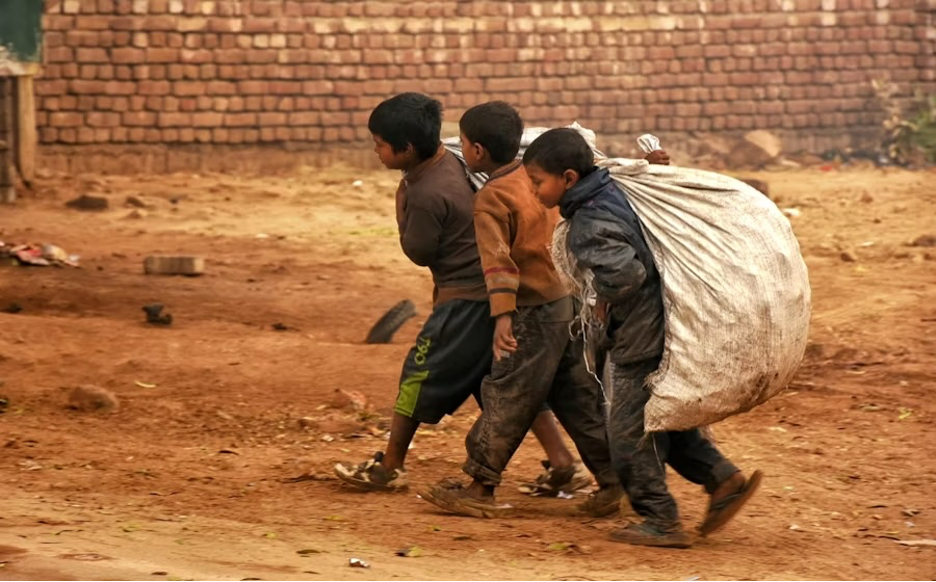
Unsplash image by Dulana Kodithuwakku
A Quick Global Quiz
Consider this top-10 list of countries: Slovakia, Belarus, Slovenia, Kiribati, India, Ukraine, Czechia, Netherlands, Syria, Norway.
It’s a motley bunch, isn’t it?
Well, these are the top-10 countries in terms of the best levels of Gini Coefficient, the measure of income inequality within a country. In other words, these nations have the least income inequality.
A gini coefficient under 0.4 is desirable: it represents relative income equality or relatively low levels of income inequality. All the countries in the top-10 list are well below 0.3 in terms of gini coefficient.
It is clear that a country can be rich in per capita income (Netherlands, Norway, Slovakia, Slovenia, Czechia) or low in per capital income (India), and have low levels of income inequality. The gini index merely measures the evenness (or skewness) of the distribution of income, and not the level of income or wealth.
The top-10 list is skewed toward Europe, with only Kiribati, India, and Syria being from Asia.
The bottom-10 list, on the other hand, is skewed heavily toward Latin America and Africa. The list includes (with the highest, or worst, gini coefficient listed first): Colombia, South Africa, Zambia, Brazil, Panama, Mozambique, Ecuador, Honduras, Costa Rica, and Guatemala.
It should be noted that, in some cases, as incomes rise, the middle and upper classes often zoom upward (in income and wealth terms) faster than the lower classes. In other words, the gini coefficient worsens. This is most likely to happen in the case of the world’s most populous country, viz. India.
Wealth Inequality
While over the past several decades, the world is improving in terms of income inequality, it is worsening in terms of wealth inequality. Here are some stark facts on the rising levels of wealth inequality:
-
Across the world, between 2000 and 2024, the richest captured 41% of all new wealth.
-
The bottom 50% of the world population only garnered a 1% share of the new wealth.
-
For the richest people on the planet, the average wealth increase of $1.3 million.
-
For the poor bottom half of the world, in the 2000–2024 period, the average wealth increase was miniscule: only $585.
-
It is not clear what the relationship is, but as global wealth concentration zooms up, so does food insecurity. One in four persons on the planet — 2.3 billion people — had to skip some meals in 2024. This number rose by 335 million from where it was in 2019.
South Africa, Norway, Spain
As pointed out earlier, South Africa is near the top of the inequality list while Norway is among the least unequal nations. These two nations, along with Spain, joined forces to launch a major initiative to analyze the patterns, causes, effects of, and remedies of global inequality — especially the steeply rising wealth inequality. In this space in Medium, I plan to delve into the issues surrounding this global inequality emergency.
The report on inequality, produced by a team led by the economics Nobel laureate Joseph E. Stiglitz, was produced when South Africa held the presidency of the G20 group of nations. There is of course a lot more data and analysis available on the exploding levels of global wealth inequality.
Stay tuned.
메타데이터
- post_id
- ca16deea37e3
- slug
- the-inequality-emergency-introduction-ca16deea37e3
- url
- https://medium.com/@nikdholakia/the-inequality-emergency-introduction-ca16deea37e3
- canonical_url
- https://medium.com/@nikdholakia/the-inequality-emergency-introduction-ca16deea37e3
- author_url
- https://medium.com/@nikdholakia
- status
- ok
- fetched_at
- 2026-06-09 14:34:10