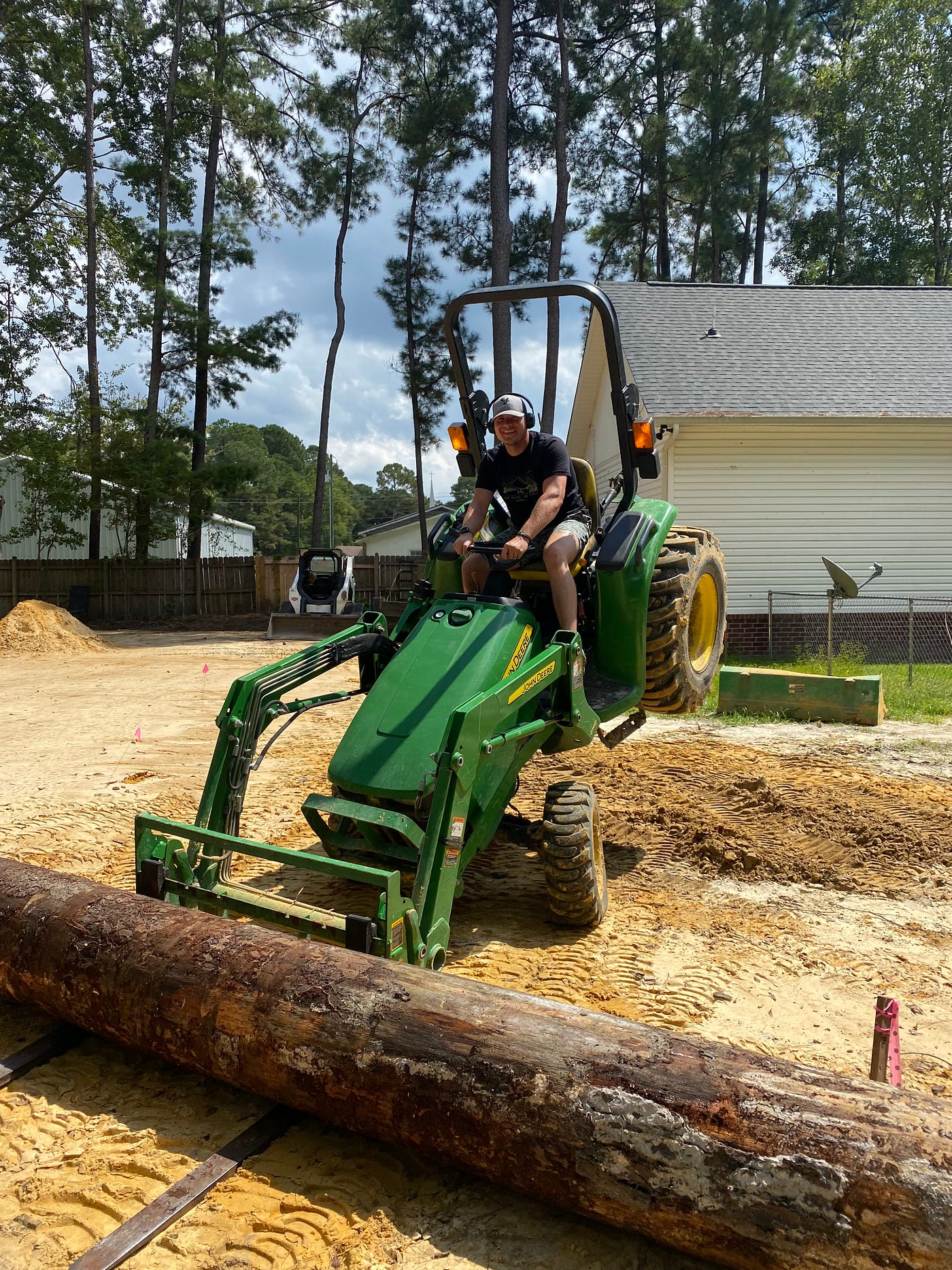
The 5 Warnings to Buying Land Around Charleston, SC
The 5 Warnings to Buying Land Around Charleston and the Lowcountry

Buying land is incredibly scary, especially if you’ve never done it before. Whether you’re buying 0.5 acres or 500 acres, there are some key things that must be considered to make sure you don’t end up with a junk piece of land.
Here are the top red flags I’ve identified as someone who was born and raised in the Charleston area, and as a local real estate expert who handles a lot of land deals in the Lowcountry.
1. WETLANDS, WETLANDS, WETLANDS!!
Y’all, this is the Lowcountry — it’s wet! If you’re searching for property and you find a piece you like, your first step should be looking for it on the National Wetlands Inventory (NWI) Mapper.
However, if you find that the property has wetlands on it according to the mapper, do not take it as gospel. The county GIS systems often align with the NWI Mapper, so you may see wetlands there too, but the boundaries identified on either of those systems can be incredibly vague.
The only true way to identify wetlands is to have them delineated. There are two ways to go about this:
- Option A: Full Delineation & Verification. You can hire a delineator to flag and sketch the wetlands, then send them off to the Army Corps of Engineers for official verification. This can be pricey — usually a couple thousand dollars depending on the size of the land — and the verification timeline is unpredictable. It could take 4 weeks, or it could take 11 months.
- Option B: A Property “Assessment.” Some delineators offer a basic assessment where they walk the property and give you a sketch (no physical flagging) that roughly estimates where the wetlands sit. This gives you a reasonable idea of how much of the property is actually buildable ground. In my experience, this service typically runs $500–$1,200 for parcels under 10 acres, and the turnaround time is usually just a week or two.
Note: This assessment is not a 100% guaranteed option, but it is close enough to give you peace of mind while you wait for official verification later on. Feel free to reach out to me if you need local delineator recommendations.
2. The “Perc Test” (Soil Analysis)
For starters, the modern technical name for this is a “Soil Analysis,” because the old ways of testing the percolation of water through soil have changed. It is still commonly referred to as a perc test, but please, don’t spell it with a “k”!
Before you buy a perc test, always check with the county or city to ensure public sewer isn’t already available nearby (even if it requires a tap fee). If you do need a septic system, you have two options for your analysis:
- Option A: The State (SCDES). The South Carolina Department of Environmental Services will come do it for roughly $200–$300, but you need to check their current turnaround time. They could be a week out, or they could be 12 weeks out. (Keep in mind: state workers can be picky and might not get too far from their trucks, so don’t expect them to hike out and test all four quadrants of your property).
- Option B: A Private Soil Classifier. You can hire a licensed, third-party soil classifier (there should be a list on the SCDES website). Their turnaround time is usually a week or two, and you can expect to pay roughly $1,200–$1,500. They often do a much more thorough job of testing the entire parcel.
What if the property fails? If the property fails the soil test, you typically won’t receive official documentation. You can ask for retests in different locations, but classifiers usually have a very good idea of the soil classes found in most local areas and even the topography of the lot.
Just because one classifier fails it doesn’t mean another won’t find a sweet spot that actually percs. Just know that chasing that rabbit can get expensive, and there’s still a good chance you’ll turn up empty-handed. Without a passing soil analysis, the property will require an expensive engineered septic system. If you need a list of trusted local classifiers or septic companies, reach out to me.
3. Flood Zones
This one is pretty straightforward. Most real estate listings will identify if a lot is in a flood zone or not, but it is always best to verify it yourself with a little internet searching. The FEMA Flood Maps are a great place to start.
Keep in mind that larger parcels of land may have a mixture of different flood zones on a single lot. If you want to know the true financial impact, talk to your insurance provider during your due diligence period to see what flood insurance coverage would look like for that specific piece of dirt.
4. The Survey
Make sure the property has a recent survey. You can determine your own level of comfort here, but for my clients, I prefer to see something no older than 10 or 15 years. The newer, the better — a plat from 1972 shouldn’t be acceptable. Depending on the size of the land, a surveyor can do a fresh survey for a few thousand dollars. I highly recommend negotiating this cost into your purchase contract and having it done before closing.
Be on the lookout for encroachments and easements:
- Encroachments: If there are encroaching neighbor fences or structures (which will show up on a recent plat), they need to be legally dealt with prior to closing. This is not a headache you want to inherit. When a bank appraiser comes out later on down the road to approve your construction loan or mobile home financing, they will spot obvious encroachments and stop your loan dead in its tracks.
- Easements: These are less lethal, but the key takeaway is this: if there is supposed to be an access easement, make sure it is legally recorded on the plat and in the deed. If it’s not, you need to ask why. If you run into an existing easement, you need to discover who can use it, why they can use it, and who is financially responsible for maintaining it.
5. Title Issues (Heirs’ Property)
The Charleston Lowcountry is no stranger to large families with roots that date back hundreds of years. Land here was bought, sold, and passed down between folks long before we even became a country.
Because of this, some parcels have been left to “heirs” who aren’t even aware the land exists — sometimes dozens of heirs at once. Before going under contract on a piece of rural land, have your agent ask questions about the seller’s exclusive ownership and their absolute authority to sell. Most of the time there are no issues and an existing title insurance policy is in place, but you have to check.
This warning item is a sneaky dream-crusher because it typically doesn’t rear its ugly head until a week or two from closing when the title search is being wrapped up by your real estate attorney’s office. A hidden title defect will drastically extend your closing timeline or cause the deal to fall apart entirely, putting you right back on the hunt.
The Bottom Line
At the end of the day, there are a lot of moving parts when buying land — way more than just these five. But these are the “big ones” that usually make or break a purchase during the first few weeks of due diligence.
If you’re looking for additional guidance to purchase a piece of property, or maybe you just have a specific question about a lot you saw online, please don’t hesitate to reach out. I help folks buy and sell land pretty much everywhere in the Lowcountry.
**Jeremy Garrett, **Lowcountry Land Specialist
Carolina One Real Estate
📞 (843) 377–7612
✉️ Jeremy.Garrett@Carolinaone.com
메타데이터
- post_id
- ca3fee1aa3ce
- slug
- the-5-warnings-to-buying-land-around-charleston-sc-ca3fee1aa3ce
- url
- https://medium.com/@jeremy.garrett/the-5-warnings-to-buying-land-around-charleston-sc-ca3fee1aa3ce
- canonical_url
- https://medium.com/@jeremy.garrett/the-5-warnings-to-buying-land-around-charleston-sc-ca3fee1aa3ce
- author_url
- https://medium.com/@jeremy.garrett
- status
- ok
- fetched_at
- 2026-07-15 00:47:22