How iWall 3.0 Brings Interactive Fitness and Gaming into the Home
Home workouts are easier to maintain when they feel engaging, varied, and rewarding. Traditional exercise equipment can support fitness…
How iWall 3.0 Brings Interactive Fitness and Gaming into the Home
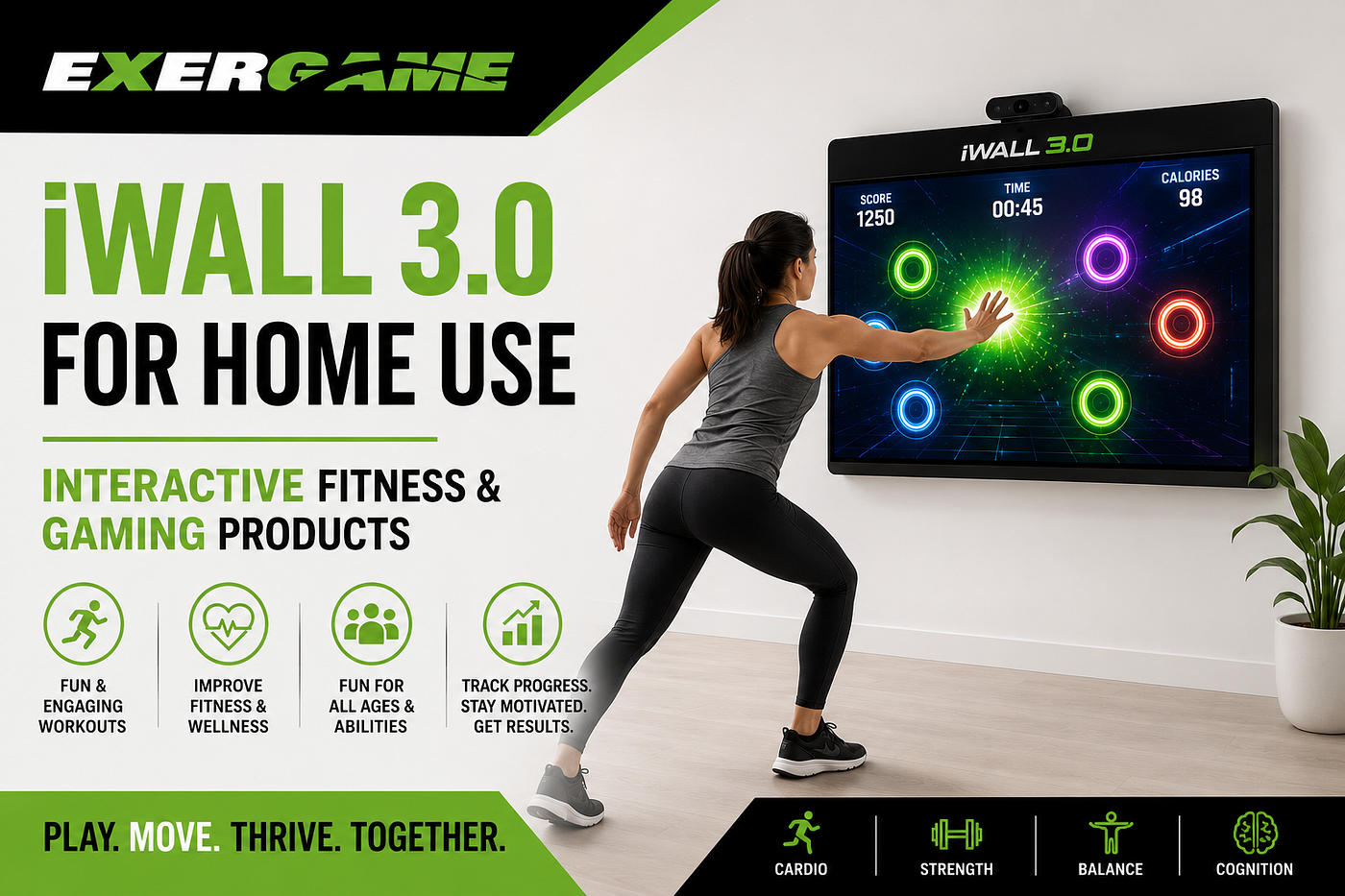
Home workouts are easier to maintain when they feel engaging, varied, and rewarding. Traditional exercise equipment can support fitness goals, but repeating the same routine may become boring over time. Interactive technology offers a different approach by combining physical movement with the motivation of digital games.
**iWall 3.0 for home use** can transform exercise into an active gaming experience. Instead of sitting with a controller, users move their entire body to complete challenges, improve scores, and progress through different activities.
As part of a wider range of interactive fitness and gaming products, iWall helps make movement more enjoyable for children, adults, and families.
What Is iWall 3.0?
iWall is an active wall game that combines digital entertainment with physical exercise. It uses movement-based gameplay, allowing users to control the on-screen action through body movements rather than a handheld controller.
Exergame Fitness categorizes iWall as both an active wall game and a strength-and-cardio product. The company explains that active wall systems are designed to use limited space while offering cardio, functional training, and multiplayer activity options.
This format can make iWall suitable for a dedicated home gym, recreation room, family activity area, or other open indoor space.
How Interactive Fitness Works
Interactive fitness combines gaming technology with exercise. Sensors, screens, software, and movement-based controls respond to what the player does in real time.
Rather than completing a fixed workout while watching a screen, the user becomes part of the game. Depending on the activity, players may need to:
- Reach in different directions
- Squat and rise
- Step from side to side
- Jump or dodge
- Balance and stabilize
- React quickly to visual cues
- Coordinate the arms and legs
Exergame describes exergaming as the combination of exercise and video gaming. Its technology can track body movement, reaction time, and progress while making physical activity more entertaining.
Why iWall 3.0 Can Work Well at Home
A home fitness system should be convenient, engaging, and flexible enough for different users. iWall 3.0 for home use offers several advantages.
It Makes Exercise Feel Like Play
The biggest challenge with many home workouts is staying motivated. A game-based experience gives users a clear goal, immediate feedback, and a reason to keep moving.
Instead of counting every repetition, players focus on completing a challenge or improving their score. Exercise becomes part of the activity rather than the only purpose.
It Supports Multiple Age Groups
Interactive games can appeal to children, teenagers, adults, and active older users. Each person can participate at an appropriate pace and choose activities that match their comfort level.
Exergame states that its interactive fitness approach is designed for different ages and activity levels.
It Uses Space Efficiently
Large exercise machines can quickly fill a home gym. Active wall games are designed to make use of wall space while preserving more of the surrounding floor area.
Exergame notes that active wall products take up limited fitness space while providing access to multiple workouts and game formats.
It Adds Variety to Home Workouts
Repeating one routine can lead to boredom. Interactive fitness can provide different games, difficulty levels, movement patterns, and challenges.
This variety may help users remain interested and build a more consistent exercise habit.
Physical Benefits of iWall Training
Movement-based gaming can support several areas of physical fitness.
Cardiovascular Endurance
Fast-paced games may require constant stepping, reaching, jumping, or directional changes. These actions can raise the heart rate and create an active cardio session.
Coordination
Players must connect visual information on the screen with accurate physical movement. This can challenge hand-eye coordination and whole-body coordination.
Balance and Stability
Reaching, changing direction, and shifting weight require body control. Some games may encourage users to stabilize the core while moving quickly.
Agility and Reaction Time
Interactive challenges often ask players to respond to visual signals within a limited time. This can support speed, decision-making, and reaction training.
Muscular Endurance
Repeated squats, lunges, reaches, and other movements can challenge the legs, shoulders, arms, and core over the course of a session.
Exergame says its interactive fitness products may support cardio, functional training, reaction, coordination, balance, and cognitive engagement, depending on the system and activity.
Cognitive Benefits of Active Gaming
Interactive workouts do not only challenge the body. They may also require concentration, memory, timing, and problem-solving.
Players may need to:
- Recognize changing visual targets
- Remember movement sequences
- Make quick decisions
- Track multiple objects
- Adjust their strategy
- Maintain attention while exercising
Exergame’s broader product range includes neuro-motor and cognitive solutions designed to train physical and mental skills together. The company describes this as dual-task training, which can involve attention, executive function, cognitive-motor speed, and agility.
Although individual results depend on the games used and the user, this combination can make interactive exercise more mentally stimulating than a repetitive routine.
Family Fitness with iWall 3.0
One advantage of iWall 3.0 for home use is its potential to bring family members together around physical activity.
Parents and children can:
- Take turns completing challenges
- Compete for higher scores
- Play cooperative games
- Create short family workout sessions
- Encourage each other to improve
- Use movement as an alternative to passive screen time
Multiplayer and shared experiences can make exercise feel more social. Exergame explains that its products are designed to create supportive and engaging fitness communities through gamification and technology.
At home, this same concept can encourage family members to be active together.
A Better Use of Screen Time
Technology is often linked with sitting, but interactive gaming changes the role of the screen. The display becomes a reason to move rather than remain inactive.
Active gaming can be particularly useful for children and teenagers who already enjoy digital entertainment. Instead of asking them to stop gaming completely, families can introduce a format that includes exercise.
This does not need to replace outdoor play, sports, or traditional workouts. It can become another option within a balanced routine.
How iWall Fits with Other Home Fitness Equipment
iWall can be used as a central workout system or combined with other equipment.
A home fitness area may also include:
- Exercise mats
- Resistance bands
- Dumbbells
- Kettlebells
- Balance tools
- A treadmill or exercise bike
- Mobility and stretching equipment
A typical session might begin with an iWall warm-up, continue with strength exercises, and finish with a lower-intensity game or mobility work.
The interactive system adds movement, entertainment, and cardio variety to equipment that may otherwise focus mainly on strength.
Other Interactive Fitness and Gaming Products
Exergame Fitness offers a broad selection of **interactive fitness and gaming products** for different spaces and users.
Its main product categories include:
- Active floor games
- Active wall games
- Dance and step systems
- Gaming bikes
- Strength and cardio products
- Interactive climbing equipment
- Neuromuscular training systems
- Neuro-motor cognitive products
Active floor games use projection or intelligent flooring to turn open areas into movement-based play spaces. Dance and step games use rhythm and visual cues. Gaming bikes connect cardio exercise with digital challenges, while interactive climbing systems add technology to climbing-based activity.
This range allows homes and facilities to choose products based on available space, age group, workout goals, and desired activity level.
Tips for Creating an iWall Home Fitness Space
A suitable setup can make the experience safer and more enjoyable.
Provide Enough Movement Room
Users need space to step, reach, squat, and move laterally. Remove furniture, sharp objects, and other obstacles from the play area.
Use Safe Flooring
A stable, non-slip surface can help users move confidently. Fitness flooring may also improve comfort during jumping and repeated footwork.
Maintain Clear Screen Visibility
The display should be easy to see from the activity area without glare or visual obstructions.
Consider Ceiling Height
Some games may involve reaching or jumping. Make sure the space offers appropriate overhead clearance.
Support Different Users
Choose suitable activities and difficulty levels for each participant. Children, beginners, and older adults may need slower or lower-impact options.
Include Warm-Ups and Breaks
Even though the experience feels like gaming, it is still exercise. Users should warm up, drink water, rest when necessary, and stop if they experience pain or dizziness.
Who May Enjoy iWall 3.0?
iWall may appeal to:
- Families seeking active indoor entertainment
- Children who enjoy video games
- Adults who find traditional cardio repetitive
- Home gym owners wanting more workout variety
- Users interested in reaction and coordination training
- People who prefer short, engaging exercise sessions
It may also be useful during poor weather when outdoor activities are limited.
Why Interactive Fitness Can Improve Consistency
The best exercise program is one that people are willing to repeat. A workout may be technically effective, but it provides little value when users quickly lose interest.
Interactive systems encourage consistency through:
- Scores
- Challenges
- Progress tracking
- Immediate feedback
- Competition
- Different game choices
- Short, achievable sessions
Exergame explains that gamified fitness can increase engagement by combining exercise with entertainment, progression, and real-time feedback.
These features can make users more interested in returning for another session.
Final Thoughts
iWall 3.0 for home use offers a different way to approach indoor exercise. By using body movement to control digital games, it can support cardio, coordination, balance, reaction time, muscular endurance, and family engagement.
It also provides an alternative to passive screen time and repetitive home workouts. Users can focus on challenges, scores, and gameplay while still completing meaningful physical activity.
As part of Exergame Fitness’s wider range of interactive fitness and gaming products, iWall reflects a growing approach to exercise that combines technology, movement, motivation, and fun. With a suitable room layout and age-appropriate activities, it can help turn a home fitness space into an engaging environment that encourages people to move more regularly.
메타데이터
- post_id
- ca4f5b7d9862
- slug
- how-iwall-3-0-brings-interactive-fitness-and-gaming-into-the-home-ca4f5b7d9862
- url
- https://medium.com/@exergame/how-iwall-3-0-brings-interactive-fitness-and-gaming-into-the-home-ca4f5b7d9862
- canonical_url
- https://medium.com/@exergame/how-iwall-3-0-brings-interactive-fitness-and-gaming-into-the-home-ca4f5b7d9862
- author_url
- https://medium.com/@exergame
- status
- ok
- fetched_at
- 2026-08-07 02:42:37