THE PRICE OF TRUTH: BALANCING INNOVATION WITH INTEGRITY IN THE REGULATION OF PREDICTION MARKETS
EXECUTIVE SUMMARY
THE PRICE OF TRUTH: BALANCING INNOVATION WITH INTEGRITY IN THE REGULATION OF PREDICTION MARKETS
EXECUTIVE SUMMARY
The United States is facing an urgent policy crisis: a multibillion-dollar prediction market industry is operating without adequate structural financial oversight. This rapid, unchecked expansion has created a volatile environment where well-capitalized speculators can easily manipulate illiquid markets, threatening the integrity of a highly accurate forecasting tool. As trading volumes surge past a billion dollars, immediate action is necessary to prevent these platforms from operating as predatory, gamified sportsbooks. Without swift intervention, the United States risks permanently losing a vital data-gathering mechanism to widespread insider trading and consumer exploitation. To address this crisis, policymakers face three divergent paths: relying on the fragmented status quo of reactive litigation, attempting to enact a sweeping legislative ban, or pursuing structural transparency reforms. This brief strongly advocates for the third option. A strict prohibition is virtually impossible to enforce against decentralized offshore networks and would merely blind regulators, while the current status quo actively subsidizes unregulated platforms through costly regulatory arbitrage. To preserve the informational value of prediction markets while mitigating their structural flaws, the Commodity Futures Trading Commission (CFTC) must formally establish a comprehensive, exchange-level compliance framework. Implementing strict position limits to neutralize outsized speculative influence, mandating insider disclosure regimes, and enforcing neutral, non-gamified interface designs will successfully transition event contracts from an exploitative model into a secure, regulated financial asset class.
RATIONALE: THE WILD WEST OF INFORMATION MARKETS
In late 2024, the global financial landscape witnessed a collision between efficient market theory and high-stakes gambling that exposed a critical vulnerability in the U.S. regulatory framework. A single trader, colloquially known as the “French Whale,” wagered over $30 million on the U.S. presidential election via the crypto-based platform Polymarket. As reported by Will Croxton for CBS News, this concentrated influx of capital allowed a single individual to significantly skew the platform’s implied probabilities, causing them to diverge sharply from traditional polling data.
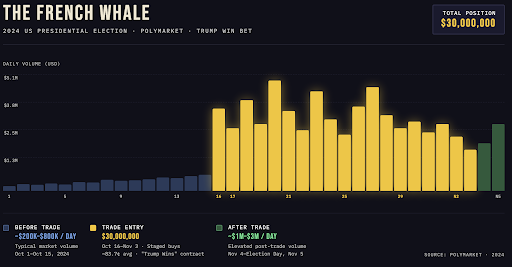
Figure 1: Thin market liquidity allows well-capitalized single actors to dramatically distort event probabilities, breaking the mechanics of price discovery. Visuals generated by Claude AI.
While the “Whale” ultimately profited when his predicted outcome materialized, the incident revealed a structural fragility in the emerging prediction market economy. As illustrated in Figure 1, these markets currently lack the depth, liquidity, and regulatory guardrails necessary to prevent well-capitalized traders from distorting prices. When a single actor can move the “price of truth” with a few aggressive trades, the market ceases to function as an information tool and risks becoming a mechanism for manipulation.
THE LEGAL TIPPING POINT
This issue is no longer theoretical; it is an urgent policy crisis because the legal floodgates have officially opened. For years, the CFTC successfully blocked the listing of political event contracts, arguing that betting on elections was “contrary to the public interest” and akin to gaming. However, that defensive wall crumbled in September 2024. Following the D.C. Circuit Court’s ruling in KalshiEx LLC v. Commodity Futures Trading Commission, federal regulators effectively lost the ability to ban election betting under their current statutory interpretation of “gaming.” By successfully arguing that political outcomes directly impact commercial realities — such as corporate tax rates or international tariffs — Kalshi demonstrated that event contracts can function as legitimate economic hedges rather than mere games of chance. Consequently, the court ruled that the CFTC could not arbitrarily block contracts simply because they “involved” election outcomes; the agency had to prove a specific violation of the Commodity Exchange Act, a much higher burden of proof that stripped the government of its preemptive regulatory shield.

Figure 2: Trading volumes on event contract platforms exploded following the D.C. Circuit Court’s ruling, demonstrating that consumer demand has vastly outpaced federal oversight. Visuals generated by Claude AI.
As a direct result of this ruling, U.S.-regulated platforms like Kalshi and unregulated offshore platforms like Polymarket are expanding rapidly. As illustrated by the massive surge in volume in Figure 2, we have entered a “Wild West” phase of financial innovation where the technology and consumer demand have vastly outpaced the rule of law. Platforms are now offering contracts on everything from Federal Reserve interest rate cuts to the outcome of geopolitical conflicts and Supreme Court decisions. The rapid proliferation of these “event contracts” presents a unique challenge to regulators who must now decide whether to treat these instruments as dangerous gambling devices or sophisticated financial derivatives.
FINANCIAL THEORY VS. MARKET REALITY
This dilemma underscores a fundamental tension between financial theory and operational reality. On one hand, the Efficient Market Hypothesis (EMH) maintains that markets, when liquid and transparent, serve as the ultimate aggregators of information. Theoretically, prediction markets should provide superior forecasts compared to pundits or polls because participants have “skin in the game.” Recent research supports this view; a 2024 study by Manish Raghavan and colleagues found that betting markets were “superior” to traditional polling in predicting political elections, particularly in capturing late-breaking shifts in voter sentiment that surveys missed.

Figure 3: Prediction markets frequently outperformed traditional polling in accuracy during the 2024 election cycle, successfully aggregating decentralized knowledge. Traditional polls have averaged ~79% accuracy across U.S. presidential elections — held back by late shifts, non-response bias, and social desirability effects. Polymarket achieved 91% accuracy in 2024, correctly calling the presidential race, Senate majority, and key swing states well before networks called them. Visuals generated by Claude AI.
As demonstrated in Figure 3, financial incentives can successfully aggregate decentralized knowledge into highly accurate forecasts. However, the current iteration of these markets suffers from severe market microstructure flaws. Unlike the deep, liquid pools of the New York Stock Exchange, prediction markets are often “thin” and illiquid, making them susceptible to volatility. Furthermore, the user experience on many of these platforms mimics the addictive mechanics of a casino — flashing lights, gamified interfaces, and push notifications — rather than the sober interface of a brokerage.
The policy problem, therefore, is not whether these markets should exist — the courts have largely settled that they will — but how to transition them from a “casino” model to a regulated “exchange” model. If left unregulated, we risk allowing a powerful forecasting tool to degrade into a vehicle for insider trading, market manipulation, and consumer exploitation. The challenge lies in crafting a regulatory framework that preserves the economic utility of price discovery while aggressively mitigating the negative externalities of gambling and manipulation.
OPTIONS AND ANALYSIS: REGULATING THE FUTURE OF FORECASTING
To address the rise of prediction markets and the regulatory vacuum left by the Kalshi ruling, policymakers face distinct paths. Each option represents a different philosophy regarding the intersection of finance and gambling, and each carries significant economic and social trade-offs.
OPTION 1: THE STATUS QUO (ENFORCEMENT VIA LITIGATION)
The current approach to regulating prediction markets can best be described as “enforcement via litigation.” Lacking a clear legislative mandate or an updated statutory definition of “event contracts,” the CFTC attempts to police the market on a case-by-case basis. In its June 2024 “Notice of Proposed Rulemaking,” the CFTC attempted to clarify its stance by proposing to explicitly define political event contracts as “gaming” that is contrary to the public interest. However, without congressional action, this rule-making authority remains subject to intense legal challenges. The agency reviews individual contract proposals from exchange operators and attempts to block those it deems dangerous, often leading to protracted legal battles. Simultaneously, state-level gaming commissions — such as the Nevada Gaming Control Board — have stepped into the void, issuing cease-and-desist orders to platforms they argue are operating as unlicensed sportsbooks.

Figure 4: The absence of federal preemption has resulted in a fragmented patchwork of state-level regulations, encouraging widespread regulatory arbitrage. Visuals generated by Claude AI.
As seen in Figure 4, the primary failure of the status quo is the creation of a “regulatory vacuum.” The ruling in KalshiEx LLC v. CFTC stripped the CFTC of its broad discretionary power to ban entire categories of contracts. By forcing the agency to litigate every new contract type individually, the courts have placed the regulator in a permanent defensive crouch. This creates a high degree of uncertainty for market operators, stifling legitimate innovation while failing to stop bad actors. Furthermore, without clear federal preemption, a patchwork of state laws is emerging where a trader in California might have legal access to a prediction market while a trader in Nevada does not. This fragmentation encourages “regulatory arbitrage,” where platforms shop for the most lenient jurisdictions or move their operations entirely offshore. Compliant U.S. platforms like Kalshi face high legal costs and delays, while unregulated offshore platforms like Polymarket — accessible to any U.S. user with a VPN — operate with impunity. This penalizes the companies trying to follow the rules while inadvertently subsidizing their unregulated competitors.
OPTION 2: THE RESTRICTIVE APPROACH (A FULL BAN ON EVENT CONTRACTS)
A second option, favored by many consumer protection advocates and financial reform groups, is a legislative “hard reset.” This would involve Congress amending the Commodity Exchange Act to explicitly categorize political and social event contracts as “gaming” rather than “financial derivatives.” Such legislation would strip these contracts of their status as financial instruments, effectively banning them from U.S. exchanges and creating a unified federal prohibition.
The strongest argument for a ban lies in the concept of “economic utility.” Critics, such as the non-profit Better Markets, argue that financial markets exist to facilitate capital allocation and risk hedging. In their August 2024 comment letter, Better Markets contended that political event contracts “offer no hedging utility” to the real economy, unlike wheat futures or interest rate swaps that serve clear commercial purposes. From this perspective, prediction markets are zero-sum gambling vehicles that allow wealthy individuals to speculate on democratic outcomes without adding any value to the broader society.

Figure 5: Modern prediction markets operate on decentralized blockchain infrastructure, making a traditional federal ban virtually impossible to enforce. Visuals generated by Claude AI.
However, the “Prohibition Problem” renders this option largely ineffective in the digital age. As Figure 5 illustrates, modern prediction markets like Polymarket operate on decentralized blockchain networks. Because these platforms operate on code rather than corporate compliance, a U.S. ban cannot physically stop the trading; it can only remove the regulated, transparent on-ramps. A ban would effectively destroy the visibility of the market, leaving the government with zero insight into who is betting or manipulating outcomes, while surrendering all control over market integrity.
OPTION 3: THE REGULATED PATH (STRUCTURAL TRANSPARENCY REFORMS)
The third option accepts the reality that prediction markets are here to stay — both legally and technologically — and focuses instead on imposing strict market structure regulations similar to those used in equities and futures markets. Rather than attempting to suppress the market entirely, this option preserves the market’s forecasting utility while mitigating consumer harm through comprehensive structural safeguards.
Strategic Considerations
As policymakers weigh these options, two overarching strategic considerations must guide the decision-making process. The first is the challenge of definition. One of the biggest hurdles to successful regulation is legally distinguishing between a “gaming” contract and a “financial” contract. In its Notice of Proposed Rulemaking, the CFTC attempted to broaden the definition of “gaming” to block political contracts. However, this broad approach risks collateral damage. Legitimate hedging markets — such as insurance products that protect companies against changes in tax policy or trade tariffs — could easily be swept up in a clumsily worded ban on “political betting.” Any new policy must draft these definitions with surgical precision to avoid stifling legitimate risk management innovation. To achieve this, policymakers should formally establish an “Economic Exposure Test.” This framework would require exchange operators to theoretically or mathematically demonstrate that an event contract allows commercial entities to hedge against quantifiable financial risks, such as supply chain disruptions or shifts in federal interest rates. By explicitly demanding proof of commercial utility, regulators can create a clear legal boundary that successfully outlaws purely gamified election betting without inadvertently suffocating legitimate corporate risk management.
The second consideration is the “Integrity of Price” argument. While critics like Better Markets argue these contracts are economically useless, the recent data from Raghavan et al. suggests they may be informationally vital. If prediction markets are indeed “superior” to traditional polling, as their study indicates, then these markets produce a positive externality: high-fidelity data. If we over-regulate or ban these markets, we lose this data source. The goal of regulation, therefore, should not be to suppress the market, but to “clean” the data — ensuring that the prices reflect distinct information signals rather than manipulation or noise.
Finally, regulators must remain cognizant of global arbitrage risks. The “balloon effect” is real: if U.S. regulations are too burdensome — for example, by requiring platforms to hold prohibitively large cash reserves or imposing onerous identity verification that slows down trading — liquidity will simply migrate back to offshore, crypto-native platforms. This would leave U.S. regulators with the worst of both worlds: a volatile, influential market that affects U.S. public perception, but with zero jurisdiction to police it. Therefore, any regulatory framework must be attractive enough to keep liquidity onshore, bringing the “Wild West” into the fold rather than fencing it out.
RECOMMENDATION: IMPLEMENTING OPTION 3
This brief strongly recommends that policymakers abandon both the reactive status quo and the pursuit of an unenforceable ban in favor of Option 3: The Regulated Path. This approach treats event contracts as a unique asset class that requires tailored safeguards to ensure integrity, transparency, and fairness.

Figure 6: A successful regulatory transition requires a cohesive, three-pronged framework targeting market microstructure, transparency, and consumer interface design. Visuals generated by Claude AI.
To execute this transition effectively, Congress should authorize the CFTC to enforce a three-pillared compliance framework, outlined in Figure 6:
1. ADDRESSING MARKET MICROSTRUCTURE: LIQUIDITY AND WHALES
The most glaring economic flaw in current prediction markets is “thin” liquidity. In prediction markets, the pools of capital are often small enough that a single “whale” can move prices dramatically. The “French Whale” incident of 2024 is the definitive case study: a single entity wagering over $30 million was able to skew the implied probability of a U.S. election outcome by significant margins. This violates the Efficient Market Hypothesis; the price did not reflect the collective wisdom of millions of diverse participants, but rather the risk appetite of one well-capitalized individual.
To fix this, a regulated path would impose strict position limits. Just as the CFTC limits how many corn futures a single speculator can hold to prevent cornering the market, regulators must cap the percentage of a prediction pool that any single wallet or entity can control. Position limits would force the “wisdom of the crowd” to overpower the “wealth of the whale,” ensuring that prices reflect broad consensus rather than concentrated leverage. Critics often argue that enforcing these limits on decentralized, blockchain-based networks like Polymarket is technologically impossible. However, the solution lies in transitioning from traditional corporate compliance to cryptographic enforcement. Regulators must mandate the use of “smart contract circuit breakers” paired with zero-knowledge (ZK) identity verification. Under this protocol, users mathematically prove their identity and wallet consolidation to a centralized regulatory oracle before interacting with the decentralized liquidity pool. If a trader attempts to exceed the statutory position limit, the smart contract simply rejects the transaction at the protocol level, making manipulation technologically impossible rather than just legally prohibited.
2. ENSURING FAIR PLAY: INSIDER TRADING AND ETHICS
A second critical failure of the current market is the absence of a clear “insider trading” framework. In corporate finance, it is illegal for a CEO to trade stock based on non-public earnings data. However, there is no direct legal equivalent for “event insiders.” Currently, nothing explicitly prevents a campaign manager from betting on their own candidate based on internal polling data, or a Supreme Court clerk from betting on a ruling before it is released. This creates an asymmetry of information that erodes public trust. If retail traders believe the game is rigged by insiders who know the outcome in advance, liquidity will dry up, and the market will fail.
A robust regulatory framework must establish a mandatory disclosure regime. Just as corporate executives must publicly report when they buy or sell shares in their own companies, large traders in prediction markets should be legally required to verify their identities. This would end the era of anonymous “mystery whales” operating in the shadows. Furthermore, the framework must explicitly ban participation by defined “event insiders” — individuals with privileged access to non-public information, such as polling firm employees or campaign strategists. By adapting these principles, regulators can ensure that market prices reflect genuine public sentiment rather than private manipulation.
3. MITIGATING THE GAMBLIFICATION OF FINANCE
Finally, regulation must address the interface of the platforms themselves. Current unregulated platforms borrow heavily from the playbook of online sportsbooks and social media. In their 2025 analysis for the Fordham Intellectual Property, Media and Entertainment Law Journal, Nizan Geslevich Packin and Sharon Rabinovitz argue that features like flashing notifications for “hot streaks” and confetti animations are designed to trigger dopamine loops rather than rational financial analysis. They warn that this “gamblification” blurs the line between a financial exchange and a slot machine, exploiting retail users who may not fully understand the risks.
A regulated path would enforce neutral design standards. Regulators could mandate that prediction market interfaces mimic the sober, utilitarian design of a brokerage account rather than a video game. By regulating the packaging of the product, the government can preserve the informational value of the contract while mitigating the predatory nature of its delivery.
CONCLUSION
The collision between rapid financial innovation and profound regulatory ambiguity has brought prediction markets to a critical crossroads. Left unchecked, the current trajectory virtually guarantees that event contracts will devolve into sophisticated gambling apparatuses, easily manipulated by well-capitalized whales and predatory interface design. However, pursuing an outright ban is a fundamentally flawed strategy. It is a twentieth-century solution doomed to fail against the realities of decentralized, twenty-first-century networks. The only viable path forward is institutionalization. By officially recognizing event contracts as a unique financial asset class and implementing strict, exchange-level safeguards such as position limits, insider disclosure regimes, and neutral design standards, the CFTC can successfully restore order to this financial frontier. Ultimately, the “price of truth” must not be dictated by the deepest pockets or the most aggressive insiders, but by the collective, transparent wisdom of a fair and liquid market. Implementing these structural reforms will ensure that prediction markets fulfill their true economic potential: serving not as a casino, but as a powerful, uncorrupted lens into the future.
References
Anthropic. Claude. AI generated chart, 2026, anthropic.com.
Better Markets. “Comment Letter on the Listing of Political Event Contracts.” Better Markets Policy Brief, 5 Aug. 2024.
Commodity Futures Trading Commission. “Notice of Proposed Rulemaking regarding Event Contracts and the Definition of Gaming.” Federal Register, vol. 89, 2024.
Croxton, Will. “How a French ‘Whale’ Made Over $80 Million on Polymarket.” CBS News / 60 Minutes, 30 Nov. 2025.
Kalshi. Event Contract Trading Volume and State Regulatory Data, 2026, kalshi.com.
KalshiEx LLC v. Commodity Futures Trading Commission. №1:23-cv-03257, D.D.C., 12 Sept. 2024.
Packin, Nizan Geslevich, and Sharon Rabinovitz. “All Bets Are On: Addiction, Prediction, Regulation, and the Future of Financial Gambling.” Fordham Intellectual Property, Media and Entertainment Law Journal, vol. 36, 2025.
Polymarket. 2024 Presidential Election Forecasting Accuracy and Volume Data, 2026, polymarket.com.
Raghavan, Manish, et al. “Are Betting Markets Better than Polling in Predicting Political Elections?” arXiv preprint, arXiv:2507.08921, 2024.
메타데이터
- post_id
- ca69761efbe2
- slug
- the-price-of-truth-balancing-innovation-with-integrity-in-the-regulation-of-prediction-markets-ca69761efbe2
- url
- https://medium.com/writ340spring2026econ/the-price-of-truth-balancing-innovation-with-integrity-in-the-regulation-of-prediction-markets-ca69761efbe2
- canonical_url
- https://medium.com/writ340spring2026econ/the-price-of-truth-balancing-innovation-with-integrity-in-the-regulation-of-prediction-markets-ca69761efbe2
- author_url
- https://medium.com/@breslavs
- status
- ok
- fetched_at
- 2026-06-15 20:49:13