A Photographic Miracle: THIS IS NOT A FIRE
My eyes saw bamboo. My camera saw fire.
A Photographic Miracle: THIS IS NOT A FIRE
My eyes saw bamboo. My camera saw fire.

▲ “Tang & Ao” finds its way from architectural positioning into photography.
Camera: Canon EOS R5 Lens: RF 24–70mm F2.8L IS USM Mode: Aperture Priority (Av) Focus: Manual Focus (MF) Location: FUFU Nara, Japan Date: April 19, 2023 · 8:39 PM
FUFU Nara is one of Kengo Kuma’s((日語:隈研吾/くまけんご) recent hotel projects. Through wood, latticework, gardens, light, and shadow, the architecture softens its own presence and allows nature to take center stage. As day slowly turns into night, what guests experience is more than a hotel stay. It is a different rhythm of life.
I stayed there for two nights, beginning April 19, 2023.
FUFU Nara | Nara, Japan April 19, 2023 | 8:39 PM
Near the lobby of FUFU Nara, in a corner by the stairs leading to the second floor, stood a lamp wrapped in countless thin strips of bamboo. It gave the space a quiet sense of warmth, yet it was something most people could easily overlook.
Driven by curiosity, I brought my camera close to the fine bamboo strands and gave it a quick sweep from top to bottom. As countless strands fell out of focus together, the collective effect produced something I never expected: the illusion of fire.
And suddenly, Tang & Ao, an idea I had been exploring through architectural positioning, found its way into photography.
Tang & Ao is an ancient Eastern way of understanding the world.
Tang speaks of what is visible. Ao speaks of what is invisible.
The bamboo is Tang. The fire is Ao.
What is visible is the bamboo. What is invisible is the fire.
What is visible is the image. What is invisible is the story.
What is visible is focus. What is invisible is blur.
What is visible is technique. What is invisible is chance.
One Photograph, One Story of Its Own

▲ Photo by CHI VAGO | April 19, 2023 · 5:33 PM | Canon EOS R5 | Restaurant Tekisui, FUFU Nara, Japan
Outside, rain was falling over Nara Park. I ordered three glasses of sake.
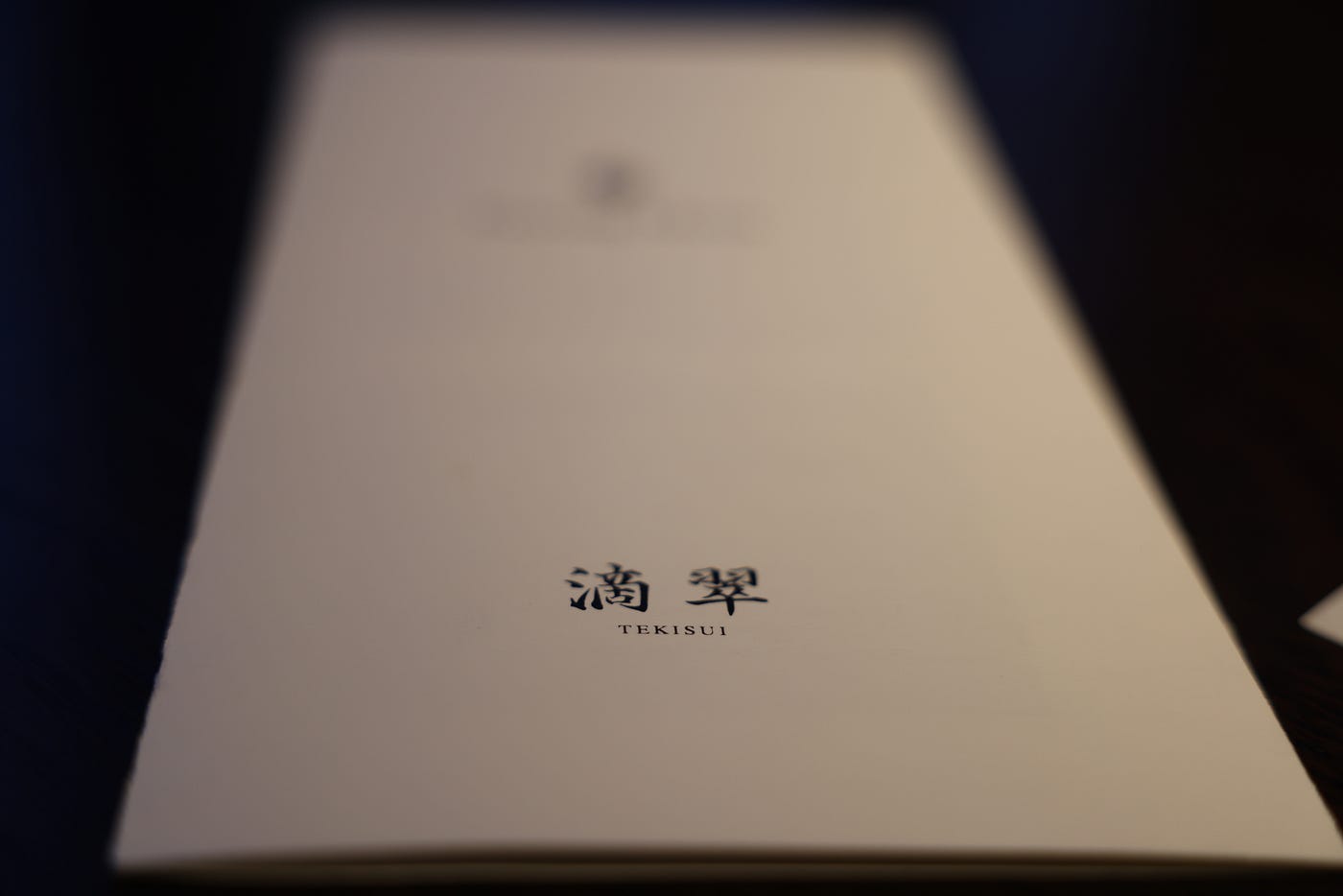
▲ Photo by CHI VAGO | April 19, 2023 · 5:23 PM | Canon EOS R5 | Restaurant Tekisui, FUFU Nara, Japan
I asked the hotel staff and even local guides, but no one could explain why the restaurant at FUFU Nara was named “Tekisui” (滴翠).

▲ Photo by CHI VAGO | April 19, 2023 · 10:07 AM | Canon EOS R5 | Tōshōdai-ji, Nara, Japan
From a Photograph to a Haiku
Later, I did some research of my own. I came to believe that the name “Tekisui” (滴翠) may have been inspired by a verse by the great haiku master Matsuo Bashō.
This verse appears in Oi no Kobumi (笈の小文), a travel journal by Bashō, and is closely connected to Tōshōdaiji (唐招提寺) in Nara.
In 1688, Bashō visited Tōshōdai-ji to pay his respects before the portrait statue of the revered Buddhist monk Ganjin. Learning the story of Ganjin, who had lived more than 900 years earlier, Bashō was deeply moved and composed this haiku:
若葉して 御目の雫ぬぐはばや With fresh leaves, I’d like to wipe the tears from your eyes.
But what was it about Ganjin’s story that moved Bashō so deeply?
Ganjin (688–763) was a revered Buddhist monk from Yangzhou, China, during the Tang dynasty. He entered monastic life at the age of fourteen, became a distinguished master of the Vinaya, and was acclaimed as “the foremost master of Jiangnan.”
At the invitation of Japanese monks, Ganjin set out for Japan to transmit the Buddhist precepts. Over the following twelve years, he made five unsuccessful attempts to cross the sea and gradually lost his sight. Yet even after becoming blind, he continued his journey. On his sixth attempt, he finally reached Japan in 753.
Despite his blindness, Ganjin later founded Tōshōdaiji in Nara and helped establish Japan’s Risshū (Vinaya) school. His contributions to Japanese Buddhism and culture were profound, and he came to be regarded as a great benefactor of Japanese culture.
Today, Tōshōdai-ji is part of UNESCO’s Historic Monuments of Ancient Nara, inscribed on the World Heritage List. The seated portrait statue of Ganjin enshrined at the temple is officially designated a National Treasure of Japan. Created in the eighth century using the hollow dry-lacquer technique, the statue dates to the Nara period.
On the morning of April 19, 2023, 1,260 years after Ganjin’s death, I visited Tōshōdai-ji in Nara.
That evening, I stayed at FUFU Nara.
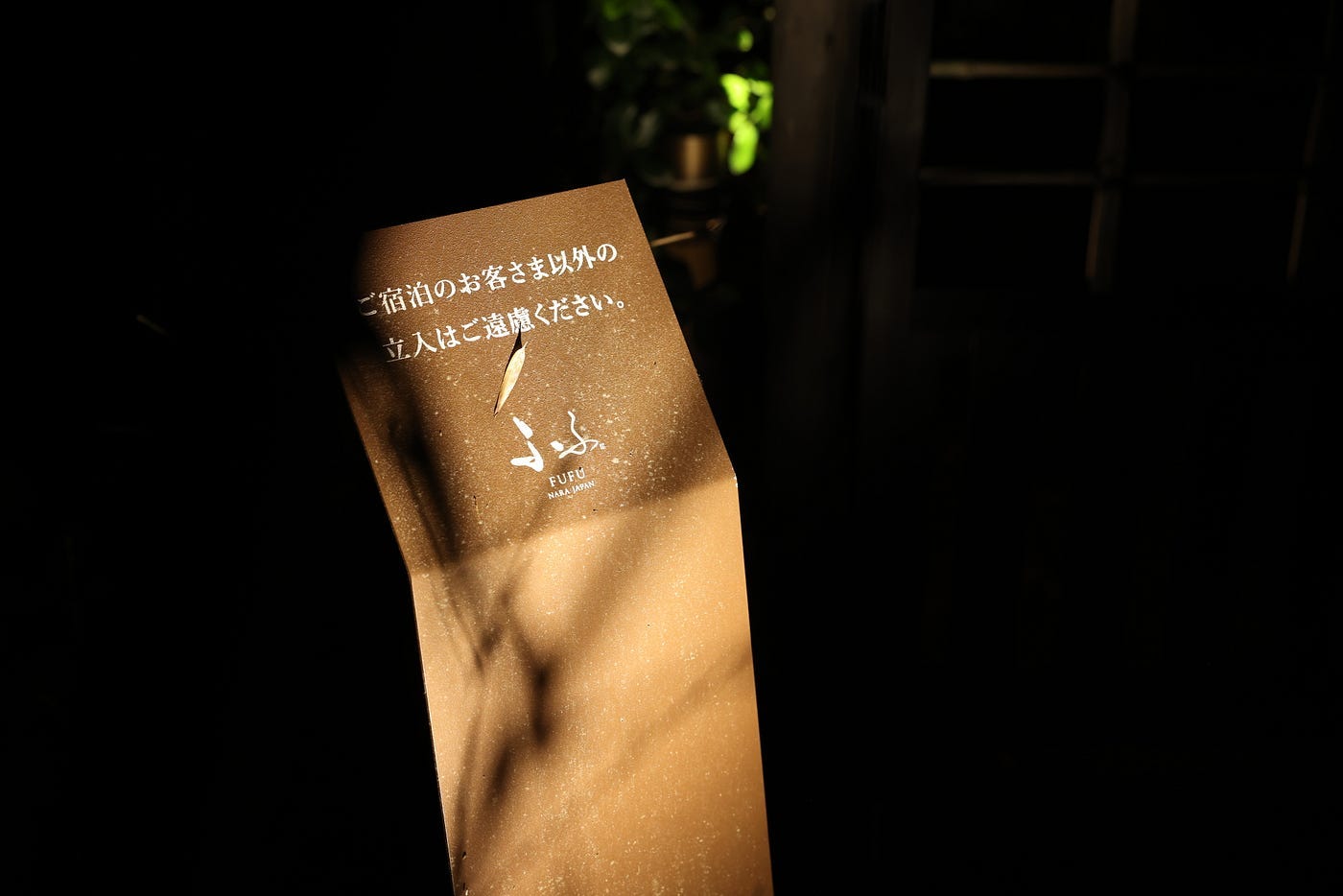
▲ Photo by CHI VAGO | April 19, 2023 · 8:17 PM | Canon EOS R5 | FUFU Nara, Japan

▲ Photo by CHI VAGO | April 19, 2023 · 8:48 PM | Canon EOS R5 | FUFU Nara, Japan
When a Scene Becomes Poetry
I have always loved the haiku of the great Japanese haiku master Matsuo Bashō (1644–1694). His words have an extraordinary sense of imagery.
One example is:
古池や 蛙飛び込む 水の音 The old pond — a frog jumps in, the sound of water.
When a scene enters the heart, it becomes poetry. Photography is much the same.

▲ “若葉して 御目の雫ぬぐはばや” | Calligraphy by CHI VAGO | “殘破體,” a self-created calligraphic style
I later wrote Bashō’s haiku 「若葉して 御目の雫ぬぐはばや」 in a calligraphic style I created, which I call “殘破體.” The work is now displayed at the reception center of 慶山明仁 in Fengyuan, Taiwan, a residential project whose landscape design was created by renowned Japanese garden designer Shunmyo Masuno.
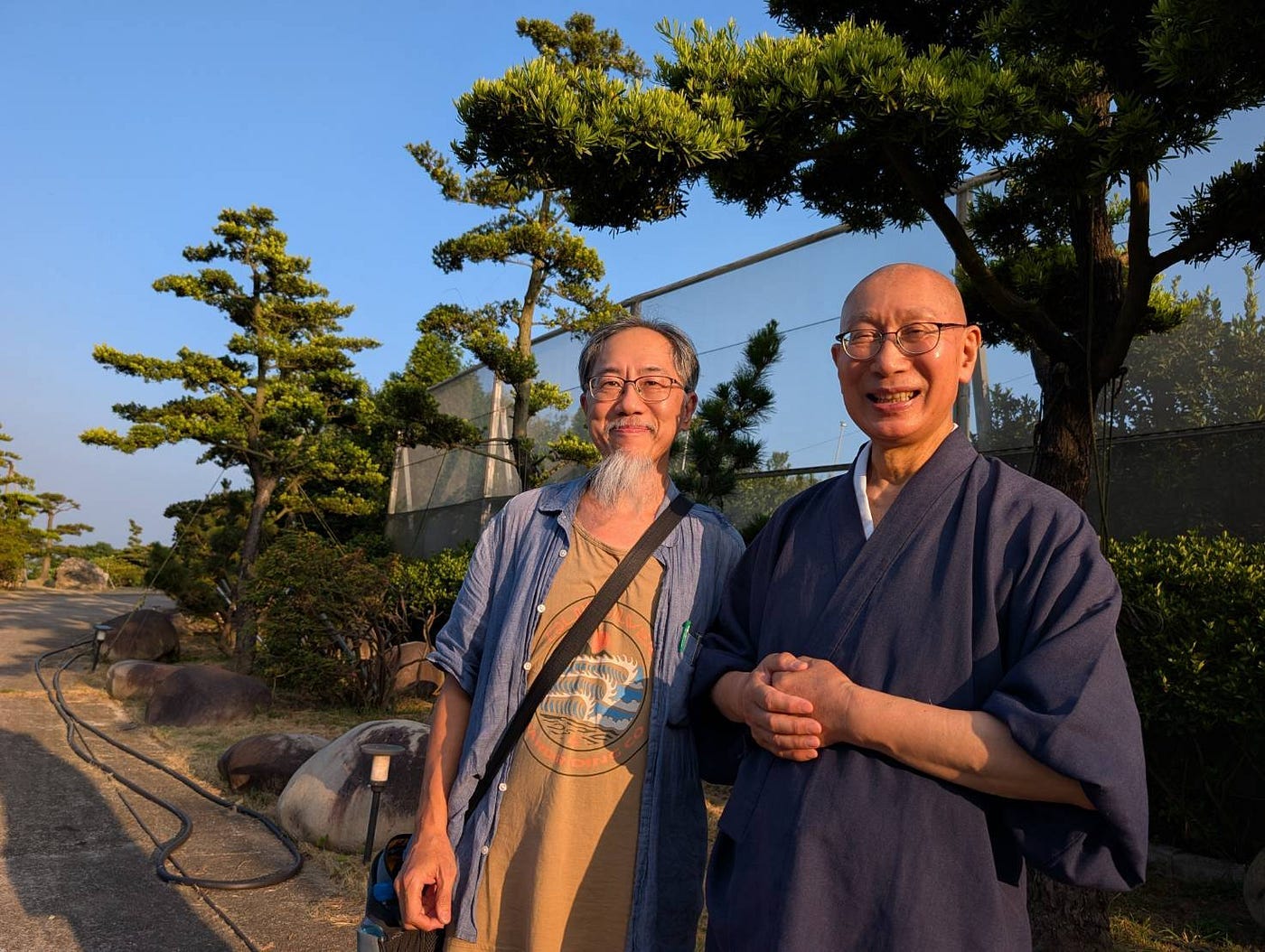
▲ June 2, 2026 | Gonglaoping, Fengyuan, Taiwan | CHI VAGO (left) with Japanese garden designer Shunmyo Masuno (right)
메타데이터
- post_id
- ca6dbf86bf78
- slug
- a-photographic-miracle-this-is-not-a-fire-ca6dbf86bf78
- url
- https://medium.com/full-frame/a-photographic-miracle-this-is-not-a-fire-ca6dbf86bf78
- canonical_url
- https://medium.com/full-frame/a-photographic-miracle-this-is-not-a-fire-ca6dbf86bf78
- author_url
- https://medium.com/@chivago2026
- status
- ok
- fetched_at
- 2026-08-29 12:07:23