Taste of Survival — Foods from the Tragic Bengal Famines
How frequent famines shaped the Bengali cuisine
Taste of Survival — Foods from the Tragic Bengal Famines
How frequent famines shaped the Bengali cuisine
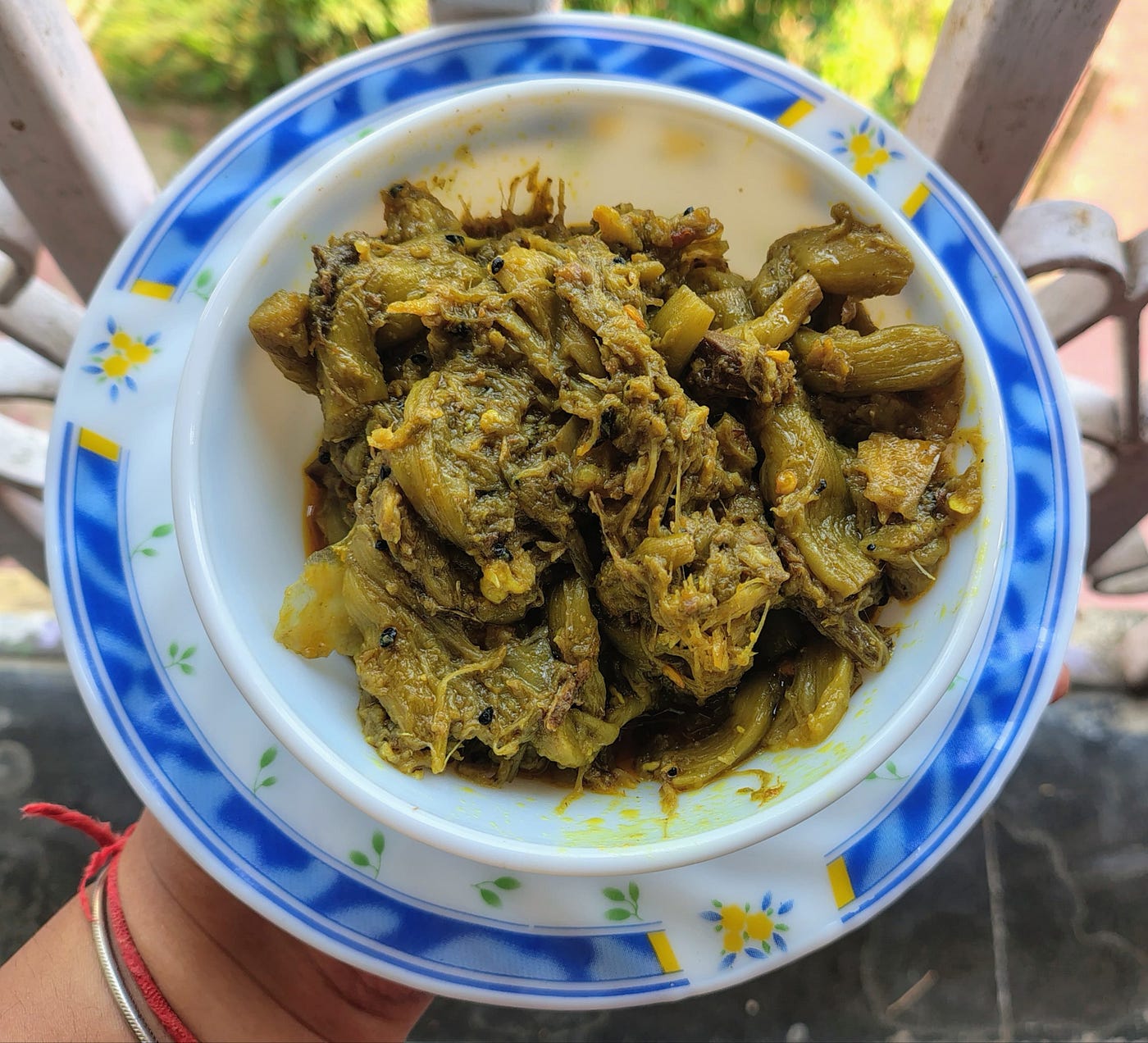
Kochu shaag (Taro leaves) prepared with Hilsa fish head, a classic Bengali delicacy. During the famine, a simpler version was prepared without any special ingredients like the fish head. Photo by the author.
Sometimes when bottle gourd is cooked in my home, my mother keeps the skin for separate stir fry. I’ve relished food from different Indian and international cuisines but never have I ever come across a dish made with some vegetable skin. Maybe I’m wrong or lack knowledge about other food.
While wondering how did we start eating vegetable skin that otherwise goes to the waste. My maternal grandmother said our community has always practiced zero wastage policy largely shaped by the frequent famines in 19th and early 20th centuries.
I guess I was in the 7th grade when I got to know about the Great Bengal Famine of 1943 and how tragic it was. Years later, now that I cook food at home, certain dishes take me back to that tragic event.
I come from a Bengali household in India and in my community, rice is the staple grain. As they say, bengalis can have rice for breakfast, lunch and dinner every single day.
It’s true, my grandparents always had rice in all their meals. Today, things might have changed mostly due to modern lifestyle. But I still know many who swear by rice, breakfast to dinner.
Now imagine, what a community that survives on rice must have gone through when massive quantities of rice were diverted from the public to feed the mouths of the soldiers of the Second World War.
As many of you might know, till 1947 India was ruled by the British. India didn’t directly participate in the Allied vs Axis war. But British India did.
The massive shortage of rice resulted in huge chaos overnight. People started hoarding and looting the grain. This sent panic waves across East India, particularly the Bengal province.
I don’t want to go deeper into the havoc but a little introduction of this tragedy is needed for you to understand how Bengali cuisine evolved.
Zero Waste before it got popular
Bengali cuisine is largely zero waste culinary magic. Since childhood I’ve seen my mother and grandmother make dishes with ingredients that otherwise would go to waste.
Among them, cauliflower stems stir fry with potatoes and eggplant is my all time favorite. Once the cauliflower is used, the stems are kept and later this delicious dish is prepared. This is a winter speciality in my house.
Next we have lau r kosha bhaja which is bottle gourd skin fry with potatoes.
Did you know?
Bottle gourd skin is an amazing source of fiber, vitamin C, and antioxidants like flavonoids and polyphenols. Making it highly nutritious.
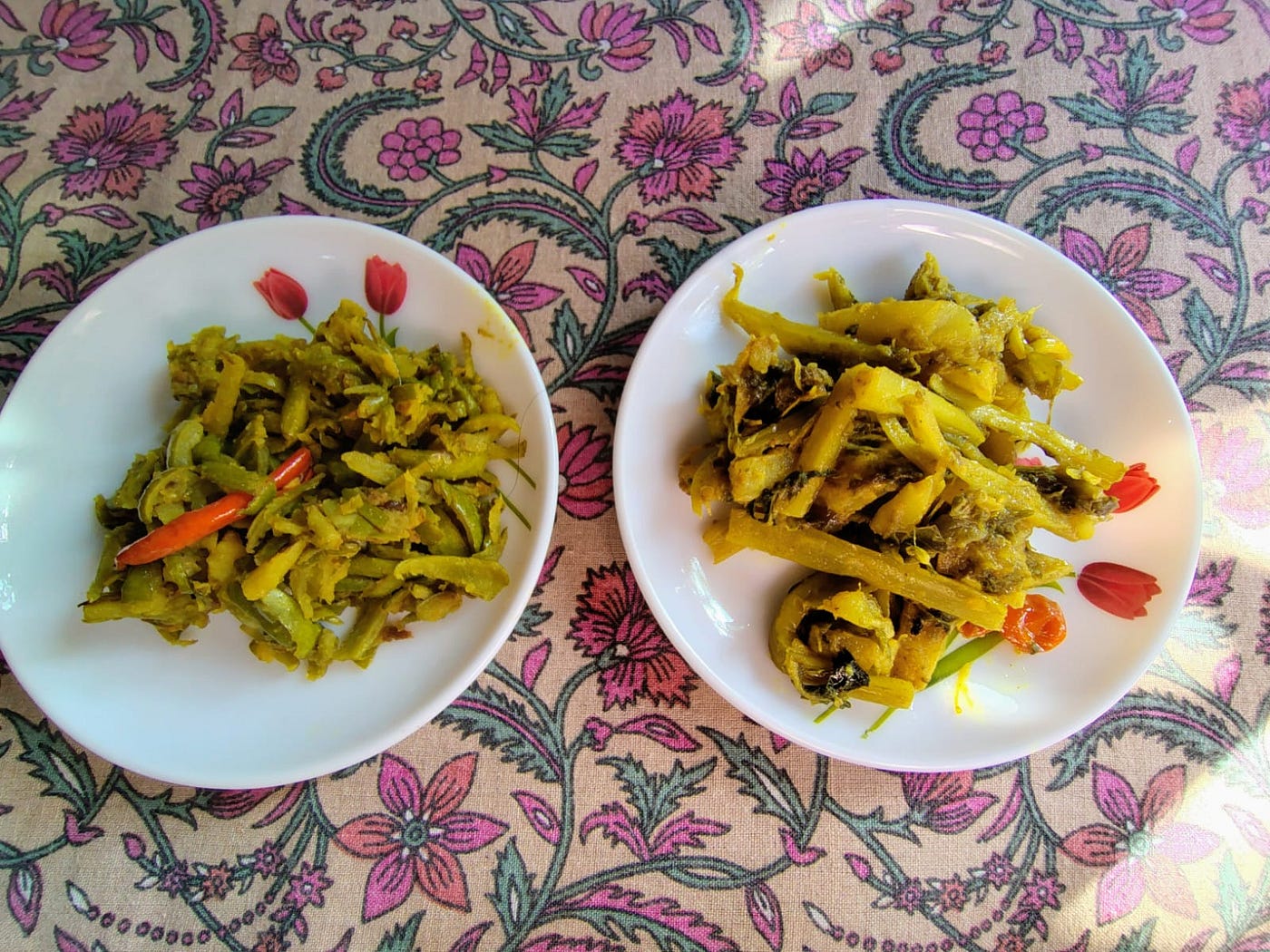
On the left we have Lau kosha bhaja (bottle gourd’s skin stir fry) and (on the right) califlower’s stems and leaves stir fry — photo by the author.
A Memory from my Grandmother’s Childhood
My Grandmother was very young in the late 1940s, but she has heard about those horrifying days from her mother. In our region, taro plants grows everywhere mostly beside roads, wetlands and open fields. During the famine, these taro plants including the roots, stems and the leaves were out of sight, people were literally surviving on these.
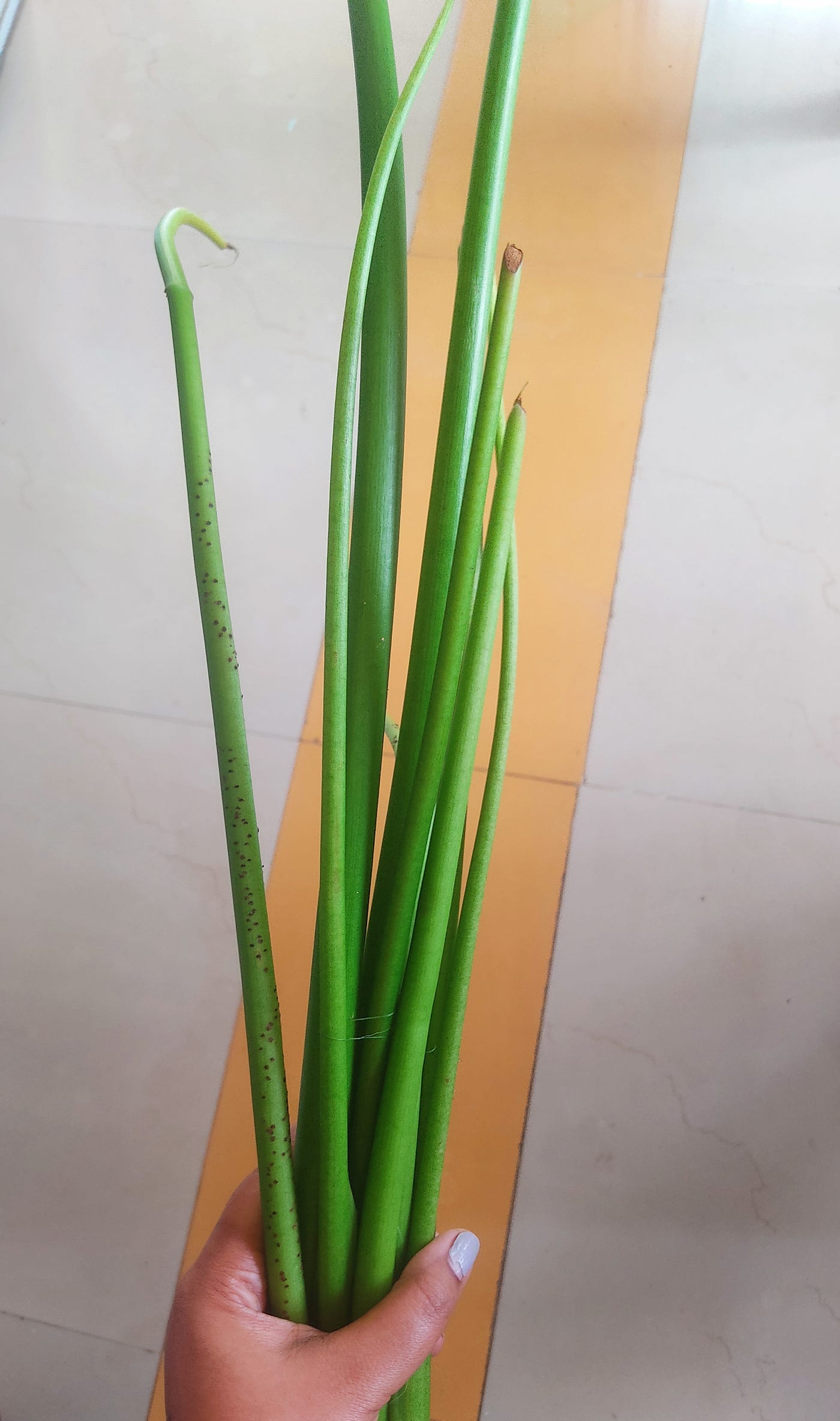
kochu (Taro) stems. Photo by the Author.
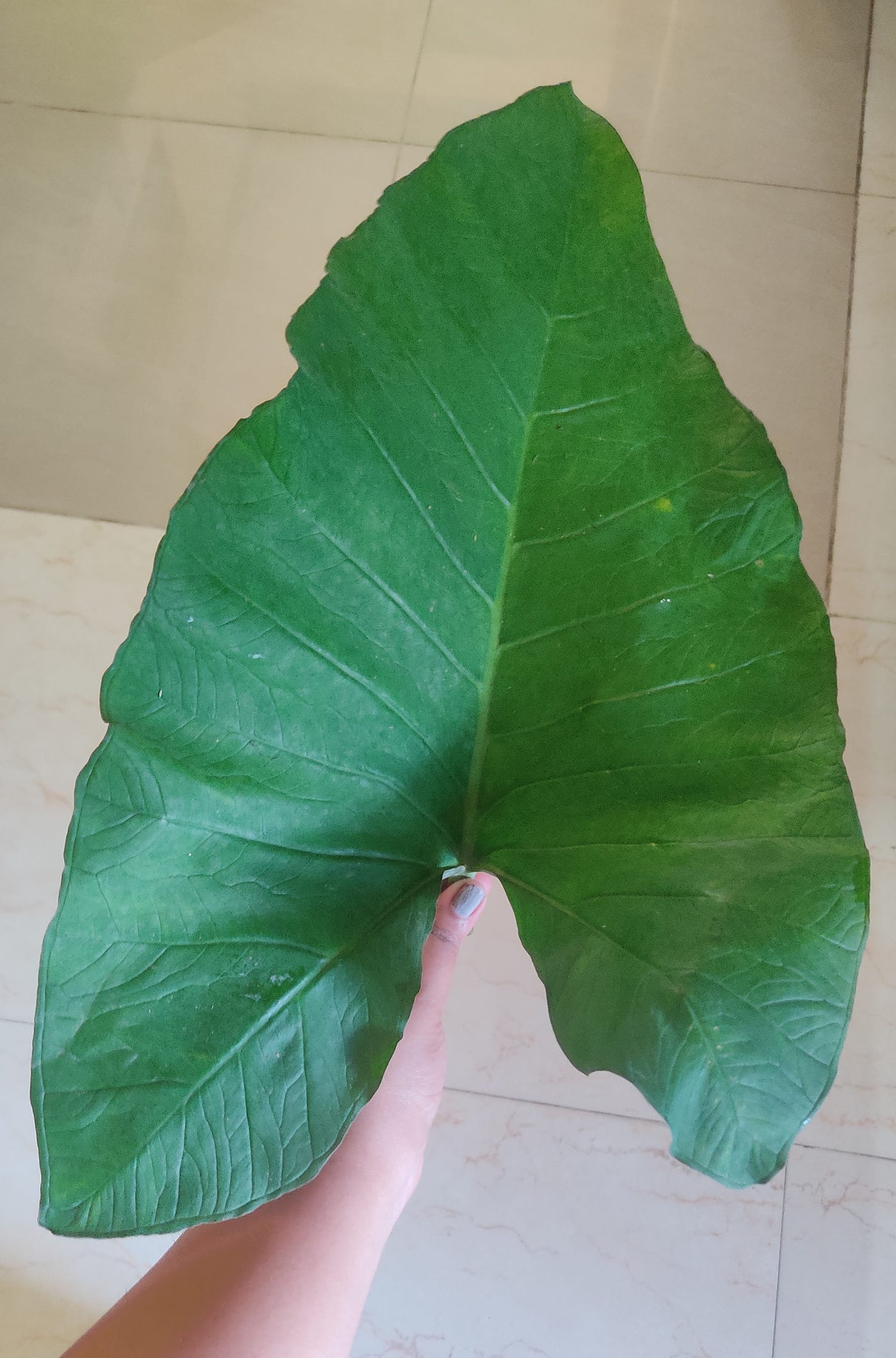
kochu pata (Taro leaf). Photo by the Author.
When rice was scarce, people would cook khichuri or plain boiled rice with lots of water so that it could feed more people. One such dish is phena bhat (boiled rice and lentil), it is different from kichuri as there’s no spices added here. This has now become a common breakfast and post-sickness recovery meal.
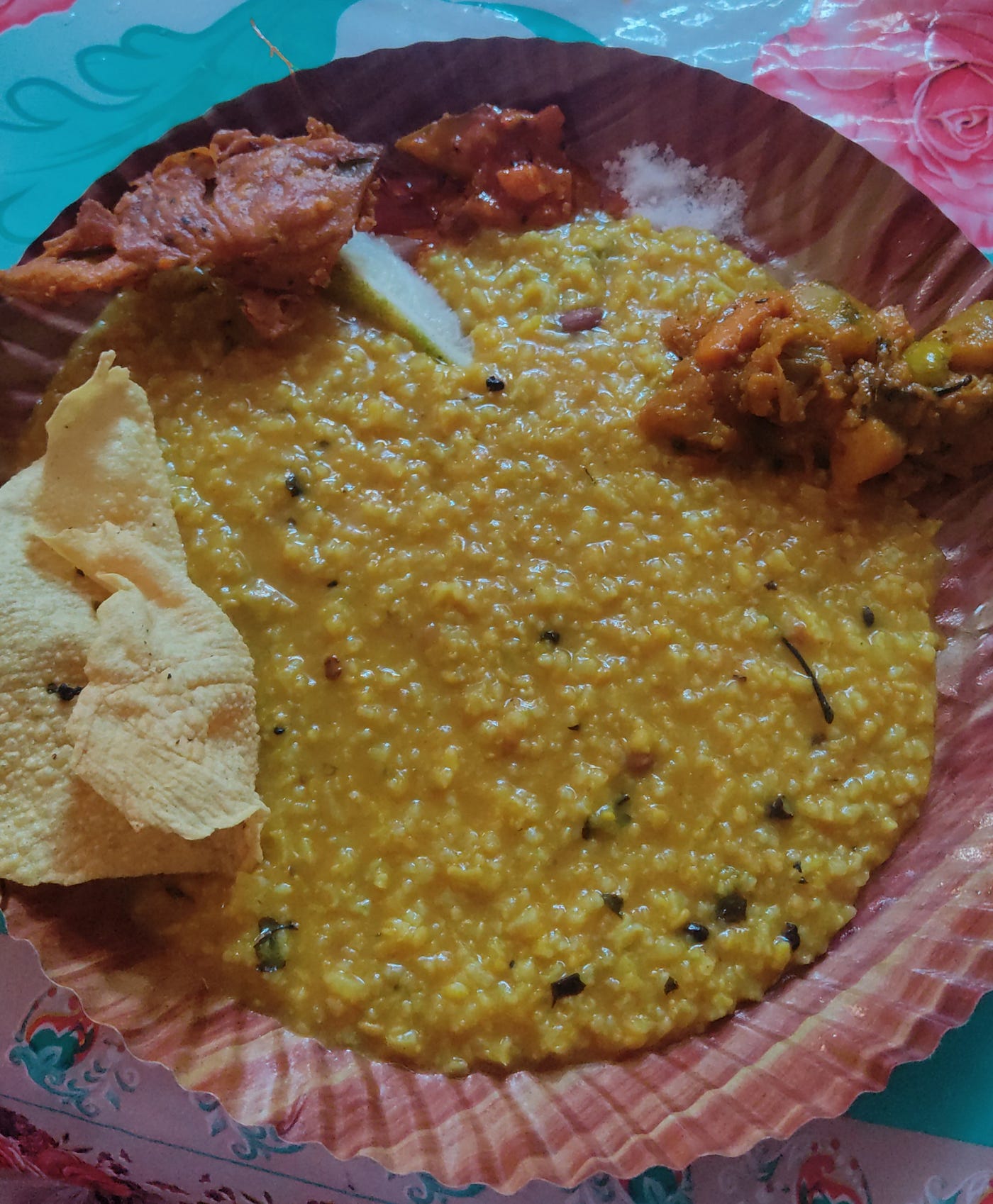
A thin watery khichuri (one pot rice and lentils) was common during famine due to shortage of rice and lentils. Today we like to eat it with multiple side dishes (papadum, pumpkin fritters, mixed vegetables, Indian pickles etc.) earlier in the days of famine, a bowl of simple khichuri was the sole meal for survival for many. Photo by the author.
My Thoughts
Bengali community has gone through a lot in the 20th century, from multiple partition to frequent famines. All these have had major influence in it’s food culture. The scarcity has taught this community to utilise even the waste and leftovers and turn it into culinary magic.
메타데이터
- post_id
- ca74b7fc86ee
- slug
- taste-of-survival-foods-from-the-tragic-bengal-famines-ca74b7fc86ee
- url
- https://medium.com/rooted-publication/taste-of-survival-foods-from-the-tragic-bengal-famines-ca74b7fc86ee
- canonical_url
- https://medium.com/rooted-publication/taste-of-survival-foods-from-the-tragic-bengal-famines-ca74b7fc86ee
- author_url
- https://medium.com/@riyadas0896
- status
- ok
- fetched_at
- 2026-07-08 18:29:56