Product Management: The Backbone of Successful Products
In today’s fast-changing business world, building a successful product is not only about creating something innovative. It is also about…
Product Management: The Backbone of Successful Products
In today’s fast-changing business world, building a successful product is not only about creating something innovative. It is also about understanding customer needs, aligning teams, planning strategies, and continuously improving the product experience. This is where Product Management plays a critical role.
Product Management acts as the bridge between business goals, customer expectations, and technical execution. A strong product management strategy helps organizations create products that solve real problems and deliver value to users.
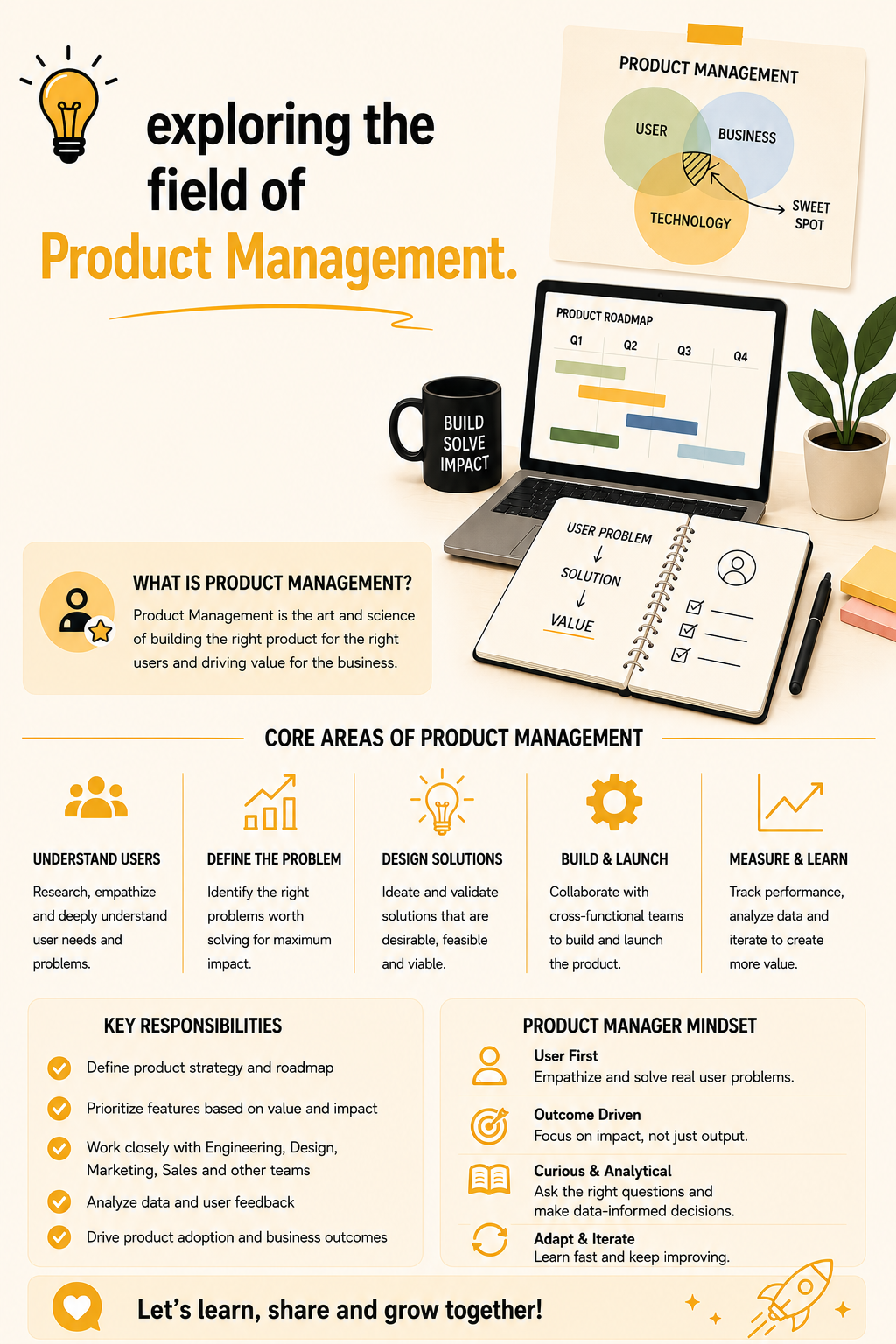
What is Product Management?
Product Management is the process of planning, developing, launching, and improving a product throughout its lifecycle. It involves coordinating with different departments such as development, marketing, sales, and design to ensure the product meets customer needs and business objectives.
A Product Manager works closely with multiple teams to:
- Understand customer pain points
- Define product goals
- Create product strategies
- Prioritize features
- Monitor market trends
- Improve customer experience
The main goal of product management is to build products that customers love while also helping the business grow.
Benefits of Product Management
Effective product management provides several advantages to organizations:
1. Drives Product Growth
A well-managed product evolves based on customer feedback and market demand, helping businesses grow steadily over time.
2. Delivers Customer Value
Product management focuses on solving customer problems and improving user satisfaction.
3. Expands Customer Base
By understanding user needs and market trends, businesses can attract and retain more customers.
4. Strengthens Market Position
Companies with strong product strategies can compete effectively and stay ahead in the market.
Understanding the Product Life Cycle
Every product goes through different stages during its journey in the market. This process is known as the Product Life Cycle.
The main stages include:
1. Introduction Stage
The product is launched into the market. Businesses focus on creating awareness and attracting early customers.
2. Growth Stage
The product starts gaining popularity, and sales begin to increase rapidly.
3. Maturity Stage
The product reaches its peak performance in the market. Competition becomes stronger, and businesses focus on customer retention.
4. Decline Stage
Sales begin to decrease due to changing trends, competition, or new technologies.
Understanding the product life cycle helps companies make better marketing and business decisions.
The 4Ps of Marketing in Product Management
Marketing plays an important role in product success. One of the most common frameworks used in product management is the 4Ps of Marketing:
- Product
- Price
- Promotion
- Place
Product
The product should solve a real customer problem and provide value.
Price
Pricing should balance customer affordability and business profitability.
Promotion
Promotion includes advertising, social media marketing, and campaigns to increase awareness.
Place
Place refers to the channels through which the product reaches customers.
The 4Ps help businesses create effective marketing strategies for product success.
Product Management Strategies
Successful products require smart strategies at every stage of the product lifecycle.
Some common product management strategies include:
Market Research
Understanding customer behavior, industry trends, and competitors.
Customer Feedback Analysis
Listening to users helps improve products and create better experiences.
Data-Driven Decisions
Using analytics and insights to make informed business decisions.
Cross-Functional Collaboration
Working with design, engineering, sales, and marketing teams for smoother product development.
Continuous Improvement
Successful products are constantly updated based on customer expectations and market changes.
Why Product Management Matters Today
In the digital era, customers expect products that are fast, user-friendly, and innovative. Companies that invest in strong product management can:
- Improve customer satisfaction
- Increase revenue
- Build better products
- Stay competitive in the market
- Create long-term business growth
Product Management is no longer limited to tech companies. Today, industries like healthcare, finance, e-commerce, education, and manufacturing also rely heavily on product management principles.
Final Thoughts
Product Management is one of the most valuable skills in modern business. It combines strategy, creativity, analytics, communication, and customer understanding into one powerful role.
Whether you are a student, aspiring Product Manager, entrepreneur, or business professional, learning product management can help you understand how successful products are built and scaled.
As technology and customer expectations continue to evolve, the demand for skilled Product Managers will only continue to grow.
“ I’m also learning and exploring the field of Product Management. If you’re someone who is interested in Product Management too, feel free to share your thoughts, experiences, or insights — I’d love to learn and grow together with this community. ”
메타데이터
- post_id
- ca7dbf0b13f9
- slug
- product-management-the-backbone-of-successful-products-ca7dbf0b13f9
- url
- https://medium.com/@girianiket468/product-management-the-backbone-of-successful-products-ca7dbf0b13f9
- canonical_url
- https://medium.com/@girianiket468/product-management-the-backbone-of-successful-products-ca7dbf0b13f9
- author_url
- https://medium.com/@girianiket468
- status
- ok
- fetched_at
- 2026-06-09 15:37:30



