I Thought It Was Frostbite — Then I Learned I Had Raynaud’s Syndrome
I will try to explain what the Raynaud’s Phenomenon is and how it has effected my life. This phenomenon may be symptomatic of more serious…
I Thought It Was Frostbite — Then I Learned I Had Raynaud’s Syndrome
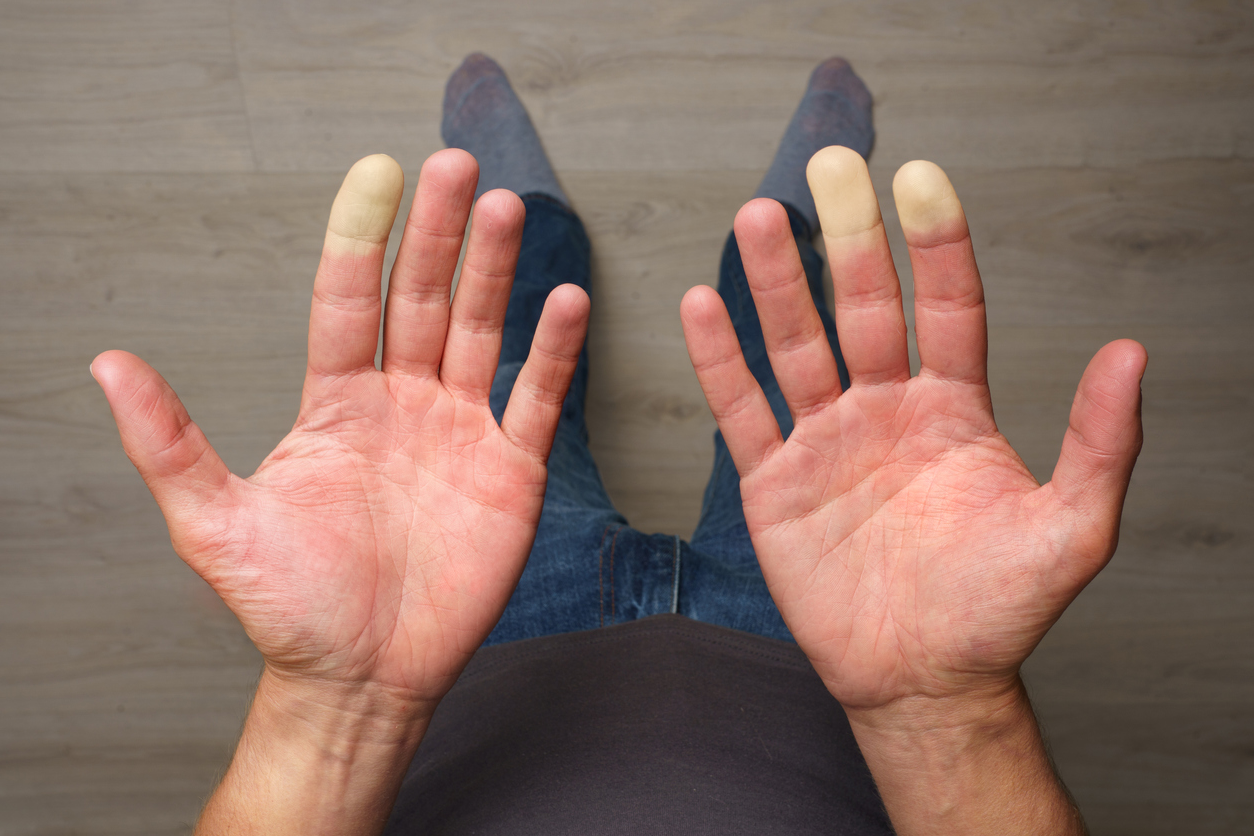
Credit: wwmedgroup
I will try to explain what the Raynaud’s Phenomenon is and how it has effected my life. This phenomenon may be symptomatic of more serious illnesses such as scleroderma and lupus (auto immune diseases) in which up to 90 percent of people with the illness can have this complication.
I am one of those 90 percent. I first noticed the color changes in my hands and feet, along with horrible itching and swelling, about 15 years after I was first diagnosed with the lupus anti-body.
At that time, I lived in a very cold region of the U.S. I loved long walks through the woods on a beautiful, snowy day. The year was 1998. It was one of the coldest winters we had seen in many years. I was totally unaware of what Raynaud’s was, and yes, scared when I first noticed many of the changes in my hands and feet. I soon made a doctor’s appointment and was told I have Raynaud’s Syndrome and that it is a direct link to lupus. That scared me even more.
I thought to myself, “Oh great, what else does lupus have in store for me?”
My hands and feet hurt so bad I had to keep them wrapped tightly with cotton badges to hold-in body heat. The best way I can explain how it feels is frost bit or severe burns. I looked pretty strange with all those cotton badges, probably like a mummy, but I still tried to return to work. Later I was able to graduate to only using gloves, sometimes several pairs at a time. Even though I was careful not to expose myself to cold temperatures again, I still had to wear the added protection for my condition to get better and reduce the pain. The healing process took several months, even with medication.
My job entailed an abundance of computer data entry. Needless to say, each key stroke was horribly painful. The tips of my fingers turned reddish blue or white and formed blood blisters (even under the nails) which often broke open and bled whenever I tried to use my fingers to type. I can still see the horror in some of my customer’s faces when they noticed my hands and fingers.
My feet and toes itched, endlessly, everyday, swelled and turned colors of bright red, white and bluish red. I would sit for hours and just scratch my feet and hands. My feet were so tender it was almost impossible to walk on them without being in horrible pain or breaking open the skin, leaving painful lesions.
I was quickly put on a medication and warned by my doctor not to expose myself to any cold temperatures. The medication I was put on is called Adalt. Adalt is a prescribed medication to control high blood pressure, but it also serves double duty in controlling Raynaud’s.
Prevention Is The Key
I can report that the medication truly does help along with staying clear of cold temperatures and reducing stress. Stress is a trigger that can often bring on a flare-up at anytime. Staying clear of cold temperatures also means many of the everyday things in our lives and not so easily avoidable. Air-conditioning, or even something as simple as pulling a frozen meal out of the freezer to prepare for dinner that night can bring on a flare-up. You don’t have to live in cold climates to bring this phenomenon on.
Smoking is an absolute no, no as it compromises the circulation system which is already not working properly. If you need to handle frozen or cold food and drinks, be sure to wear at least one pair of gloves before doing so.
I now live in a much warmer climate. However, if I allow stress to add up in my life or fail to take my medication, as I have been known to do, I still have flare-ups but not as bad as before I knew how to take care of myself. I avoid places where I cannot control how low the air-conditioning is set. This causes a problem in Florida and most work places which is another reason I am unable to return to my line of work, the office.
I was told by a doctor that I am fortunate not to be living up north any longer because he knew of a patient who ended up having amputations because of the colder climate she lived in. She had also moved to Florida, but in her case, I guess it was too late. Soon after moving south she had to have the operations and lost several fingers and toes.
What is Raynaud’s phenomenon?
Raynaud’s phenomenon is the short-term interruption of blood flow to the extremities, such as fingers and toes. It is caused by a constriction of the blood vessels. Other areas of the body can be affected, including the ears, nose, tongue and even the nipples of breastfeeding mothers. Raynaud’s phenomenon can last from just a few minutes to many hours. Around five percent of the population has the condition to some degree. It is much more common in females, with around one in five women thought to experience Raynaud’s phenomenon at least once in their lifetime. Women under the age of 25 years are more commonly affected.
Colour changes
Raynaud’s phenomenon is characterized by changes in skin colour, from pink to blue to white, as the blood supply dwindles. When blood flow returns, the skin turns from white to blue, then to red and finally back to the normal pink colour. Sometimes the extremities only exhibit two colour changes, from pink to white and back again.
Raynaud’s phenomenon can be categorized into two groups:
Primary Raynaud’s phenomenon in cold weather, the body prevents heat loss by redirecting the blood away from the extremities. In a person with Raynaud’s phenomenon, this reaction is exaggerated. The blood vessels constrict tightly, starving the tissues of blood and causing the characteristic blue or white colour change. However, circulation to the rest of the body is perfectly normal. It is unclear why the blood vessels in a person with Raynaud’s are abnormally sensitive.
Secondary Raynaud’s phenomenon — this condition can be symptomatic of various underlying autoimmune disorders, including rheumatoid arthritis, scleroderma and systemic lupus erythematosus. Around one in 20 people with Raynaud’s phenomenon have an autoimmune disease.
Other causes
Other common causes of Raynaud’s phenomenon include:
Mechanical vibration — such as using a power tool for long periods. This is known as ‘industrial white finger’. It is thought that the vibrations disrupt the nerves.
Atherosclerosis — characterized by a narrowing of the arteries, caused by a build-up of fatty plaques. Blood flow to the extremities may be hampered by this condition.
Complications of Raynaud’s phenomenon
In most cases, Raynaud’s phenomenon is harmless and doesn’t have any lasting effects. However, in severe cases the constant loss of blood flow can permanently damage the tissue. Complications include:
- Impaired healing of cuts and abrasions
- Increased susceptibility to infection
- Ulceration
- Tissue loss
- Scaring
- Gangrene
If you or someone you know thinks they may have this phenomenon, seek medical advice. Since Raynaud’s phenomenon can be a symptom of more serious underlying illnesses, including scleroderma and lupus, it is important to see your doctor for diagnosis. Usually, treating the primary illness should ease the symptoms of Raynaud’s phenomenon. In severe cases, vasodilating medications (drugs that dilate the blood vessels) may be prescribed.
Prevention tips
There is no cure for Raynaud’s phenomenon. Managing the condition requires avoiding known triggers, particularly exposure to cold temperatures.
Suggestions include:
- Avoid prolonged exposure to cold weather.
- Avoid sudden temperature changes, such as leaving a warm house on a cold day.
- Keep the extremities warm with gloves and woollen socks.
- Make sure your whole body is kept warm, using several layers of clothing to trap body heat.
- Be mindful that even holding something cold, such as a can of drink, can trigger symptoms.
- Don’t smoke cigarettes or drink caffeinated beverages, since nicotine and caffeine constrict the arteries.
- Exercise regularly.
Where to get help, your doctor.
The word lupus still brings fear to the faces of so many as I have seen, first hand. But there is life after lupus and it’s complications. I am living proof. I was first diagnosed in 1984 and 20 years later I am still here to talk about it and hopefully help others.
I advocate awareness of all auto immune diseases. Communication and the sharing of information is the key. Being informed and receiving fellowship with other suffers can help tremendously. If you have an autoimmune disorder, and, especially if you have been newly diagnoised, consider joining many of the great on-line support groups available. Support groups are essential in living and coping with any chronic illnesss. I have provided a link to one of the many support groups I belong to. Consider joining us and open up a new world of understanding for you and your family and friends.
메타데이터
- post_id
- ca86057b6c01
- slug
- i-thought-it-was-frostbite-then-i-learned-i-had-raynauds-syndrome-ca86057b6c01
- url
- https://medium.com/the-way-we-live/i-thought-it-was-frostbite-then-i-learned-i-had-raynauds-syndrome-ca86057b6c01
- canonical_url
- https://medium.com/the-way-we-live/i-thought-it-was-frostbite-then-i-learned-i-had-raynauds-syndrome-ca86057b6c01
- author_url
- https://medium.com/@aamilMS
- status
- ok
- fetched_at
- 2026-06-25 07:00:49
