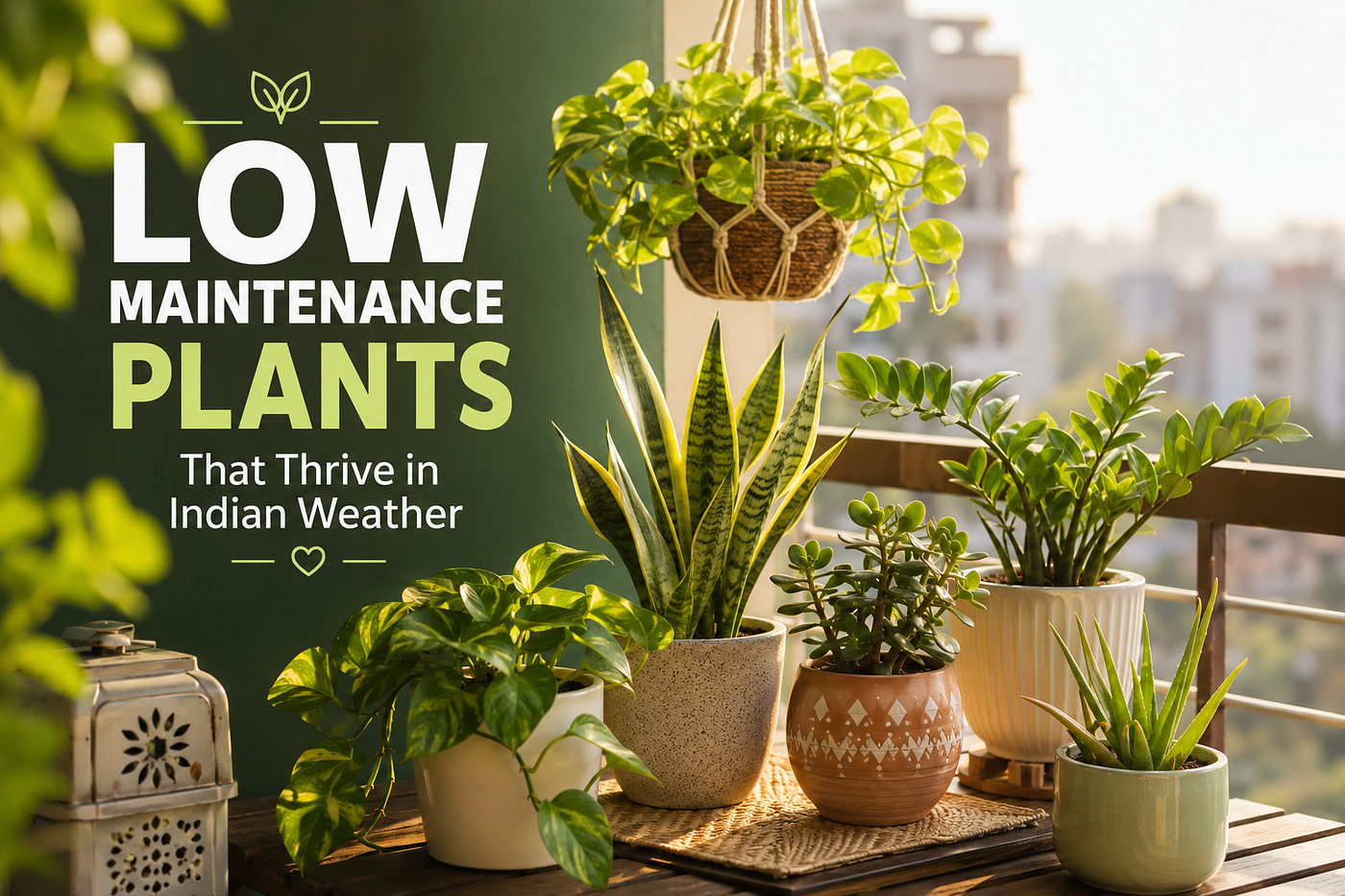
Low-Maintenance Plants That Thrive in Indian Weather
You don’t need a green thumb — just the right plants for your city, your balcony, and your busy life.
Low-Maintenance Plants That Thrive in Indian Weather
You don’t need a green thumb — just the right plants for your city, your balcony, and your busy life.
You know that plant you bought during 2 a.m. Instagram scroll, convinced it would fix your entire personality? Yeah. It’s dead now. Or dying slowly on your windowsill, judging you every time you walk past.
Here’s the thing nobody tells beginners: it’s usually not you. It’s the plant.
Half the “aesthetic” plants flooding your feed are bred for cool, humid climates that have nothing to do with a Jaipur summer or a Mumbai monsoon. You don’t need more willpower or a mythical green thumb. You need **low maintenance plants** that are actually built for Indian weather — plants that shrug off 42°C afternoons, survive three weeks of forgotten watering, and still look like they belong in a coffee-table magazine.
This guide is for anyone who wants a home full of greenery without turning it into a second job — apartment dwellers, hostel students, first-time plant parents, and busy professionals who just want something alive that doesn’t need a PhD in botany to keep alive. Let’s get into it.
Why Low-Maintenance Plants Are Perfect for Indian Homes
India is not exactly a gentle climate. It’s extremes, back to back, all year:
- Brutal summers that can hit 45°C in places like Rajasthan and Delhi, frying anything delicate
- Monsoon humidity that either makes plants explode with growth or rot their roots overnight
- Short, mild winters in most regions that barely give plants a break
- Apartment living with limited natural light, small balconies, and zero garden space
- Packed schedules — between work, college, commutes, and everything else, remembering to water a fussy fern just isn’t happening
At the same time, more Indians than ever are getting into home gardening. Balconies are turning into mini jungles, WFH desks now have a pothos trailing off the shelf, and “plant parent” has become an actual identity on social media.
There’s a real reason for that beyond aesthetics, too. Studies on indoor greenery consistently link having plants around to lower stress and better mood — something anyone who’s sat next to a healthy plant during a rough week already knows in their gut. A windowsill of green does more for your headspace than another productivity app ever will.
The solution isn’t trying harder. It’s choosing **easy-care plants** that are already wired to handle what Indian weather throws at them.

Top Low-Maintenance Plants for Indian Weather
Here’s your shortlist — plants that have proven themselves in real Indian homes, not just in perfectly climate-controlled nurseries.
1. Snake Plant (Sansevieria trifasciata)
Practically indestructible. Thrives on neglect, tolerates low light, and is one of the best **low light indoor plants** for bedrooms and offices.
- Sunlight: Bright indirect to low light
- Watering: Every 2–3 weeks; let soil dry out fully
- Location: Indoor, corners, bathrooms
- Difficulty: Beginner
- Benefits: Air-purifying, releases oxygen at night
- Common mistake: Overwatering — this is the #1 killer
- Quick tip: When in doubt, don’t water it.
2. ZZ Plant (Zamioculcas zamiifolia)
The plant equivalent of a low-effort friend who’s always reliable. Glossy leaves, near-zero demands.
- Sunlight: Low to bright indirect light
- Watering: Once every 2–3 weeks
- Location: Indoor, offices, dim hallways
- Difficulty: Beginner
- Benefits: Tolerates AC rooms and neglect equally well
- Common mistake: Watering on a schedule instead of checking soil
- Quick tip: Wipe the leaves occasionally — they hold dust like magnets
3. Aloe Vera
A drought tolerant plant and a functional one — snap off a leaf for sunburn relief after a beach trip gone wrong.
- Sunlight: Full sun to bright indirect
- Watering: Every 2–3 weeks, more in peak summer
- Location: Balcony, windowsill
- Difficulty: Beginner
- Benefits: Medicinal gel, hardy in heat
- Common mistake: Using regular garden soil instead of a well-draining mix
- Quick tip: Terracotta pots help excess water escape faster
4. Money Plant (Epipremnum aureum, often sold locally as Money Plant)
The unofficial national plant of every Indian household. Grows in soil or water, forgives almost everything.
- Sunlight: Low to bright indirect
- Watering: Weekly, or just top up if grown in a water bottle
- Location: Indoor, hanging baskets, office desks
- Difficulty: Beginner
- Benefits: Fast-growing, great for beginners who want quick wins
- Common mistake: Letting it sit in stagnant, unchanged water for weeks
- Quick tip: Change water every 7–10 days if grown hydroponically
5. Areca Palm (Dypsis lutescens)
One of the best tall indoor plants for filling empty living room corners with a tropical, resort-y vibe.
- Sunlight: Bright indirect light
- Watering: Twice a week in summer, weekly in winter
- Location: Indoor near windows, covered balconies
- Difficulty: Intermediate
- Benefits: Natural humidifier, strong air purifier
- Common mistake: Placing it in direct harsh afternoon sun, which scorches leaves
- Quick tip: Mist occasionally during dry AC months
6. Spider Plant (Chlorophytum comosum)
Fast, forgiving, and it literally makes baby plants you can propagate for free.
- Sunlight: Bright indirect light
- Watering: Weekly
- Location: Indoor, hanging pots
- Difficulty: Beginner
- Benefits: Pet-friendly, non-toxic, air-purifying
- Common mistake: Overwatering causes root rot faster than underwatering
- Quick tip: Brown tips usually mean tap water fluoride — try filtered water
7. Jade Plant (Crassula ovata)
A chunky little succulent that’s practically a houseplant heirloom — many families pass down cuttings for generations.
- Sunlight: Bright light, some direct sun
- Watering: Every 2 weeks
- Location: Windowsill, balcony
- Difficulty: Beginner
- Benefits: Compact, great for small spaces
- Common mistake: Using heavy, water-retentive soil
- Quick tip: Mix regular potting soil with sand for better drainage
8. Peace Lily (Spathiphyllum)
One of the few flowering plants that still counts as low-effort, and it dramatically droops when thirsty — free built-in reminder.
- Sunlight: Low to medium indirect light
- Watering: Weekly, when leaves start drooping slightly
- Location: Indoor, low-light rooms
- Difficulty: Beginner
- Benefits: Excellent air purifier, blooms indoors
- Common mistake: Placing near direct sun, which burns the leaves
- Quick tip: It tells you exactly when it’s thirsty — just watch the leaves
9. Rubber Plant (Ficus elastica)
Big, glossy, statement-making — and surprisingly chill about being ignored.
- Sunlight: Bright indirect light
- Watering: Weekly, less in winter
- Location: Indoor, near bright windows
- Difficulty: Beginner to intermediate
- Benefits: Air purification, dramatic visual impact
- Common mistake: Frequent repotting — it actually likes being slightly root-bound
- Quick tip: Dust the broad leaves monthly so they can photosynthesize properly
10. Tulsi (Ocimum tenuiflorum)
Culturally rooted, genuinely useful, and thrives specifically because it evolved for Indian conditions.
- Sunlight: Full sun
- Watering: Daily in summer, alternate days otherwise
- Location: Balcony, courtyard, outdoor
- Difficulty: Beginner
- Benefits: Medicinal, aromatic, culturally significant
- Common mistake: Underwatering during peak summer heat
- Quick tip: Pinch flower buds regularly to keep leaves fresh and bushy
11. Pothos (Epipremnum aureum varieties)
Technically the same species family as money plant, but the variegated types deserve their own spotlight for sheer visual range.
- Sunlight: Low to bright indirect
- Watering: Weekly
- Location: Indoor, shelves, hanging
- Difficulty: Beginner
- Benefits: Fastest-growing trailing vine, endlessly propagatable
- Common mistake: Not trimming, leading to leggy, sparse vines
- Quick tip: Trim regularly and root cuttings in water for free new plants
12. Agave
A sculptural, architectural **drought tolerant plant** that basically thrives on being forgotten.
- Sunlight: Full sun
- Watering: Every 3–4 weeks
- Location: Outdoor, garden beds, large planters
- Difficulty: Beginner
- Benefits: Striking structural look, extremely heat-tolerant
- Common mistake: Overwatering in monsoon without drainage
- Quick tip: Elevate the pot slightly so excess monsoon rain drains out fast
13. Bougainvillea
The bright, papery-flowered climber you see spilling over compound walls across the country — because it genuinely loves Indian heat.
- Sunlight: Full sun
- Watering: Weekly, less once established
- Location: Outdoor, gardens, terraces, gates
- Difficulty: Beginner
- Benefits: Vibrant color, thrives in poor soil, drought-hardy once mature
- Common mistake: Overfeeding with nitrogen-heavy fertilizer, which kills blooms in favor of leaves
- Quick tip: Slight stress (less water, less fertilizer) actually triggers more flowering
14. Hibiscus
A classic Indian garden flower that rewards very little effort with big, bold blooms.
- Sunlight: Full sun to partial shade
- Watering: 2–3 times a week
- Location: Outdoor, garden, large pots
- Difficulty: Beginner
- Benefits: Continuous flowering in warm months, pollinator-friendly
- Common mistake: Letting pots dry out completely for days, which stresses buds off
- Quick tip: Feed lightly every 3–4 weeks during flowering season
15. Succulents (assorted varieties)
The entire succulent family deserves a mention as a category of **easy-care plants** perfect for sunny windowsills and desks.
- Sunlight: Bright light, some direct sun
- Watering: Every 2–3 weeks
- Location: Indoor windowsills, balconies
- Difficulty: Beginner
- Benefits: Compact, decorative, huge variety
- Common mistake: Grouping thirsty and drought-loving varieties in the same pot
- Quick tip: Always use a cactus/succulent soil mix, never regular potting soil
16. Cactus
The ultimate low-water plant for people who travel often or simply forget things exist.
- Sunlight: Full sun
- Watering: Once a month, even less in winter
- Location: Indoor bright spots, outdoor
- Difficulty: Beginner
- Benefits: Near-zero maintenance, striking shapes
- Common mistake: Watering out of guilt rather than actual need
- Quick tip: If it looks fine, leave it alone — that’s the whole strategy
17. Bamboo Palm (Chamaedorea seifrizii)
A softer, fuller alternative to the areca palm that handles low light better.
- Sunlight: Low to medium indirect light
- Watering: Weekly
- Location: Indoor, shaded corners
- Difficulty: Beginner to intermediate
- Benefits: Air-purifying, pet-friendly, humidity-loving
- Common mistake: Letting the soil dry out completely for too long
- Quick tip: Keep away from direct AC vents, which dry it out fast
18. Syngonium (Arrowhead Plant)
An underrated trailing plant with arrow-shaped leaves that adapts to almost any indoor spot.
- Sunlight: Low to bright indirect light
- Watering: Weekly
- Location: Indoor, shelves, hanging pots
- Difficulty: Beginner
- Benefits: Fast grower, wide range of leaf colors and patterns
- Common mistake: Keeping it in a pot with no drainage hole
- Quick tip: Rotate the pot occasionally so growth doesn’t lean toward the light
19. Philodendron
A jungle-vibe plant family that’s remarkably tolerant of the erratic watering habits of a busy household.
- Sunlight: Low to bright indirect light
- Watering: Weekly
- Location: Indoor, shelves, climbing poles
- Difficulty: Beginner
- Benefits: Lush look, tolerates missed waterings well
- Common mistake: Overcrowding roots in too small a pot for too long
- Quick tip: Repot once a year into a slightly bigger container
20. Curry Leaf Plant (Murraya koenigii)
Not just decorative — genuinely useful in the kitchen, and it thrives in exactly the heat that stresses out imported varieties.
- Sunlight: Full sun to partial shade
- Watering: 2–3 times a week
- Location: Balcony, kitchen garden, outdoor
- Difficulty: Beginner to intermediate
- Benefits: Fresh curry leaves on demand, fragrant, culturally useful
- Common mistake: Overwatering in clay-heavy soil without drainage
- Quick tip: Add sand or perlite to improve drainage in heavier soils
Indoor vs Outdoor Plants: What Actually Suits Your Space
Not every plant belongs where you put it — this is where most beginners go wrong.
Best for apartments with limited light: Snake plant, ZZ plant, pothos, peace lily, philodendron, syngonium — all solid low light indoor plants that don’t sulk in dim corners.
Best for sunny balconies: Aloe vera, jade plant, succulents, cactus, curry leaf plant, hibiscus.
Best for open gardens or terraces: Bougainvillea, hibiscus, agave, tulsi — plants that want full sun and don’t mind a little wind and rain.
Best tall indoor plants for filling empty corners: Areca palm, rubber plant, bamboo palm — instant visual height without needing a garden.
Best indoor plants for total beginners: Money plant, pothos, ZZ plant, snake plant. If you’re nervous about killing something, start here.
If your home barely sees direct sun, don’t fight it — lean into a shade-tolerant lineup instead of forcing a sun-loving plant to survive in a corner it hates.

Drought-Tolerant Plants: Your Summer Survival Squad
Indian summers are not gentle, and your plant choices should reflect that reality rather than fight it.
Solid drought tolerant plants for peak heat:
- Aloe vera
- Agave
- Succulents
- Cactus
- Jade plant
- Snake plant
Summer survival tips:
- Water early morning or late evening, never at midday when it evaporates instantly
- Group pots together — they create shared humidity and shade each other’s soil
- Mulch outdoor pots with dry leaves or pebbles to slow water loss
- Move sensitive indoor plants away from direct window heat during the harshest afternoon hours
- Terracotta pots breathe better than plastic but dry out faster, so adjust watering accordingly
One-line truth: the plants that survive Indian summers aren’t the fussy ones — they’re the ones that evolved to expect a fight.

Beginner Plant Care Guide
A few fundamentals fix almost every plant problem you’ll ever run into.
Watering mistakes: Overwatering kills more houseplants than underwatering, full stop. Always check soil moisture with a finger before watering — if the top inch is still damp, wait.
Soil selection: Regular garden mitti holds too much water for most pot-grown plants. Mix in coco peat, perlite, or sand for drainage depending on the plant type.
Fertilizer basics: Feed most houseplants once a month during the growing season (spring to early monsoon) and skip it entirely in winter when growth slows down.
Choosing garden planters: Always prioritize drainage holes over looks. A gorgeous pot with no drainage is a slow-motion root-rot machine.
Sunlight requirements: Match the plant to the light you actually have, not the light you wish you had. Observe your space for a day before buying.
Pest prevention: Wipe leaves regularly, inspect undersides weekly, and isolate any new plant for a few days before placing it near others.
Seasonal care: Reduce watering in winter, increase (carefully) in summer, and watch for fungal issues during monsoon humidity spikes.
Repotting: Most plants need repotting only every 1–2 years — roots peeking out of drainage holes are your cue.

Trending Home Gardening Ideas Worth Trying
Indoor herb garden: Basil, mint, and coriander do genuinely well on a sunny kitchen windowsill and pay you back in actual meals.
Indoor hydroponic garden: Soil-free kits are having a real moment — lower mess, faster growth, and surprisingly beginner-friendly once you get the hang of nutrient dosing.
Balcony gardening: Vertical railing planters and stackable pots turn even a tiny balcony into a proper green corner.
Vertical gardening: Wall-mounted planters and hanging systems are a smart move if floor space is basically zero.
Sustainable gardening: Composting kitchen scraps for potting soil is easier than it sounds and cuts down on buying fertilizer.
Minimalist plant décor: A few well-chosen large plants often look more intentional than a dozen tiny scattered ones.

Are Artificial Plants Worth It?
Let’s be honest about this one instead of pretending real is always better.
Where artificial outdoor plants make sense:
- Extremely low-light balconies where nothing real survives
- High-rise terraces with harsh wind that shreds real foliage
- Rental spaces where you can’t commit to long-term care
- Areas that need to look consistently green with zero upkeep, like a reception space
Where fake outdoor plants fall short:
- They don’t purify air or offer any mental health benefit
- Cheap versions fade and look plasticky within a year of sun exposure
- They can’t be part of an actual gardening hobby or learning process
Bottom line: artificial plants are a smart filler for genuinely impossible spots, not a permanent substitute for real greenery everywhere else. Use them strategically, not as a shortcut for everything.

Evergreen Lawn Care Tips
If you’ve got an actual lawn patch, not just pots, here’s how to keep it consistently green through Indian seasons.
- Watering schedule: Deep watering 2–3 times a week beats a light daily sprinkle, which only wets the surface
- Fertilizing: Feed with a balanced NPK fertilizer at the start of summer and again post-monsoon
- Mowing: Never cut more than a third of the grass height at once — scalping stresses the roots
- Weed control: Hand-pull weeds early before they seed; it’s tedious but saves you from a full-blown invasion later
- Monsoon care: Ensure proper drainage to avoid waterlogging and fungal patches
- Winter care: Reduce mowing frequency and watering as growth naturally slows
Consistent evergreen lawn care is really about small, regular effort rather than occasional heroic weekend gardening sessions.
Common Plant Care Mistakes (And How to Fix Them)
- Overwatering “just to be safe” — check soil first, always
- Using pots with no drainage holes — drill one or switch pots
- Ignoring light requirements — observe your space before buying
- Repotting too often — most plants prefer being slightly snug
- Fertilizing dormant plants — skip feeding in winter
- Placing all plants in direct afternoon sun — many prefer indirect light
- Not checking for pests early — weekly inspection saves whole plants
- Using the wrong soil mix — match soil to plant type
- Panic-watering droopy leaves — droop can also mean overwatering, check first
- Buying plants unsuited to your climate — prioritize India-hardy species
- Skipping quarantine for new plants — isolate before placing near others
- Misting succulents and cacti — they hate the extra moisture
- Moving plants around constantly — most prefer a stable spot
- Trimming too aggressively at once — prune gradually, not all at once
- Giving up after one plant dies — every plant parent kills something eventually
FAQs
1. What are the easiest low maintenance plants for Indian beginners? Snake plant, ZZ plant, money plant, and pothos are the most forgiving choices — they tolerate irregular watering, low light, and general beginner mistakes without much drama.
2. Which plants survive Indian summer heat the best? Drought-tolerant options like aloe vera, agave, succulents, cactus, and jade plants handle high temperatures with minimal watering.
3. Can low-maintenance plants survive in apartments with little sunlight? Yes. Low light indoor plants like snake plant, ZZ plant, peace lily, and philodendron are specifically suited to dim indoor corners.
4. How often should I water low-maintenance indoor plants? Most thrive on a check-before-you-water approach — generally every 1–3 weeks depending on the species, season, and pot size, rather than a fixed daily schedule.
5. Are artificial plants a good alternative to real plants in India? They work well for extremely low-light or high-wind spots where real plants struggle, but they don’t offer the air-purifying or mental health benefits of real greenery.
6. What’s the best soil for low-maintenance houseplants in India? A well-draining mix of potting soil, coco peat, and perlite or sand works for most easy-care plants, preventing waterlogging during humid months.
7. How do I start an indoor herb garden with minimal effort? Begin with hardy herbs like mint, tulsi, or curry leaf on a sunny windowsill, and water only when the top soil feels dry.
8. Do low-maintenance plants still need fertilizer? Yes, but sparingly — once a month during the active growing season is enough for most easy-care plants, with little to none needed in winter.
Conclusion
Growing plants in India doesn’t have to be difficult. With the right **low maintenance plants**, anyone can build a greener, healthier home — no green thumb, no gardening degree, no daily fuss required.
You don’t need twenty plants on day one. Start with one. A snake plant on your desk, a money plant in a water bottle, a pot of tulsi on the balcony ledge. Watch it survive your first few weeks of uncertainty. Then get another.
That’s genuinely how every plant parent starts — not with expertise, but with one plant that refused to die and gave them the confidence to try the next one.
Your turn: which low-maintenance plant has survived the most neglect in your home? Drop it in the comments — we’re building a list.
메타데이터
- post_id
- cab2aa3aa600
- slug
- low-maintenance-plants-that-thrive-in-indian-weather-cab2aa3aa600
- url
- https://medium.com/@purnimadqot/low-maintenance-plants-that-thrive-in-indian-weather-cab2aa3aa600
- canonical_url
- https://medium.com/@purnimadqot/low-maintenance-plants-that-thrive-in-indian-weather-cab2aa3aa600
- author_url
- https://medium.com/@purnimadqot
- status
- ok
- fetched_at
- 2026-08-02 00:23:54