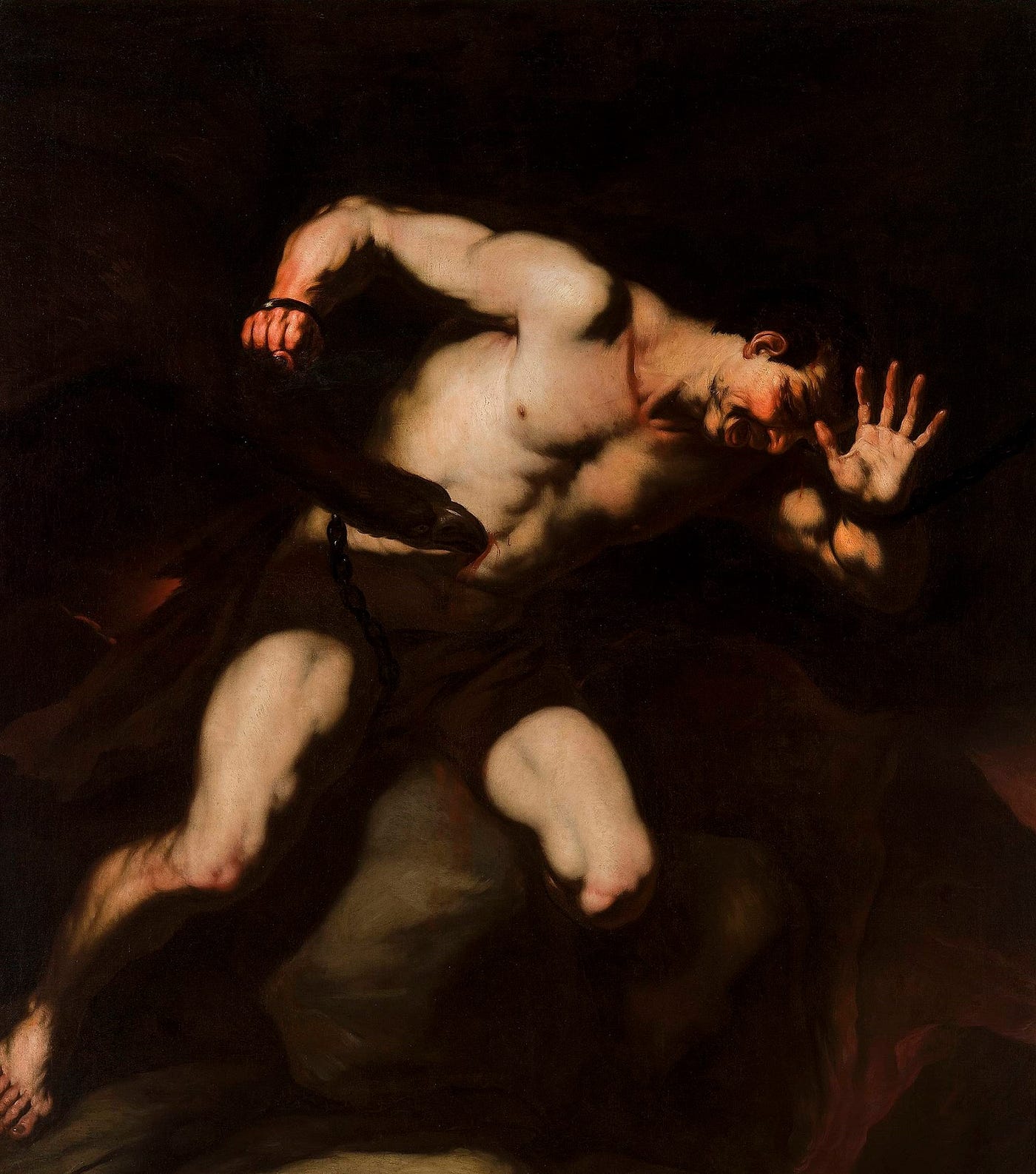
Robert Johnson, Delta Poet
Songwriting and the art of silence
Robert Johnson, Delta Poet
Songwriting and the art of silence
Some song lyrics belong to the house of poetry. For me that means they live and thrive on the page, separated (though not exactly divorced) from the singer, the instruments, the melody and harmony, and all the other aural components of music. At their poetic best, song lyrics use poetic devices like metaphor, ambiguity, indirection, abstraction, imagery, and layered meaning. Yes, I do believe *a-wop-bop-a-loo-bop-a-lop-bop-bop* is poetry, too, but only in the broadest and least formal meaning of the word.
Music and poetry were married in classical times, and it is inevitable that they still have connubial ties. Sappho sang her lyrics as she strummed a lyre, the medieval poet-troubadours roved the countryside with lutes and tambourines, Bob Dylan transfixed the culture with his lyrics, guitar, and harmonica, and the best of the hip-hop artists ratatat with rhythm and rhyme on their mic’s. Rhyme and rhythm are the shared pillars of all music and poetry.
I have been listening to and playing the blues on guitar my entire adult life. The depth of feeling in the music reminds me of poetry, even when the lyrics are not particularly sophisticated or carefully crafted.
Sometimes, though, a blues lyric takes flight into the realm of poetry. Consider the words to “Love in Vain” by the great Delta bluesman Robert Johnson. (Yes, the song the Rolling Stones covered.) These lyrics can be read through a poetic lens.
The music is haunting: the steady thump on the low E string, the delicate fingerpicking on the higher notes, and Johnson’s sorrowful voice. But the lyrics are the foundation for this song’s world of heartbreak. They are strong enough poetically to live outside the music.
Johnson was an artist. The beauty of Art is that it dwells everywhere, including in the soul of an itinerant musician in the deep American South during America’s Great Depression. Johnson had no training in poetry, nor was he trying to write it. The poetry in his lyrics had to have happened intuitively, brought forward by his sense for the right words and images, and then marrying these to the music. Like Sappho and those troubadours.
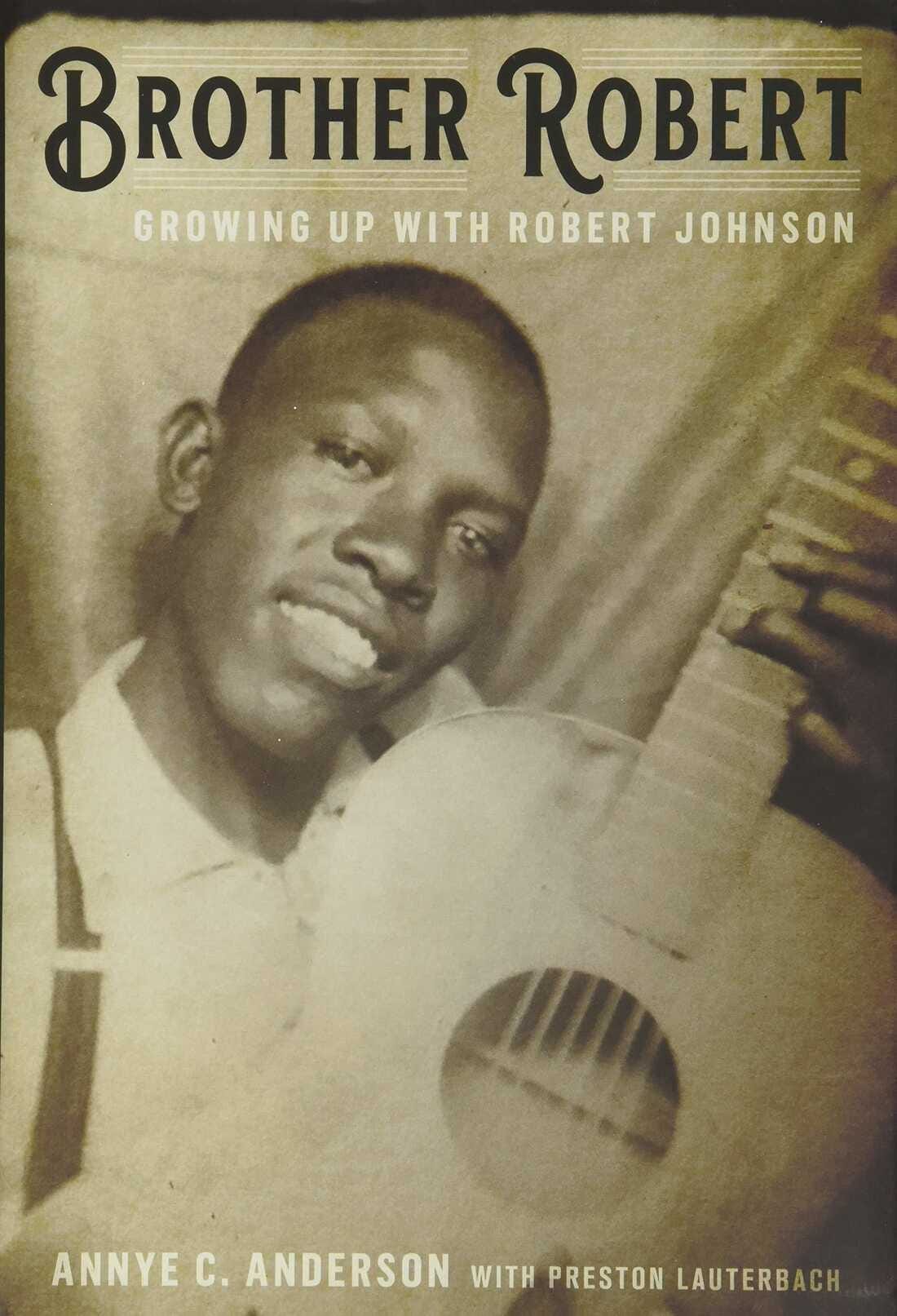
3rd known photo of Johnson according to his stepsister Annye Anderson in her 2020 memoir
Love in vain
Here’s the song on the page. (Note that the repetition of the first two lines of each stanza is the norm in blues structure and essential to the music. Johnson was writing a blues song, not a poem.)
Love in Vain
I followed her to the station With her suitcase in my hand And I followed her to the station With her suitcase in my hand It’s hard to tell , it’s hard to tell
when all your love’s in vain. (All my love’s in vain)
When the train rolled up to the station I looked her in the eye When the train rolled up to the station I looked her in the eye I was lonesome, I felt so lonesome And I could not help but cry. (All my love’s in vain.)
When the train, it left the station With two lights on behind When the train, it left the station With two lights on behind The blue light was my baby And the red light was my mind. All my love’s in vain.
The lyrics achieve their emotive power about heartbreak not only in what is said but in what is not said and not explained, in the narrative gaps, in its use of metonymy (a small part of a thing representing the whole), and in the strange metaphor at the end. In its elliptical approach to story telling, the lyrics are simply poetic.
The art of the unspoken
Poetry is like a block of prose chiseled into elegant form. The finished product is as much about the words rejected or removed as those selected. We think of poetry as starting with a blank page and then adding words. Think of it, just for the moment, the other way around.
The poet has a powerful experience or a deep insight and is moved to write about it in verse. An entire lexicon is available to bring the thoughts to life in words. Like a sculptor cutting into a block of marble, the poet chooses one word by whittling away all the others. Chiseling language or stone creates a negative space surrounding the work.
Poets chip away at their block of words and images until a poem emerges with all its meanings and penumbra. Poetry and sculpture can be considered not only by what they include but also by their negative spaces, silences, and boundaries, by what has been carved out, by what they exclude.
I should mention that I come to Robert Johnson primarily as a musician and not as a poetry enthusiast.¹ In the handful of his recordings from the late 1930’s, the first thing I hear is the voice, often sad, lonesome, haunted, but other times playful and bawdy.
To my mind, all blues starts with the personality and tonal qualities of the vocalist. Then there are the instruments. Johnson’s guitar work is like a Robert Frost poem: it may seem simple at first but in fact goes deep. Even in a song as simple as “Love in Vain,” the guitar work is hard to properly duplicate because it is so soulful, so insistent, from its delicate “turnaround” opening to the complex fingerpicking and steady thumbed rhythm throughout the song.²
But it’s the poetic lyrics I want to focus on here. I think they do what good poetry does. Johnson uses silence strategically, choosing a detail in a scenario and letting that detail stand in for a world of unsaid things. The lyrics use metaphor, indirection, elision. “Show, don’t tell” is the mantra of poetry workshops, but Johnson does both. He shows and tells.
Metrically, the song is in trimeter (three strong syllables per line), and it has an A-A-B rhyme scheme.
The song is a short narrative poem: a man recalls walking to the train station with his girlfriend. She is leaving him. In the first verse, he “followed her to the station.” He doesn’t “walk” or “drive” her to the station. He follows her there. You can visualize her walking ahead of him on the road, she knows where she is going, and all he can do is follow.
She, not he, is in control. Her suitcase is in his hand. Why? It’s up to us to fill in the blank. There is only one suitcase — hers. He’s not going with her. Carrying her suitcase is, perhaps, his last move. It’s the most frequent trope in the blues: “baby, please don’t go.”
In the stanza’s second half, the story line pauses and the singer enters a brief painful self-dialogue: “it’s hard to tell when all your love’s in vain,” he reflects, and he provides the answer himself: yes, “all my love’s in vain.” The subtle switch from “all your love” to “all my love” signals the two voices inside. The “you” says “it’s hard to tell,” and the “me” says “not so hard” and confirms the “you”s worst fears.
In the second verse, the train arrives, and he looks her in the eye. That’s all we are told. Does she look back? Does he say anything? Does she? The song doesn’t say. He looks her in the eye and then is overwhelmed by sadness. What is he looking for? We aren’t told, but surely he is looking for an answer. “I looked her in the eye” is a metonymic device that stands in for all the other gestures and exchanges between two lovers who are about to leave each other, probably forever.
What other choices might Johnson have made to explain the poignant moment? As the songwriter, he could have retained his rhythm and told us “I took her gentle hand,” “I said oh please don’t go,” “I got down on one knee.” Or Johnson could have told us what she did, like “she looked down at her shoes” or “she said I have to go” or “Robert, oh, please don’t.”
But Johnson went minimal and opted against any detail except “I looked her in the eye.” Not her two anatomical “eyes.” The “eye” strikes me as a metaphor for the soul. And the “look” into her eye is a metonymic proxy for the entirety of his pleading and his despair.
In the final verse, our forlorn speaker watches the train leave the station, and he sees “two lights on behind.” Those are the only narrative facts. And the song ends with a mystifying last line: “The blue light was my baby, and the red light was my mind.”
Those two lights have always captivated and left me in the beautiful state of uncertainty that my favorite poems leave me in. What does it mean? Why blue and red? To my mind, trains and train tracks are associated with green and red lights. So Johnson’s departing train is at variance with my expectation, and I find it unsettling.
What is that blue light? The blue light was my baby, the song says. So maybe my baby is my blues, and the blue light is my ache, my longing, my broken heart. And the red light? My mind, the song says, my confused mind, besieged by the color of passion, blood, angst.
These two lights are the “objective correlative” in poetry, which I recently discussed in an earlier post. That is, the poet chooses an image on which to hang deep emotional stirrings that are more artfully expressed indirectly. T. S. Eliot’s character Prufrock could have said, “I am feeling very insecure at this soirée.” But, meh. Far better for him to say, “Shall I part my hair behind? Do I dare to eat a peach?” These trite social proprieties are a correlate to the gnawing social anxieties the narrator is experiencing.
Robert Johnson mixes the direct and the indirect. Yes, he directly tells us he is lonesome. But he intimates far more when he places himself at the station and watches the discordant blue and red lights vanish into the distance. One light is his tears, the other his turmoil. One his sad heart, the other his troubled mind, both broken in their own ways.
It is a beautifully poetic way to express his despair, to show his torn-up, divided self. He “told” us he was so lonesome he had to cry, and then he “showed” us in a metaphorical image of sadness (“blue light”) and emotional turbulence (“red light”).
The suitcase, the look in the eye, the two lights on behind. Poetry.
Another songwriter: Gillian Welch
Look at these poetic song lyrics by the singer-songwriter Gillian Welch:
Oh me oh my oh Look at Miss Ohio She’s a-running around with her rag-top down She says I wanna do right but not right now
Gonna drive to Atlanta And live out this fantasy Running around with the rag-top down Yeah I wanna do right but not right now
Had your arm around her shoulder A regimental soldier And mama starts pushing that wedding gown Yeah you wanna do right but not right now
I know all about it So you don’t have to shout it I’m gonna straighten it out somehow Yeah I wanna do right but not right now

Welch with her musical collaborator David Rawlings
With the sparest number of brushstrokes, this song paints an entire story if you look closely. But as with many a great poem, you (the reader/listener) have to work your own imagination to fill in the empty spaces. And there are many ways to interpret the song. Mine is only one.
The lyrics use the vernacular, not unlike what you’d see in the mid-Western poetry of Carl Sandburg or the black dialect of Paul Laurence Dunbar. That tells us something right away about the characters we are about to meet: local, rural, unsophisticated perhaps.
There’s a chorus (“oh me oh my oh”) that opens the song (the chorus is repeated two more times but I’ve removed the repeated lyrics for purposes of discussion). The chorus sets the scene: look at pretty, young Miss Ohio, driving around in her car, that great American metaphor for sexuality, with the rag-top down. She’s showing herself off, she’s exposed, she’s free, young, having a good time now, maybe looking for the party, for the boys. She wants to do right, but not now. Later.
And there are three verses. Each builds upon the one before it.
In verse 1, the narrative voice — the “I” in the last line — is the girl, planning to light out for Atlanta to live out a fantasy. What fantasy? We have to imagine it, we have to fill in the gap with our own ideas of what a young woman in rural America might wish to do. Note the wonderful off-balance rhyme of “Atlanta” and “fantasy” which works perfectly the way Welch sings it.
Verse 2 sees a shift in the narrative perspective, just as modern and Modernist poems do. An unidentified speaker is now addressing a young man who apparently wooed Miss Ohio, successfully. The “arm around her shoulder” is a poetic way of referring to the relationship as a whole. It is indirect, almost euphemistic. It shows us without telling us. The phrase “a regimental soldier” is not attached to an object. Does it refer to the young man (he has enlisted, perhaps) or describe to the way he put his arm around her shoulder (stiffly, like an awkward teenager)? And “Mama” — whether his or hers, we’re not told, or maybe “Mama” here is a metaphor for society in general — “starts pushing that wedding gown.” Why? He’s a young man, and he, too, wants to do right but not right now.
In verse 3, we reach the moment of crisis. Who is speaking? It could be the girl again, but I think the perspective shifts a third time, now to the young man. We first heard from the young woman, then from an unknown but adult narrator (maybe Mama), and now the young man. It’s as if everyone is in dialogue. What is he saying? “I know all about it/ So what you don’t have to shout it.” Shout what? What does he know all about? Who is shouting, and why? We are left, again, in a state of uncertainty. Welch hints but doesn’t say. We need a resolution to this story, we need an ending.
Mine is that the young man got Miss Ohio pregnant, and he’s gonna straighten it out somehow. Marriage? Abortion? He wants to do right but, like Miss Ohio, not right now. I think I know where this is headed.
Is this good poetry, or good songwriting? The best song lyrics are better than most poetry. Just look at almost anything Joni Mitchell has written. These lyrics work for me as poetry because they make me want to think and feel at the same time.
Think of the meaning, the story line, the metaphors (“the rag-top down”), the beats in each line (3–3–4–4-), the rhyme scheme, the metrics including the metric foot known as a molossus — that is, three stressed syllables in a row like Shakespeare’s “bared ruined choirs” or Keats’ “no birds sing.” (Check it out yourself: the last three syllables of the third line in each stanza is heavily stressed. I doubt Welch was thinking “molossus” but there it is.) These lyrics engage the mind.
Feel the poignant dilemma of the poem’s young characters, caught up in a mess that could end their young dreams prematurely. These lyrics speak to the heart.
It’s a beautiful song, musically and poetically.
A poetic example — Emily Dickinson
I referred before to the state of uncertainty that my favorite poems leave me in. By “state of uncertainty,” I don’t mean “state of confusion” or the feeling that the poem is strategically opaque, inaccessible, or too smart for my own good.
Far too many poems leave me feeling exactly that.
I mean the state in which I am beguiled by a poem although I only half-understand it, I am left with uncertainty, mystery, or doubt, as the Romantic poet John Keats said, with a half-knowledge that doesn’t need to be reasoned out and nailed down.
It’s not hard to show that the elliptical approach used in song by Robert Johnson and Gillian Welch is a commonplace of poetry. Not telling everything is poetry’s bread and butter.
Let me give a quick example of a Dickinson poem that also achieves more by eliding the facts, by using a metaphor to represent a world of intense feeling. Less is more.
In Johnson’s case, the train is sadly leaving the station; in Dickinson’s case, the boat is ecstatically coming in.
Wild nights — Wild nights! Were I with thee Wild nights should be Our luxury!
Futile — the winds - To a Heart in port - Done with the Compass - Done with the Chart!
Rowing in Eden - Ah — the Sea! Might I but moor — tonight - In thee!
The wild feelings here — erotic desire — are perfectly evident, just as Johnson’s despair is plain to see. But much is left to the reader’s imagination. Like the song, the poem is vastly enhanced by what is unsaid. Back when the now-banished perception of Dickinson as a lonely and loveless spinster was firmly in place, what did readers possibly make of the line “Might I but moor tonight in thee”? Dickinson is not being nautical here, she is being naughty. The line clearly has coital implications for her wild nights.
But who is mooring in whom? Did Dickinson intend to play with gender roles by being the (male) boat that enters the (female) slip? Or is Dickinson the “you” (female) to whom a third party narrator (male) is speaking? Or is the “boat mooring in thee” a metaphor discreetly hiding the more scandalous fact (for a Calvinist household) that this poem was most likely written to Sue Gilbert, Emily’s sister-in-law, dearest friend, and (likely) romantic interest?
Once moored, the lovers will be “done with the compass, done with the chart.” Meaning, let’s get lost in each other. Let’s throw out society’s rules. Let’s spend the night together. Right?
The delight in this poem is in its negative space, in what it strategically leaves unsaid. And the further delight is to see Emily Dickinson in a whole other light.
You go girl!
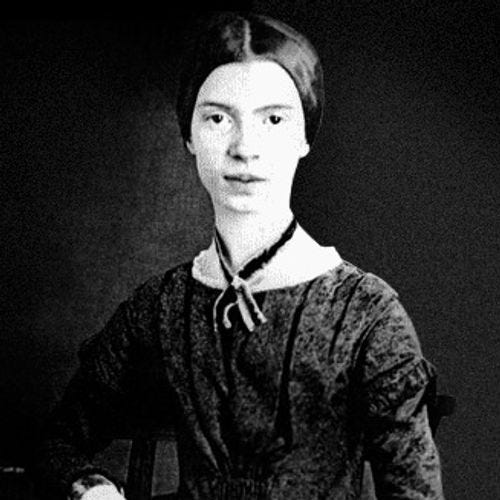
As with Robert Johnson, there are only two confirmed photographs of Emily Dickinson. A third verified photo of either is the Holy Grail in each of their respective domains
Never in a million years did I expect to put the names “Emily Dickinson” and “Robert Johnson” together in a poetry essay. Yet here they are.
Thanks for reading. And listening.
Check Robert out. Check Gillian out.
And, as always, read Emily.
Notes
¹ My musician son has recorded me playing a dozen blues songs, and my Internet-savvy son got these songs up on Bandcamp and Spotify. You can listen here or here.
² The “turnaround” in blues is ordinarily the last 2 measures of a 12-bar or 16-bar blues when the song moves from the V chord (dominant) to the I chord (tonic). It resolves the 12- or 16-bar cycle and propels the song into the next. Johnson often began his songs with the turnaround as a lead-in to the main chorus. “Love in Vain” is an example of that structure.
For more great stories from Global Literary Theory see this list:
Sign up to write for us here.
메타데이터
- post_id
- cac1c7eaff6c
- slug
- robert-johnson-delta-poet-cac1c7eaff6c
- url
- https://medium.com/global-literary-theory/robert-johnson-delta-poet-cac1c7eaff6c
- canonical_url
- https://medium.com/global-literary-theory/robert-johnson-delta-poet-cac1c7eaff6c
- author_url
- https://medium.com/@ifader
- status
- ok
- fetched_at
- 2026-08-09 10:31:50