The Benefits & Risks of AI Software License Management
Software license management is no longer just an IT task, it has become a business necessity. As companies adopt more SaaS tools, AI…
The Benefits & Risks of AI Software License Management
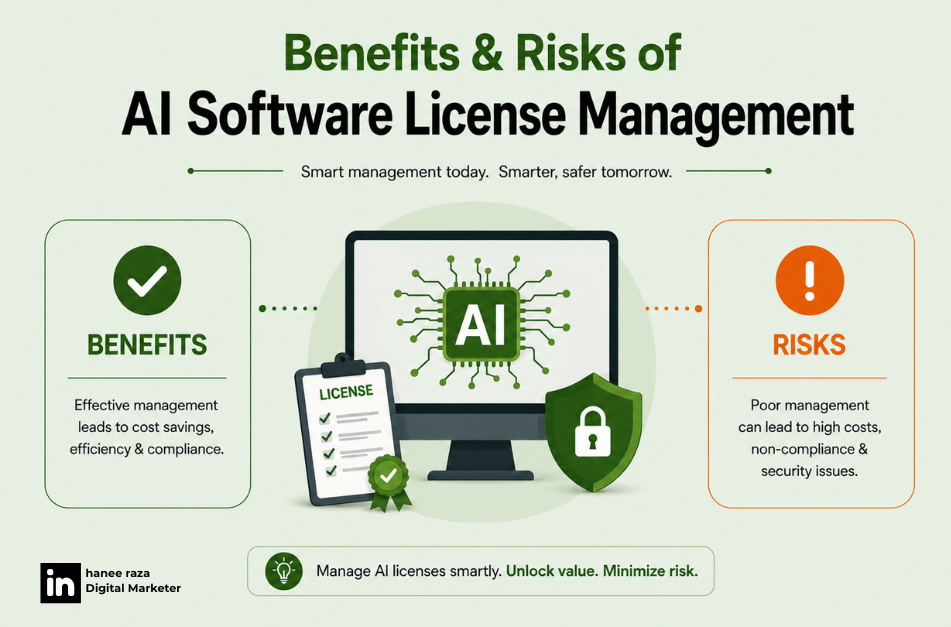
Software license management is no longer just an IT task, it has become a business necessity. As companies adopt more SaaS tools, AI subscriptions, cloud platforms, and enterprise applications, managing software costs and visibility is getting harder than ever.
Many organizations are now dealing with:
- Unused licenses
- Duplicate subscriptions
- Expensive renewals
- Compliance risks
- Shadow IT
- Poor visibility into software usage
Traditional license management methods like spreadsheets and manual audits simply cannot keep up with modern SaaS ecosystems.
Why AI Software License Management Matters
AI-powered software license management helps companies move from reactive tracking to real-time software intelligence.
Instead of relying on outdated reports, AI systems can continuously analyze software usage and identify:
- Inactive licenses
- Underused subscriptions
- Unnecessary software spending
- Renewal optimization opportunities
- Compliance gaps
- Unusual usage behavior
This allows businesses to reduce waste, improve software visibility, and make smarter procurement decisions.
Key Benefits of AI-Powered License Management
1. Detecting Unused Licenses
One of the biggest advantages of AI is identifying software that employees no longer use. Companies often continue paying for inactive licenses simply because no one notices them.
AI can monitor:
- Login activity
- Feature usage
- Session frequency
- Adoption trends
This helps organizations reclaim unused licenses before renewals happen.
2. Smarter Software Allocation
AI-driven analytics help businesses understand how teams actually use software.
For example, AI can identify:
- Teams underusing premium plans
- Overlapping tools with similar functionality
- Departments overspending on SaaS subscriptions
These insights improve software optimization and budgeting decisions.
3. Better Renewal Forecasting
Traditional renewal planning often relies on guesswork. AI improves forecasting by analyzing historical usage and adoption patterns.
This helps companies:
- Avoid over-purchasing
- Improve vendor negotiations
- Forecast future software demand
- Reduce unnecessary renewals
4. Improved Compliance Monitoring
Modern software licensing has become more complex with:
- User-based licensing
- Cloud entitlements
- Usage-based pricing
- AI feature restrictions
AI systems can continuously monitor licensing activity and identify compliance risks before audits become a problem.
The Risks and Challenges of AI License Management
While AI brings major advantages, it is not a perfect solution.
Poor Data Quality
AI systems depend heavily on accurate software data. If inventories, procurement records, or usage data are incomplete, AI recommendations can become unreliable.
Integration Complexity
Most organizations store software data across multiple systems:
- SaaS dashboards
- Cloud platforms
- Finance tools
- Identity providers
- Procurement systems
Connecting these systems can be difficult and time-consuming.
Lack of Business Context
AI can detect patterns, but it cannot fully understand operational priorities.
For example:
- A rarely used application may still be business-critical
- Seasonal tools may appear inactive during off periods
- Temporary project licenses may distort forecasts
This is why human oversight remains essential.
Security and Governance Concerns
AI-powered license management platforms process sensitive operational data, including:
- User activity
- Software access patterns
- Procurement information
- Financial records
Organizations must ensure proper governance, privacy protection, and vendor security controls.
Best Practices for Successful AI License Management
To implement AI effectively, companies should:
Build a Centralized Software Inventory
Create a single source of truth for software assets, licenses, users, and renewals.
Focus on High-Cost Software First
Start with expensive or complex software categories like:
- Microsoft 365
- AI subscriptions
- Developer tools
- Enterprise SaaS platforms
Combine AI With Human Oversight
AI should support decisions, not replace them. IT teams and software asset managers still play a critical role.
Measure Real Outcomes
Track:
- Reduced software waste
- Better license utilization
- Improved renewal forecasting
- Lower compliance risks
AI software license management is becoming essential as SaaS ecosystems continue to grow. Businesses need better visibility, smarter forecasting, and stronger software governance to control rising software costs.
However, AI works best when paired with accurate data, strong governance, and human oversight. Organizations that implement AI strategically can significantly improve software efficiency, reduce waste, and make smarter licensing decisions.
Read the full detailed guide here: https://licensemanager.at/ai-software-license-management/
메타데이터
- post_id
- cac958dcf3b9
- slug
- the-benefits-risks-of-ai-software-license-management-cac958dcf3b9
- url
- https://medium.com/@haneeraza/the-benefits-risks-of-ai-software-license-management-cac958dcf3b9
- canonical_url
- https://medium.com/@haneeraza/the-benefits-risks-of-ai-software-license-management-cac958dcf3b9
- author_url
- https://medium.com/@haneeraza
- status
- ok
- fetched_at
- 2026-06-09 15:37:30