Shreelok vs Online Darshan: What Is the Difference?
Technology has changed how devotees connect with temples and spiritual traditions. A person can now watch live aarti, view a deity from…
Shreelok vs Online Darshan: What Is the Difference?
Technology has changed how devotees connect with temples and spiritual traditions. A person can now watch live aarti, view a deity from another country, listen to devotional music, and learn about sacred rituals through a mobile phone. These developments have made devotion more accessible, especially for people who cannot visit a temple regularly.
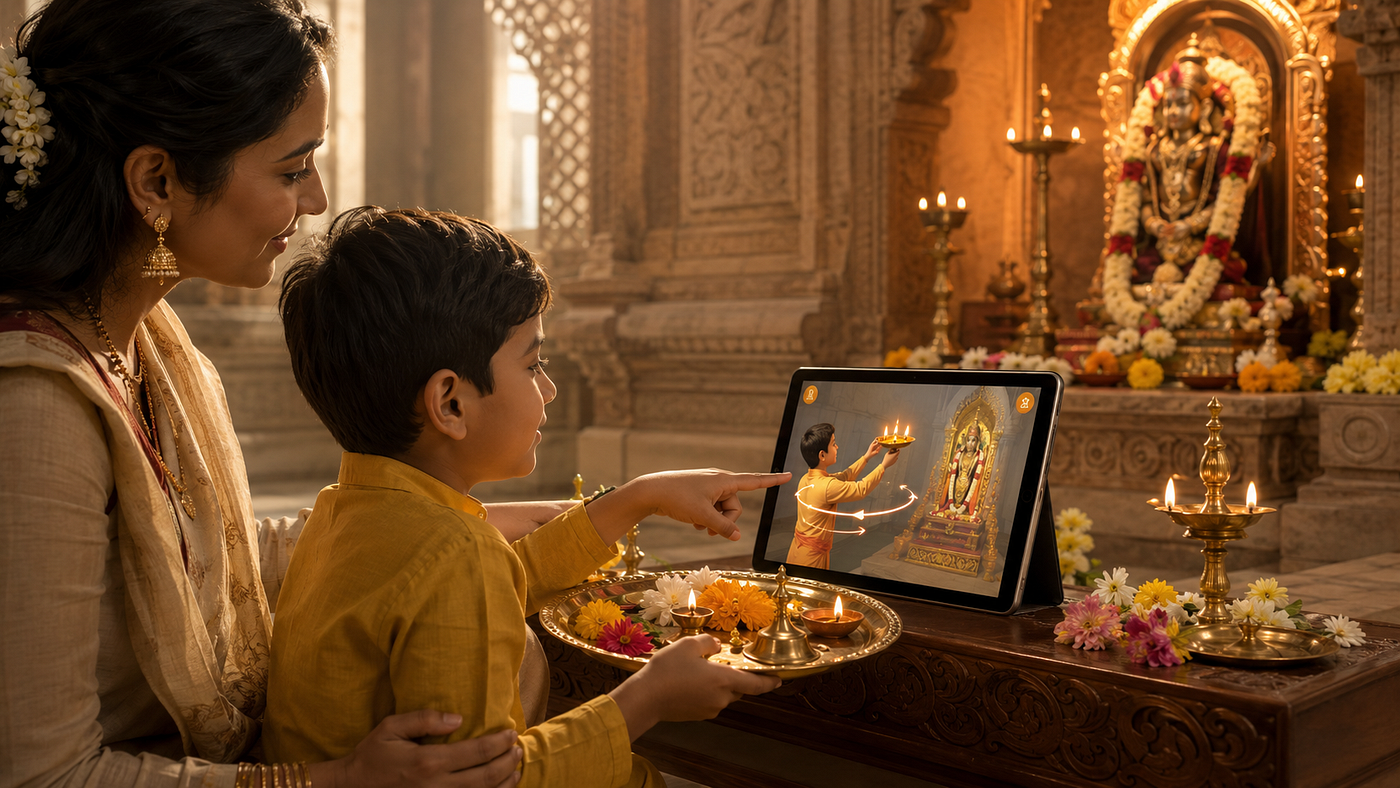
However, not every digital devotional experience works in the same way. Online darshan generally allows users to watch a live or recorded view of a temple. Shreelok offers an immersive 3D temple environment in which users can actively participate in a guided virtual puja.
This difference between observation and participation is central to understanding Shreelok vs online darshan. Both can support devotion, but they serve different needs. Online darshan brings the view of a physical temple to the devotee, while Shreelok creates an interactive devotional journey that users can enter from wherever they are.
This guide explains the differences, benefits, limitations, and appropriate uses of Shreelok and online darshan.
What Is Online Darshan?
Online darshan is a digital broadcast that lets devotees see a deity or temple through a website, mobile application, social media platform, or video-streaming service.
The broadcast may be live or recorded. A livestream shows events as they happen inside a physical temple. A recorded darshan allows people to view the deity, aarti, or ceremony at another time.
Online darshan became especially important for devotees living far from famous temples. It also helped elderly people, those with health limitations, and Indians living abroad stay connected with sacred places.
In most online darshan experiences, the devotee watches the temple activities. Priests perform the rituals at the physical location while viewers observe them through their screens. Users may pray, chant, or meditate while watching, but they usually do not interact directly with the ritual.
The experience is primarily visual and observational.
What Is Shreelok?
Shreelok is an immersive digital devotional platform that allows users to explore virtual Hindu temples and participate in guided puja experiences.
Rather than showing only a broadcast from a physical temple, Shreelok presents a carefully designed 3D environment. The user enters this virtual space, approaches the deity, expresses a personal prayer, makes digital offerings, performs aarti, offers Pushpanjali, and receives blessings.
The experience gives the devotee an active role. Users are not limited to watching someone else perform the puja. They participate in the devotional sequence through meaningful interactions.
Shreelok currently includes virtual experiences associated with Shree Kalahasti, Shree Ram, Shree Mahakaleshwar, Shree Tirupati Balaji, and Maa Vaishno Devi. Each experience has its own spiritual atmosphere and devotional focus.
Shreelok is designed to support prayer, learning, and spiritual connection. It does not claim to replace physical temples, traditional pilgrimages, or ceremonies conducted by qualified priests.
The Main Difference Between Shreelok and Online Darshan
The main difference between Shreelok and online darshan is the user’s role.
During online darshan, the user usually observes. A camera shows a physical deity, temple, or ceremony, and the devotee watches the broadcast.
During a Shreelok virtual puja, the user participates. The devotee enters a 3D temple environment and moves through a guided devotional experience. Each action requires attention and personal involvement.
Online darshan can be compared with viewing a sacred event from a distance. Shreelok can be understood as entering an interactive digital temple created for personal participation.
Neither format is automatically superior. Their value depends on what the devotee needs at that moment.
A Real Temple Broadcast vs a 3D Temple Environment
Online darshan is usually connected to a real temple. A camera streams the actual deity, altar, priest, or ceremony from the physical location.
This real-time connection can be deeply meaningful. A devotee may watch the morning aarti from a beloved temple, see festival decorations, or observe rituals happening at a particular sacred place.
Shreelok uses a virtual 3D temple environment. It does not depend on a continuously operating camera or a fixed broadcast schedule. Instead, the environment is digitally designed to provide an immersive and consistent devotional experience.
The user can explore the virtual setting and interact with puja elements. Lamps, flowers, bells, offerings, and the deity altar contribute to the atmosphere.
Online darshan provides a window into a physical temple. Shreelok provides an interactive digital space inspired by sacred temple traditions.
Watching a Ritual vs Participating in Puja
Online darshan generally allows the devotee to watch priests perform worship. The viewer may pray silently, repeat a mantra, or fold their hands, but the broadcast itself usually remains unchanged by the user’s actions.
Shreelok invites the user to participate in the devotional journey. The app guides the devotee from darshan to personal prayer and offerings.
This participation can help maintain concentration. Instead of watching passively while the mind drifts, the user follows a purposeful sequence. Each action becomes a reminder to return attention to the deity.
Lighting a virtual diya can encourage reflection on knowledge and hope. Offering flowers can represent gratitude and surrender. Performing virtual aarti can create a focused moment of reverence.
The spiritual meaning does not come from tapping the screen. It comes from the intention and awareness connected with the action.
Fixed Schedule vs Flexible Access
Many live online darshan services follow the schedule of the physical temple. Morning aarti, evening aarti, special pujas, and festival ceremonies take place at specific times.
A fixed schedule can be valuable because devotees join the temple’s real rhythm. Watching a live ceremony may create a sense of community with other people praying at the same moment.
However, fixed timing may not suit everyone. Time-zone differences, work commitments, school hours, and family responsibilities can make it difficult to attend a live broadcast.
Shreelok offers greater flexibility. Users can enter a virtual temple and begin their devotional journey when their schedule permits. A person may pray before work, during a quiet afternoon, after returning home, or while travelling.
Online darshan connects the devotee with the temple’s schedule. Shreelok allows the devotee to create a personal prayer time.
General Viewing vs Personal Prayer
Online darshan is normally broadcast to a wide audience. Thousands of devotees may watch the same temple ceremony simultaneously. This shared viewing can create a powerful sense of collective faith.
However, the content remains the same for everyone. The broadcast does not usually pause for an individual user’s intention or personal prayer.
Shreelok offers a more personal journey. Users can express or record their own prayer before continuing with the puja. They may speak about gratitude, family welfare, health, courage, work, education, or an important decision.
A personal prayer does not need formal language. The devotee can speak naturally and sincerely. The experience becomes centred on the user’s relationship with the chosen deity.
Online darshan offers a shared view. Shreelok creates space for individual participation and reflection.
The Role of Immersion
Immersion refers to the feeling of being present within an environment. In online darshan, the viewer sees the temple through a camera. The perspective is determined by where that camera has been placed.
Shreelok uses 3D design to create a sense of entering and participating within the temple space. The visual arrangement of the altar, lighting, offerings, bells, and architecture helps separate the devotional moment from ordinary phone use.
Immersion matters because attention is often difficult to maintain. People regularly use mobile phones for messages, work, news, and entertainment. A carefully designed temple environment can signal that the next few minutes have a different purpose.
However, impressive graphics alone cannot create spirituality. The user must still approach the experience with sincerity, respect, and awareness.
The Puja Journey on Shreelok
The Shreelok experience follows a guided devotional flow. The user begins by choosing a virtual temple connected with a particular deity or spiritual intention.
After entering, the devotee has darshan and takes time to focus on the deity. The user can then express a personal prayer. This can include gratitude, hopes, concerns, or prayers for loved ones.
The journey continues through interactive offerings. Users may light a virtual diya, present flowers or other suitable devotional items, perform aarti, and complete Pushpanjali.
The experience concludes with blessings and a quiet opportunity for reflection.
Online darshan does not normally provide this same interactive sequence. The viewer watches the ritual as it unfolds at the physical temple.
The Virtual Temples Available on Shreelok
Shreelok presents different virtual temples so users can choose an experience based on personal faith, family tradition, or present intention.
Shree Kalahasti Pooja
The Shree Kalahasti virtual experience is associated with Lord Shiva, spiritual cleansing, protection, and inner strength. The physical Shree Kalahasti tradition is also widely linked with Rahu-Ketu worship.
The digital experience can support prayer and spiritual learning. However, it should not be treated as a replacement for formal Rahu-Ketu ceremonies conducted by qualified priests.
Shree Ram Pooja
Shree Ram represents dharma, courage, discipline, compassion, and righteous action. Devotees may choose this virtual temple when seeking family harmony, emotional peace, or guidance during an important decision.
The experience can also help parents introduce children to the values and teachings associated with Shree Ram.
Shree Mahakaleshwar Pooja
Shree Mahakaleshwar is a revered Jyotirlinga form of Lord Shiva associated with time, transformation, divine protection, and freedom from fear.
This virtual puja may appeal to people facing uncertainty or moving through an important life transition. It offers a peaceful environment for surrendering anxiety and seeking courage.
Shree Tirupati Balaji Pooja
Shree Tirupati Balaji, also known as Lord Venkateshwara, is worshipped for prosperity, success, stability, protection, and the fulfilment of sincere wishes.
Users may select this virtual temple while beginning a new project, praying for family welfare, or expressing gratitude for existing blessings.
Maa Vaishno Devi Pooja
Maa Vaishno Devi represents Shakti, courage, protection, guidance, and divine grace. Devotees may choose this virtual experience when praying for emotional strength, family well-being, or the blessings of the Divine Mother.
It can help devotees maintain a connection with Mata Rani when undertaking the physical pilgrimage is not possible.
The Temples Available Through Online Darshan
Online darshan provides access to many physical temples across India and other countries. Devotees may watch daily ceremonies from major pilgrimage centres, local temples, or community mandirs.
The precise availability depends on the cameras, internet connection, temple schedule, and platform operating the broadcast. Some temples provide darshan throughout the day, while others stream only specific aartis or festivals.
Online darshan is especially valuable when a devotee wants to see what is happening at a real temple at that moment. It can show seasonal decorations, festival crowds, priest-led rituals, and the actual deity in the sanctum.
Shreelok serves a different purpose by offering a guided and interactive experience that does not depend on a live temple broadcast.
Shreelok vs Online Darshan for Beginners
Beginners may benefit from both formats in different ways.
Online darshan introduces users to the appearance and rhythm of a real temple. They can observe how priests conduct aarti, how the deity is decorated, and how worship changes during festivals.
However, a beginner may not always understand what is happening during the broadcast. The ceremony may move quickly, and explanations may not be available.
Shreelok offers a clearer participatory structure. Users can follow the devotional journey in a calm environment without worrying about missing a step. The interactive format may help them understand the purpose of darshan, diya lighting, flower offerings, aarti, and Pushpanjali.
Shreelok can therefore offer a gentle introduction, while online darshan can deepen familiarity with real temple practices.
Shreelok vs Online Darshan for Families
Online darshan allows families to watch an actual temple ceremony together. It may be especially meaningful during festivals or when the family has a strong connection with a particular sacred place.
Shreelok encourages more direct participation. Parents can involve children in selecting a virtual temple, presenting flowers, performing aarti, and completing the puja.
This interaction can lead to educational conversations. A parent might explain why a diya is lit or why Shree Ram represents dharma. A grandparent may share memories of visiting Tirupati, Vaishno Devi, Mahakaleshwar, or Kalahasti.
Online darshan connects the family with a real temple. Shreelok can help family members explore devotional actions together.
Shreelok vs Online Darshan for Indians Abroad
For Indians living abroad, both formats can reduce the emotional distance from home.
Online darshan allows overseas devotees to see a familiar physical temple in real time. This can bring comfort during festivals, family occasions, or periods of homesickness.
Time-zone differences can sometimes create difficulty. A morning aarti in India may occur late at night or during working hours in another country.
Shreelok provides flexible access. Users can begin their virtual puja at a time that suits their local schedule. This makes it easier to maintain a regular devotional routine.
Overseas families may use online darshan for live festival ceremonies and Shreelok for personal or family puja at convenient times.
Learning Through Observation and Interaction
Online darshan supports learning through observation. Users see how a real temple conducts worship. They can notice the sequence of ceremonies, decorations, music, priestly traditions, and festival changes.
Shreelok supports learning through interaction. Users perform devotional actions themselves and gain a clearer sense of how those actions connect.
These learning methods can work together. A person may first explore a puja through Shreelok and later recognise its elements during online darshan. Alternatively, someone may watch a live temple ceremony and then use Shreelok to reflect on the meaning of the offerings.
The combination of observation and interaction can create a richer understanding than either method alone.
Is Shreelok a Game or a Devotional App?
Shreelok uses interactive 3D technology, which may feel familiar to people who use mobile games. However, its purpose is devotional participation, spiritual learning, and positive engagement.
The virtual temple should not be treated as a place for careless play. Sacred symbols, deities, offerings, and rituals require respectful presentation and use.
The interactive elements can make the experience engaging without trivialising faith. A person may enjoy exploring the 3D environment while still understanding that the devotional meaning comes first.
The best way to use Shreelok is to approach it as a digital spiritual space. Set aside distractions, focus on the deity, and perform each action with attention.
Can Shreelok Replace Online Darshan?
Shreelok does not need to replace online darshan because the two experiences meet different devotional needs.
If a devotee wants to see a real temple ceremony as it happens, online darshan is the appropriate choice. It provides a direct visual connection with the physical shrine and its living traditions.
If a person wants to participate in a guided puja at a convenient time, Shreelok may be more suitable. It provides an interactive journey centred on the user’s prayer and attention.
Some devotees may use online darshan in the morning and Shreelok for personal puja in the evening. Others may watch livestreams during festivals and use Shreelok while travelling or on ordinary weekdays.
The choice does not have to be either-or. Both formats can become part of a balanced devotional routine.
Can Digital Worship Replace a Physical Temple Visit?
Neither Shreelok nor online darshan can fully replace the experience of visiting a physical temple.
A physical temple contains living traditions shaped by generations of worship. It brings together priests, devotees, rituals, architecture, music, prasad, festivals, service, and community life.
Pilgrimage also requires effort. The journey, waiting, walking, and discipline can become part of the spiritual experience.
Digital devotion serves another purpose. It creates access when distance, health, travel, or time makes a temple visit difficult. It can support regular prayer between physical visits and help beginners become familiar with devotional traditions.
A healthy approach recognises the value of each form without claiming that one must eliminate the others.
Privacy and Mindful Use
A digital devotional platform should treat personal information carefully, especially when users express or record private prayers.
Users should review the app’s privacy information and understand how recordings or personal details are handled. They should avoid including sensitive financial, medical, or identity information in any digital recording unless they fully understand how that information is stored.
Mindful use also involves controlling distractions. Before beginning, silence unrelated notifications and find a quiet place. Try not to move immediately from puja to social media or entertainment. A short period of silence after prayer can help preserve the experience.
Technology becomes spiritually supportive when users control it with purpose.
Which Experience Is Right for You?
Online darshan may be the better choice when you want to see a real temple, attend a live aarti, witness a festival ceremony, or feel part of a large devotional gathering.
Shreelok may be more suitable when you want an interactive puja, personal prayer, flexible timing, a 3D environment, or a beginner-friendly devotional journey.
You may also combine both. Watch online darshan from a meaningful physical temple and then enter Shreelok to perform your own guided virtual puja.
Your choice should reflect your circumstances, spiritual needs, and available time. The most important factors remain sincerity, attention, and respect.
The Future of Digital Devotion
The difference between Shreelok and online darshan reflects a wider change in digital spirituality. Earlier platforms mainly delivered religious content for people to watch. Newer experiences are becoming more interactive and personalised.
Future digital temples may include richer 3D environments, multilingual guidance, festival-based experiences, educational stories, and more accessible designs for elderly users and children.
As the technology improves, respect for tradition must remain central. Developers should present deities, mantras, offerings, and sacred architecture thoughtfully. They should also explain the difference between virtual participation and traditional priest-led rituals.
Digital devotion will be most valuable when it strengthens interest in spiritual learning, ethical living, family connection, and physical temple traditions.
Final Thoughts
The central difference in Shreelok vs online darshan is simple: online darshan is mainly an observational experience, while Shreelok offers interactive devotional participation.
Online darshan connects users with a real temple broadcast. Devotees can watch live aarti, view the physical deity, and witness ceremonies taking place at the sacred location.
Shreelok invites users into a 3D virtual temple. They can express a personal prayer, make offerings, perform aarti, complete Pushpanjali, and receive blessings through a guided digital journey.
Both experiences can hold value. Online darshan offers a connection with living temple activity, while Shreelok offers flexibility, participation, and personal engagement. Neither should be treated as a complete replacement for physical temple worship or rituals conducted by qualified priests.
The right choice depends on the moment. When you want to witness a real ceremony, online darshan can bring the temple into view. When you want to participate personally, Shreelok can guide you from darshan to blessings wherever life takes you.
Explore Shreelok and experience interactive virtual puja: https://www.shreelok.com/
메타데이터
- post_id
- cad081b2ceea
- slug
- shreelok-vs-online-darshan-what-is-the-difference-cad081b2ceea
- url
- https://medium.com/@astroterminal/shreelok-vs-online-darshan-what-is-the-difference-cad081b2ceea
- canonical_url
- https://medium.com/@astroterminal/shreelok-vs-online-darshan-what-is-the-difference-cad081b2ceea
- author_url
- https://medium.com/@astroterminal
- status
- ok
- fetched_at
- 2026-08-16 19:14:18