Looking Beyond Monuments: Discovering Bengaluru Through Its Dhobi Ghats
Looking Beyond Monuments: Discovering Bengaluru Through Its Dhobi Ghats
The Indian National Trust for Art and Cultural Heritage (INTACH) is a non-profit organisation dedicated to documenting, preserving, and promoting India’s tangible and intangible heritage. Through research, conservation efforts, and educational initiatives, INTACH works to help communities engage with and understand their cultural histories.
As part of my Community Project, I chose to work with INTACH because I wanted to learn more about Bengaluru and its heritage. Having grown up in the city, I was familiar with its roads, neighbourhoods, and landmarks, but I had never really thought about its history or heritage beyond what is commonly taught in schools. Heritage, to me, usually meant temples, forts, palaces, and historical monuments. Over the past two weeks, however, my understanding of heritage has started to shift in unexpected ways.
Week 1: Meeting INTACH and Rethinking Heritage
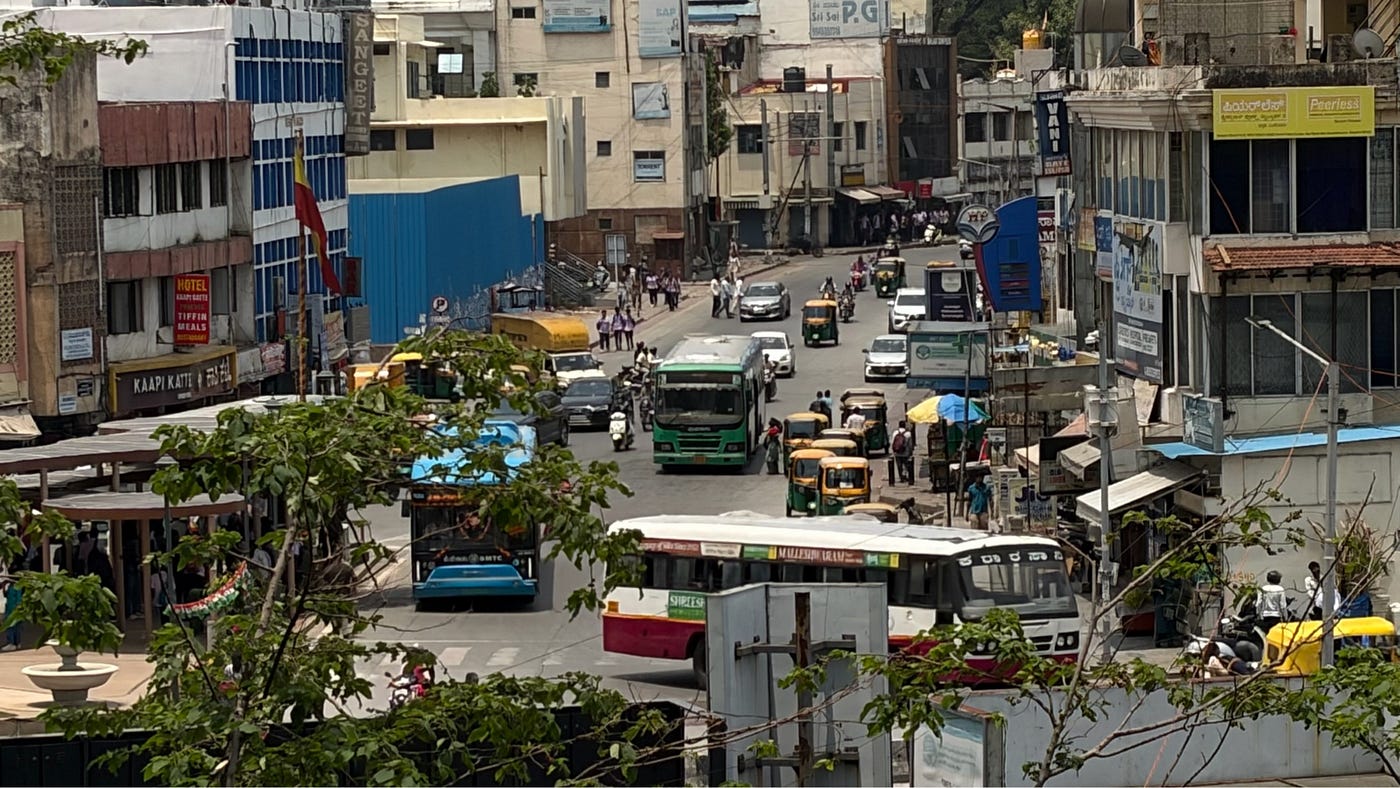

My first week began with an introduction to INTACH and the work they do in preserving and promoting heritage. What stood out to me was that their approach to heritage was not limited to buildings and monuments. Instead, they encouraged us to think about heritage as something that can also exist in communities, occupations, languages, and everyday practices.
During our first meeting, they showed us old maps of Bengaluru and asked us to identify different locations. What surprised me was how difficult I found the exercise. Despite having lived in Bengaluru for most of my life, I realised that I knew very little about the city’s historical development and how different parts of it came to be. The session made me reflect on the gap between living in a city and actually understanding it. I knew where places were, but I did not know their stories.
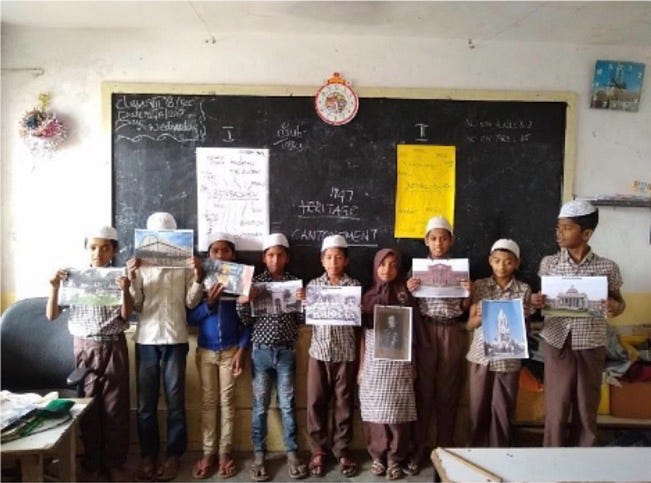
Another aspect of the session that stood out to me was seeing the educational activities INTACH had designed for children. Instead of teaching heritage through facts and memorisation, they used games, storytelling, and interactive exercises to make children curious about their surroundings. As a design student, I found this approach inspiring. It showed me how design can make learning more engaging and participatory rather than simply informative.
I realised that if I did not know much about Bengaluru’s heritage, how could I expect younger students to engage with it? Seeing their methods and educational approach made me interested in creating something that could encourage a similar sense of curiosity.
By the latter half of Week 1, we moved from the classroom into the field and began visiting dhobi ghats.
Week 1 and 2: Observing the Dhobi Ghats
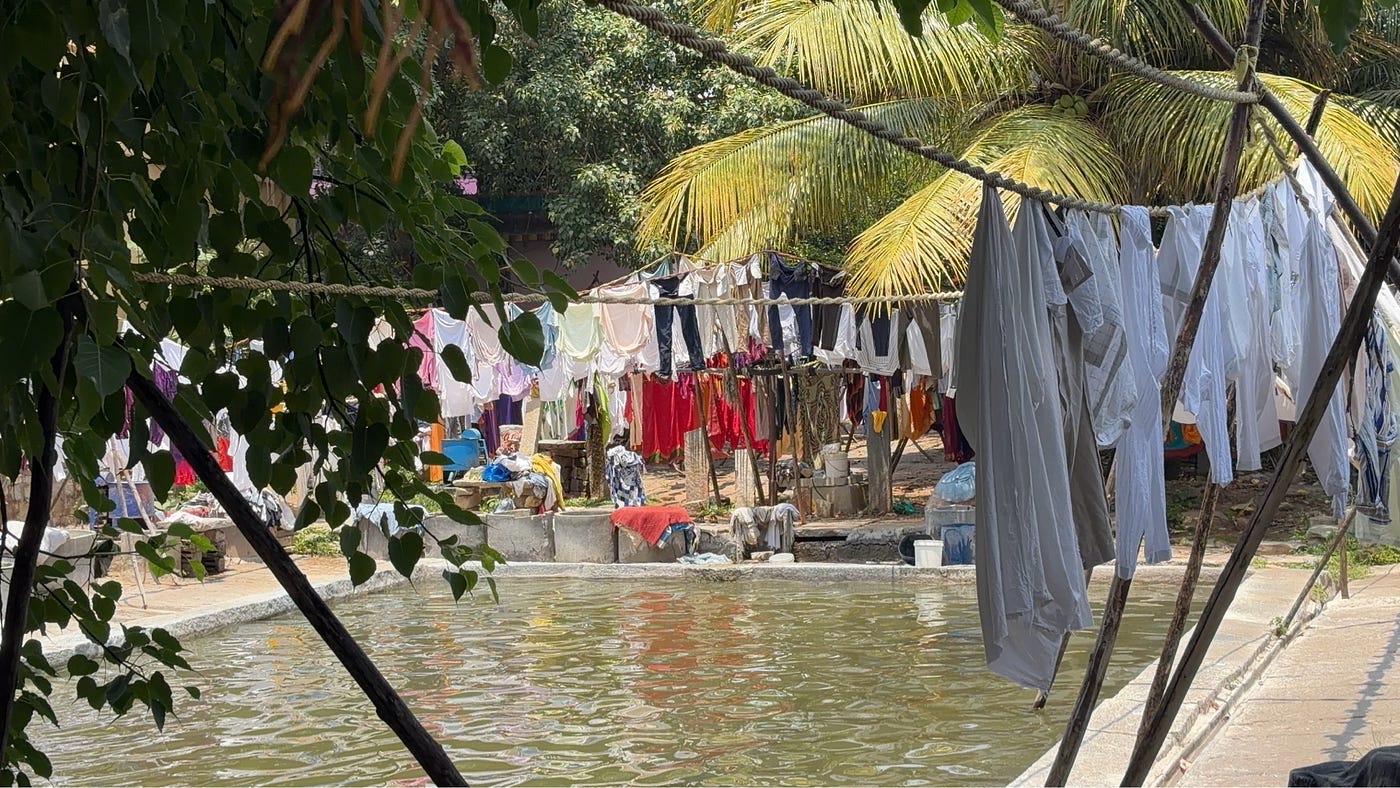

Over the course of the two weeks, I visited the dhobi ghats at Ulsoor and Malleswaram quite a few times. Before this project, I could honestly say that I had never thought much about dhobi ghats. In fact, I barely knew they existed.
My first impression was the scale of the spaces. The drying areas stretched much farther than I had expected, filled with rows of clothes drying under the sun. The ghats felt less like small workplaces and more like systems that had been supporting the city for generations. Many of the workers mentioned that these places have existed for over 150 years, making them much older than many modern institutions in the city.
The sensory experience was also memorable. The machine room, in particular, had a strong smell of soap and freshly washed fabric. Rather than feeling industrial, it felt intensely clean. It was a small observation, but it matched the assumptions I had formed about the space before visiting it.
During the visits, I focused on documenting observations, taking photographs[SB2.1], and speaking to workers. I was interested in understanding the materials used for washing, the organisation of labour, the division of work, possible health concerns, and the systems that kept the dhobi ghats functioning.
One reason I was particularly interested in visiting the dhobi ghats was because I wanted to understand how heritage exists in the present rather than only in history. Initially, I wanted to explore connections between Bengaluru’s lakes and washerman communities. However, as the visits progressed, I realised that the dhobi ghats themselves represented a form of living heritage. The practices, routines, and knowledge present within these spaces had been passed down over generations and continue to exist today.
One topic I was especially interested in was health. Considering the prolonged exposure to water, detergents, and physically demanding labour, I expected workers to speak about serious health concerns. While some issues were mentioned, what surprised me was how casually they were discussed. The challenges seemed to be treated as part of everyday life rather than problems that required special attention. This made me reflect on how easily certain forms of labour and their associated difficulties become normalised.
I also learned that machine washing now plays a significant role in the workflow. Hand washing still exists, but some workers explained that it continues partly because it provides income opportunities within the informal labour sector. This challenged my assumption that the work was carried out entirely through traditional methods and showed how heritage practices continue to adapt alongside changing technologies.
At the same time, many of my questions remained unanswered. At one of the ghats, the women explained that they mainly handled washing while the men managed the business side of operations. Since the men were not present, they could not answer questions about finances, systems, or administration. At another ghat, workers repeatedly directed me to speak to a secretary whenever I asked about organisational structures, but the secretary never appeared during my visits.
This became one of the most important lessons from the fieldwork. As researchers and designers, it is easy to assume that information will be available if we ask the right questions. However, community engagement requires patience, sensitivity, and an understanding that not everyone is comfortable sharing certain information with outsiders.
Discovering Invisible Systems


One observation fascinated me more than any direct answer I received. I wanted to understand how drying spaces were assigned and organised. From the outside, there appeared to be no visible system. There were no labels, numbers, or marked sections.
However, the workers knew exactly where everything belonged.
The explanation was surprisingly simple: habit and routine. Through years of working in the same space, people had developed an understanding of where things went and how the space functioned. The system existed not through signs or documentation but through practice and shared knowledge.
As a design student, this made me reconsider what a system looks like. I had been searching for something visible and formal. Instead, I encountered a system embedded in people’s actions, memories, and everyday behaviour.
Bengaluru, Language, and Heritage
Another unexpected aspect of the project was language. Since I was speaking with local workers, most of my conversations took place in Kannada, although I also encountered Tamil speakers in Ulsoor.
Reflecting on the experience, I realised that this was probably the most Kannada I had spoken outside my home in a long time. The field visits made me engage with the city in a way I normally do not. Rather than simply moving through Bengaluru, I was actively listening to the people who shape it every day.
Travelling across different parts of Bengaluru also became an important part of the learning process. Using the metro and moving through neighbourhoods that I would not normally visit made me realise how much of the city exists outside my everyday routine. In many ways, the journey to the sites became just as important as the sites themselves.
During discussions with INTACH, I also learned that Bengaluru’s lakes are largely man-made. This was another fact that surprised me and made me realise how much of the city’s history I still did not know despite growing up here.
This became particularly relevant when I began exploring the relationship between dhobi ghats and lakes. The name Madiwala Lake, where “Madiwala” refers to the washerman community, was one of the things that inspired me to explore this connection. The name itself suggests a historical relationship between water bodies and the occupation. However, during my visits, I discovered that the dhobi ghats I observed do not use lake water today. Instead, they rely on borewell water, which is then directed into what workers referred to as a “chamber.” While I still do not fully understand this system, the discovery showed me that historical relationships and present-day realities are often more complex than they initially appear.
Looking Ahead
As the project continues, I am exploring the possibility of creating a visual, comic-style educational artefact for middle-school students. The reason I am exploring this format is because my interest in the project began with learning about Bengaluru’s heritage myself. If storytelling and visual narratives helped me become curious about the topic, I hope they can encourage a similar curiosity in younger students as well.
The idea is still evolving, but I want to use storytelling and illustration to introduce children to forms of heritage that often go unnoticed. Through the dhobi ghats, I hope to show that heritage can exist not only in monuments and historic structures but also in occupations, communities, practices, and everyday systems.
This project has also helped me connect classroom learning with fieldwork. The observation and documentation methods I practised in modules such as Design Methods and Designing the Now became useful during site visits. I found myself using frameworks such as POEMS (People, Objects, Environment, Messages, and Signage) to organise information and observations from the field. The confidence to approach and interact with people, developed through previous projects, also helped me engage with workers during interviews. Since my intervention is likely to be visual, I see strong connections with what I have learned in Visualisation and Representation as well.
After two weeks, I do not feel like I have found all the answers. Instead, I have found better questions. More importantly, I have begun to understand heritage not as something frozen in the past, but as something that continues to live through people, practices, and communities. Perhaps that has been the most valuable outcome of the project so far.
메타데이터
- post_id
- caf77e68655c
- slug
- looking-beyond-monuments-discovering-bengaluru-through-its-dhobi-ghats-caf77e68655c
- url
- https://medium.com/@stutispaul/looking-beyond-monuments-discovering-bengaluru-through-its-dhobi-ghats-caf77e68655c
- canonical_url
- https://medium.com/@stutispaul/looking-beyond-monuments-discovering-bengaluru-through-its-dhobi-ghats-caf77e68655c
- author_url
- https://medium.com/@stutispaul
- status
- ok
- fetched_at
- 2026-06-15 22:55:51




