MCP Beyond the Basics: 7 Production Lessons from The Missing Layer of AI
Model Context Protocol (MCP) has quickly become one of the most discussed standards in the LLM ecosystem. By defining a common way for…
MCP Beyond the Basics: 7 Production Lessons from The Missing Layer of AI
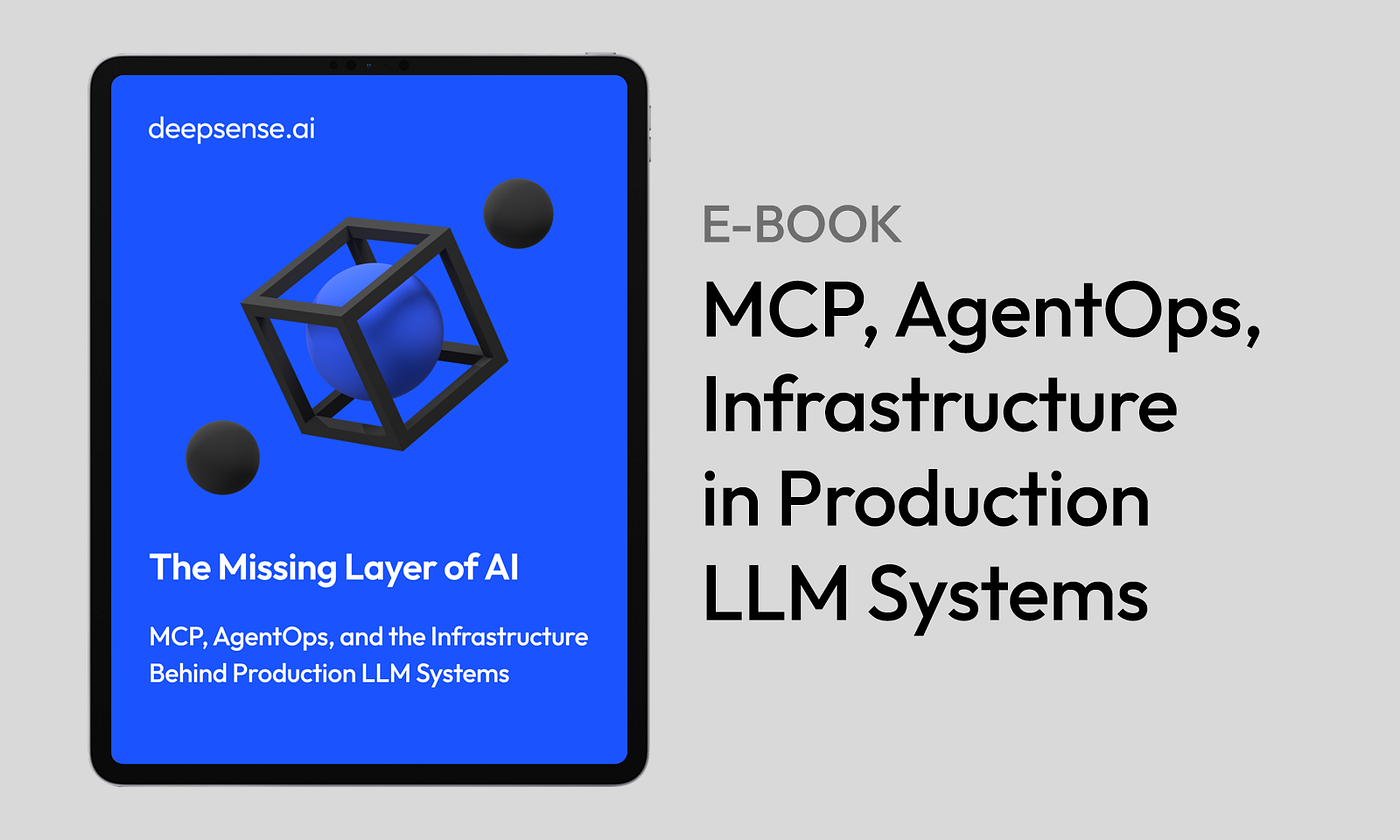
Model Context Protocol (MCP) has quickly become one of the most discussed standards in the LLM ecosystem. By defining a common way for models to connect with external tools and data sources, it promises to simplify integrations across AI applications.
But adopting MCP is only one piece of the puzzle.
Running AI systems in production introduces a broader set of challenges: operating autonomous agents, securing tool access, optimizing inference costs, designing multi-agent workflows, and meeting compliance requirements.
These are the topics we explore in our ebook, **The Missing Layer of AI**.
Instead of focusing on APIs alone, the guide examines the infrastructure required to build reliable production AI systems.
1. AgentOps: the operational layer AI teams are now building
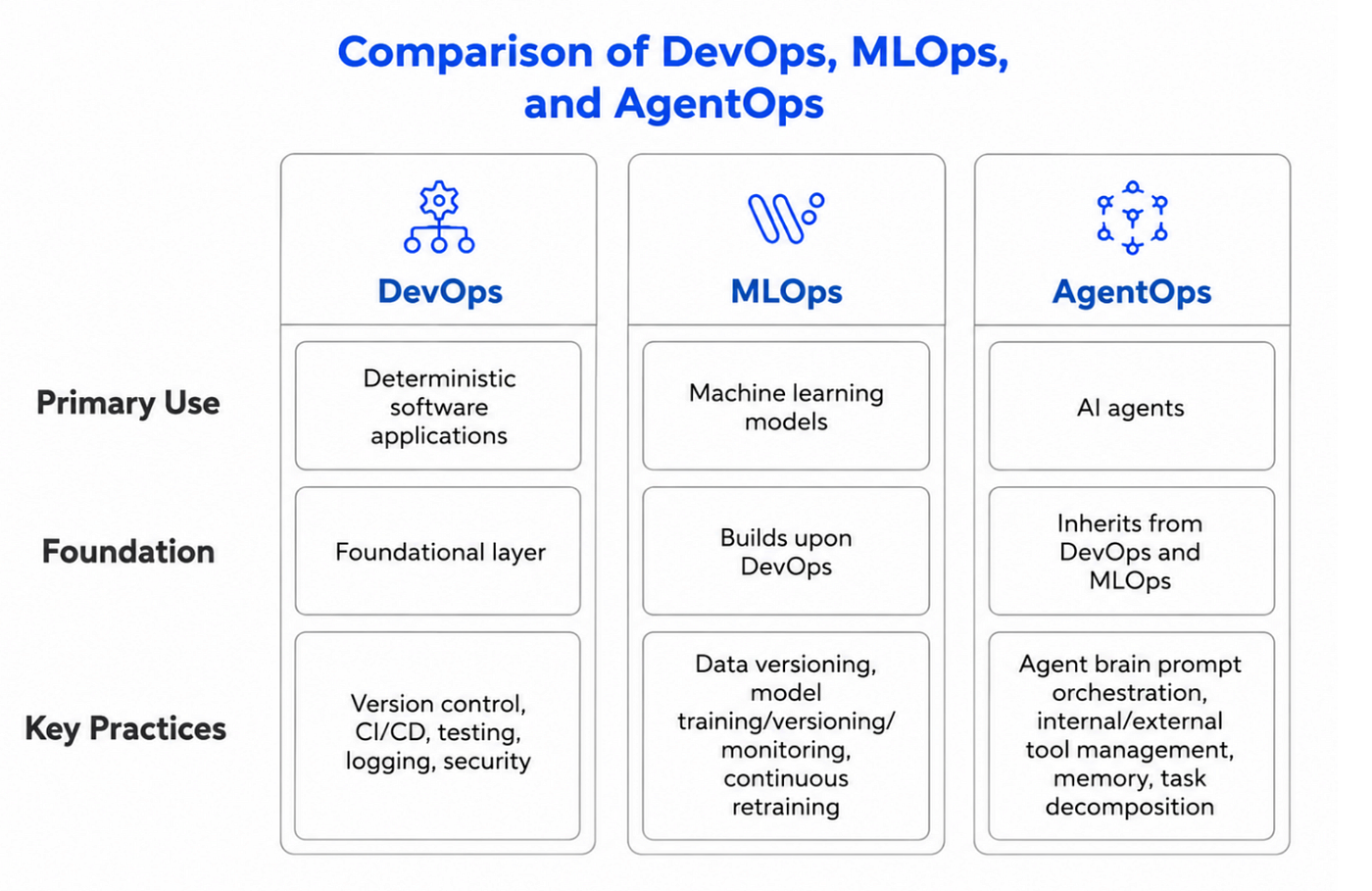
Before discussing MCP itself, the ebook introduces a concept that’s becoming increasingly important: AgentOps.
As AI systems evolve from simple chat interfaces into autonomous agents, traditional DevOps and MLOps practices no longer cover everything teams need to monitor and manage.
The guide explains:
- how AgentOps differs from MLOps
- which new operational challenges emerge
- what teams need to observe, evaluate and govern once agents start acting autonomously
📘 Download the complete ebook HERE
2. MCP solves more than tool integration
Most introductions explain MCP as a protocol connecting models with external tools.
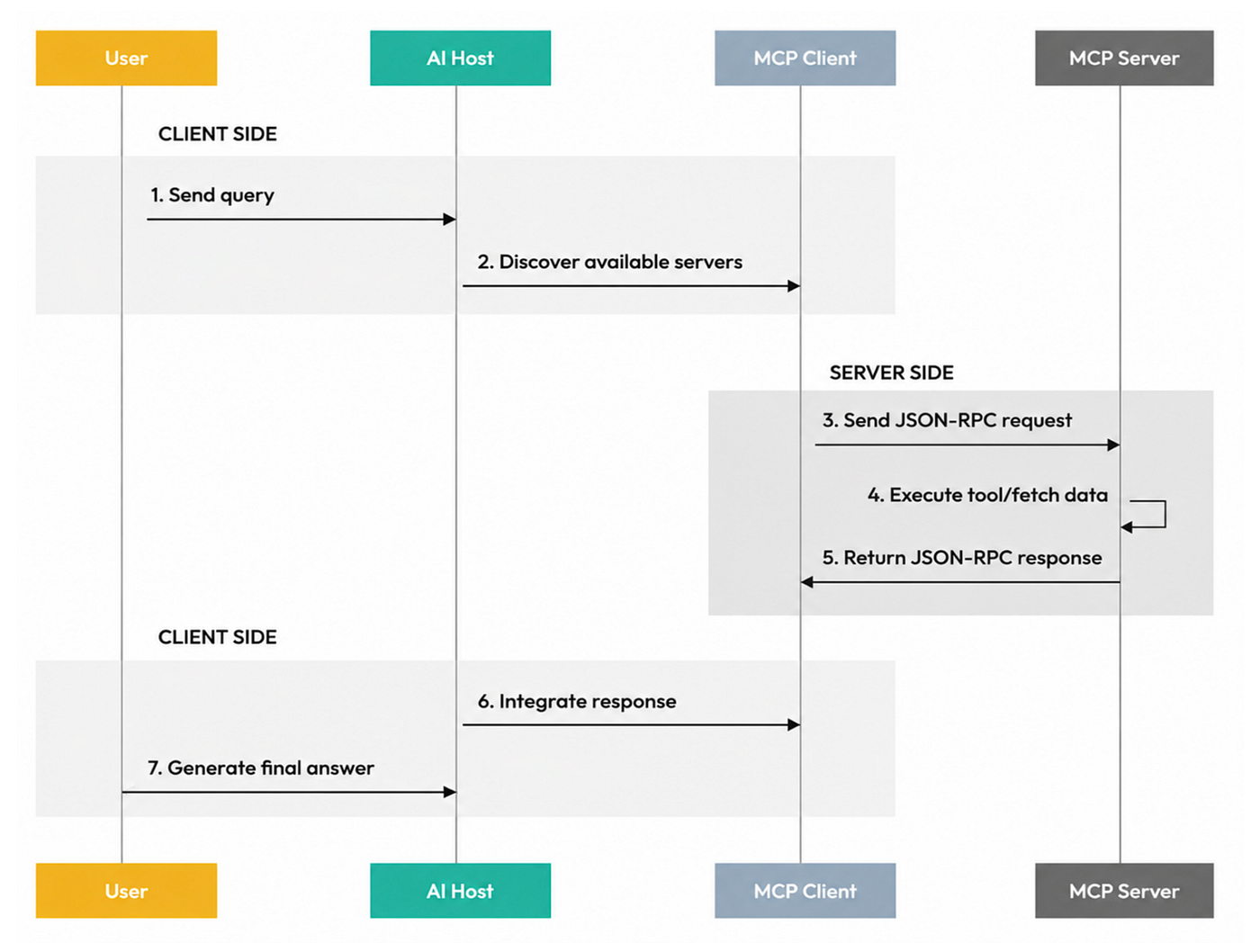
That’s true — but it’s only the beginning. The ebook explains:
- why MCP emerged
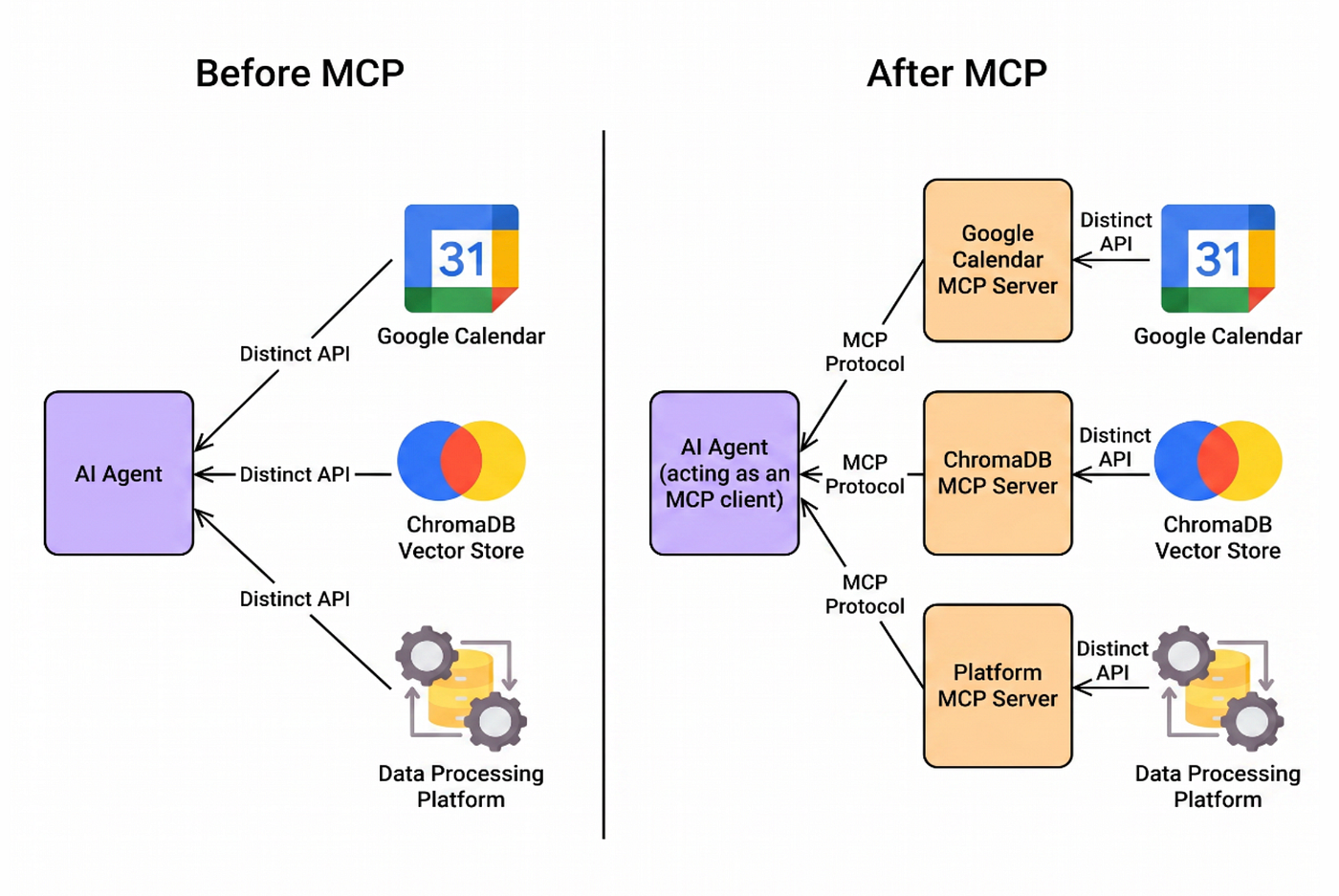
- how its client-server architecture works
- why one MCP server can support multiple LLM providers
- how it reduces integration complexity
Rather than treating MCP as another framework, the guide explains why it is becoming an interoperability layer for AI applications.
📘 Download the complete ebook HERE
3. Regulated industries change the architecture
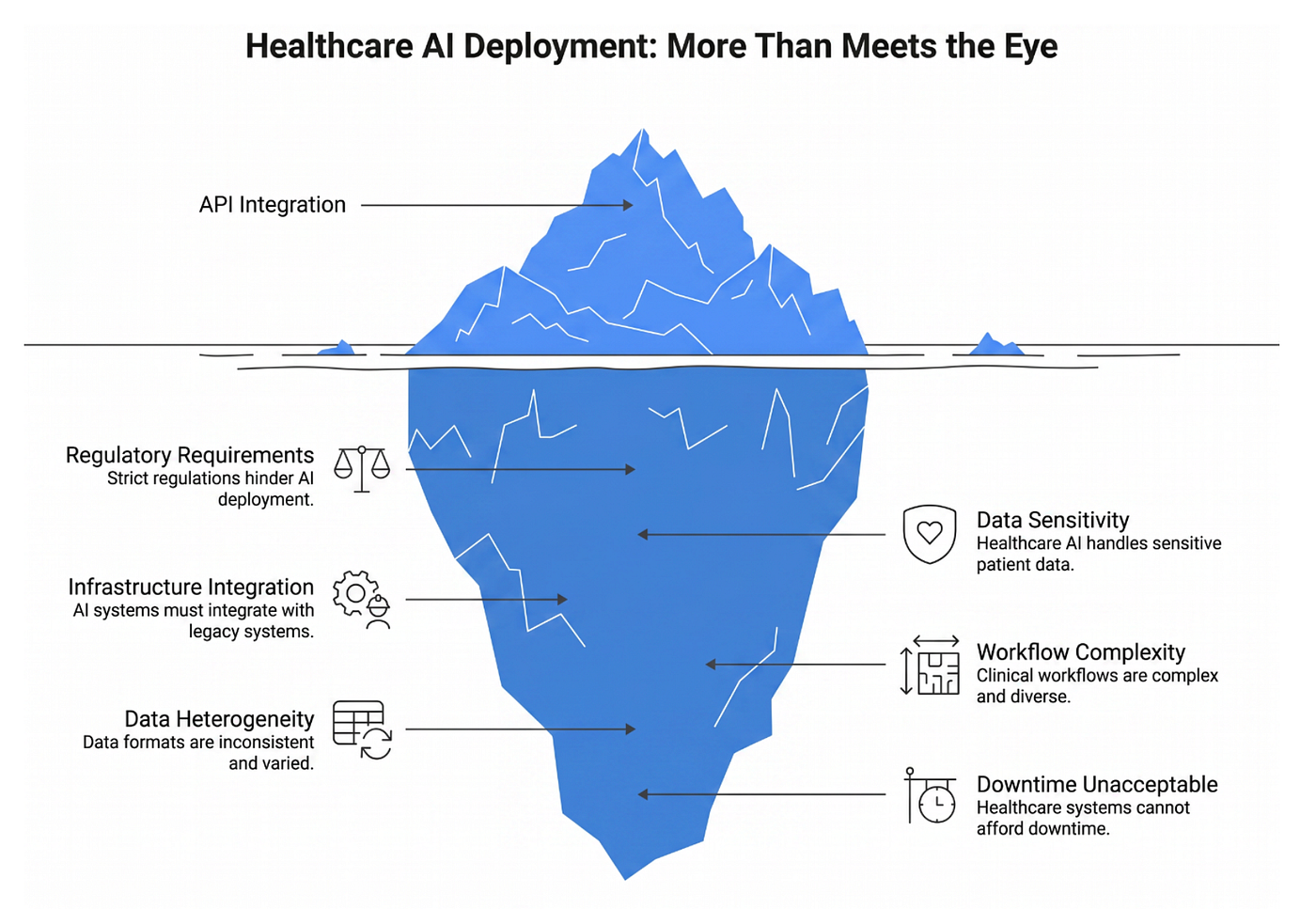
Production AI looks different when every action must be auditable.
Drawing on projects in life sciences and healthcare, the ebook shows why compliance requirements influence architecture from the beginning — not after deployment. Topics include:
- security boundaries
- auditability
- human oversight
- governance
- controlled tool access
This section illustrates why building AI for regulated environments requires different design decisions than typical enterprise applications.
📘 Download the complete ebook HERE
4. One agent isn’t always enough
As AI applications become more capable, many tasks exceed what a single agent can reasonably manage. The ebook explores:
- supervisor-worker patterns
- specialized agents
- orchestration strategies
- communication between agents
- practical design trade-offs
Instead of assuming multi-agent systems are always better, it discusses when the added complexity is justified.
📘 Download the complete ebook HERE
5. Inference strategy is an engineering decision
Model selection isn’t just about benchmark scores.
Production systems often combine multiple models, balancing latency, quality, cost and reliability. The ebook explains:
- routing strategies
- hybrid deployments
- model selection
- production trade-offs
These decisions often have a larger impact on business outcomes than choosing the highest-scoring model.
6. Optimizing inference goes beyond reducing latency
Inference optimization affects far more than response speed.
The guide discusses practical approaches to improving:
- throughput
- GPU utilization
- operational cost
- scalability
Rather than presenting isolated techniques, it explains how optimization fits into production system design.
7. Security cannot be an afterthought
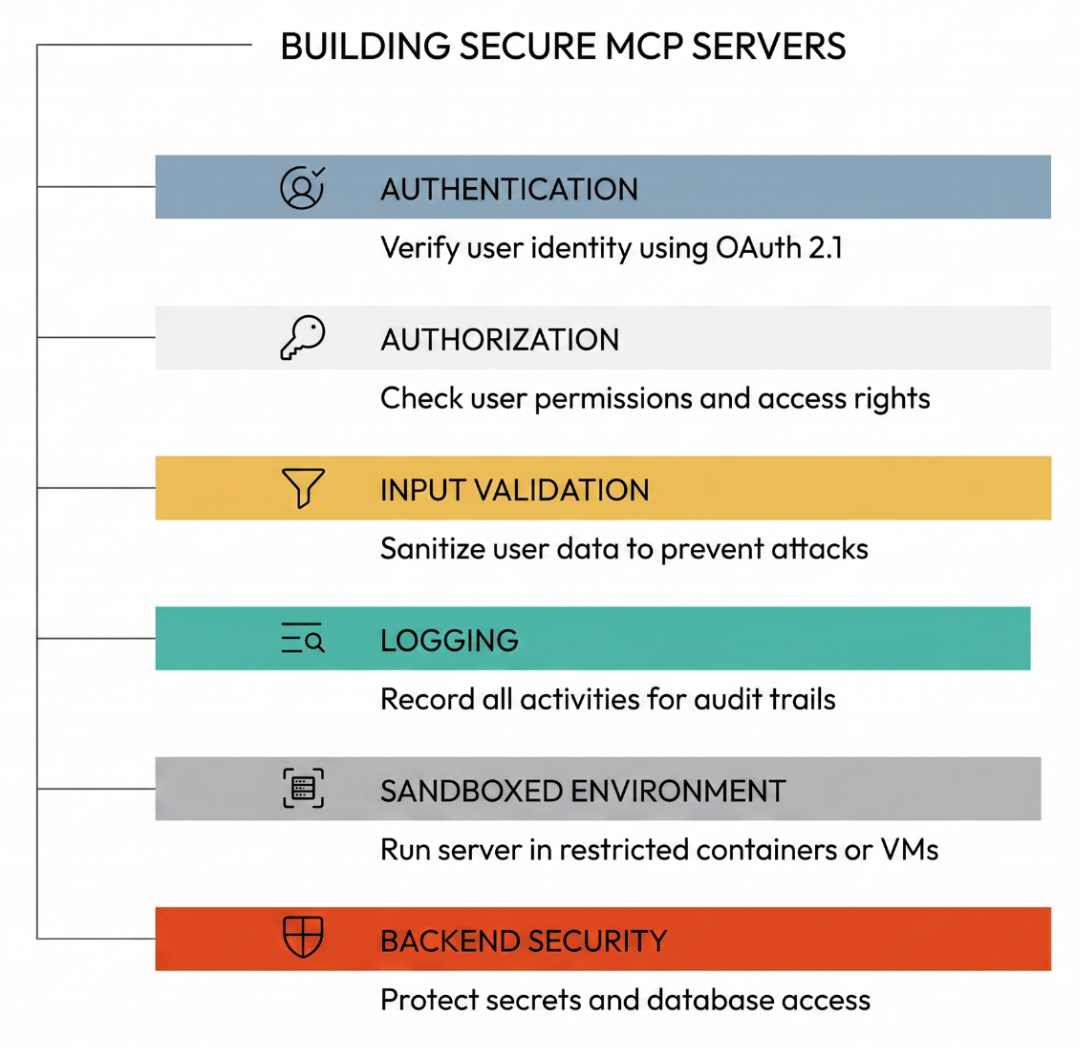
The final chapter focuses on securing AI systems that interact with external tools and enterprise data. It covers topics including:
- authentication
- authorization
- secrets management
- MCP security considerations
- operational best practices
As AI agents gain broader capabilities, security becomes part of the application architecture — not simply an infrastructure concern.
📘 Download the complete ebook HERE
Why we wrote this guide
Many resources explain how to build an MCP server.
Far fewer explain everything that comes after:
- operating agents
- scaling production systems
- optimizing inference
- meeting compliance requirements
- securing AI infrastructure
That’s the gap The Missing Layer of AI aims to address.
Download the ebook to explore each topic in depth → CLICK HERE
메타데이터
- post_id
- cb2c53626474
- slug
- mcp-beyond-the-basics-7-production-lessons-from-the-missing-layer-of-ai-cb2c53626474
- url
- https://medium.com/deepsense-ai/mcp-beyond-the-basics-7-production-lessons-from-the-missing-layer-of-ai-cb2c53626474
- canonical_url
- https://medium.com/deepsense-ai/mcp-beyond-the-basics-7-production-lessons-from-the-missing-layer-of-ai-cb2c53626474
- author_url
- https://medium.com/@deepsense-ai-team
- status
- ok
- fetched_at
- 2026-07-09 03:40:04