The Day Russia’s Ally Fell: How Tehran Exposed Moscow’s Empty Promises
As U.S.-Israeli strikes kill Iran’s Supreme Leader, Putin offers only condolences — while Ukrainian forces blind Russian air defenses, quad…
The Day Russia’s Ally Fell: How Tehran Exposed Moscow’s Empty Promises
As U.S.-Israeli strikes kill Iran’s Supreme Leader, Putin offers only condolences — while Ukrainian forces blind Russian air defenses, quad bikes burn near Myrnohrad, and a new generation learns drone warfare from textbooks
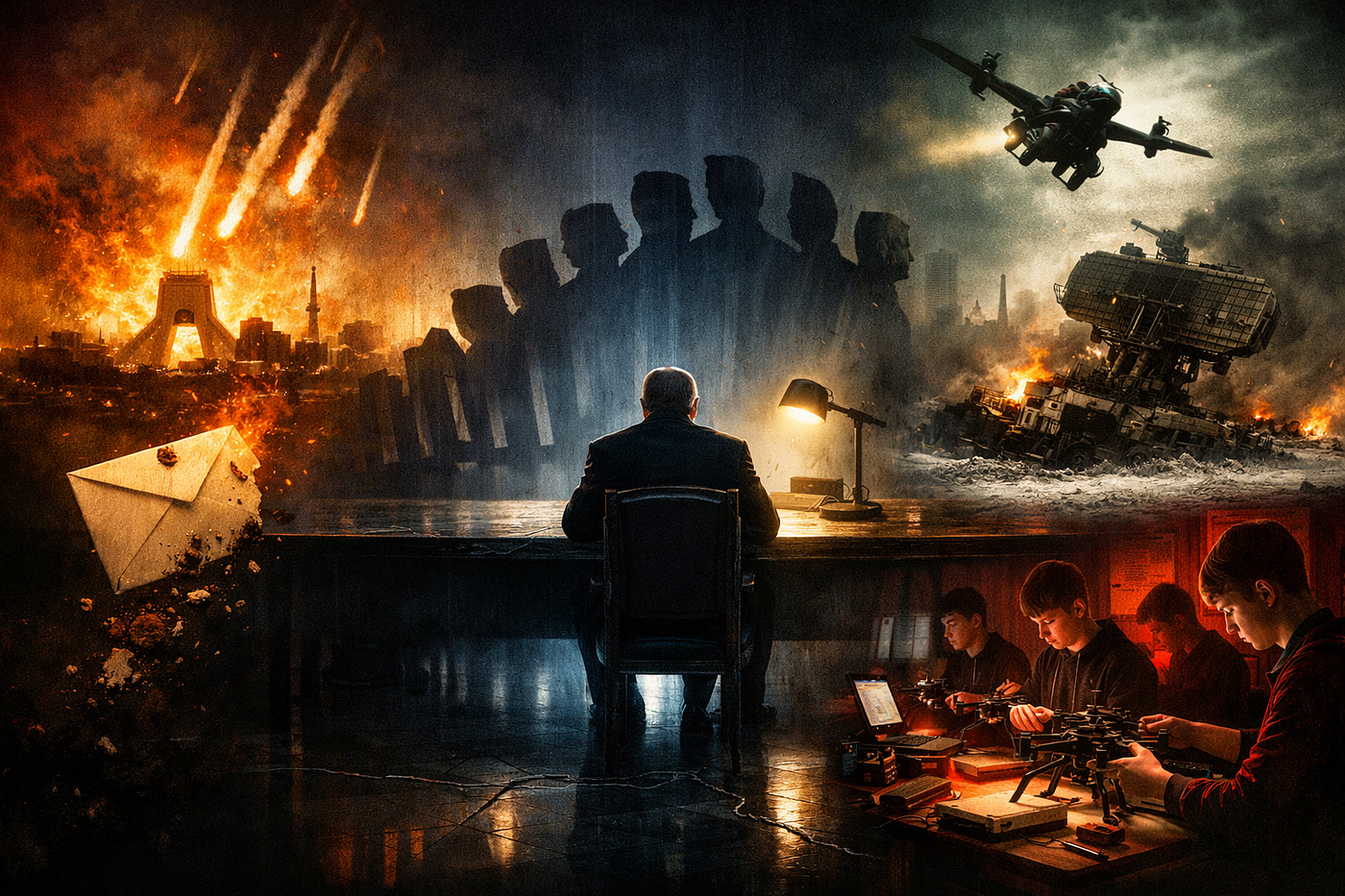
Illustration | Credit: Author
The calls for help went out from Tehran as American and Israeli missiles streaked toward the capital — and from Moscow, there was only silence.
When Iranian Supreme Leader Ali Khamenei was killed in the coordinated U.S.-Israeli strikes on Feb. 28, the world expected Russia, his supposed strategic partner, to react with more than words.
Instead, Vladimir Putin offered condolences — a telegram, a few sympathetic phrases, and nothing else.
No troops. No missiles. No red lines crossed.
Ukrainian Foreign Minister Andrii Sybiha watched the drama unfold and saw something familiar: the same Russia that abandoned Bashar al-Assad when his regime crumbled, the same Russia that watched Nicolás Maduro cling to power without lifting a finger, now standing idle while its most important Middle Eastern ally burned.

Andrii Sybiha | Credit: Getty Images
“Putin’s fall is inevitable,” Sybiha wrote on X. “Together we must do everything possible to bring this joyful day closer.”
His argument is simple and devastating: Russia is not a reliable ally — not even for regimes that depend on it entirely.
And while Moscow remains bogged down in a “senseless war” against Ukraine that it will never win, its global influence is shrinking by the day.
The dominoes, he suggests, are beginning to fall.
The Silence from Moscow
In the hours after Khamenei’s death, the Kremlin released a carefully worded statement.
Putin called the killing a “cynical violation of all norms of human morality and international law.”
He praised the late Supreme Leader as an “outstanding statesman” who strengthened Russian-Iranian relations.

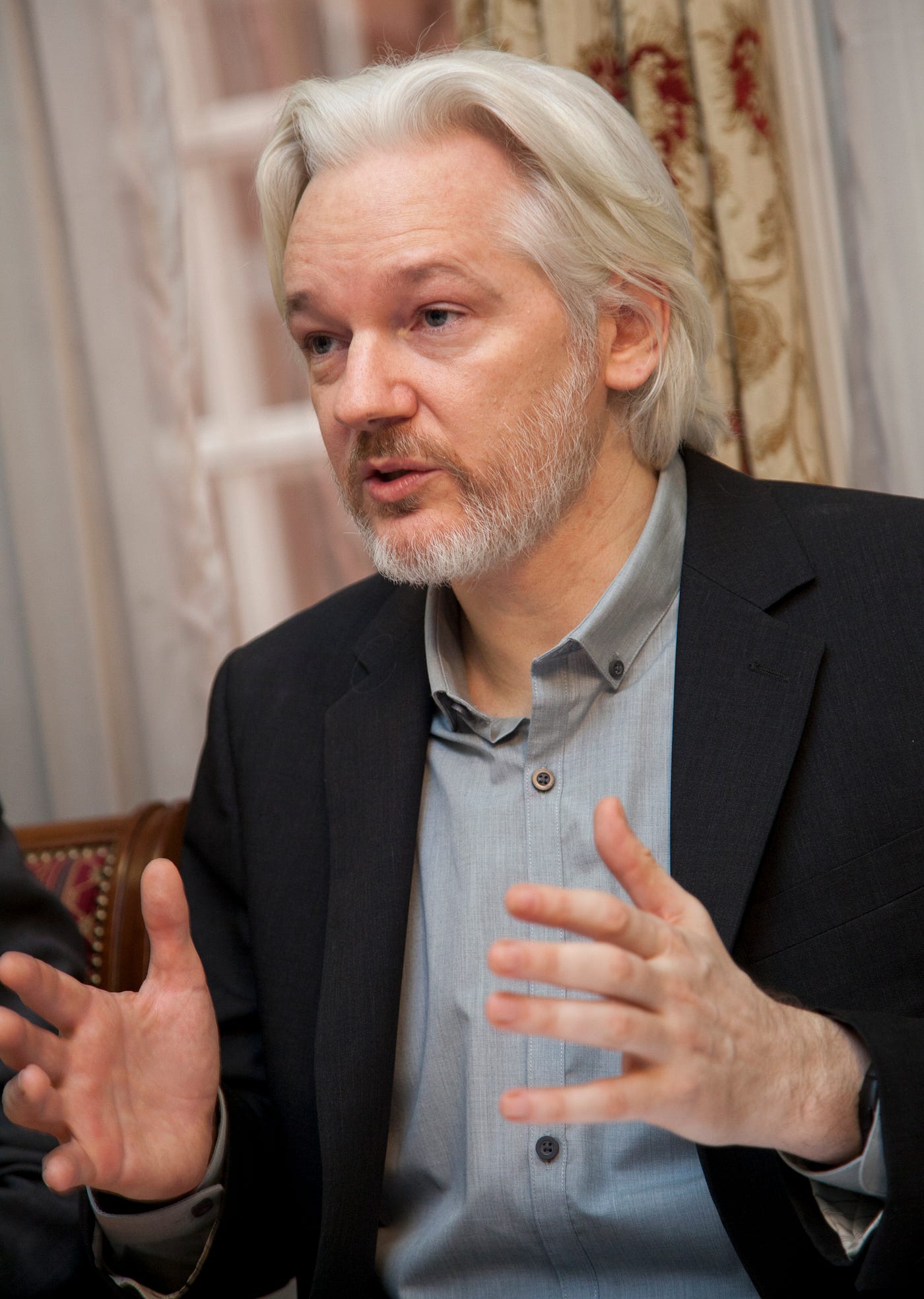
Putin | Credit: Mikhail METZEL / POOL / AFP via Getty Images
What he did not do was offer military support. What he did not do was threaten retaliation. What he did not do was anything that might risk direct confrontation with the United States and Israel.
Iran’s Islamic Revolutionary Guard Corps, meanwhile, announced what it called an “unprecedented military response.” Missile units were placed on highest combat readiness.
The IRGC vowed to strike U.S. bases in Iraq and Syria, to target Israeli strategic facilities, to “change the course of history in the region.”
But without Russia, without its promised Su-35 fighter jets and Mi-28 helicopters and Verba air defense systems, Tehran faces the fight alone.
Experts watching the relationship unfold were not surprised.
“I don’t really see Russia coming to the rescue of Iran,” Olli Ruohomaki, a Middle East expert at the Finnish Institute of International Affairs, told the Kyiv Independent.

Photo Description: Shiite Muslims hold portraits of Iran’s late supreme leader Ayatollah Ali Khamenei as they attempt to storm the US embassy in Islamabad on March 1, 2026 after the death of Iran’s supreme leader Khamenei amid US-Israel strikes. | Credit: Aamir QURESHI / AFP
“Russia is pretty entangled in the Ukrainian war. They are fully committed and already struggling. It’s not like Russia has all these resources to fight many fronts.”
The relationship, he explained, has always been “transactional.” Iran sent drones and ammunition to Russia.
Russia sent tools for suppressing dissent — internet blackout capabilities, GPS jamming, monitoring systems.
But a defensive alliance? That was never part of the deal.
The Asymmetry of Power
Iran has increasingly leaned on Moscow as U.S. pressure mounted and domestic unrest simmered.
After Iran’s air defenses were decimated in the twelve-day war with Israel in June 2025, Tehran turned to Russia for help.
In December, it reportedly signed a deal to purchase 500 Verba man-portable launchers and 2,500 surface-to-air missiles.
Russia’s nuclear energy company Rosatom, which built Iran’s only operational nuclear plant in Bushehr, signed a memorandum in September 2025 to build eight smaller reactors.

Photo Descripton: The logo of Russian atomic energy agency Rosatom | Credit: Eric Piermont/AFP via Getty Images
The strategic partnership agreement signed in January covered energy, finance, transportation, and counterterrorism.
But when the moment of existential crisis arrived, Moscow’s commitments evaporated.
“The relationship is not a defensive alliance: it is exceedingly unlikely Russia will come to save Iran if push comes to shove in an existential sense,” said Julian G. Waller, a lecturer in political science at George Washington University.
Arash Beidollahkhani, an expert at the University of Manchester, notes that Russia’s role has been more about internal stability than external defense.
During the winter crackdown on anti-regime protests, he says, “the Russian footprint was everywhere in the shadows” — the total internet blackout, the jamming of GPS and Starlink, all “hallmarks of Russian electronic warfare doctrine.”
But when the threat comes from outside, from American bombers and Israeli missiles, electronic warfare is no shield.
The Domino Theory
Sybiha’s argument rests on a pattern. In just over a year, Putin has lost three key supporters: Assad in Syria, Maduro in Venezuela, and now Khamenei in Iran.
In each case, Moscow proved unable or unwilling to provide effective assistance at the critical moment.
“Russia is not a reliable ally even for regimes that are fully dependent on it,” Sybiha said.
The implications extend far beyond the Middle East. If Russia cannot protect its closest partners, what message does that send to China? To North Korea? To the African nations now supplying mercenaries for its war?
The toppling of dictators, Sybiha argues, is a “domino effect.” And Putin, he believes, will be next.
The Battlefield Reality: Blinding the Russian Eye
While diplomats parsed the meaning of Khamenei’s death, Ukrainian forces on the ground continued their methodical work of dismantling Russia’s military machine.
On March 1, Ukraine’s Unmanned Systems Forces announced a successful strike on elements of a Russian S-300 surface-to-air missile system in the Donetsk direction.
[embed]
A radar station and a launcher were hit — precision strikes that carry strategic significance far beyond the equipment destroyed.
“Taking out such elements of the system ‘blinds’ air defenses, complicating the detection of aerial targets and missile guidance,” the Unmanned Systems Forces explained.
The radar is the eye of the S-300. Without it, the system cannot see incoming threats. The launcher is the fist. Without it, it cannot strike back.
Together, their destruction creates “gaps” in Russian defenses — openings that Ukrainian drones and missiles can exploit.
“Such actions significantly reduce the enemy’s ability to control the airspace,” the agency concluded.
The strikes are part of a broader campaign.
Ukrainian defenders have recently destroyed Russian Ka-52 and Mi-8 helicopters, hit surface-to-air missile systems near Mariupol and Donetsk, and targeted Russian analogues of Starlink.
The Unmanned Systems Forces published a list of targets for long-range UAVs covering Russian territory from Ryazan to Tuapse.
The message is clear: nowhere is safe. Not the front lines. Not the rear. Not the skies above.
The Quad Bike War
On the ground near Myrnohrad, the fight has taken a strange and desperate turn.
Russian forces, unable to break through Ukrainian defenses with direct assaults, have changed tactics.
They are now attempting to bypass Ukrainian positions from the northeast and southwest, trying to create conditions for the operational encirclement of the city.
[embed]
And they are doing it on quad bikes.
The 79th Separate Air Assault Tavrian Brigade reports a significant increase in quad bike usage by Russian forces for assault operations and infantry transport.
The vehicles offer high cross-country capability, allowing Russian troops to navigate terrain that would bog down heavier equipment.
In many cases, they attempt to move in groups of four on a single vehicle.
But the tactic has a weakness.
“Despite their obvious advantages, quad bikes also have significant drawbacks, including limited maneuverability, which makes it easier for strike drone operators to target them,” the brigade said.
The Russian command has concentrated around 150,000 personnel on the Pokrovsk axis, trying to grind forward through sheer weight of numbers.
Ukrainian defenders recently repelled a large-scale breakthrough attempt by Russian mobile groups. After two days of fierce fighting, the enemy suffered heavy losses.
The quad bikes keep coming. So do the drones that hunt them.
The Classroom War
While Russian soldiers ride quad bikes toward Ukrainian positions, Russian students are learning a different kind of warfare — from textbooks.
In Russia, an official unmanned aerial vehicle textbook has been published for students in grades 10–11.
The manual is planned for use not only in Russian schools but also in educational institutions in the temporarily occupied territories of Ukraine.
The curriculum is comprehensive: students will undergo a full cycle of drone development, from design to testing.

Credit/Source: https://t.me/CenterCounteringDisinformation/17311
They will learn construction, programming, 3D modeling, computer vision, and elements of artificial intelligence. Separate sections cover registration of UAVs and interaction with regulatory authorities.
This is not an isolated initiative. In 2024, a UAV training manual for grades 8–9 was released and integrated into technology classes.
A consistent system is now in place, training students from middle school through high school.
Russian officials frame it as career guidance and technical skill development.
But in the context of a full-scale war where drones have become the dominant weapon, the program looks like something else entirely: a personnel pipeline for the unmanned systems sector, preparation for war beginning in adolescence.
The Center for Countering Disinformation describes it as “an element of militarizing education.”
In practice, Russia is building its future drone operators while they’re still too young to fight — ensuring that when they’re old enough, they’ll already know how to kill.
Ukraine, meanwhile, is launching an operational system for reporting school and kindergarten absences, with data transmitted in real time among educators, police, and social services.
The contrast could not be starker: one nation teaches its children to build weapons; the other tracks whether they showed up for class.
The Putin Problem
Back in Moscow, Putin faces a dilemma that no telegram can solve.
His ally in Iran is dead. His air defenses in Ukraine are being systematically dismantled. His troops are riding quad bikes into drone kill zones. His schools are training children for a war that shows no signs of ending.
And the world is watching.
Sybiha’s “domino effect” may sound like rhetoric, but the pattern is undeniable. Assad fell. Maduro is isolated. Khamenei is gone.
Each time, Russia proved unable to protect its partners. Each time, the perception of Russian power diminished.
“If Tehran is able to take the U.S. into a long protracted conflict, Moscow’s ability to help will increase,” noted Ryhor Nizhnikau, a Russia expert at the Finnish Institute of International Affairs.
But that’s a big if. And in the meantime, Iran faces retaliation alone.
Richard Betts, professor emeritus at Columbia University, suggests Putin has kept support for Iran “low-key” to avoid “annoying Trump” — the same Trump who is now brokering peace talks between Russia and Ukraine, the same Trump who ordered the strikes that killed Khamenei.

Photo Description: U.S. President Donald Trump will deliver his annual state of the union address to a joint session of Congress on Tuesday night. | Credit: Alex Brandon/The Associated Press
The calculation is cold and clear: Iran is expendable. The war in Ukraine is not.
The Long View
As the sun set on March 1, the situation remained fluid. Iranian missile units were on highest alert.
The IRGC promised retaliation that would “change the course of history.” U.S. bases across the Middle East braced for impact.
In Ukraine, another S-300 lay in smoking ruins. Another quad bike burned in a field near Myrnohrad.
Another class of Russian teenagers opened their drone textbooks and learned to build what would someday kill.
And in Moscow, Vladimir Putin sat alone with his thoughts and his telegrams, watching the dominoes fall one by one.
“Putin’s fall is inevitable,” Sybiha had said. “Justice is unavoidable.”
The words hung in the air like drones over a battlefield — waiting, watching, ready to strike.
Thank you for reading.
Best way to support my work? Simply by reading the articles I write.
If you enjoy music, I write & produce music under “Iron Nyx”. ***Spotify & [YouTube](https://youtube.com/@ironnyx?si=rTb63Gvslf9cYh55)*** are the best places to find it.
Music Genres: Alternative Rock, Rap & Hip Hop, Dark Outlaw Rock, Low-Fi, Country. I tend to dip into many different genres.
If you’re more of a book person, I also write books. Can find them on ***Amazon KDP* & [Gumroad](https://redcreative.gumroad.com/)**.
For my books, I write fiction mostly. There are a few books that are non-fiction, they are books to help with writing, student cook book, Fantasy, Adventure, Romance. I do need to update Gumroad, BUT Amazon KDP does has everything.
메타데이터
- post_id
- cb5a474e4646
- slug
- the-day-russias-ally-fell-how-tehran-exposed-moscow-s-empty-promises-cb5a474e4646
- url
- https://medium.com/@jayduggy87/the-day-russias-ally-fell-how-tehran-exposed-moscow-s-empty-promises-cb5a474e4646
- canonical_url
- https://medium.com/@jayduggy87/the-day-russias-ally-fell-how-tehran-exposed-moscow-s-empty-promises-cb5a474e4646
- author_url
- https://medium.com/@jayduggy87
- status
- ok
- fetched_at
- 2026-06-11 05:11:55