From the Big Bang to Earth
The Story of Our Cosmic Origins
From the Big Bang to Earth
The Story of Our Cosmic Origins
About 13.8 billion years ago, everything that exists today began with a single, extraordinary event known as the Big Bang. At that time, the entire Universe was compressed into an extremely small and dense point, no larger than a grain of sand. Suddenly, this point began to expand. This expansion marked the birth of space, time, matter, and energy.
In the first moments after the Big Bang, the Universe was unimaginably hot and filled with enormous amounts of energy. The temperature was so extreme that no particles or structures could form. However, as the Universe continued to expand, it gradually cooled. This cooling allowed matter to begin separating and organizing itself. During this early phase, the four fundamental forces of nature appeared: gravity, electromagnetism, the strong nuclear interaction, and the weak nuclear interaction. These forces govern how matter behaves and interact with each other throughout the Universe.
Scientists know that the Big Bang occurred partly because of the discovery of the Cosmic Microwave Background, a faint radiation that fills the entire Universe. This radiation is essentially the leftover heat from the moment the Universe became transparent to light, providing strong evidence of the early hot state of the cosmos.
As the Universe continued expanding, it became increasingly stable. Eventually, the first atoms formed. These atoms gathered together into vast clouds of gas. Over time, gravity caused these clouds to collapse and heat up, eventually igniting nuclear fusion. This process gave birth to the first generation of stars.
Inside stars, extreme heat and pressure allow hydrogen atoms to fuse into heavier elements such as helium, oxygen, and carbon. This nuclear fusion releases enormous amounts of energy, which is why stars shine so brightly. However, stars do not live forever. When they run out of fuel, they can no longer sustain fusion. Massive stars collapse under their own gravity and explode in dramatic events called Supernova. These powerful explosions scatter heavy elements — such as iron, gold, and lead — into space.
These stellar explosions are crucial for the creation of planets and life. The dust and elements expelled by dying stars mix with interstellar gas and eventually form new stars and planetary systems. In this way, matter in the Universe is constantly recycled. Every atom in our bodies was once forged in the core of ancient stars. Without this cosmic recycling, planets and life would never have formed.
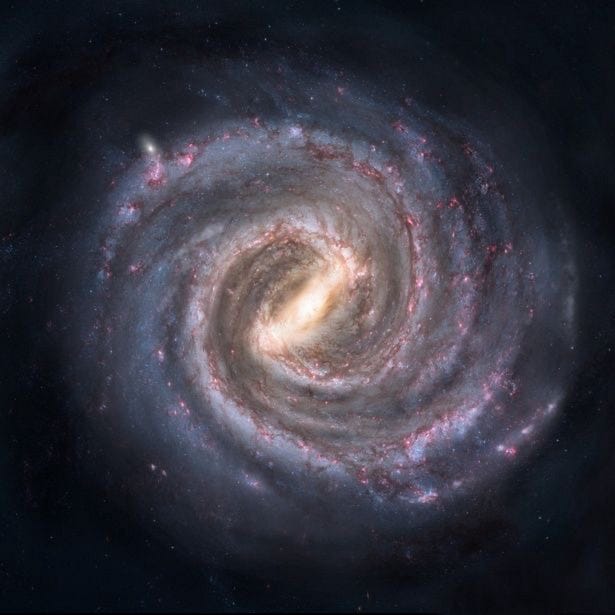
Our home galaxy is the Milky Way, a vast spiral galaxy containing roughly 300 billion stars, including our own Sun. Astronomers estimate that the Universe may contain around two trillion galaxies. The Milky Way stretches about 100,000 light-years across and rotates around a supermassive black hole called Sagittarius A*, which has a mass roughly four million times greater than the Sun.
Galaxies themselves are not static. They move through space at enormous speeds, sometimes interacting and merging with each other. In about four billion years, the Milky Way is expected to collide and merge with the Andromeda Galaxy, forming a new, larger galaxy.
Within the Milky Way lies our Solar System, located in a region known as the Orion Arm, about 25,000 light-years from the galactic center. Around 4.6 billion years ago, our Solar System did not yet exist. Instead, there was a vast cloud of gas and dust drifting through space. One day, this cloud collapsed under its own gravity. As it collapsed, it began spinning faster and heating up.
At the center of this spinning cloud, matter accumulated into a dense and extremely hot core. Eventually, the temperature became high enough to ignite nuclear fusion, giving birth to the Sun. In the Sun’s core, temperatures exceed 15 million degrees Celsius. The Sun is so massive that it contains more than 99.8% of all the matter in the Solar System.
Around the young Sun remained a disk of gas, dust, and rocky particles. Through a process called accretion, these small particles collided and stuck together, gradually forming larger bodies. Over millions of years, these collisions produced protoplanets, which eventually became the planets, moons, asteroids, and comets of our Solar System.
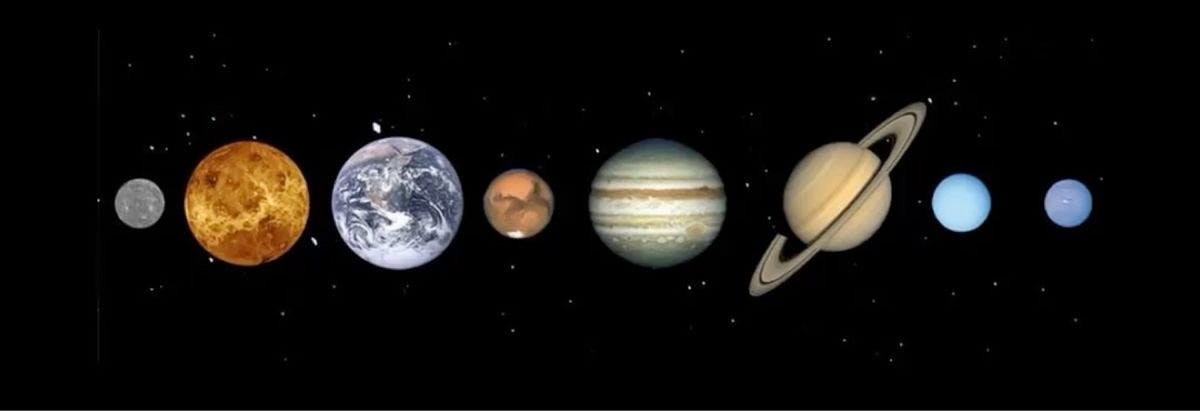
The Solar System ultimately formed eight major planets, divided into two main groups. The first group is the terrestrial planets: Mercury, Venus, Earth, and Mars. These planets are relatively small and have solid, rocky surfaces.
Farther from the Sun lie the Jovian planets, which are much larger and mostly composed of gas or ice. These include the gas giants Jupiter and Saturn, as well as the ice giants Uranus and Neptune. All of these outer planets possess ring systems and numerous moons.
Not all material in the early Solar System became planets. Between Mars and Jupiter lies the Asteroid Belt, a vast ring of rocky fragments. A planet might have formed there, but Jupiter’s immense gravitational pull prevented the material from merging. Some of the largest objects in this region include Ceres, Vesta, and Hygiea.
Beyond the orbit of Neptune lies the Kuiper Belt, a region filled with icy objects. One of the most famous of these is Pluto, which was reclassified as a dwarf planet in 2006. Even farther away lies the Oort Cloud, a vast spherical region containing billions of icy fragments that mark the outer limits of the Sun’s gravitational influence.
The formation of Earth began about 4.6 billion years ago. In its earliest stage, the young Earth was a molten sphere constantly bombarded by meteorites and fragments of rock from space. These violent impacts released enormous amounts of heat, causing much of the planet to melt.
As Earth remained molten, its materials began to separate according to their density. Heavy elements such as iron sank toward the center, forming the core, while lighter materials rose to form the mantle and crust. This process, known as planetary differentiation, shaped the internal structure of our planet.
During this turbulent period, Earth developed its first atmosphere. However, it was very different from today’s atmosphere. Volcanoes released gases such as water vapor, carbon dioxide, and sulfur compounds. Oxygen was completely absent. The atmosphere was also about one hundred times denser than it is today, making it impossible for humans to breathe. Nevertheless, this thick atmosphere trapped heat, promoted chemical reactions, and protected the young Earth from many impacts.
As Earth gradually cooled, water vapor in the atmosphere condensed into liquid. Torrential rains fell for thousands of years, eventually filling depressions in the surface and forming the first oceans.
Shortly after Earth formed, another dramatic event occurred. A massive object known as Theia collided with the young Earth. The impact was so powerful that enormous amounts of debris were blasted into space. Over time, this debris formed a ring around Earth that eventually came together to create the Moon.
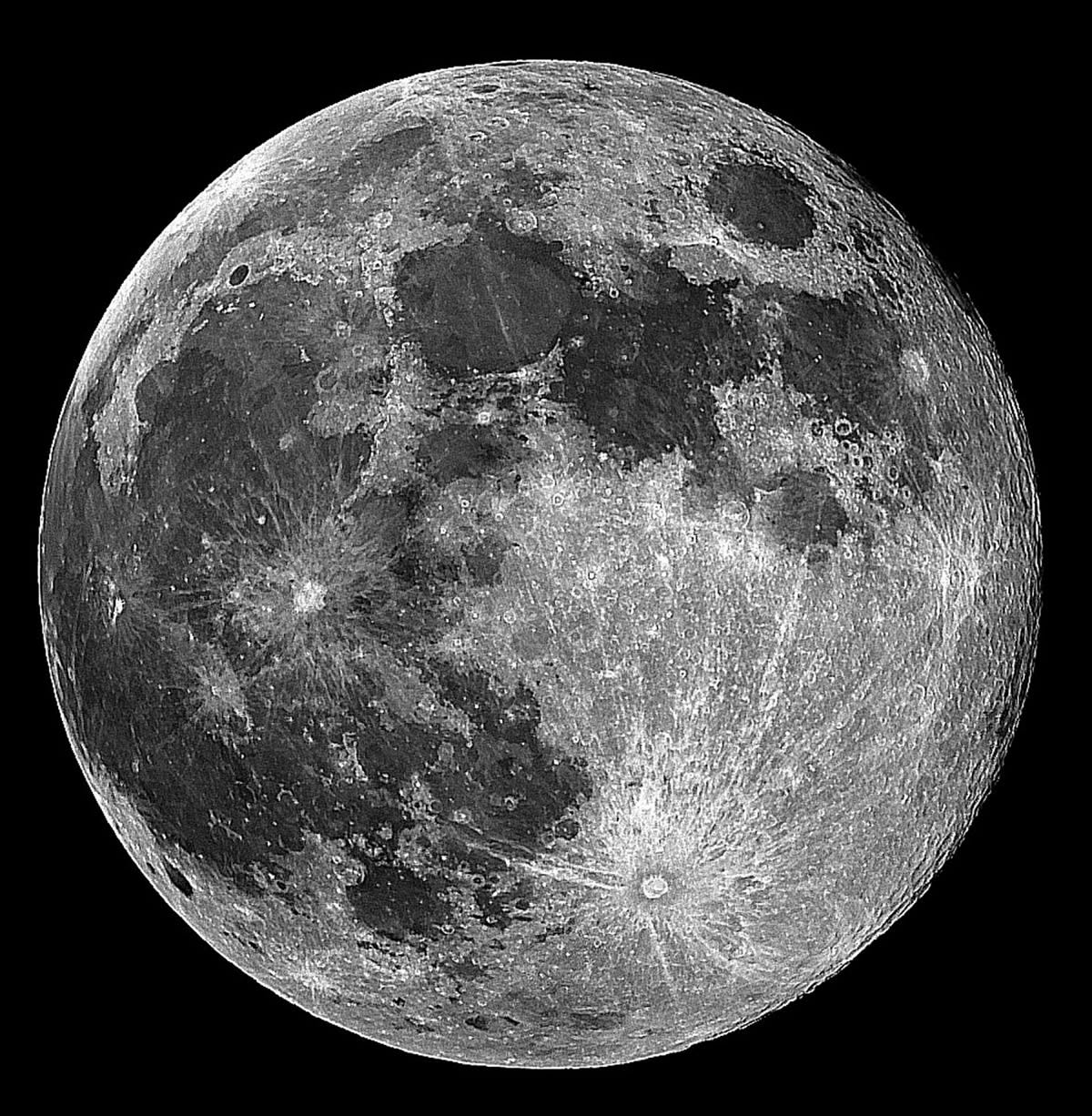
The Moon plays a crucial role in Earth’s stability. Its gravitational influence helps stabilize Earth’s tilt of about 23.5 degrees, which is responsible for the seasons. The Moon also creates ocean tides by pulling on Earth’s waters. Without the Moon, Earth’s climate would be far more unstable, and the conditions for life might have been much less favorable.
From a tiny point at the beginning of time to the formation of stars, galaxies, planets, and eventually Earth itself, the story of the Universe is one of continuous change and transformation. Every atom on our planet — and in our own bodies — has traveled through this cosmic history, linking us directly to the stars that once lived and died billions of years ago.
메타데이터
- post_id
- cb706d394ef7
- slug
- from-the-big-bang-to-earth-cb706d394ef7
- url
- https://medium.com/@ssdtqxnc/from-the-big-bang-to-earth-cb706d394ef7
- canonical_url
- https://medium.com/@ssdtqxnc/from-the-big-bang-to-earth-cb706d394ef7
- author_url
- https://medium.com/@ssdtqxnc
- status
- ok
- fetched_at
- 2026-07-12 02:20:00