The Mountain Always Wins
Two sisters’ attempt at tackling Mount St. Helens
OUTDOOR ME
The Mountain Always Wins
Two sisters’ attempt at tackling Mount St. Helens

Above the clouds on Mount St. Helens. (Photo by author)
It’s never a good omen when your hiking partner gets carsick on the way to the trailhead. It could be a sign that you should just turn around and go back home.
My sister Lisa wasn’t having it. Even though I was driving, she was really technically the one behind the wheel. We were on our way to climb Mount St. Helens. She traveled all the way from Chicago to visit me in Washington state, and she was going to summit that mountain no matter what.
I usually try to avoid arguing with her. Lisa is four years older and is accustomed to supervising people in her occupation. She is intelligent, determined, driven, and not one for throwing in the towel. She is assertive and blunt, not like me, her soft-hearted sister who tries to make peace with everyone.
It all started in the fall of 2024. We were catching up on the phone, and she was the one who came up with the idea of climbing Mount St. Helens. We decided to do it in the first part of September in 2025. I had previously climbed and summitted Mount St. Helens with some friends in September 2022. Most of the snowpack had melted by September, and you could luck out and get a sunny, clear day.

View of Mount St. Helens from Lewisville Hwy on a sunny day in March. (Photo by author)
My sister asked me what I needed to do to train for climbing the mountain. I thought it was ironic that she asked me for advice, as she was always the most athletic one in the family. She played several sports in high school, while I read books and studied. Oh, she did all that, too. She graduated as the valedictorian of her class.
I felt confident in her ability to climb Mount St. Helens. She worked out routinely and was a runner. I advised her to strengthen her quadriceps muscles, hike, and do aerobic exercise. No problem, she said.
I ran, cycled, and swam consistently and felt confident regarding my endurance and stamina. I had also been doing kettlebell training, and my upper body strength had never been so good, definitely stronger than I was in my 20s. Still, I knew that climbing Mount St. Helens was a formidable task.
I informed Lisa months ahead of our scheduled climb what she would need to bring. Hiking boots, gloves, headlamp, layered clothing, sunscreen, food, water, electrolytes, etc. I sent her videos of what to expect on the climb, along with testimonials of those who had summited.
My sister arrived in Washington on a Thursday morning in early September, and she wanted to hike Mount St. Helens the following day. I had already secured the climbing and parking permits. Months ago, I had tried to talk her into giving herself a day after traveling to relax. We could do the climb on Saturday, not Friday. She said it wouldn’t be a problem.
We stayed at a vacation rental in Stevenson, WA, and woke up early on Friday morning to head to the trailhead. The drive was over an hour long, and it was before sunrise. I was driving with Lisa riding shotgun. Soon, we were on winding roads snaking through the forest. That’s when she announced that she was feeling sick.
I hadn’t traveled with her in years, and I had no idea that she was prone to getting carsick. I asked her if she wanted me to pull over. She declined the offer, reclined her seat, and closed her eyes. Uneasiness began to settle in my own stomach out of concern for her.
We eventually turned off the meandering paved road onto a forest road. The road was rough and bumpy in my little SUV, and I dodged potholes and rocks. She started feeling worse and needed to get out of the car. We pulled over, and she immediately deposited her breakfast along the forest road. She got back into the car, stating one of her most famous lines: “I’m fine.”
I told her that we could turn back around and bag the whole adventure. Starting a grueling hike with dehydration and nausea was a recipe for disaster. She wanted to keep going. About five minutes later, I pulled the car over again, stopping so she could further empty whatever remained in her stomach.
I offered her a way out again. There was no shame in turning back around. She said no, and I wasn’t one for arguing with my older sister, who was used to being in charge. We finally made it to Climber’s Bivouac trailhead, the start of the Ptarmigan trail going up the mountain.

Photo by author
Once we parked and walked around a little bit, Lisa declared that she was feeling better and that her stomach had settled down. She wanted to push forward. The first part of the hike was an easy stroll through a two-mile trail in the forest. If she didn’t do well on the trail, there was no way she was going to be able to traverse up boulders for hours.
The two miles seemed like a breeze for her. Eventually, the trail cleared the forest, and the trees gradually disappeared. Lisa said she was feeling well and ready to forge ahead. The trail became rocky and less defined. Soon we were negotiating boulders. Our guides to the summit were large wooden posts erected on the side of the mountain.

Boulders, ash, and more boulders. (Photo by author)
Because I had climbed Mount St. Helens before, I led the way. My sister began having trouble keeping up, so I slowed my pace. Her breathing became heavier, even though the elevation gain wasn’t especially significant at that point. We took a break, sitting down on boulders, eating some snacks, and filling up on water.

Resting and “counting” the number of boulders remaining. (Photo by author)
After about ten minutes of rest, we returned to scrambling over boulders. Her pace became even slower, and she needed to take more little breaks. She would point to a post up ahead and say, “Let’s make it to that post and then rest.” Then it became: “Let’s make it to that rock and then rest.” This was how our trek went on for a while. It was slow and arduous. Sometimes I didn’t know exactly which boulder she was pointing to because, well, frankly, they all started to look the same.
She was fading, especially now that the elevation had increased and we were almost to the ash section of the climb. We were about 80 percent of the way to the summit. I went ahead a little to scope out the rest of our climb. I came back to see her sitting on a boulder with her arms crossed over her head in her lap. She was done. I told her that we were turning back around. This time, she didn’t protest.
We started making the trek back down the mountain. As the elevation dropped, my sister perked up a little, and her condition improved. We still had a few hours of negotiating boulders back down to the tree line and to the trail. I was anxious and kept a close eye on her, praying she would feel well enough to make it down.

In a sea of boulders. (Photo by author)
Her energy started to dwindle again. She had run out of water and hadn’t brought electrolytes like I had advised her to do. I added my electrolytes to my water bottle and had her drink it, even though she protested at its taste. I suddenly took on the role of the elder sister, telling her she needed to drink it, and I wasn’t going to listen to her argue about it.
I was almost out of water in my own hydration reservoir. She asked me if I had enough water for myself, and I lied and said I did (I later told her the truth). At that point, I was in a much better condition than she was. She brightened up a bit after drinking the electrolytes, but the energy was ephemeral.
Lisa stopped, sat on a boulder, and started talking crazy. She told me to just leave her there and that no one would care. She started talking about our dad, who had died three years prior, and how it was her fault that he died. She started crying and wasn’t making any sense. She was irrational. I told her that our dad’s death was no one’s fault and that was a conversation for another time. I told her that all we needed to think about was getting off the side of the mountain, as we were exposed and nearly out of water. We had to make it back down to the shade of the forest trail.
After some more tough love and encouragement, we thankfully made it to the trail. Walking on flat terrain in the shade of the mighty evergreen trees soothed and calmed her. I walked behind her, letting her know that we were almost done and she could rest soon. She just had to go a little bit further.

Tucked into the trees again. (Photo by author).
The trail finally spit out into the parking lot. The glorious parking lot. I had water and electrolyte drinks in my car, and I made her drink a couple of small bottles to start. She started to come back to life and to coherence.
I made her recline in the passenger seat of the car and close her eyes. We got back out on the forest road and soon were on smooth, paved asphalt. We pit-stopped at a convenience store to fuel up on more water and electrolytes.
We returned to Stevenson. I vowed to myself that we were never going to try climbing Mount St. Helens again. I felt like I could have summited without an issue, but I would never put my sister through that again. It was not worth it.
I felt completely responsible for putting her in danger. I knew that she was lucky to have made it off the mountain. We talked to our respective husbands on the phone to update them on how the day went. I knew I was going to be in trouble with Lisa’s husband.
I wasn’t. After 25 years of marriage, my brother-in-law knew how stubborn my sister was. He gently but firmly scolded her for not being better prepared and for not listening to my advice preceding the climb. I still felt guilty. We should have turned around long before we did on the mountain. We probably shouldn’t have even attempted it, knowing that she was going into the journey dehydrated and not properly fueled. I should have been more assertive. I shouldn’t have allowed the “older sister card” to trump my better judgment.
We ate dinner and went to bed. The next morning, on Saturday, Lisa seemed physically and mentally back to her old self, as if nothing had happened. We enjoyed spending the day together, walking along the Columbia River and exploring the local farmers’ market. It was a beautiful, relaxing day in the Pacific Northwest.

Stevenson, WA. (Photo by author)
I drove her to the airport on Sunday so she could return to Chicago. That’s when she announced that she wanted to try climbing Mount St. Helens again next September. She said she learned her lesson and would be much better equipped and fueled the next time. I told her I didn’t want to do it again. Nope. No way. She told me she was going to do it with or without me. The woman was tenacious.
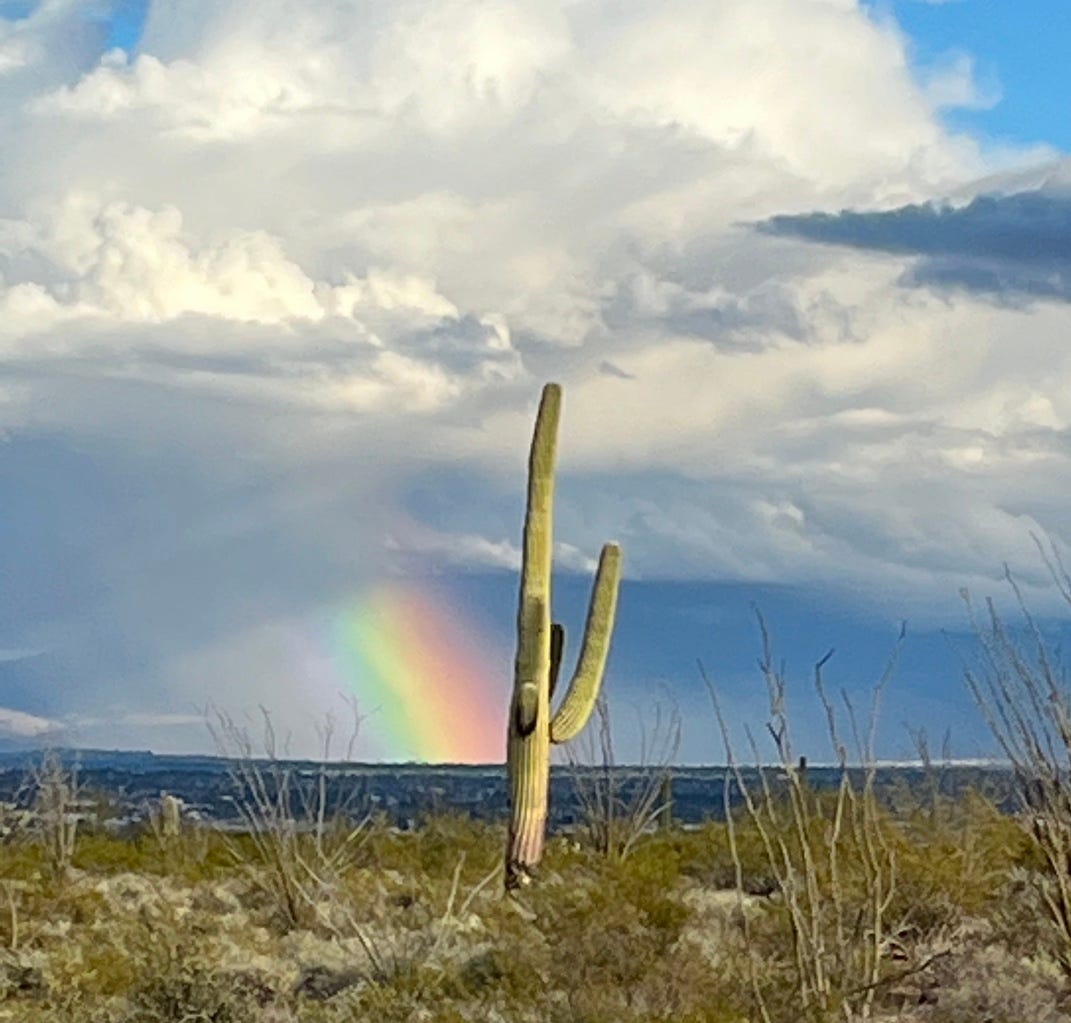
Being the older sister, she eventually talked me into it over the next few months. She knew now firsthand the intensity of the endeavor. It was a humbling experience for both of us. She now knew what to do and what not to do. Mount St. Helens was not like the desert hills we climbed up as children, growing up in Arizona. The mountain commanded respect, and we were privileged to attempt to summit it.
I have mixed feelings about climbing Mount St. Helens again with her, but I can’t let her try to do it alone. I’m still trying to convince her to camp out at the trailhead the night before the climb, so she isn’t carsick in the morning. Otherwise, I will let her drive. I’ll be along for the ride and the climb, just like a little sister should be. I’ll also be there to back her up, just like a sister should.

My sister on the left and me on the right. Before it all began, there were smiles. (Photo by author)
If you’re interested in reading about my Mount St. Helens journey in 2022, check out Crater Fever: Metamorphosized by Mount St. Helens. Thank you!
메타데이터
- post_id
- cb992ebc33f6
- slug
- the-mountain-always-wins-cb992ebc33f6
- url
- https://medium.com/the-new-outdoors/the-mountain-always-wins-cb992ebc33f6
- canonical_url
- https://medium.com/the-new-outdoors/the-mountain-always-wins-cb992ebc33f6
- author_url
- https://medium.com/@danablackpt
- status
- ok
- fetched_at
- 2026-06-13 12:55:53