Best Microphone for Faceless YouTube Cooking Videos
As an Amazon Associate, I earn from qualifying purchases.
Best Microphone for Faceless YouTube Cooking Videos
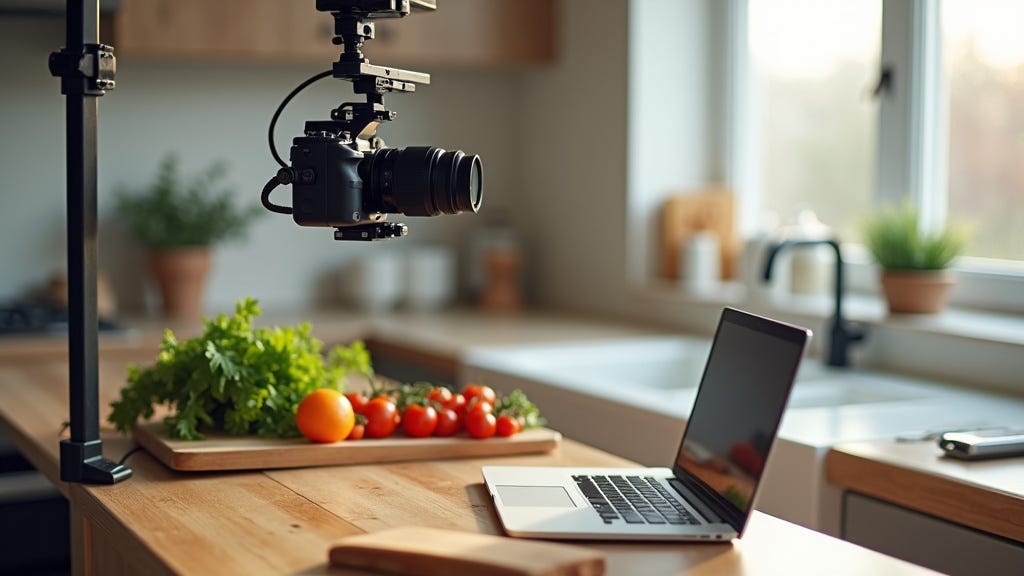
As an Amazon Associate, I earn from qualifying purchases.
If you make faceless cooking videos, your microphone matters more than most beginners think.
Viewers can forgive simple lighting. They can forgive a basic phone camera. They can even forgive a slightly messy countertop if the recipe looks useful.
But bad audio feels cheap fast.
For cooking content, the problem is not just voice quality. It is kitchen noise. Knife taps, running water, sizzling pans, extractor fans, fridge hum, clanking bowls, and echo from hard surfaces all fight your narration.
That means the “best microphone” depends on how you actually record.
If you record voiceovers after cooking, a USB desktop microphone is usually the cleanest beginner move. If you talk while cooking, a wireless lavalier system makes more sense because the mic stays close to your mouth while you move around.
For most beginner faceless YouTube cooking channels, my top pick from this list is the AKG Pro Audio Ara Professional USB-C Condenser Microphone, Dual Pattern Audio Capture Modes.
It is simple, USB-C, creator-friendly, and the dual pattern setup gives it more flexibility than a basic one-mode desk mic. For recipe voiceovers, ingredient explainers, and calm narration over B-roll, that is usually enough without making your setup feel complicated.
Quick Buying Judgment
If you mainly record voiceovers after filming, get a USB condenser mic.
If you talk while your hands are cooking, get a wireless lavalier.
If you are filming in a loud kitchen with lots of hard surfaces, do not expect any mic to magically fix the room. You may still need to record voiceover separately, turn off loud appliances, move away from tile walls, and add soft materials nearby.
Here is how I would rank the options for beginner faceless cooking creators.
1. AKG Pro Audio Ara Professional USB-C Condenser Microphone
AKG Pro Audio Ara Professional USB-C Condenser Microphone, Dual Pattern Audio Capture Modes
The AKG Ara is the best starting point here for most faceless YouTube cooking channels.
It is a USB-C condenser microphone, which means you can plug it into a computer and record voiceovers without needing an audio interface. That matters if your workflow is simple: film the cooking, edit the footage, then record narration while watching the timeline.
The useful detail is the dual pattern audio capture. For a cooking channel, you will usually want a focused solo setup for narration. But having more than one capture mode gives you a little more room to adapt if you record at a table, include another speaker, or capture a wider sound source.
This is the kind of mic I would use for calm recipe narration, “here is why this works” cooking explainers, grocery prep videos, and faceless educational food content.
It is not the right choice if you want to walk around the kitchen while talking live. A desktop USB mic wants you to stay reasonably close and consistent. If you turn away from it, chop loudly beside it, or stand several feet away, your audio will get worse.
Pros:
- Simple USB-C setup for beginner creators.
- Better suited to voiceover than a phone mic across the room.
- Dual capture modes add flexibility.
- Good fit for faceless channels that narrate after filming.
Cons:
- Not ideal for live cooking narration while moving around.
- Condenser mics can pick up room echo and kitchen noise.
- Needs decent mic placement to sound good.
Best for:
Faceless cooking creators who record clean voiceovers at a desk or quiet counter after filming the recipe.
Buying caveat:
Do not buy this expecting it to remove kitchen noise by itself. Use it close to your mouth, record in a quiet room, and keep the gain controlled. A cheap boom arm or small stand placement upgrade can matter almost as much as the mic.
2. Audio-Technica AT2020USB+ Cardioid Condenser USB Microphone
Audio-Technica AT2020USB+ Cardioid Condenser USB Microphone, with Built-in Headphone Jack &
The Audio-Technica AT2020USB+ is the more established USB microphone pick.
It is a cardioid condenser USB mic, which means it is designed to focus mainly on sound from the front. For YouTube cooking voiceovers, that is useful because you can sit in front of the mic and record narration with more control than you would get from a camera or laptop mic.
The built-in headphone jack and volume control are practical. Beginners often record an entire voiceover before realizing the mic was too quiet, too loud, or full of background hum. Monitoring helps you catch problems earlier.
For a faceless cooking channel, this mic makes sense if you want a more traditional creator desk setup. You film your overhead shots, close-ups, pan shots, and plating sequence. Then you record narration separately with the mic in front of you.
That workflow is often better than trying to speak while cooking. It lets you write tighter lines, cut dead air, and make the video feel more polished.
Pros:
- Cardioid pickup is useful for solo narration.
- Built-in headphone monitoring is beginner-friendly.
- Strong fit for voiceover-heavy cooking channels.
- USB connection keeps the setup simpler than XLR.
Cons:
- Usually less flexible than a wireless mic for live kitchen movement.
- Still needs a quiet recording space.
- May be more mic than some casual beginners need.
Best for:
Creators who want a dedicated voiceover mic for recipe videos, food explainers, meal prep channels, and long-form YouTube narration.
Buying caveat:
This is a voiceover-first choice. If your style is “talk while stirring, chopping, and moving around,” a lavalier system will probably fit your production style better.
3. DJI Mic 3 Transmitter
DJI Mic 3 Transmitter, Wireless Mini Microphone for iPhone/Camera/Android, Lightweight &
The DJI Mic 3 Transmitter is the pick for creators who do not want to be stuck at a desk.
The listing highlights a lightweight, compact wireless mic designed for phones, cameras, Android, iPhone use cases, vlogging, interviews, and streaming. It also mentions 32-bit float and integrated timecode. Those are more advanced features than a total beginner may need, but they point toward a more production-focused wireless workflow.
For faceless cooking, the biggest advantage is simple: the mic can stay close to your voice while your camera watches the food.
That matters if your videos include live commentary like “I’m lowering the heat here because the garlic is starting to brown” or “listen for the sizzle to calm down before adding the sauce.” Those moments can make cooking videos feel more human and useful.
A wireless mic also works well if your camera is mounted overhead, across the counter, or on a tripod several feet away. Camera-mounted audio from that distance usually sounds thin and roomy. A lavalier-style mic near your mouth usually beats that.
Pros:
- Better for moving around the kitchen.
- Useful when the camera is not near your mouth.
- More suitable for live cooking narration than a desk mic.
- Compact wireless format fits mobile creator workflows.
Cons:
- Wireless setups add charging, pairing, and file-management considerations.
- The listing evidence notes no featured offers for the captured page, so availability should be checked before buying.
- May be more advanced than needed for simple voiceover-only channels.
Best for:
Creators who talk during cooking, shoot with a phone or camera, and want the voice to stay clear while moving around the kitchen.
Buying caveat:
Check the exact package before buying. A transmitter-only listing may not include everything every creator expects. Make sure your phone, camera, or recording setup has the receiver or connection path you need.
4. DJI Mic Mini (2 TX + 1 RX)
DJI Mic Mini (2 TX + 1 RX), Detail-Rich Audio, Wireless Lavalier Microphone for
The DJI Mic Mini setup is the better wireless choice if you want a small two-person system.
The listing evidence describes a 2 TX + 1 RX configuration and says the transmitter is small and ultralight. For a cooking channel, that can be useful even if the videos are faceless.
Why would a faceless channel need two transmitters?
Because not every cooking video is one-person narration. You might have a second person off camera tasting, asking questions, reading recipe steps, or reacting while the camera stays focused on the food. You might also use one transmitter as your main voice mic and keep the second as backup.
The lightweight design also matters on camera. Even if your face is not shown, your shirt, apron, or torso may appear in frame. A smaller mic is less visually distracting.
This setup makes sense for kitchen creators who want flexibility without jumping into a full audio rig.
Pros:
- Two-transmitter setup is useful for two-person cooking formats.
- Small transmitter is easier to hide or wear discreetly.
- Better for live movement than a USB desktop mic.
- Good fit for phone or camera-based kitchen shooting.
Cons:
- More setup steps than a single USB mic.
- Wireless audio still requires battery management.
- The captured listing evidence noted no featured offers, so availability may vary.
Best for:
Cooking creators who want wireless narration, two-person recipe videos, taste-test commentary, or a more flexible kitchen filming setup.
Buying caveat:
If you only record voiceovers after filming, this may be overkill. A USB mic will be simpler. Buy this because you need movement, two transmitters, or in-kitchen narration.
5. ZERFUN Pro Wireless Lavalier Lapel Microphone System
ZERFUN Pro Wireless Lavalier Lapel Microphone System for iPhone Android Phone PC Laptop
The ZERFUN Pro Wireless Lavalier system is the budget-style wildcard on this list.
The listing evidence points to a wireless lavalier system with USB-C and Lightning support, 2.4G connectivity, compatibility with phones, tablets, laptops, and features like one-tap noise cancellation, mute, reverb, ear monitoring, and a smart digital display.
For beginner cooking creators, the appeal is obvious. It aims to solve a lot at once: phone connection, wireless recording, basic noise control, and portable creator use.
That can be useful if you film on a phone and want a simple way to improve spoken audio without buying a desktop mic, audio interface, or camera-specific setup.
But this is also where I would be most careful.
Feature-heavy budget wireless systems can be convenient, but the real test is consistency: connection stability, battery behavior, clipping, background-noise handling, and whether the noise cancellation makes your voice sound processed. Since I am not claiming hands-on testing here, I would treat this as a practical budget option, not the safest quality pick.
Pros:
- Wireless lavalier format works well for moving around the kitchen.
- USB-C and Lightning support can be useful for phone creators.
- Listed features include noise cancellation and monitoring.
- Potentially convenient for beginner mobile workflows.
Cons:
- More unknowns than the established USB mic options.
- Noise cancellation can sometimes make voices sound unnatural.
- The captured listing evidence noted no featured offers, so check availability carefully.
Best for:
Beginner creators filming on a phone who want a wireless lapel mic setup and are willing to check compatibility closely before buying.
Buying caveat:
Make sure it works with your exact phone, case, editing workflow, and recording app. Also test it before filming a real recipe batch. Wireless problems are much easier to fix before the food is on the stove.
What I Would Actually Buy
For most faceless YouTube cooking videos, I would start with the AKG Pro Audio Ara Professional USB-C Condenser Microphone, Dual Pattern Audio Capture Modes.
It fits the cleanest beginner workflow: film the food first, then record a controlled voiceover. That gives you better pacing, clearer explanations, and fewer ruined takes from kitchen noise.
If you want a more established voiceover setup with headphone monitoring, choose the Audio-Technica AT2020USB+ Cardioid Condenser USB Microphone, with Built-in Headphone Jack &.
If your cooking style depends on talking while you move, skip the desktop mic and look at the DJI Mic Mini (2 TX + 1 RX), Detail-Rich Audio, Wireless Lavalier Microphone for or the DJI Mic 3 Transmitter, Wireless Mini Microphone for iPhone/Camera/Android, Lightweight &, depending on the package you need.
Final Verdict
The best microphone for faceless YouTube cooking videos is not automatically the most expensive or most advanced mic.
It is the mic that matches your filming style.
For voiceover-first recipe videos, get a USB condenser mic and record in a quiet space. The AKG Ara is the easiest recommendation here for most beginners.
For live kitchen narration, get a wireless lavalier system so your voice stays close even when the camera is far away.
And no matter what you buy, remember this: microphone placement beats microphone hype. A decent mic used close and correctly will usually sound better than a fancy mic placed across a noisy kitchen.
Topics: Content Creation, YouTube, Tech, Audio, Home Studio
메타데이터
- post_id
- cbda879e2d34
- slug
- best-microphone-for-faceless-youtube-cooking-videos-cbda879e2d34
- url
- https://medium.com/@CreatorGearLab/best-microphone-for-faceless-youtube-cooking-videos-cbda879e2d34
- canonical_url
- https://medium.com/@CreatorGearLab/best-microphone-for-faceless-youtube-cooking-videos-cbda879e2d34
- author_url
- https://medium.com/@CreatorGearLab
- status
- ok
- fetched_at
- 2026-06-09 15:37:30