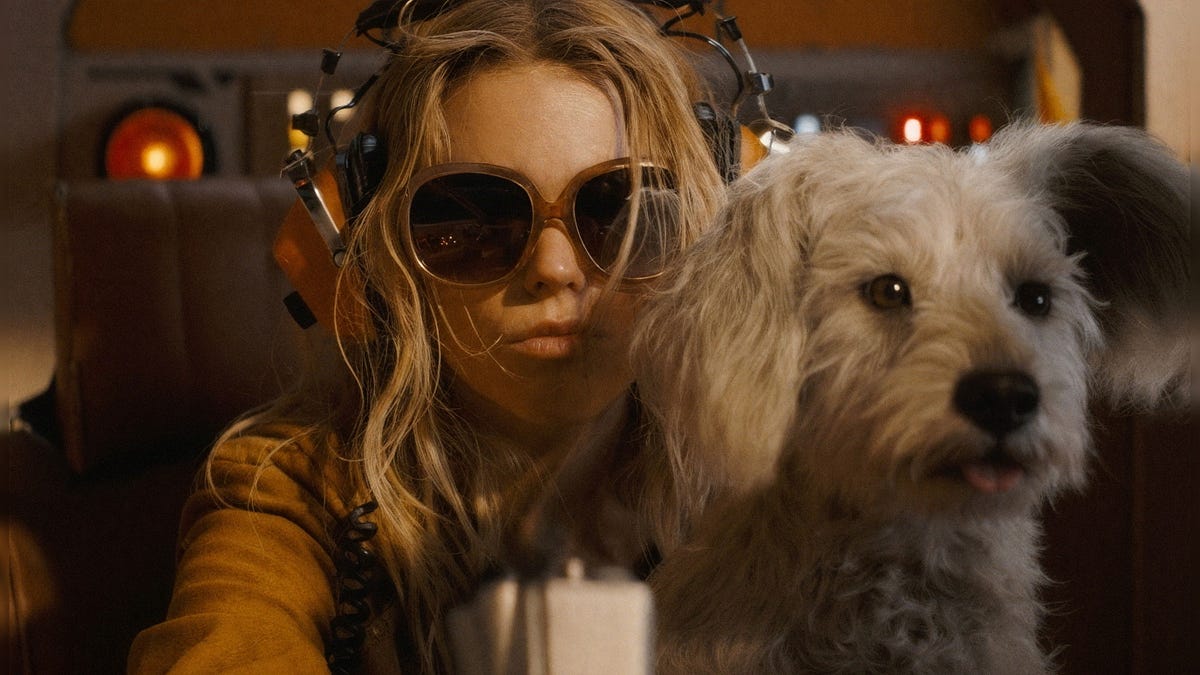
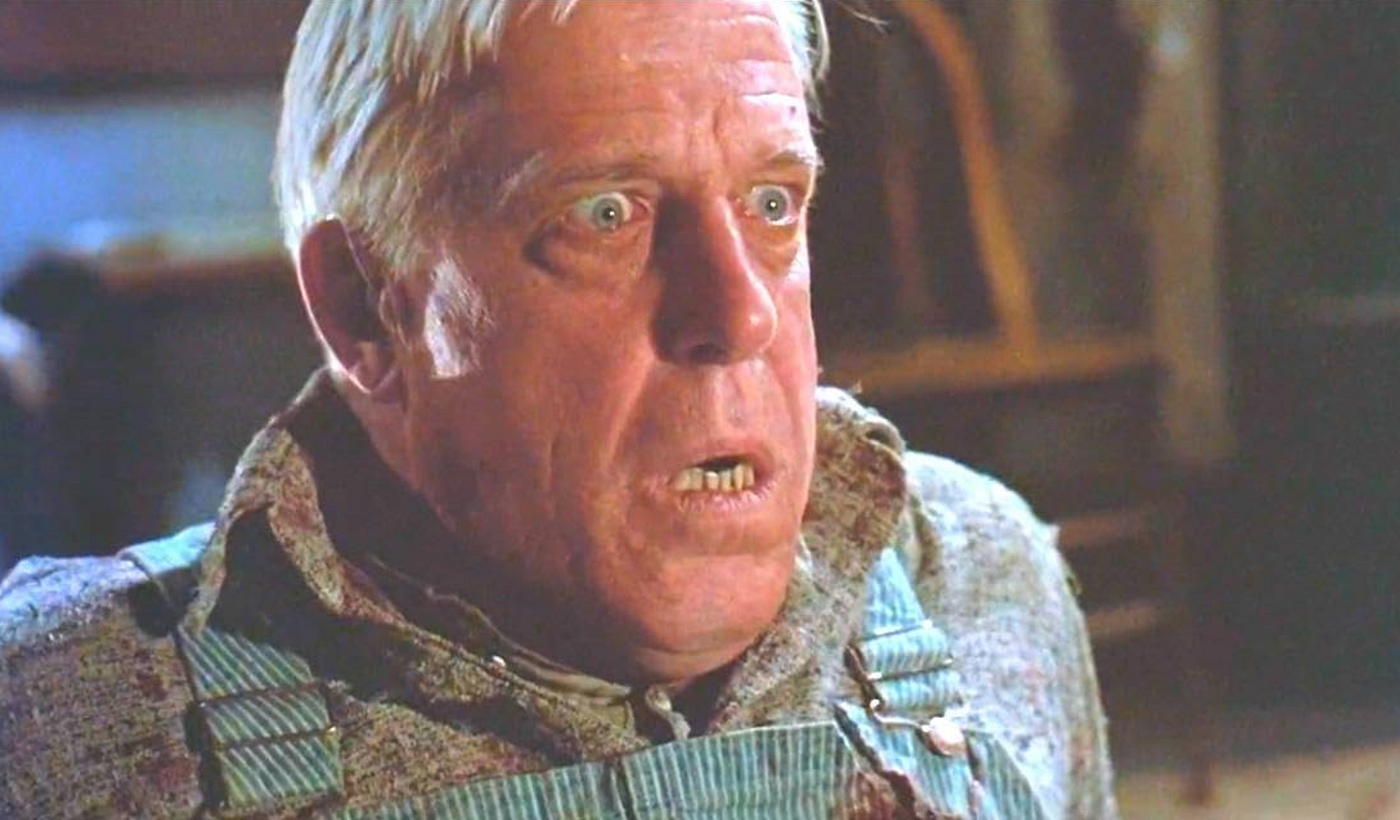
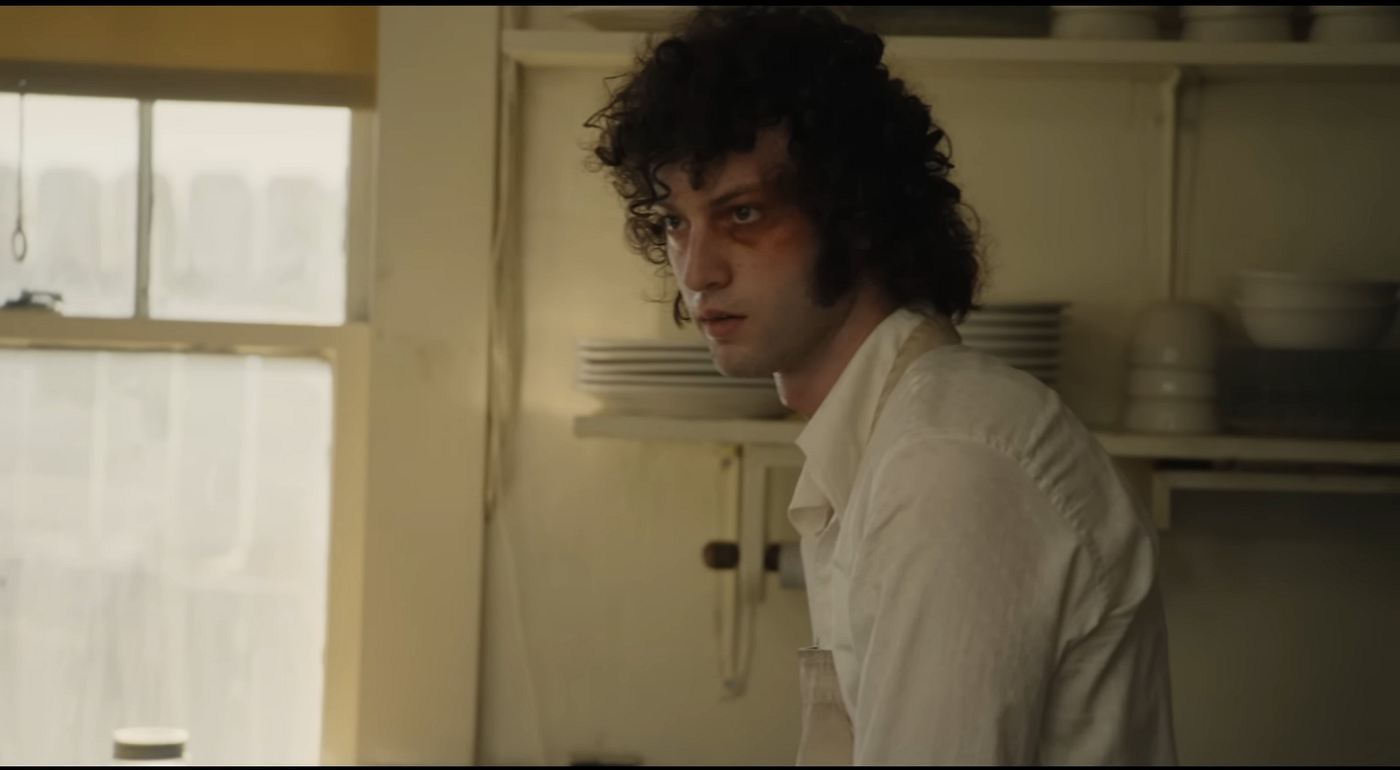
‘Backrooms’ is Split Between Analog and Formulaic Psychological Horror
Kane Parsons’s ‘Backrooms’ trades its famously online analog horror for a popcorn-oriented story of trauma
‘Backrooms’ is Split Between Analog and Formulaic Psychological Horror
Kane Parsons’s ‘Backrooms’ trades its famously online analog horror for a popcorn-oriented story of trauma
Backrooms (2026), A24
Picture this: you wake up one morning, and the news warns you not to go outside. Perhaps the sun is burning so hot it’s melting the concrete off the roads, or Satan has seized the planet, preparing for the sacrifice of humanity. The reporter tells you to be on the lookout for creatures that look like humans but aren’t quite so. Close examination might reveal too-white teeth or fingernails dirtied from crawling out of the ground. Not-so close examination might reveal that they look just like you.
This uncanny game of deduction is at the heart of analog horror, a subgenre that acts as an amalgamation between found footage and mockumentary, firmly grounding the horror in reality. Local 58, for instance, a web series available on YouTube credited for popularizing the subgenre title, is portrayed entirely through mock television broadcasts à la Ghostwatch or Late Night with the Devil.
The “horror” that occurs in this genre is largely senseless. One episode of Local 58, entitled “Weather Service,” centers around a news report of a random, unknown meteorological happenstance on the moon, which apparently brainwashes anyone who looks at it. Innocent bystanders may “noclip” (i.e., glitch or fall out of reality) into the Backrooms purely by accident in Kane Parsons’s web series of the same name. These series are committed to the idea of random violence and misfortune; the biggest culprit is simply bad luck.
Analog horror also lives in the realm of the uncanny valley, with some of its most popular games and series revolving around not-quite-humanoid creatures (such as *Marble Hornets’ Operator or Morley Grove*’s Morley Man, both Slender Man adaptations), oftentimes relying on player or viewer input to differentiate them from real humans.
One of the introductory episodes to web series *The Mandela Catalogue is a PSA to viewers teaching them how to identify so-called Alternates, while video game No, I’m Not a Human* requires the player to carefully assess people looking to stay in their home to determine whether they are a dreaded Visitor; the dirt under their fingernails or the bugs crawling from their ears may be a good sign that they’ve been sent by Death and have climbed their way out of the ground to kill you.
There is something deeply frightening to me about analog horror in particular, and it is largely related to that detail of examination and near constant ambiguity. A “human” or a location must be assessed in order to determine if it is safe, thus placing some of the labor of the scare on the viewer, holding them at attention. It works precisely because the medium treats each abnormality (whether it be a monster born from the dirt, or a room created from the memory of another room) as par for the course, almost mundane in their regularity. The format of a PSA or a TV show broadcast is a modernized version of the same effect of the found-footage style and unknown actors from The Blair Witch Project or the now portentous “based on a true story” declaration in the opening credits.
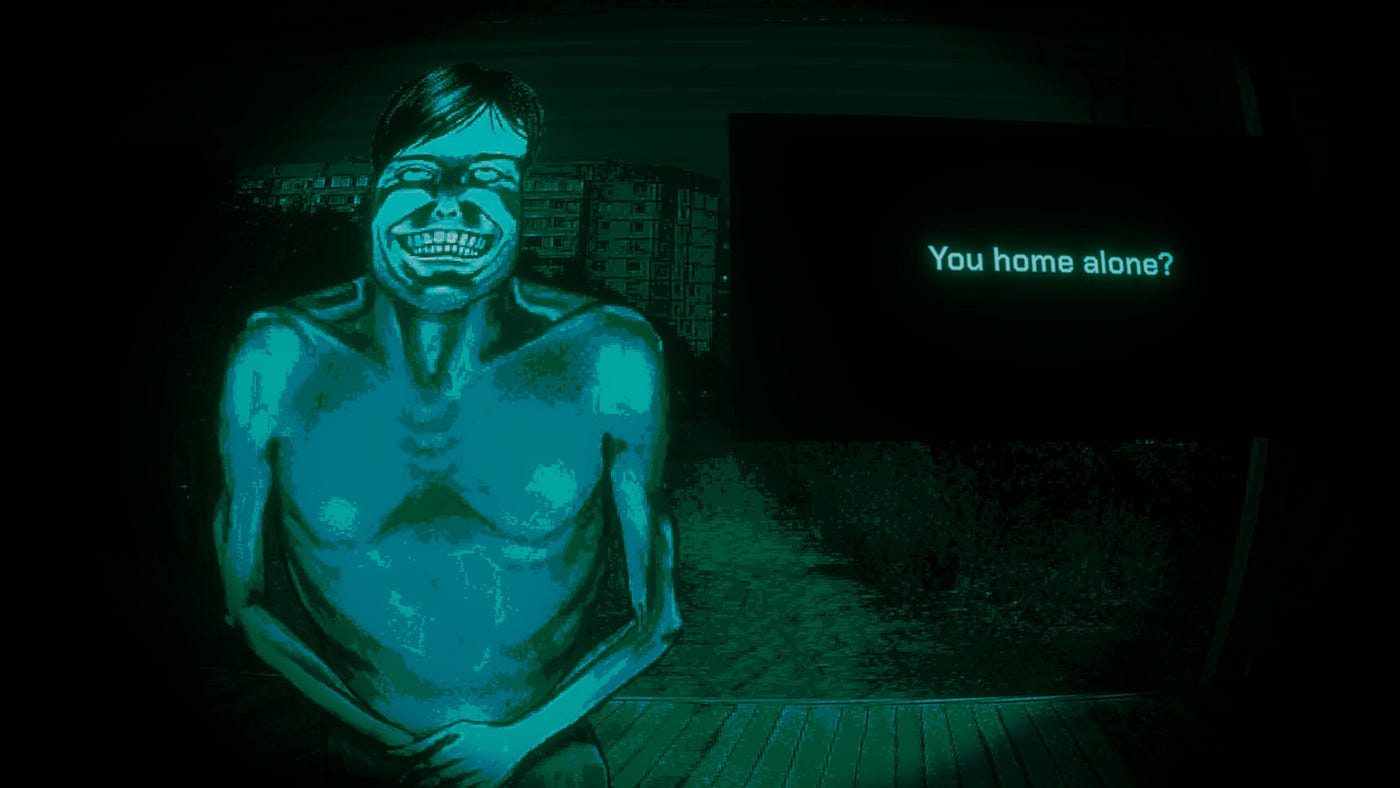
No, I’m Not a Human (2025), Critical Reflex
The commitment to the random and unusual allows for some very unique storytelling. The aforementioned Alternates from Mandela Catalogue are demonic shapeshifters, summoned by Satan after he overthrew God by masquerading as the Archangel Gabriel. YouTube-based Marble Hornets follows a monster latching onto students through haunted tapes, slowly destroying their bodies and their minds from the inside out as they share their troubles and woes online. Video game Amanda the Adventurer revolves around a child’s consciousness being forcibly trapped in an evil entity that lives inside a cartoon kids’ show.
Analog horror is creative, bizarre, and uncanny, and while defined by its relation to the types of media it portrays, be it VHS tapes, news broadcasts, or top secret government recordings, it also carries thematic through lines: isolation, paranoia, identity, and bad things happening to ordinary people. Violence is a force as arbitrary as it is cruel.
The horror of the uncanny forced into the mundane and made all the more frightening for it is what I expected from Kane Parsons’s Backrooms.
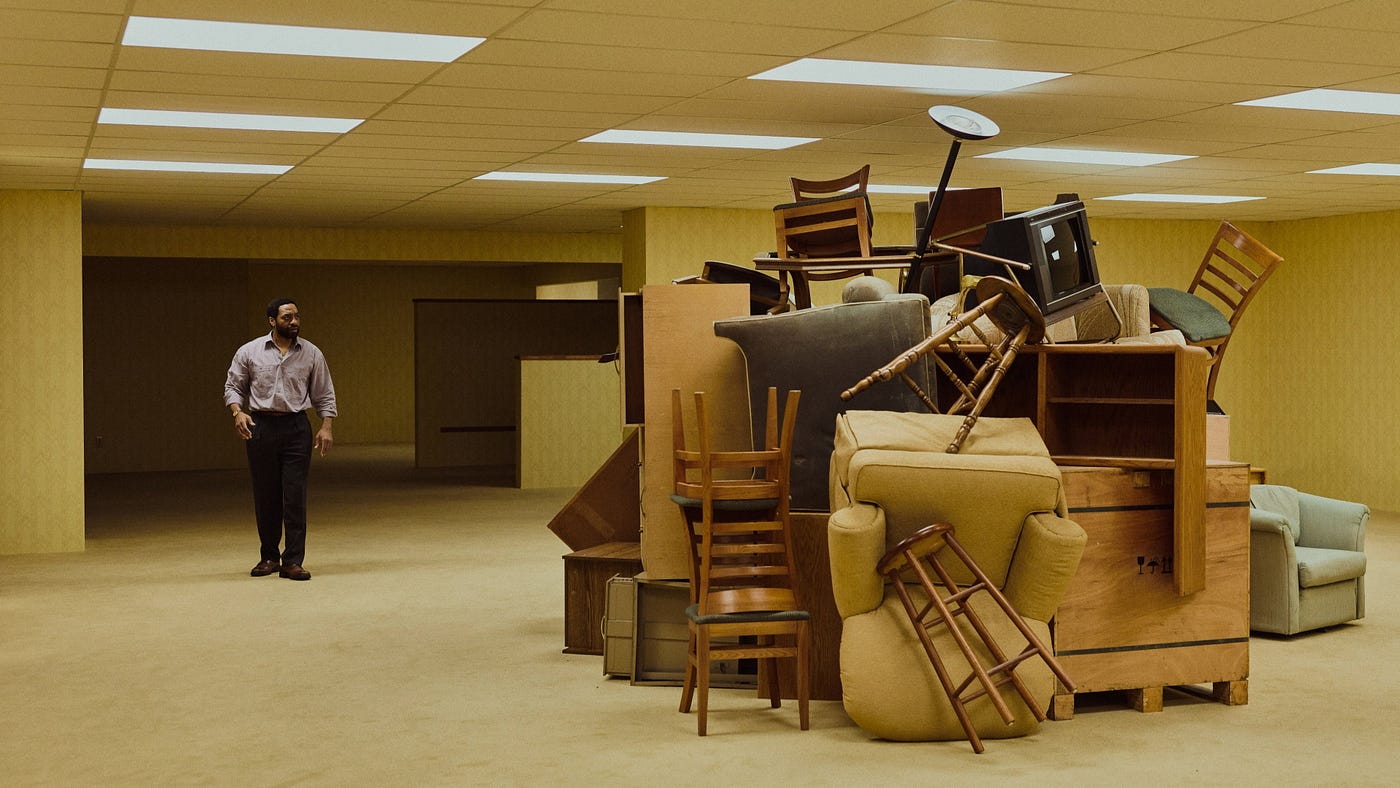
Backrooms follows dual protagonists: furniture store owner, Clark, and his therapist, Mary. After being kicked out by his wife, Clark spends all his time at his store, where he unintentionally stumbles upon the Backrooms, a maze-like liminal space drenched in fluorescent light as if a misremembered mockery of an old office building. He dreams of being an architect, so the strangeness of the space peaks his interest and demands his attention, regardless of the odd noises and evidence of life he begins to find inside.
While the Backrooms conceptually don’t have to be analog horror, Parsons’s take on the subject is widely considered part of the subgenre. Most of his YouTube web series follows the Async Research Institute as they explore and investigate the Backrooms (or, as they refer to it, the Complex), presenting the research videos paired with typical found-footage fare (presumably recovered by Async) of civilians who find themselves trapped there, just like the film’s protagonists.
The horror of the series also revolves around the same themes of the line between humanity and something else, as well as the familiar ambiguity and need for examination, with the dilapidated, labyrinthine walls of the Complex constantly begging the viewer to keep an eye out for whatever may appear around the corner.
However, where analog horror tends to find greater metaphor in its themes of isolation and identity, the Backrooms film, to its own detriment, seems more interested in the lasting impact of trauma.
I consider myself to be a person who values story above nearly all else in film, and perhaps that’s why I’m disappointed in the way it seems adversely injected into this concept.
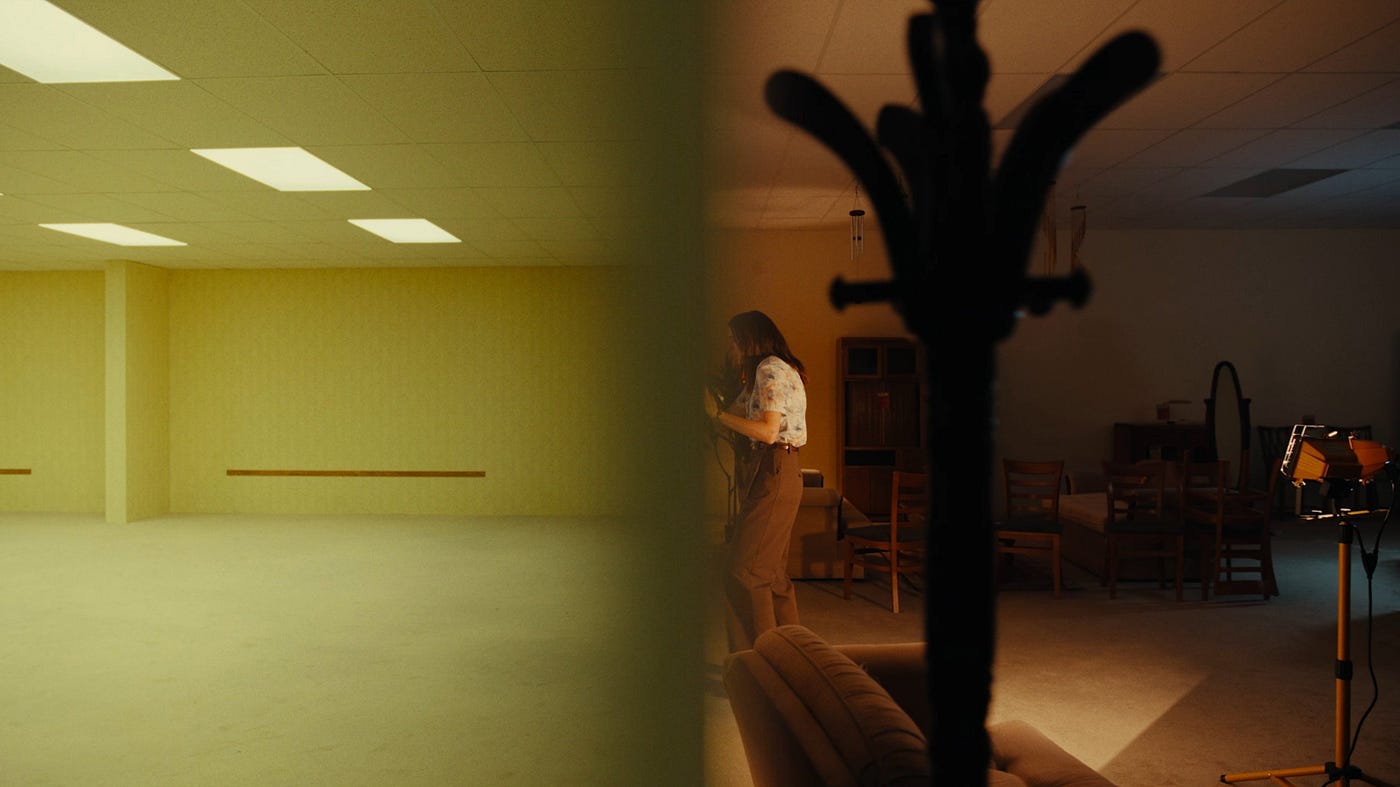
Backrooms (2026), A24
Backrooms’ story and metaphor feel more like fluff shoved in to fatten the runtime than anything intentional or interesting. Trauma and horror are not a bad pairing; *Hokum* just came out a month ago and utilized this theme brilliantly. Here, however, it feels lazy on behalf of the screenwriters, as if it were an easy choice to fall back on if nothing else came to mind. If the metaphor falls apart when you go back and review the details, then it was not a metaphor worth having.
While Mary’s life is fascinating (despite feeling like a random interjection that pops up by fits and starts throughout the film), Clark’s story is dreadfully straightforward, both in the sense of its well-trodden predictability and in the way the film seems obsessed with spelling it out beat-for-beat, delivered entirely through long-winded, on-the-nose monologues at his therapist rather than through his actions. The story slows the film’s pace to a snail’s crawl before inexplicably skipping entire days of presumably interesting events. It makes the film feel simultaneously jarring and unending.
Despite Parsons mentioning in *The A24 Podcast* that the mundane, random nature of the Backrooms is part of what made it so interesting to him, this adaptation feels specifically built for Clark: a reference to his dream job, filled with furniture and signs from his store, with a monster clearly made for him. He falls into the Backrooms by accident, sure, but we don’t get to see him spend any real time there before he’s suddenly so obsessed he doesn’t want to leave. His rushed character development feels like an excuse to skip along to the next monster, which makes the film’s plot twists land ungracefully.
In analog horror and in the Backrooms, things happen for no reason. They are mundane. The world will exist with or without you. But in this film, that just doesn’t feel true.
Beyond the simple pacing, the themes feel unfit for the material. Of course, we loop and distort our own memories of our past, especially those things we regret, but the choice to focus purely on the effects of the past feels shallow in comparison to other potential story avenues, especially in the age of AI. What makes us human? What does it mean to create, or impersonate? What does it mean to feel so alone that rooms full of emptiness and bland, distorted mockeries of life are more inviting than the outside world?
That is not to say those themes don’t exist at all in the film; the appearance of some of the creatures is certainly reminiscent of generative AI, and the use of wide shots in the cinematography makes the characters feel constantly isolated. However, the overly explanatory dialogue spoon-feeding meaning with all the discretion of a brick to the head seems to discourage any reading between the lines and deter the ambiguity that is so foundational to the genre.
As it stands, the weak story makes Backrooms feel more like a compilation of pieces, some better suited to Parsons’s directorial style than others. The interference of the studio (likely driven by the 22 producers credited on IMDB) is egregious, pulling the film in all different directions, and it is very easy to tell which are in Parsons’s wheelhouse.
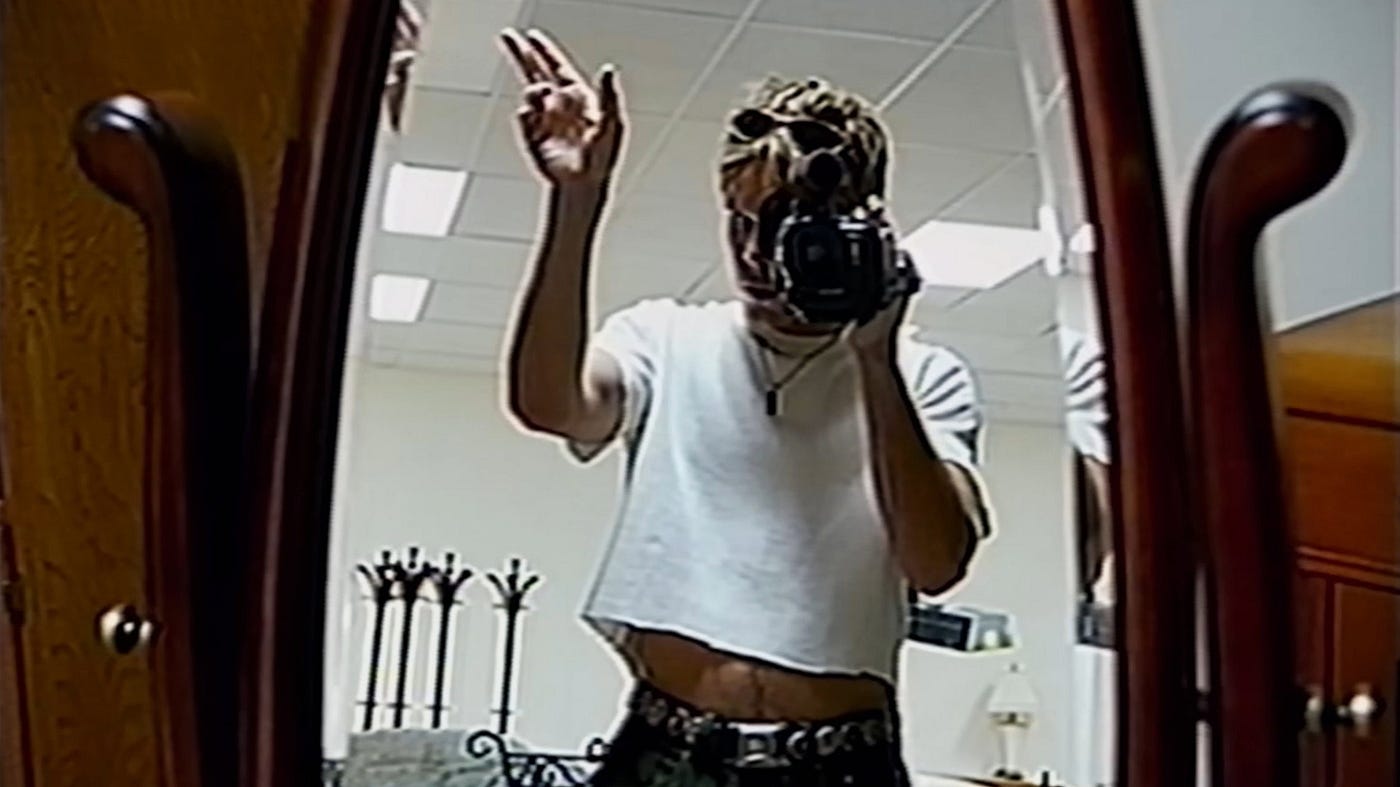
Backrooms (2026), A24
Some shots and scenes from the film are genuinely interesting and deeply frightening, and I find myself reflecting on them days later: a found-footage segment guided by the familiar elements of analog (the shaky format, the sense of examination and discovery, slow-building tension, and the perversion of what is normal, safe, and sacred) is one of the scariest parts of the film. Another sequence of a memory distorting over and over until it falls into the familiar texture of the Backrooms also gave me the chills and carried sincere emotional weight.
But of course those scenes stood out. Found-footage scares and the uncanny layout of the Backrooms are the focal points of Parsons’s older work.
For his multiple YouTube series, Parsons used Blender, a computer graphics software, to create the actual Backrooms in addition to the creatures that inhabit them. This process involved a lot of CGI, glossed over with effects and the familiar found-footage sheen to blend everything seamlessly into the environment. He used the same software for the movie, and the production design on the maze of rooms is genuinely creepy, invoking the dreamy unease of liminal spaces the original Backrooms photo captured so well. Interplays between darkness and light bring a constant tension, anxiety about what’s around a corner or hidden behind a wall.
When Parsons is allowed to play to his strengths, specifically the genuinely frightening world that he had already so carefully constructed, the film excels, but he only has that opportunity for a vast minority of its runtime. It makes me wonder why the whole film couldn’t have been created in the same way: to highlight Parsons’s (plentiful) strengths rather than devoting so much time to a lackluster story.
The same is true for the creature designs. Analog horror revels in the uncanny, which is specifically defined by being almost human. It is lost when you stray too far from the original into the realm of obvious artificiality. Where the monster design in Backrooms should have leaned one dial to the left of normalcy, it felt like it instead went full-tilt, the creatures so distorted they flew past uncanny into silly.
In the YouTube web series, the still life creatures showcased were digitally altered in a way that would be physically impossible in real life, no matter what sort of harm or distortion was caused to the body. Parsons’s creatures, such as in Backrooms or one of his other series, The Oldest View, move in ways that are genuinely alarming: think of Nikki in the bedroom in Obsession, or, better yet, backward-walking Gabriel from Malignant.
While I will always be an enthusiast for practical effects, it is specifically the uncanny nature of the digital effects placed into an environment just surreal enough for you to suspend your disbelief that makes analog horror so scary: faces stretched beyond comprehension and bathed in darkness, eyes humongous, teeth tall and white.
Backrooms suffers from too many hands grabbing at the camera when it could have and, frankly, should have put more trust in its young director. Analog horror is a niche guided by young people who feel profoundly lonely in a world that couldn’t care less, and, more importantly, it is built on passion; it is thanks to passion that Parsons spent his time building out the Backrooms with Blender on his computer at sixteen years old, all because he saw a single picture that interested him online.
It is that very soul that is missing from Backrooms, with under-explored human anxieties substituted for an out-of-place trauma metaphor, uncanny creatures for over-the-top, and random cruelty for a tidy plot, tied up with a bow. I am only left to wonder what kind of film Parsons would’ve made if left to his own devices, and I’m disappointed that isn’t what played in theaters.
메타데이터
- post_id
- cbe4ef784a55
- slug
- backrooms-is-split-between-analog-and-formulaic-psychological-horror-cbe4ef784a55
- url
- https://fanfare.pub/backrooms-is-split-between-analog-and-formulaic-psychological-horror-cbe4ef784a55
- canonical_url
- https://fanfare.pub/backrooms-is-split-between-analog-and-formulaic-psychological-horror-cbe4ef784a55
- author_url
- https://medium.com/@gretapw
- status
- ok
- fetched_at
- 2026-06-10 09:45:17