Roof Repair vs. Replacement: How to Actually Tell Which One You Need
A homeowner in Vancouver, WA found a wet spot on the living room ceiling on a Tuesday morning.
Roof Repair vs. Replacement: How to Actually Tell Which One You Need
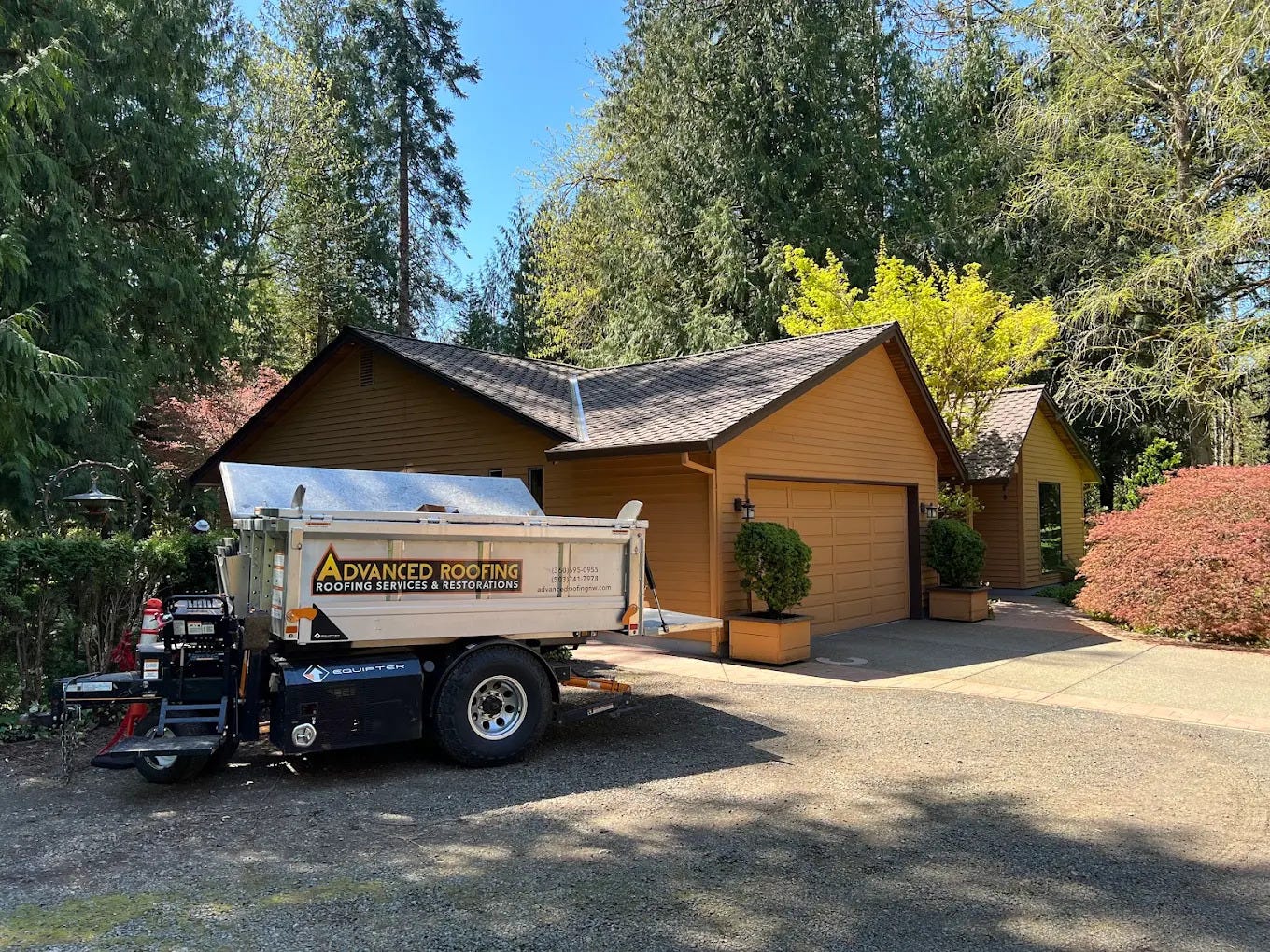
A homeowner in Vancouver, WA found a wet spot on the living room ceiling on a Tuesday morning.
By Tuesday afternoon, she’d called three different roofing companies. By Wednesday, she had three completely different opinions.
One contractor took a quick look and quoted a simple flashing repair a few hundred dollars. Another walked the entire roof and recommended a full replacement, several thousand dollars. The third landed somewhere in between, suggesting a more extensive repair but not a complete teardown.
Same roof. Same leak. Three different answers.
That’s the moment most homeowners realize this decision isn’t nearly as straightforward as it sounds.
Why This Question Is So Hard to Answer on Your Own
A leak feels like an emergency. It isn’t always one.
Sometimes it’s a small, isolated issue a cracked seal, a lifted shingle or a gap in the flashing. Other times, it’s the first visible sign that the entire roofing system is beginning to fail.
The challenge is that both situations can look exactly the same from inside the house. A single water stain on the ceiling doesn’t tell you which one you’re dealing with.
That’s why experienced roofers don’t make this decision based on the leak alone. They look for several key indicators that reveal the overall condition of the roof.
Signal One: The Age of the Roof
Age alone doesn’t decide anything. But it provides important context.
A roof that’s six years old with one isolated leak is usually a repair. A roof that’s 22 years old with that same leak tells a very different story, because it’s probably not the only weak spot, it’s simply the first one that’s become visible.
Most asphalt shingle roofs are designed to last between 20 and 25 years. Once a roof reaches that stage, a leak often isn’t an isolated problem. It’s a sign that multiple components may be reaching the end of their service life.
Age, however, is only one piece of the puzzle. The next question is whether the damage is limited to one area or spread across the roof.
Signal Two: How Widespread the Damage Actually Is
This is where a thorough inspection matters far more than a quick look from the ground.
A single damaged area one section of missing shingles or one deteriorated flashing detail, is usually repairable. Multiple issues scattered across different sections of the roof point to a different problem.
When damage appears in several unrelated areas, it’s rarely a coincidence. More often, it’s a sign that the roofing system is aging as a whole, even if only a few spots have started leaking.
But what’s visible on top of the roof isn’t always the full story. Some of the most important clues are hidden underneath.
Signal Three: What’s Happening Underneath the Surface
This is the part most homeowners can’t check themselves, and it’s often the deciding factor.
A roof can look perfectly fine from above while the decking underneath has already softened from trapped moisture. Insulation can remain damp for months without creating any obvious signs inside the home.
A repair only makes sense if the structure beneath the roofing materials is still sound. If the decking has begun to deteriorate, patching the surface becomes a temporary solution rather than a lasting one.
Even when the roof can technically be repaired, there’s still one practical question left to answer is it financially worth it?
Signal Four: The Cost-Per-Year Math
This is the calculation that rarely gets discussed, but it’s often more useful than comparing repair and replacement prices alone.
A $600 repair on a roof with 10 or more years of life remaining is usually an easy decision. The same repair on a roof that’s likely to need replacement within the next couple of years is a different conversation.
The real question isn’t simply, “What does this cost today?” It’s “How much additional life does this investment realistically buy?”
Looking at value over time often changes the decision entirely. So does the roof’s repair history.
Signal Five: How Many Times You’ve Already Made This Call
One repair is normal. Every roof requires maintenance eventually.
Three repairs in three years, especially in different areas is a pattern. At that point, the roof usually isn’t asking for another patch. It’s telling you the system as a whole is becoming less reliable.
When several of these signals begin to line up, it’s easy to understand why different contractors may reach different conclusions.
So Why Did Three Contractors Give Three Different Answers?
Going back to the homeowner from the beginning, the answers weren’t necessarily contradictory. They were based on different levels of inspection.
The contractor who quoted a simple repair focused only on the visible leak. The one who recommended replacement also considered the roof’s age and several additional soft spots. The contractor in the middle took the extra step of inspecting the attic and checking the roof decking.
The most valuable answer didn’t come from the cheapest estimate or the most expensive one. It came from asking each contractor the same follow-up question:
“What exactly did you inspect to reach this recommendation?”
That single question often tells you more than the estimate itself.
A Simple Way to Think About It
If the roof is relatively young, the damage is isolated, and the decking underneath is still solid, a repair is usually the right choice.
If the roof is nearing the end of its expected lifespan, problems are appearing in multiple areas, or moisture has already reached the decking, replacement is often the more practical long-term solution even if it’s the more difficult recommendation to hear.
If three professionals give you three different answers, don’t base your decision on who sounds the most confident. Base it on who took the time to inspect the entire roofing system instead of focusing only on the visible leak.
Because the real problem and the right solution, is usually found beneath the surface, not where the water first appears.
메타데이터
- post_id
- cbfdf8308d18
- slug
- roof-repair-vs-replacement-how-to-actually-tell-which-one-you-need-cbfdf8308d18
- url
- https://medium.com/@advancedroofingvancouver/roof-repair-vs-replacement-how-to-actually-tell-which-one-you-need-cbfdf8308d18
- canonical_url
- https://medium.com/@advancedroofingvancouver/roof-repair-vs-replacement-how-to-actually-tell-which-one-you-need-cbfdf8308d18
- author_url
- https://medium.com/@advancedroofingvancouver
- status
- ok
- fetched_at
- 2026-08-02 16:23:04