Mall Leasing Software for Retail Property Management | RealEstatePro
Discover how mall leasing software helps retail property owners manage tenants, lease agreements, occupancy, and revenue.
Mall Leasing Software: Managing Retail Spaces, Tenants, and Revenue
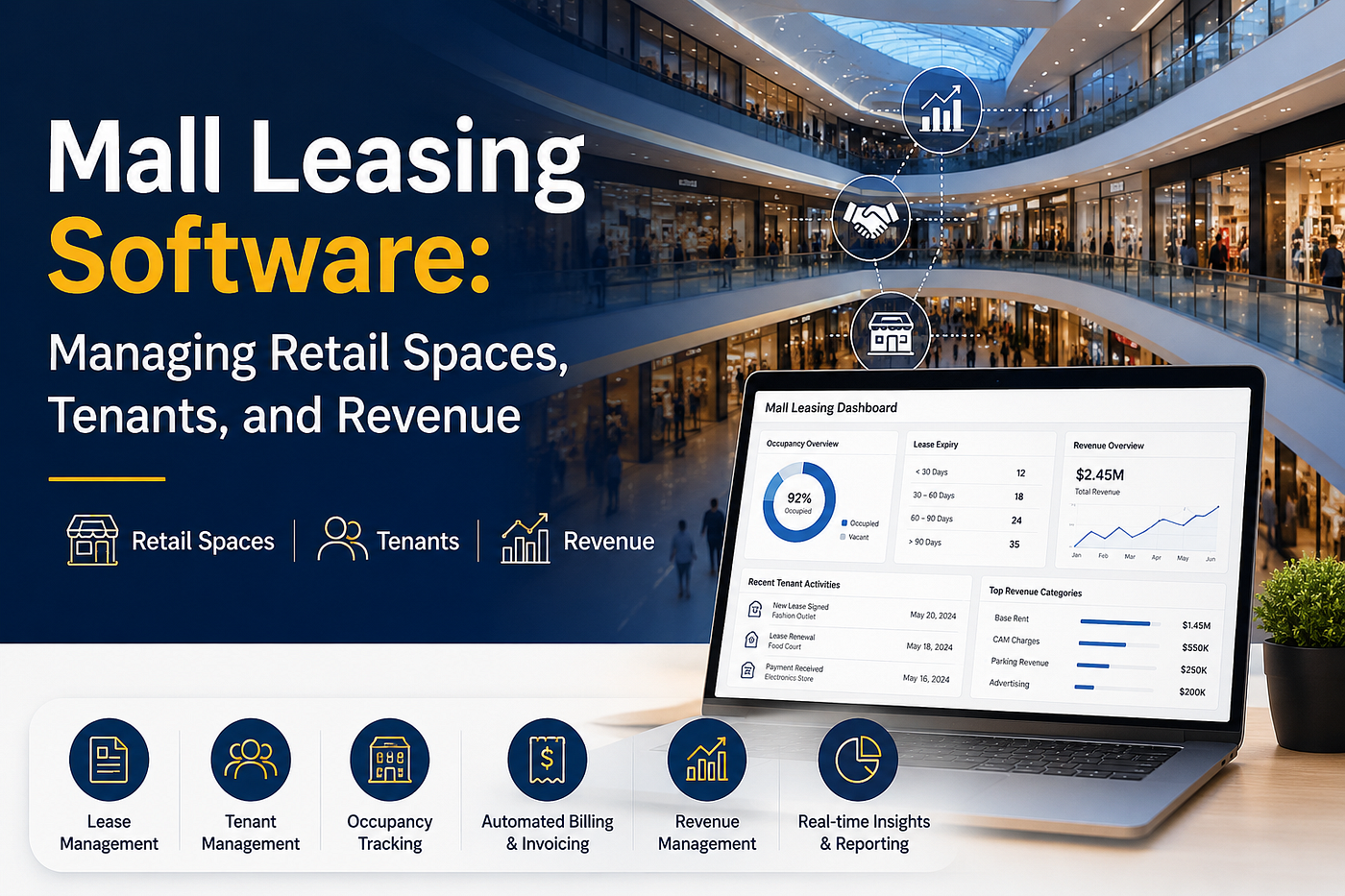
Introduction
Shopping malls have evolved far beyond being simple collections of retail stores. Modern malls are dynamic commercial ecosystems that bring together retail outlets, restaurants, entertainment venues, kiosks, and service providers under one roof. While this creates significant revenue opportunities, it also introduces operational complexity for mall owners, property developers, and leasing teams.
Managing hundreds of lease agreements, tracking occupancy rates, handling tenant communications, calculating rent escalations, allocating common area maintenance (CAM) charges, and monitoring financial performance can quickly become overwhelming when managed through spreadsheets or disconnected systems.
To remain competitive and maximize profitability, mall operators need a centralized solution that streamlines leasing operations, improves tenant management, and provides real-time visibility into revenue performance. This is where mall leasing software plays a critical role.
What is Mall Leasing Software?
Mall leasing software is a specialized property management solution designed to help shopping mall owners, retail property operators, and commercial real estate developers manage the entire lease lifecycle while maintaining complete visibility over tenants, retail units, occupancy levels, and revenue streams.
Unlike traditional property management software that may focus primarily on residential properties, mall leasing software addresses the unique requirements of retail environments, including:
- Retail lease administration
- Tenant management
- Occupancy tracking
- Lease renewals and amendments
- Revenue and rent management
- Common Area Maintenance (CAM) charge allocation
- Contract management
- Financial reporting
- Multi-property portfolio management
By centralizing leasing and financial operations, organizations can improve efficiency, reduce manual work, and make better business decisions.
The Growing Complexity of Mall Leasing Operations
As malls expand and diversify their tenant mix, managing leasing operations becomes increasingly challenging.
A typical shopping mall may include:
- Anchor tenants
- Fashion retailers
- Restaurants and food courts
- Entertainment centers
- Supermarkets
- Banks and service providers
- Pop-up stores
- Temporary kiosks
Each tenant may have different lease terms, rental structures, contract durations, renewal conditions, and billing requirements.
Without the right technology, leasing teams often struggle with fragmented information, manual processes, and limited operational visibility.
Common Challenges Faced by Mall Owners and Leasing Teams
Managing Multiple Lease Structures
Retail leases are rarely standardized.
Different tenants may operate under:
- Fixed rental agreements
- Revenue-sharing agreements
- Percentage rent structures
- Escalation-based leases
- Hybrid lease models
Tracking these agreements manually can lead to errors and compliance issues.
Revenue Leakage
Revenue leakage is one of the biggest concerns for mall operators.
Common causes include:
- Missed rent escalations
- Delayed invoicing
- Incorrect service charge calculations
- Forgotten lease renewals
- Untracked tenant obligations
Even small billing mistakes can significantly impact annual revenue.
Limited Occupancy Visibility
Occupancy rates directly influence mall profitability.
Leasing managers need instant access to:
- Vacant units
- Occupied units
- Lease expiry schedules
- Upcoming renewals
- Tenant performance metrics
Without centralized data, filling vacancies becomes slower and less efficient.
Tenant Relationship Management Challenges
Tenant satisfaction directly impacts retention and long-term revenue.
Managing tenant requests, complaints, maintenance issues, documentation, and communication manually can result in:
- Delayed responses
- Poor tenant experiences
- Increased turnover
- Higher vacancy rates
Financial Management Complexity
Modern malls generate revenue from multiple sources, including:
- Rental income
- Common area maintenance charges
- Parking fees
- Advertising space rentals
- Utility recoveries
- Event space rentals
Consolidating these revenue streams while maintaining financial accuracy requires robust financial integration.
Essential Features of Mall Leasing Software
When evaluating mall leasing software, organizations should look for features that support both leasing operations and financial management.
Lease Lifecycle Management
Effective lease administration should include:
- Lease creation
- Contract management
- Amendment tracking
- Renewal management
- Expiry notifications
- Document storage
Automated workflows help ensure that critical lease milestones are never missed.
Tenant Management
Centralized tenant management enables leasing teams to maintain complete tenant profiles, including:
- Contact information
- Lease agreements
- Communication history
- Payment records
- Service requests
This improves tenant engagement and operational efficiency.
Vacancy and Occupancy Management
Mall leasing software should provide real-time visibility into:
- Available retail units
- Occupied spaces
- Vacancy rates
- Leasing opportunities
- Occupancy trends
This enables leasing teams to make informed decisions and improve space utilization.
Automated Billing and Revenue Management
Automation helps reduce errors and improve financial accuracy.
Key capabilities include:
- Rent calculations
- CAM charge allocation
- Escalation management
- Invoice generation
- Payment tracking
- Revenue reporting
Automated billing ensures consistency and reduces administrative effort.
Financial Reporting and Analytics
Decision-makers require accurate and timely information.
Advanced reporting capabilities should include:
- Rental income analysis
- Occupancy reporting
- Tenant performance analysis
- Revenue forecasting
- Portfolio performance dashboards
These insights support strategic planning and growth initiatives.
Benefits of Implementing Mall Leasing Software
Improved Operational Efficiency
Automating repetitive leasing tasks reduces manual effort and allows teams to focus on strategic activities.
Increased Occupancy Rates
Real-time vacancy tracking helps leasing teams identify available spaces quickly and reduce vacancy periods.
Reduced Revenue Leakage
Automated billing and lease tracking ensure that all charges are accurately calculated and collected.
Better Tenant Retention
Centralized tenant information and improved communication contribute to higher tenant satisfaction and longer lease durations.
Enhanced Financial Visibility
Integrated financial reporting provides a complete picture of portfolio performance and profitability.
Scalability for Growth
As organizations acquire new properties or expand their portfolios, mall leasing software provides the flexibility needed to support growth without increasing operational complexity.
Why Enterprise Mall Operators Need Integrated ERP Capabilities
Many property management systems focus solely on leasing activities.
However, enterprise property owners often require broader functionality, including:
- Financial management
- Budgeting and forecasting
- Multi-company management
- Procurement
- Vendor management
- Payroll integration
- Asset management
- Compliance reporting
Managing these functions across separate systems often creates data silos and operational inefficiencies.
An integrated ERP-based property management platform provides a single source of truth for the entire organization.
How RealEstatePro Helps Mall Owners Manage Retail Leasing Operations
For enterprise property developers, retail property owners, and commercial real estate organizations, RealEstatePro Property Management Software built on Microsoft Dynamics 365 Finance & Operations offers a comprehensive platform for managing leasing operations, financial processes, and property portfolios from a single system.
RealEstatePro is specifically designed to support complex property management environments, including shopping malls, mixed-use developments, commercial properties, residential portfolios, and large-scale real estate operations.
Key Capabilities of RealEstatePro
Comprehensive Lease Management
Manage the complete lease lifecycle, including:
- Lease creation
- Amendments
- Renewals
- Expiry tracking
- Lease documentation
Tenant Administration
Maintain centralized tenant records and improve communication across leasing teams.
Vacancy and Occupancy Tracking
Monitor available units, occupancy rates, lease expirations, and leasing opportunities in real time.
Automated Billing and Invoicing
Generate invoices automatically based on lease terms, rent schedules, CAM charges, and other tenant obligations.
Multi-Entity Property Management
Manage multiple malls, properties, subsidiaries, or business units from a single platform.
Multi-Currency Support
Support international property portfolios operating across different currencies and jurisdictions.
Integrated Financial Management
Leverage the power of Microsoft Dynamics 365 Finance & Operations to streamline:
- Accounts Receivable
- Accounts Payable
- General Ledger
- Budgeting
- Financial Reporting
Real-Time Dashboards and Analytics
Gain visibility into:
- Occupancy performance
- Rental income
- Revenue trends
- Tenant information
- Lease expirations
- Portfolio performance
Future Trends in Mall Leasing Technology
As retail real estate continues to evolve, mall leasing software is expected to incorporate advanced technologies such as:
- Artificial Intelligence (AI)
- Predictive occupancy analytics
- Automated lease recommendations
- Self-service tenant portals
- Mobile property management applications
- Advanced business intelligence dashboards
Organizations that invest in modern leasing technology today will be better positioned to adapt to future market demands.
Conclusion
Managing retail spaces, tenants, and revenue effectively is essential for maximizing profitability in today’s competitive retail real estate market.
As shopping malls become larger and more complex, relying on spreadsheets and disconnected systems can create operational inefficiencies, increase revenue leakage, and limit visibility into portfolio performance.
A modern mall leasing software solution helps streamline lease administration, improve tenant management, automate billing, and provide real-time business insights.
For enterprise property owners, developers, and commercial real estate organizations seeking a scalable solution, RealEstatePro Property Management Software on Microsoft Dynamics 365 delivers the tools needed to manage retail leasing operations, optimize revenue, and support long-term growth across shopping malls and commercial property portfolios.
메타데이터
- post_id
- cc09dca9a4c0
- slug
- mall-leasing-software-for-retail-property-management-realestatepro-cc09dca9a4c0
- url
- https://medium.com/@dynamicnetsoft/mall-leasing-software-for-retail-property-management-realestatepro-cc09dca9a4c0
- canonical_url
- https://medium.com/@dynamicnetsoft/mall-leasing-software-for-retail-property-management-realestatepro-cc09dca9a4c0
- author_url
- https://medium.com/@dynamicnetsoft
- status
- ok
- fetched_at
- 2026-07-22 07:36:36




