Mexico 1–0 Korea Republic: How Mexico’s Half-Time Rebuild Decided a Cagey Group A Decider
Post-Match Tactical Notes #09: A cautious first half, Mexico’s second-half restructuring and Korea’s late aerial threat
Mexico 1–0 Korea Republic: How Mexico’s Half-Time Rebuild Decided a Cagey Group A Decider
Post-Match Tactical Notes #09: A cautious first half, Mexico’s second-half restructuring and Korea’s late aerial threat
This was the match that decided the leadership of Group A, but for long periods it did not feel like a contest with that much at stake.
A draw would have suited both teams and likely moved them very close to qualification, and that context shaped everything in the opening 45 minutes. Both sides started cautiously, refused to take real risks and seemed content to weigh each other up rather than commit. The result was a low tempo first half with almost no clear chances.
What changed the game was not the first half. It was what Mexico did after the break, both in structure and in mentality. They rebuilt the way they progressed the ball, lifted their pressing intensity at the right moment and turned a passive afternoon into a controlled win that also gave them top spot in the group.
Data snapshot
The numbers show how narrow and unusual the match was.
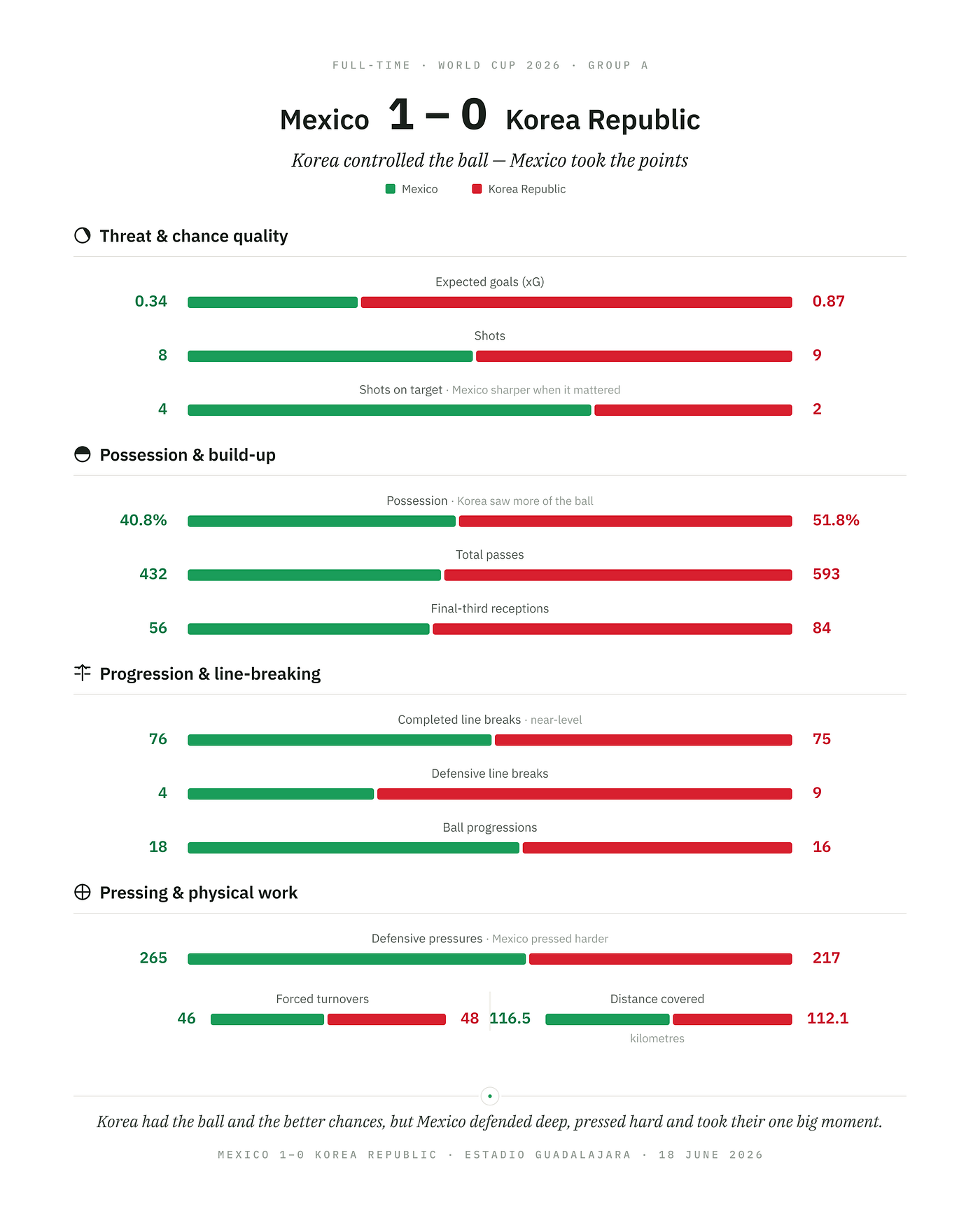
The xG split matters. Mexico won, but this was not a match where they overwhelmed Korea through chance volume. The game was low on clear chances, and Korea’s late crossing and box pressure gave them the better expected goals total. Mexico’s superiority was more about game management, second half adjustment and the way they controlled key phases after the break.
The completed line-break count was almost even, 76 to 75, but my Layer Break Score told a different story: Mexico led 44 to 22. That distinction matters. Korea reached advanced areas more often, but Mexico’s progressions tended to carry more tactical value, especially after the break.
1. A first half defined by caution from both sides
From the opening minutes, both teams approached the game carefully and avoided taking on unnecessary risk. That mutual caution was the main reason the tempo stayed so low throughout the first half.
Mexico built from the back in a back three shape, with the right back generally tucking in alongside the centre backs to form the first line. Korea matched up against Mexico’s build up players, but for the first 35 minutes or so they did not press with real aggression. Instead, they used their cover shadows to block central connections, cutting off the passing lanes into midfield rather than aggressively hunting the ball.
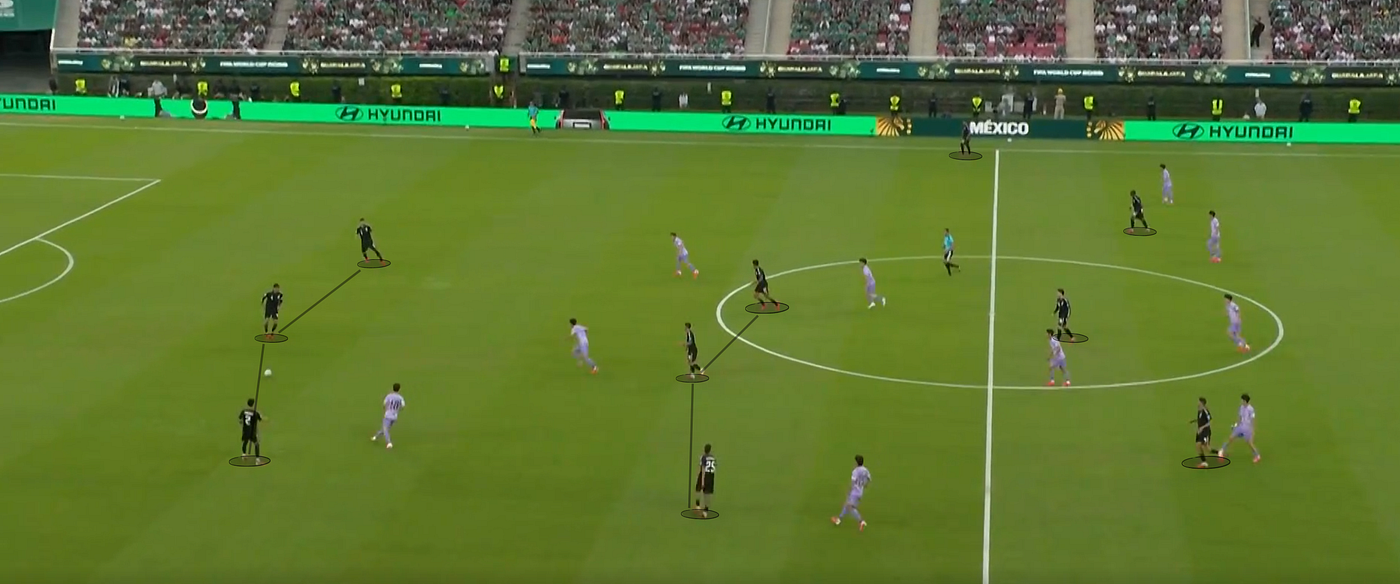
Mexico’s first half build-up structure. The right back tucked in alongside the centre backs to form a back three, while Alvarado moved inside from the right wing to create a three player support line ahead of the first line.
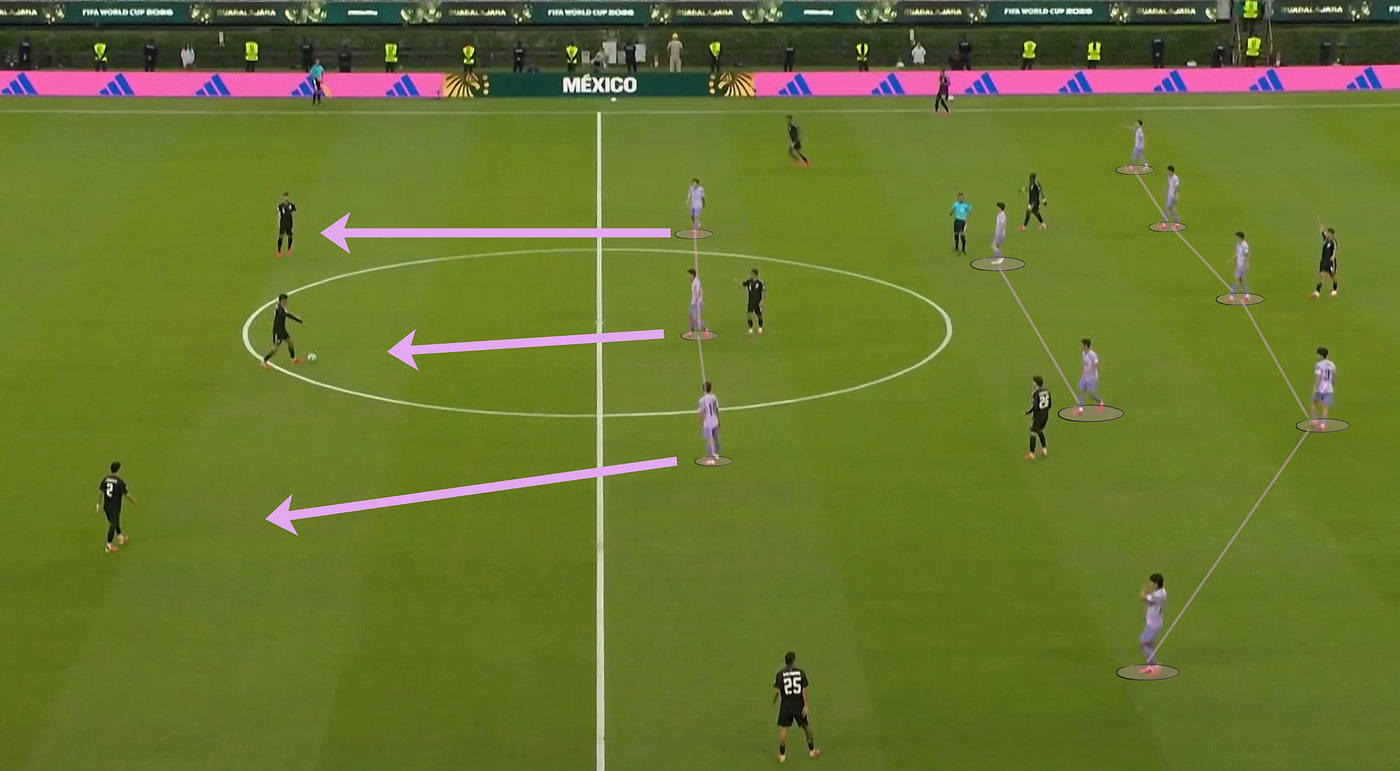
Korea’s first-half 5–2–3 defensive structure. The front three matched up with Mexico’s back three while also using their cover shadows to block central passing lanes. This allowed Korea to limit Mexico’s progression through the middle and made Mexico’s possession largely ineffective.
The effect of that was clear. Even though Mexico had the ball for large parts of the half, they could rarely progress through the middle. With the central routes blocked, their main plan became going long to Jiménez and Quiñones and trying to settle into attack from the knockdowns and flick ons those two could create.
Jiménez did this reasonably well at the start of the match, winning some of those duels, but it never looked like a sustainable way to generate sustained pressure. Mexico held more of the ball without turning it into real production.
Quiñones occasionally dropped from the left to try to link the wing with central midfield, but under tight marking he struggled to have a consistent effect there. On the left sided attacks in particular, Mexico often looked closer to a front two, with Quiñones moving inside to support Jiménez around the direct ball.
2. Two long ball plans with very different intentions
Korea, for their part, had little intention of using central connections early on. Mexico also pressed in a way that was close to man oriented, though not always with a full man to man match across the pitch. Korea did not force short build up under that pressure. Like Mexico, they were happy to go long.
But there was a fundamental difference between the two teams’ direct play.
When Mexico went long, the aim was for the forwards to bring the ball down, set it and allow the team to build numbers around the second action. When Korea went long, the aim was more about attacking the space behind Mexico’s defensive line. Their wing backs, especially on the left, repeatedly attacked the space behind, trying to receive facing goal and create a direct chance.
That plan did not work consistently. Either the ball stayed with Mexico, or Korea were caught offside on exactly those runs behind. With neither side’s attacking plan functioning, the first half became low in tempo and almost completely without chances.
3. Korea’s late first half shift toward control
In the final ten minutes of the first half, there was a clear change in Korea’s mentality.
They pressed a little more aggressively up the pitch, and at the same time they reduced the frequency of the long ball and run in behind strategy. Instead, they wanted to build short connections and move the ball into the opposition half through possession.
Lee Kang-in was central to making this work. He dropped deep frequently to provide an extra connection point in the build up, and through short passes he played an important role in helping the team progress up the pitch. Going forward, he also played with freedom, drifting and roaming to express his creativity in attack.
Korea still did not produce much in this period, but they clearly took control of the rhythm. It is also worth noting that, across the whole first half, neither team really attempted to attack through transitions or counters. This was a game both sides wanted to keep slow.
4. Mexico’s second half rebuild: new shape, new mentality
The second half was where Mexico changed both their template and their mentality.
Rather than going long to Jiménez or Quiñones, they started building short from the back and progressing through possession, and they were genuinely successful at it. A big part of that success came from a change in their build up structure. Mexico now built in a 4+2 shape, which gave them an extra player against Korea’s first line of pressure.
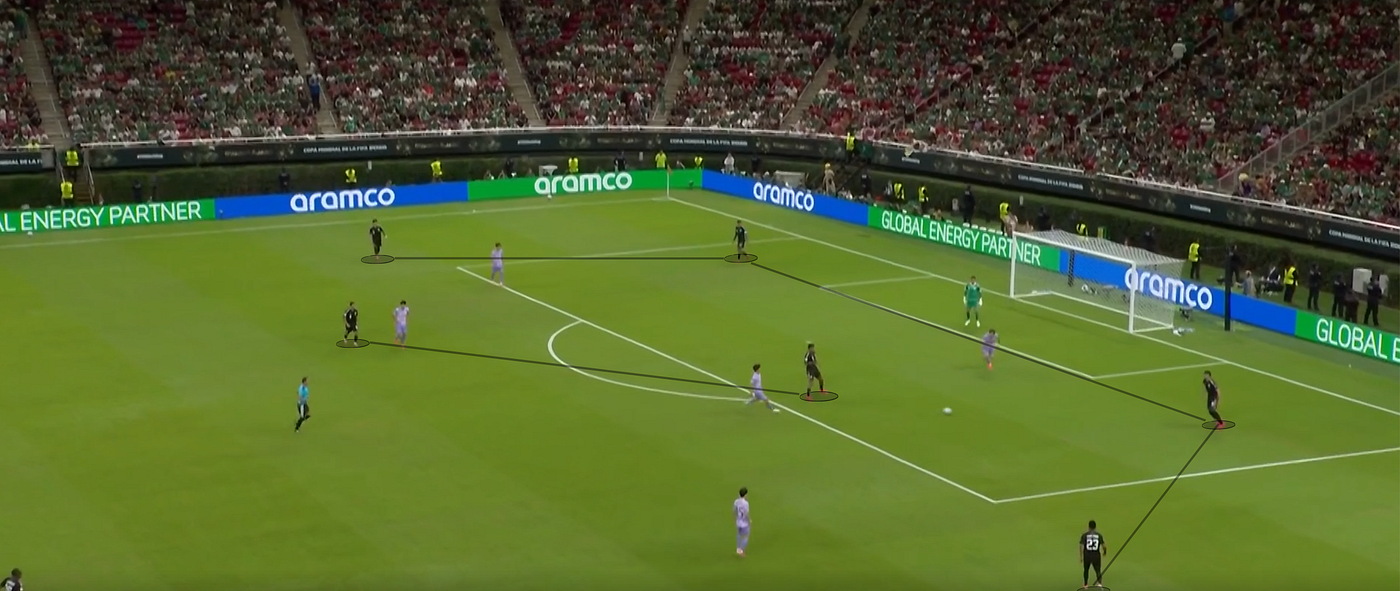
Mexico’s second-half build up shape. The four player first line disrupted Korea’s comfortable 3v3 match up, while the goalkeeper’s involvement created numerical superiority. Gallardo’s deeper position also added technical quality to the first phase, helping Mexico progress more cleanly.
When Korea pressed with a 3+2 front, Mexico were able to find the spare player. Through patient passing and the ball carrying of players like Gallardo, they carried the ball into attack more cleanly and started to dictate the rhythm.
This is supported by the phase of play data. Mexico spent 39% of their in possession time building up unopposed, only 16% building up opposed and a further 17% in progression. That is the profile of a team that found the second half build up more comfortable than the first half rhythm suggested.
The number 26, Gutiérrez, also became more influential in central areas in this phase. He had been quiet in the first half, but after the break he became one of the players who helped guide the ball into the opposition half after Mexico escaped the press. The contrast in his movement profile was important: he became more visible between the lines and in movements that connected the interior spaces.
5. The goal, and the ten minutes Mexico chose to defend
With the help of some good fortune, Mexico found their goal early in the second half. Luis Romo scored from a loose ball in the 50th minute, a right footed finish that turned Mexico’s improved territorial rhythm into a lead.
After that goal, Mexico spent roughly ten minutes accepting the game in their own half. Korea, chasing the equaliser, began pressing right up to the goalkeeper, and Mexico defended that pressure in a compact block. With Alvarado dropping into the right back and Gutiérrez lining up almost as a right sided midfielder, Mexico defended in something close to a 5–4–1 to absorb Korea’s push.
This was not Mexico’s best spell of the half, but it did not completely break their control of the match. They absorbed pressure, managed the game state and waited for the next chance to reset the rhythm.
6. The water break that reset Mexico’s second half
The turning point came with the water break, when Mexico’s coach Javier Aguirre made his moves.
He first changed his two central midfielders, and at the same time Mexico significantly increased their pressing intensity. That fresh energy from the bench stopped Korea from settling into the opposition half and relieved the pressure on Mexico.
It did more than relieve pressure. Because Mexico had ramped up their press, they were now able to win the ball back in dangerous areas at times, and from those regains they kept finding threatening positions.
The defensive pressure data backs up how active Mexico were across the match: they applied 265 total pressures to Korea’s 217, with a slightly higher direct pressure count. Those numbers fit the picture of a Mexico side that, once it committed to pressing, became the more proactive team out of possession.
7. Korea’s late aerial threat
Korea were not finished. In the last ten minutes in particular, they found openings through dangerous wide deliveries, creating headed chances in the box and building a real threat through crosses and set pieces.
This is where Korea’s higher xG total becomes easier to understand. Their best late chances came from wide and dead ball situations, not from sustained central combination play. They attempted 8 crosses to Mexico’s 5 and won 2 corners to Mexico’s 0, a sign of where their final push was directed.
But for all that late pressure, the goal would not come. Korea had territory, box entries and late aerial threat, but Mexico defended enough moments well and protected the lead.
Analyst takeaway
A draw would have suited both teams, and that is almost certainly why the first half looked the way it did: two cautious sides, weighing each other up, unwilling to take risks.
The second half told a different story. Mexico produced the difference both technically and tactically. They rebuilt their build-up into a 4+2 that beat Korea’s pressure, brought Gutiérrez into the game as a central progressor and, after the water break, lifted their pressing intensity to stop Korea from turning possession into sustained control.
Korea’s side of the story is more frustrating. They competed well and had moments of control, especially in the late first half spell built around Lee Kang-in dropping in to connect play. Their late crossing and set-piece pressure also gave them the better xG total.
But Mexico were more effective in the key tactical moments. They adjusted their build up, raised their press after the water break and managed the game state better after taking the lead. The completed line break count was almost even, but Mexico’s 44 to 22 advantage in Layer Break Score suggests that their progressions carried more tactical value.
Mexico were not dominant in the classic sense. The xG count of 0.87 to 0.34 in Korea’s favour is a reminder of how little separated the teams on chances.
But Mexico changed the match better.
In a tight Group A leadership battle, that was enough.
Originally published at https://footballtacticalnotes.substack.com.
메타데이터
- post_id
- cc2389f074c1
- slug
- mexico-1-0-korea-republic-how-mexicos-half-time-rebuild-decided-a-cagey-group-a-decider-cc2389f074c1
- url
- https://medium.com/@mkubjk/mexico-1-0-korea-republic-how-mexicos-half-time-rebuild-decided-a-cagey-group-a-decider-cc2389f074c1
- canonical_url
- https://medium.com/@mkubjk/mexico-1-0-korea-republic-how-mexicos-half-time-rebuild-decided-a-cagey-group-a-decider-cc2389f074c1
- author_url
- https://medium.com/@mkubjk
- status
- ok
- fetched_at
- 2026-07-09 20:42:47