Stop Prompting. Start Engineering: Hardening a WhatsApp AI Agent for Production
Building an AI agent is simple; building a production-stable system is where the real engineering begins. When I built a WhatsApp quote…
Stop Prompting. Start Engineering: Hardening a WhatsApp AI Agent for Production
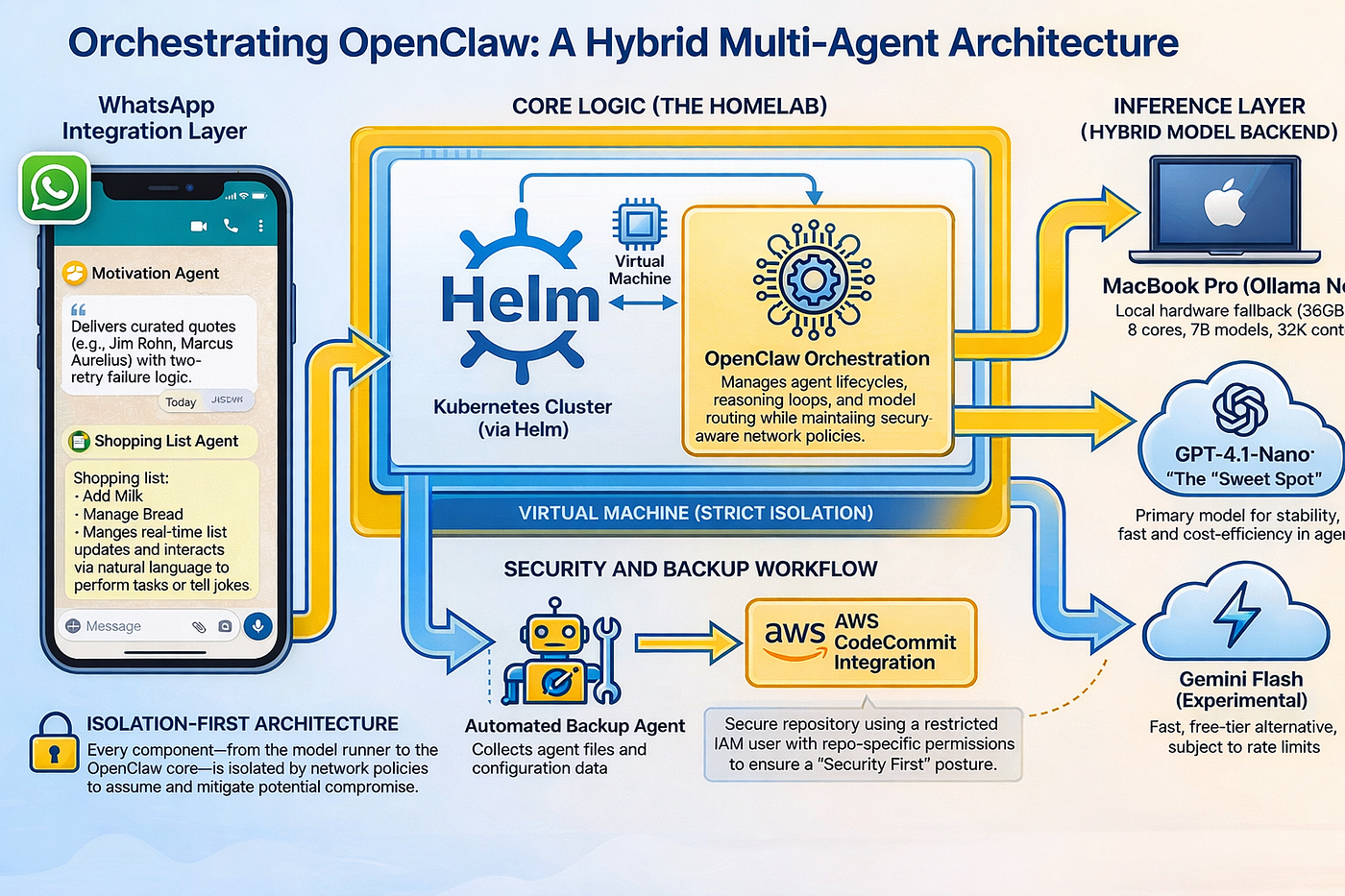
Building an AI agent is simple; building a production-stable system is where the real engineering begins. When I built a WhatsApp quote agent using OpenClaw, I expected a smooth “generate and send” loop. Instead, I faced file overwrites, repetitive models, and phantom messages.
Here is the shortened blueprint for turning an AI experiment into a reliable system.

1. The Sentinel Anchor: Beyond Append Flags
Relying on append=true for file writes is fragile if a model omits the flag or the schema changes, your memory file is overwritten.
The Fix: Use a Sentinel Anchor (like
#Q#).
The Result: The agent uses the
edittool to find the anchor and replace it with new data plus a new anchor. This ensures deterministic, log-style appends that survive model errors.
2. Structural Logic Over Embeddings
I discovered that small models are highly deterministic and repeat themselves aggressively. Worse, embeddings are not duplicate guards they detect semantic similarity, not exact string equality, and they cannot prevent deterministic repetition on their own.
The Fix: Run
memory_searchon the fully formatted quote
The Result: By limiting retries and enforcing a hard stop condition, repetition dropped significantly. The system no longer depends on model randomness; it depends on deterministic structural safeguards..
3. Hardened Tool Constraints
Stronger models (like GPT-4o-mini) often “optimize” instructions by switching tools. My agent started using write instead of edit, accidentally wiping my data again.
The Fix: Forbid tools like
writeandapply_patchin your configuration.
The Result: The agent is forced to use only the allowed tools or terminate immediately.
4. Explicit Delivery Control
“Phantom” messages can occur if your cron delivery mode isn’t explicitly managed.
The Fix: Set
"delivery": { "mode": "none" }.
The Result: This ensures the agent. and only the agent. controls when a message is actually sent.
The Bottom Line
Building reliable agents is no longer about prompt engineering; it’s about architectural engineering. By prioritizing determinism, tool restriction, and state isolation, you move from a “broken” experiment to a system that survives model upgrades and real-world use.
My agents are still not perfect, but through these educational debugging sessions, they are getting closer every day
메타데이터
- post_id
- cc360be3a71d
- slug
- stop-prompting-start-engineering-hardening-a-whatsapp-ai-agent-for-production-cc360be3a71d
- url
- https://medium.com/@nobso/stop-prompting-start-engineering-hardening-a-whatsapp-ai-agent-for-production-cc360be3a71d
- canonical_url
- https://medium.com/@nobso/stop-prompting-start-engineering-hardening-a-whatsapp-ai-agent-for-production-cc360be3a71d
- author_url
- https://medium.com/@nobso
- status
- ok
- fetched_at
- 2026-06-10 08:17:25