What Neuroscience Gets Wrong About Meditation
In this article, we discuss what is lacking in research about meditation using tools like fMRI, that real meditators can observe.
What Neuroscience Gets Wrong About Meditation
In this article, we discuss what is lacking in research about meditation using tools like fMRI, that real meditators can observe.
I have been meditating for over thirty years across more than a dozen traditions. I have sat with Tibetan teachers in the Nyingma lineage, with Thai forest monks in the samatha tradition, with Zen teachers, with Quakers in silent meeting, and with teachers whose approach fits no category at all. I have read the neuroscience literature on meditation with genuine interest and a growing sense that it is measuring something, but not quite the thing it thinks it is measuring.
This is not an argument against neuroscience. It is an argument for a more honest conversation about what brain imaging can and cannot tell us about contemplative practice.

Researcher checking fMRI images. By NIMH — US Department of Health and Human Services: National Institute of Mental Health, Public Domain, https://commons.wikimedia.org/w/index.php?curid=17982435
Problems with fMRI
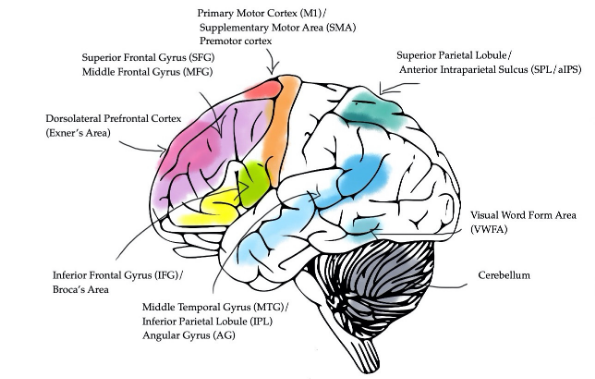
A functional MRI scan measures blood flow in the brain. More blood flow to a region indicates more metabolic activity, which researchers use as a proxy for neural activity. This is genuinely useful for understanding broad patterns: which regions are more or less active during different mental states, how certain conditions affect brain structure over time, whether an intervention changes patterns of activity in detectable ways.
What it cannot do is tell you what a mental state feels like from the inside, or whether two people producing identical scans are having identical experiences.
This matters enormously for meditation research because meditation is, at its core, a first-person undertaking. The entire project of contemplative practice across traditions is the systematic investigation of experience from within experience. A scan taken while someone sits quietly with eyes closed gives you information about the brain of a person sitting quietly with eyes closed. It does not tell you whether that person is in a state of concentrated absorption, mild distraction, dull drowsiness, or something with no good English name at all.
Researchers know this limitation. The problem is that it tends to get buried in the methods section rather than the conclusion.
The eight-week MBSR problem
A significant portion of the meditation neuroscience literature is built on studies using Mindfulness-Based Stress Reduction, an eight-week programme developed by Jon Kabat-Zinn in the 1970s. MBSR is well-designed, genuinely helpful for stress and certain clinical presentations, and has been studied more rigorously than almost any other contemplative intervention.
It is also not what most traditional meditation teachers would recognise as a complete practice.
Eight weeks of practice, typically involving forty-five minutes of daily sitting and a weekly group session, produces measurable changes in self-reported wellbeing and some changes in brain structure, particularly in areas associated with attention and emotional regulation. This is real. But extrapolating from eight weeks of structured stress-reduction practice to conclusions about meditation broadly, or about the mechanisms of long-term contemplative development, is a category error.
Traditional practice in most Asian contemplative systems is understood to unfold over years and decades. The early stages, developing the capacity for sustained attention, are considered preliminary. What comes after sustained attention is established is barely legible to an eight-week study, and most of the significant changes reported by long-term practitioners happen well beyond that threshold.
When researchers study long-term meditators, they typically define long-term as a thousand hours or more of practice. A thousand hours, at an hour a day, is less than three years. Many practitioners in serious traditional contexts consider that early-stage practice. Tibetan retreat structures, for instance, traditionally involve three years of intensive full-time practice as a single contained unit, understood as one stage in a longer arc.
What researchers miss about long-term practice
The changes that long-term practitioners report most consistently are not well captured by current neuroimaging methods.
The most commonly reported shift over years of practice is not a change in what arises in experience but a change in the relationship to what arises. Thoughts still occur. Emotions still arise. Sensations still appear and disappear. What changes is the degree to which these occurrences are taken as defining or threatening. This is described in Tibetan Buddhism as recognising the nature of mind, in Zen as seeing through the self, in Theravada as the progressive reduction of clinging.

Graph showing brain areas are thincker in practitioners of meditation. This work has been sponsored by the National Institutes of Health, the Center for Disease Control and Prevention, and the AlterMed Research Foundation — Own work, CC BY-SA 4.0, https://commons.wikimedia.org/w/index.php?curid=48773645
This is not a change in the content of experience. It is a change in the structure of how experience is held. And there is currently no imaging technique that can detect a change in existential orientation, which is what practitioners are pointing at when they describe the effects of long practice.
Researchers have begun approaching this through measures of decentering, psychological flexibility, and self-referential processing. These are useful proxies. But they are still proxies for something that the practitioner experiences as fundamental and the scanner cannot see at all.
Mindfulness research versus traditional practice
The word mindfulness is doing a great deal of work in the contemporary neuroscience literature, and not all of it clearly.
In its current popular and clinical usage, mindfulness generally means non-judgmental present-moment awareness, paying attention to what is happening right now without evaluation. This is drawn from the Pali term sati, which appears throughout Theravada Buddhist texts, but the translation is partial. Sati in its original context is closer to clear recollection or presence of mind, and it operates within a broader ethical and contemplative framework that the clinical definition leaves out entirely.
The broader framework matters because traditional contemplative systems do not treat attention training as an end in itself. In Tibetan practice, sustained attention is developed specifically in order to make direct investigation of the nature of mind possible. In Theravada practice, concentration supports insight, which supports the gradual loosening of the fundamental misperceptions that the tradition identifies as the root of suffering. Mindfulness as a clinical tool aims at symptom reduction. Mindfulness as a traditional practice aims at something it would call liberation.
Neither aim is wrong. But they are not the same aim, and conflating them produces distorted conclusions in both directions. Researchers conclude that meditation is primarily a stress-reduction technique with mood benefits. Practitioners conclude that researchers have missed the point entirely. Both are responding to the same confusion about what is actually being studied.
What subjective experience can tell us that an MRI scan or EEG cannot
Phenomenology, the careful first-person investigation of experience, was largely set aside by mainstream psychology in the twentieth century in favour of methods that could be verified externally. The neuroscience of meditation has revived some interest in first-person data, particularly through neurophenomenology, an approach developed by Francisco Varela that attempts to coordinate first-person reports with third-person measurements.
This is a genuinely promising direction. But it requires taking first-person reports seriously as data, not merely as noise to be filtered out or behavioural indicators to be correlated with scans.
What long-term practitioners report, consistently across traditions, includes changes that have no current neuroimaging correlate: a fundamental shift in the sense of being a separate self, a change in the quality of awareness itself rather than its contents, and states that practitioners describe as having no object at all, no thing being attended to, just awareness present without a target.
These reports are not easily dismissed as hallucination or error. They come from people who have spent decades in systematic self-investigation, often under the guidance of teachers who have done the same. They describe their experience carefully and distinguish it from adjacent states with precision. Whether their introspective reports accurately reflect what is happening in their brains is a genuine question. But the answer to that question requires better tools than we currently have, not the assumption that nothing interesting is occurring.
What an honest conversation looks like
Neuroscience has added something real to our understanding of meditation. It has established that practice changes the brain in measurable ways, that these changes persist beyond the meditation session, and that they correlate with improvements in attention, emotional regulation, and certain aspects of wellbeing. This is worth knowing.
What it has not established is a complete account of what meditation is, what it does over decades of sustained practice, or whether the states that long-term practitioners describe as the goal of practice have any neural correlate that current methods can detect.
The honest position is that the science is early, the subject is deep, and the most interesting questions remain open. Practitioners have been investigating this territory carefully for a very long time. The neuroscience that takes their reports seriously as data, rather than merely as outcome measures to be explained away, is the neuroscience most likely to find something worth knowing.
메타데이터
- post_id
- cc42cf34ec77
- slug
- what-neuroscience-gets-wrong-about-meditation-cc42cf34ec77
- url
- https://medium.com/@joyboseroy/what-neuroscience-gets-wrong-about-meditation-cc42cf34ec77
- canonical_url
- https://medium.com/@joyboseroy/what-neuroscience-gets-wrong-about-meditation-cc42cf34ec77
- author_url
- https://medium.com/@joyboseroy
- status
- ok
- fetched_at
- 2026-06-16 19:09:56