Racing towards Sprawl: How Urban Sprawl Impacts Motorsports and You.
I am a City Planner who loves transit-oriented development. I yearn for dense, walkable development, and wish to see cities all over the…
Racing towards Sprawl: How Urban Sprawl Impacts Motorsports and You.
I am a City Planner who loves transit-oriented development. I yearn for dense, walkable development, and wish to see cities all over the country prioritize people over cars. Before being captivated by the concept of Urbanism, however, I was also captivated by something else; Auto racing and race cars.
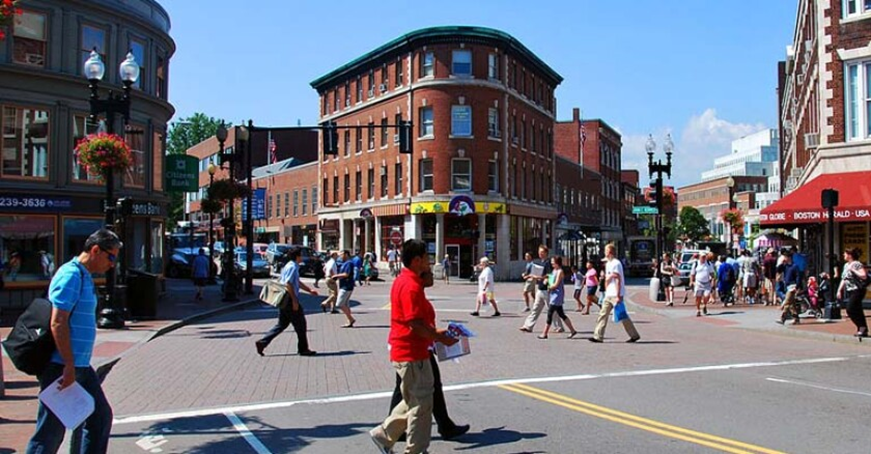
Walkable Neighborhood in Boston
Auto Racing in America can trace its roots to the 1895 Chicago to Evanston race, where six (6) “road wagons” raced at an average speed of 7.5 mph. Dozens of spectators followed the six (6) cars on foot. The race was won by Charles E. Duryea, owner of the Duryea “Road Wagon”, a 2-cylinder, water-cooled engine with a motor that produced 4 horsepower (Smithsonian, 2024). Today, several auto racing series speed across the country, including NASCAR, IndyCar, IMSA and Formula One, among others. These races are often in front of tens of thousands of fans with a variety of different cars at speeds upwards of 200 miles per hour. While motorsports do not have the popularity it did in the 2000s with the cultural success of NASCAR, the sport still thrives and has a passionate following.
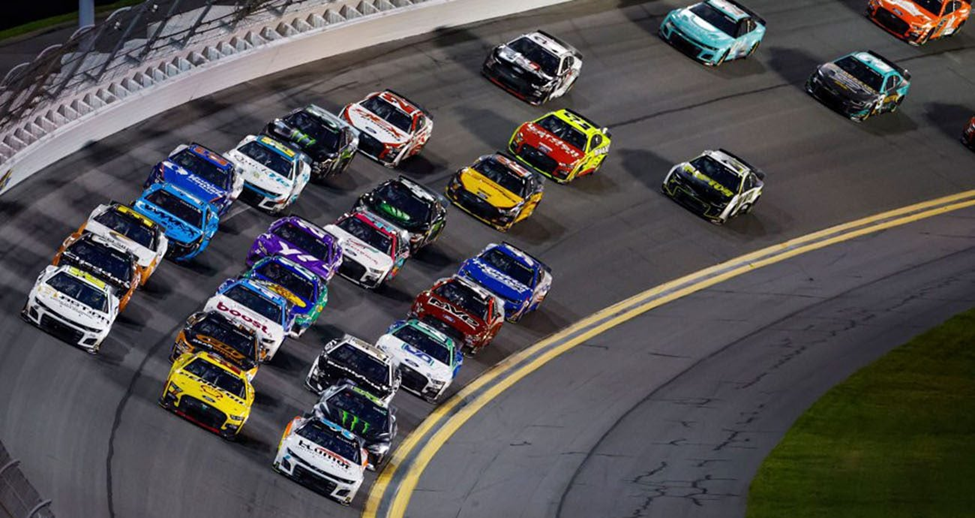
2023 NASCAR Cup Series Coke Zero 400 at Daytona International Speedway
Throughout my life and increasingly as I progress into my career, these two (2) worlds of mine have begun to collide. I now realize that my favorite sport is threatened by the same problem my profession seeks to combat and solve, which is Suburban Sprawl.
Suburban Sprawl is defined as the “the rapid expansion of the geographic extent of cities and towns, often characterized by low-density residential housing, single-use zoning, and increased reliance on the private automobile for transportation” (Britannica, 2009). Sprawl has many consequences, including a higher cost of infrastructure, traffic fatalities, taxes, dependency on automobiles, and run-off into lakes and rivers, which leads to floods, as well as the loss of natural habitats, wildlife, and open space. Sprawl also has impacts on human health (obesity, high-blood pressure, hypertension, and asthma). Additionally, sprawl has led to urban decay, food deserts, higher cost of housing, and a loss of opportunity for those in pre-war, walkable urban cores (EPA, 2015).
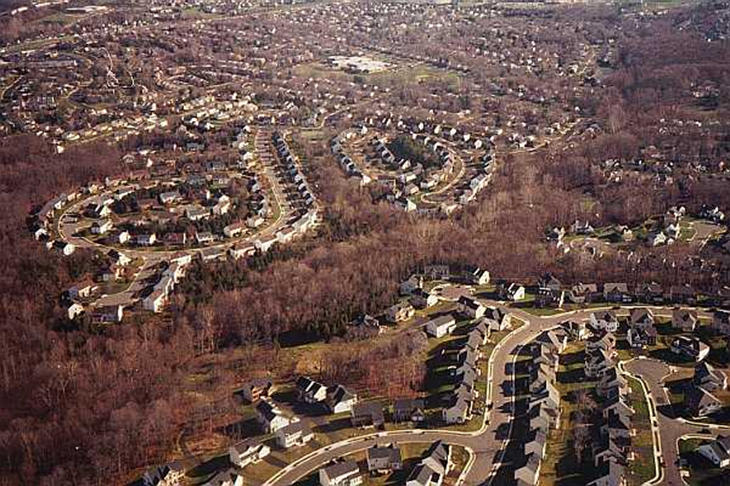
Sprawling Neighborhoods
What does any of this have to do with motorsports? Many racetracks were constructed throughout the 1950s and the 1960s with the automobile boom. These tracks in most cases were constructed away from town centers around farmland or “out in the sticks”. This arrangement worked well, as the roar of engines was situated away from town centers and residences, thereby keeping disturbances to a minimum. Our cities, however, continued to expand further and further outward, with many post-war developments consisting of large lots, low-density single-family residences, strip malls, big box stores, and massive warehouse complexes. As our city’s sprawled, the buffer between the tracks and the people disappeared. This led to an era of new developments around old racetracks, whereby residents of those new developments began calling for the closure of these racetracks as they strayed from being deemed community assets to nuisances. A prominent example of this is the case of the Nashville Fairgrounds Speedway, which has been in operation since 1904. The racetrack was developed in what was then rural Tennessee; Since its construction, however, residences have been developed around the racetrack. The track recently proposed upgrades to the track in hopes of luring a major NASCAR race. This was, however, met with fierce opposition from nearby property owners, who did not want the nuisance of an expanded racetrack near them (WSMV-TV, 2023). Other prominent examples of tracks that have met a similar fate are Myrtle Beach Speedway (Myrtle Beach Sun, 2023) and Greenville-Pickens Speedway, among others, which have shuttered due to local opposition and the continued sprawl of nearby communities (WSPA-TV, 2025).
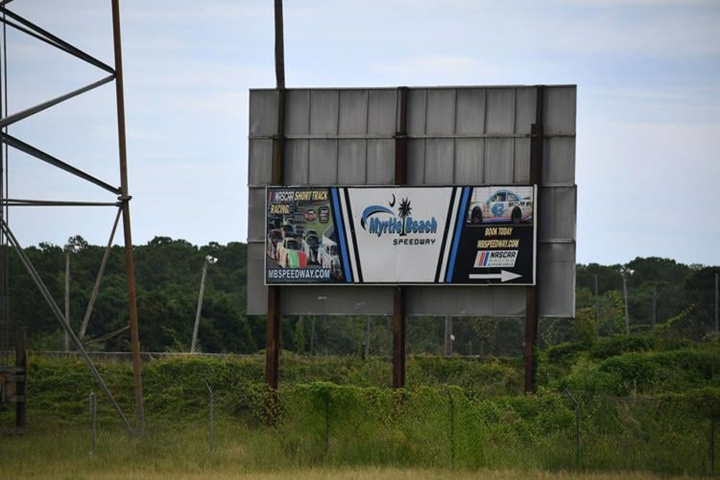
Myrtle Beach Speedway, Closed in 2023
This trend has accelerated recently; Continuous sprawl has made developable land on the fringes of our cities a premium, with property values increasing by 20% (Badger, 2022). This rise has been attributed to the lack of homes and residences being constructed and the “lack” of available land for home construction. The increase of property values has also led to an increase in property taxes, the impacts of which have been felt by everyone from property owners to track owners. Recently, the owner of Heartland Motorsports Park in Topeka, Kansas made the decision to sell the track and the land, citing high property taxes in Shawnee County, Kansas (KSNT-TV, 2023). Additionally, the increase in property values has made major auto racing tracks consider downsizing. Earlier this year, NASCAR sold a major portion of the property of the 2-mile-long California Speedway (formerly Auto Club Speedway). The property was sold for a whopping $545 million dollars. NASCAR plans to scale down the racetrack to a ½ mile short track. Our own Kansas Speedway has also recently sold off a portion of its “excess” property to be developed into a new Urban Outfitters office and distribution center (Cagle, 2022), as well as the expansion of the Buc-ee’s Travel Center (KCUR, 2024).
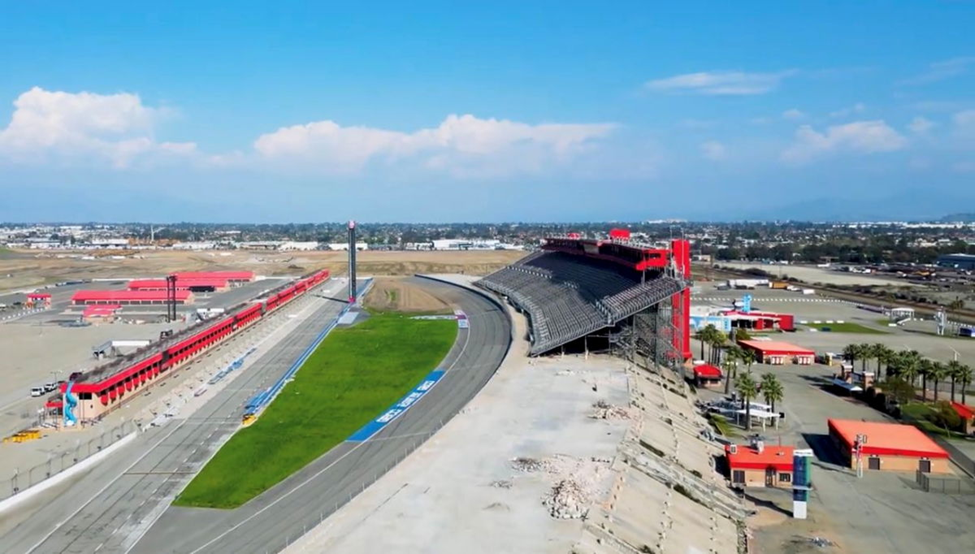
Remains of California Speedway in Fontana, California
You may now be wondering, what does this have to do with you and your money or what does this have to do with Kansas City, Kansas (KCK)? More than you think.
Suburban sprawl itself is a symptom of many problems, primarily redlining and suburbanization post-World War 2 (WW2). This is prevalent here in KCK, particularly in the Northeast, which was once home to many thriving neighborhoods, and now hosts many vacant lots, few businesses, and little opportunity for those that remain. Many of the vacant lots (over 3,000) within the Northeast are owned and maintained by the Unified Government of Wyandotte County and Kansas City, KS (UG) and its Land Bank (Unified Government, 2025). Many of these lots have already built infrastructure, including roadways, utilities, sidewalks, etc.
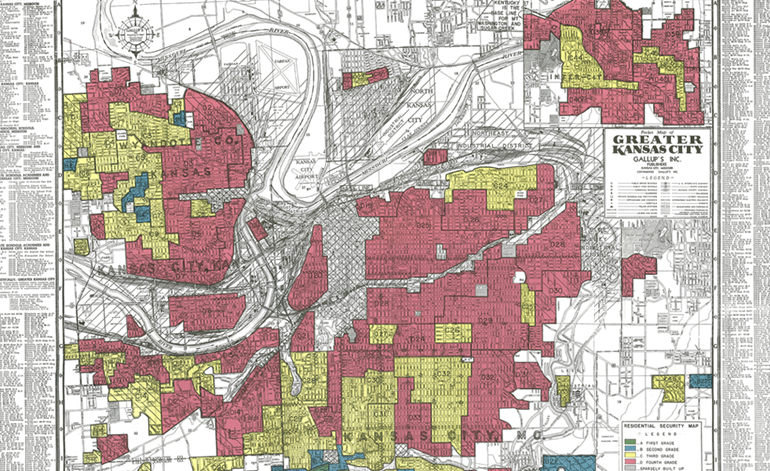
Redlining Map of Kansas City in 1935
In addition to Urban Decay, Suburban sprawl has led to the increase of property taxes and other taxes. Why is that?
In 1940, KCK had around 130,000 residents living within the city. Today, KCK has around 160,000 residents living within the city. The difference, however, is KCK now has three (3) times the land it did in 1940, yet only 20% more people. To serve all this land and all of the new developments, the city had to construct roadways, utilities, and provide services such as police and fire to these areas. Unfortunately, however, while the city has three times the land area, KCK did not proportionally increase in population. As a result, the city and its residents are now responsible for three (3) times the infrastructure it once was with roughly the same population as in 1970. Unfortunately, the costs of this expanded infrastructure have been passed onto the residents of KCK, as well as many other cities in the United States in the form of higher taxes, higher mill levy rates and, in some cases, cuts to other city services and maintenance funds. A prominent example of service cuts within the Unified Government is UG Transit services, which is expecting to cut two (2) routes and reduce service on other routes, due to the high cost of serving sprawling areas within KCK, with relatively low ridership (Lukitsch, 2024). These cuts will include eliminating service to the newly constructed I-435 Logistics Park at 99th & Leavenworth Road.
Suburban sprawl not only increases the costs of services on governments and results in higher taxes, it also directly increases costs for the population. As discussed, the continued sprawl results in increased automobile dependence, over modes such as walking, public transit, or other means. This automobile dependence brings several external costs, such as the cost of fuel, cost of maintaining a vehicle, cost of insurance to name a few. It is estimated that Americans spend as much as 15% of their income on private automobile transportation (BTS, 2024), not including taxes, as previously mentioned. It is estimated that households could save up to $13,000 if transportation alternatives, such as public transit, were utilized (APTA, 2023). Unfortunately, serving sprawl with transit is often very costly, a cost in which agencies will often forgo, to serve denser areas of a metro (Merry, 2022).
Finally, sprawl has negative impacts on the health of the community. To serve the sprawling areas of a city and in many cases, encouraging the sprawl of metropolitan areas, the interstate highway system was constructed. Originally seen as a means for national defense, the interstate highway system has become the primary means of moving around the city and the country. Many people enjoy our vast highways however, few realize the impacts they have. Among other things, various types of pollutants are found in large concentrations near major highways. The EPA estimates that 45,000,000 people live within 300 feet of a four-lane highway. Pollutants include particulate matter (PM), carbon monoxide (CO), oxides of nitrogen (NOx), benzene, nitrogen dioxide (NO2) and ozone (O3). These pollutants cause a variety of issues, including asthma onset and aggravation, cardiovascular disease, reduced lung function, impaired lung development in children, pre-term and low-birthweight infants, childhood leukemia, and premature death (EPA, 2015).
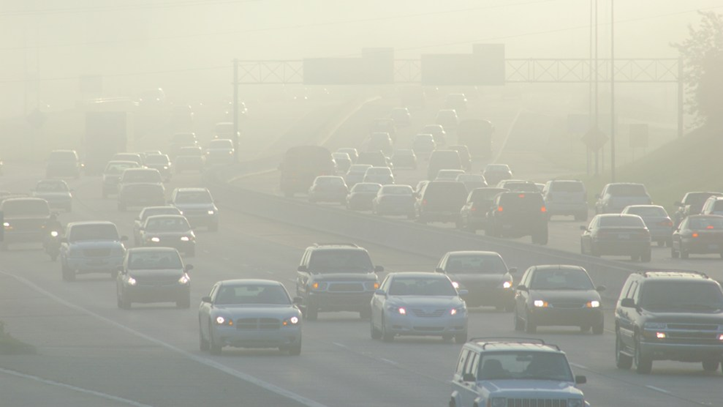
Smog along Interstate 5 in California
The health impacts of sprawl don’t stop at the highways. As mentioned previously, urban decay resulted in the loss of population and businesses, businesses including grocery stores. The loss of grocery stores in these once walkable neighborhoods resulted in food deserts, which are neighborhoods and communities that have limited access to affordable and nutritious foods. Many communities, particularly communities that were impacted by redlining and urban decay are food deserts. The lack of access to grocery stores also creates potential for several health issues, including obesity, stunted development in children, diabetes, and heart problems (National Research Council, 2009).
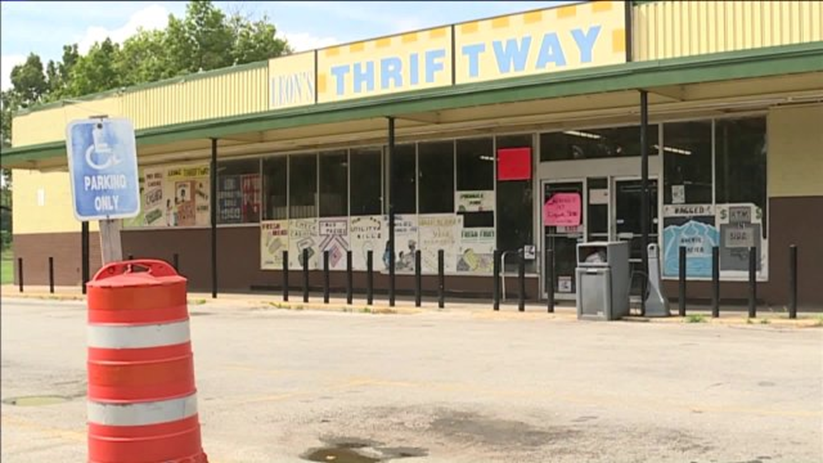
Leon’s Thirftway, in Kansas City, Missouri, after closing in 2019
Urban Sprawl is a problem, however, that can be solved. Obviously, urban sprawl is not the sole cause of these issues and sprawl itself is a symptom of these problems. Investment into our urban core, particularly on land bank lot lots, can go a long way to accomplish this goal of reversing urban sprawl. These lots exist in neighborhoods which are purpose built for dense, walkable developments and have existing infrastructure, rather than greenfield developments, in areas where there is no existing infrastructure. The Wyandotte County Land Bank Land Bank is currently working on implementing a new strategy for developing on these lots (Unified Government, 2025). Other techniques, such as urban growth boundaries, which has seen success in Portland (Jin-Jun, 2004), changes to the zoning code, to allow more density or smaller lots, and promotion of alternative transportation methods have been proven to limit and prevent urban sprawl, like what we have seen in Minneapolis (Liang, 2024). I’ll admit, the transition from racetracks closing to the brutal impacts and consequences may have been jarring for readers, however, I believe it’s important to realize that urban sprawl has many impacts, from our taxes to our health, to our infrastructure, and even to our recreational activities. With better management of our land use, however, we can preserve recreational activities, such as racing, have better health outcomes for the population, and use our finite resources more effectively.
메타데이터
- post_id
- cc4a2f4b44f8
- slug
- racing-towards-sprawl-how-urban-sprawl-impacts-motorsports-and-you-cc4a2f4b44f8
- url
- https://medium.com/@ugplanningblog/racing-towards-sprawl-how-urban-sprawl-impacts-motorsports-and-you-cc4a2f4b44f8
- canonical_url
- https://medium.com/@ugplanningblog/racing-towards-sprawl-how-urban-sprawl-impacts-motorsports-and-you-cc4a2f4b44f8
- author_url
- https://medium.com/@ugplanningblog
- status
- ok
- fetched_at
- 2026-07-20 17:28:32