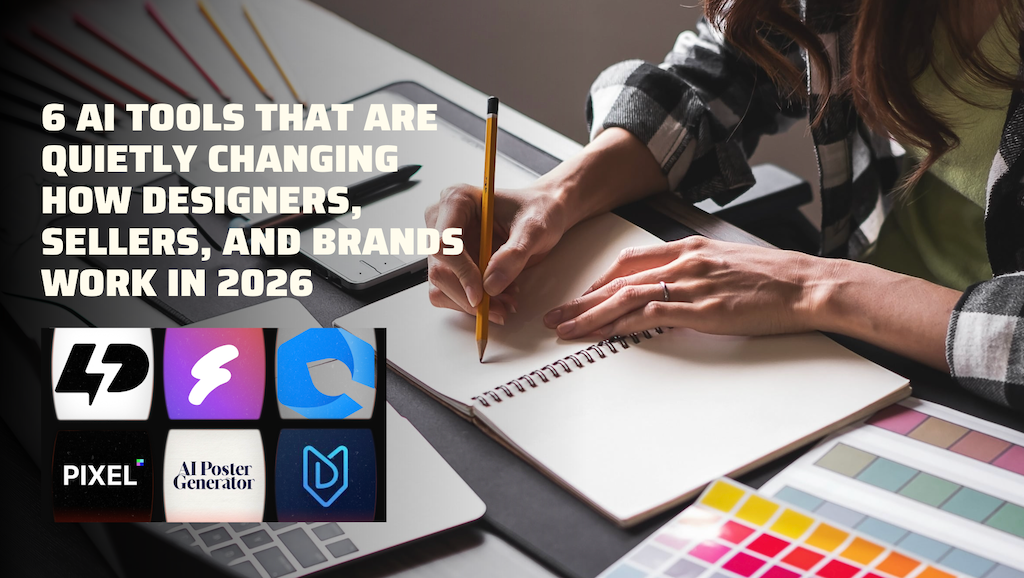
6 AI Tools That Are Quietly Changing How Designers, Sellers, and Brands Work in 2026
A honest look at the tools worth your time — and the ones doing things you didn’t know were possible
6 AI Tools That Are Quietly Changing How Designers, Sellers, and Brands Work in 2026
A honest look at the tools worth your time — and the ones doing things you didn’t know were possible
There’s a moment most designers and online sellers eventually hit. You have a great product, a solid idea, maybe even a growing store — but you’re spending 80% of your time on things that feel like they shouldn’t take that long. Writing listings. Swapping backgrounds. Tweaking mockups. Making a logo that doesn’t look like every other logo.
In 2026, that problem is increasingly solvable. Not perfectly, not magically — but practically. Here are seven tools that are doing genuinely useful things in the design, image generation, and branding space right now.
1. The Pixel — Your Shortcut to Finding the Right AI Tool

Before you can use great AI tools, you have to find them. That’s the problem The Pixel solves.
It’s a curated directory of AI-powered marketing and design tools, but the word “curated” is doing real work here. The team actively filters what gets listed, so you’re not sifting through a graveyard of abandoned projects or rebranded Canva clones. You get in-depth breakdowns of what each tool actually does, who it’s for, and how to get the most out of it.
If you’re trying to build a modern creative workflow and don’t know where to start, The Pixel is an honest first stop.
2. Logo Diffusion — Seriously Good AI Logo Generation

Most AI logo tools produce something that looks vaguely like a logo. Logo Diffusion produces something that looks like it came from a real designer.
The platform supports text-to-logo, sketch-to-logo (yes, you can upload a hand-drawn concept), and image-to-logo generation. It also handles 3D transformations, background removal, and vector exports — the formats you actually need for real-world use.
What makes it stand out in 2026 is the level of control. You’re not just picking from templates; you’re guiding an AI that’s learned a lot about what makes logos work visually. Free plan available, with transparent paid tiers if you need unlimited generations.
3. AI Poster Generator — The Chat-Based Design Tool That Actually Works

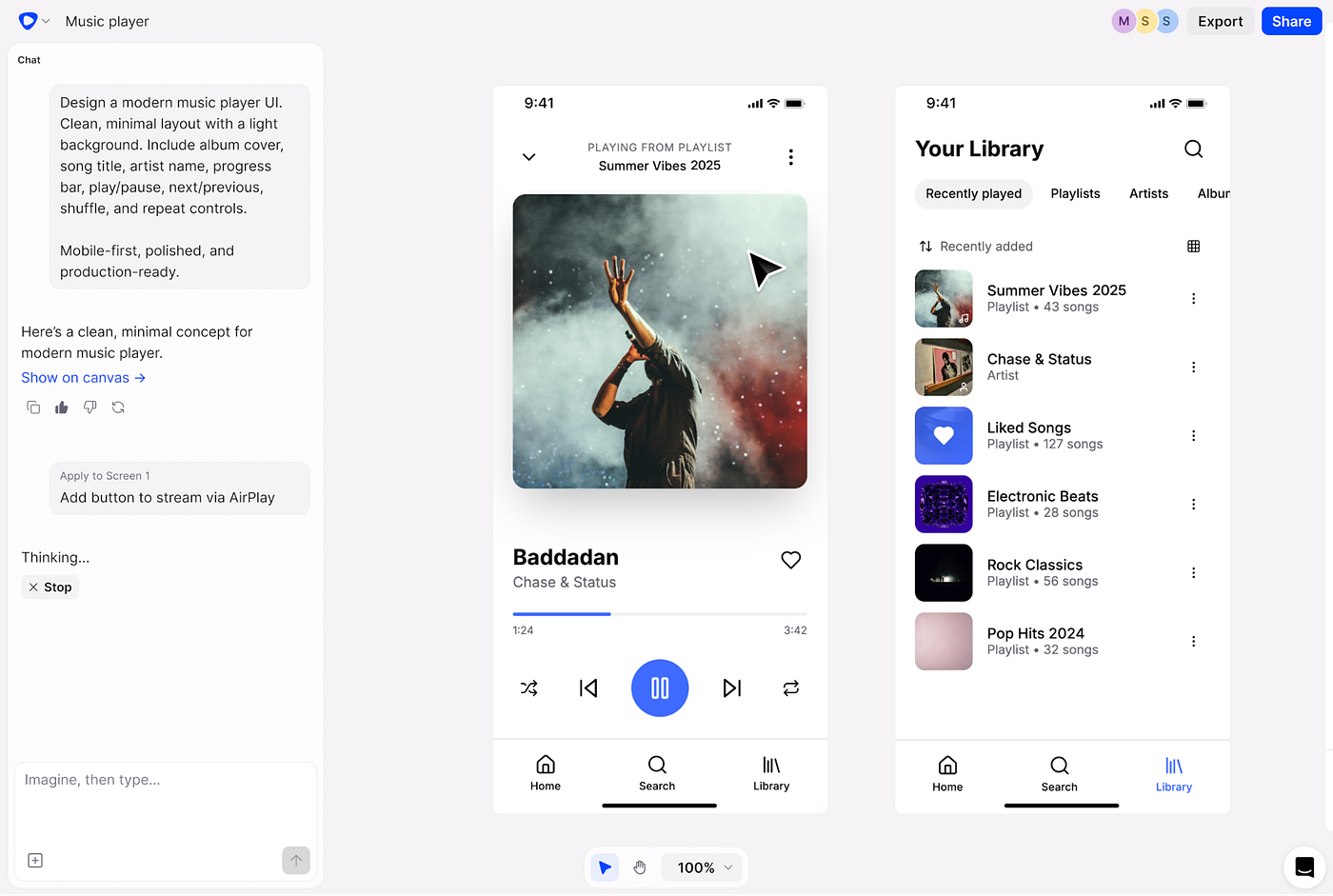
AI Poster Generator has a clever interface: instead of dropping you into a blank canvas, it starts a conversation. You describe what you need — an event poster, a product promotion, an educational display — and the AI asks you follow-up questions about style, imagery, and text.
As you answer, the poster takes shape in real time on the right side of your screen. Then you can manually adjust anything in the editor: move text, change colors, swap backgrounds.
The result is that people with zero design experience can produce something genuinely print-ready in minutes. It’s especially good for small business owners and event organizers who need a professional look without the learning curve of tools like Illustrator.
4. SellerPic — One Product Photo, Endless Visuals

Here’s the workflow problem SellerPic solves: you have a product, you take one decent photo, and you need that product to appear in a lifestyle context, on a model, in a video, across multiple platforms. Traditionally, that’s a photoshoot budget and a week of editing.
SellerPic takes your single product image and generates lifestyle scenes, AI model shots (with customizable appearance, pose, and body type), and short-form videos for TikTok, Instagram Reels, and YouTube Shorts. The AI handles lighting, shadows, and perspective automatically so the product blends naturally into the scene.
For e-commerce sellers scaling a catalog in 2026, this is the kind of tool that pays for itself quickly.
5. Dynamic Mockups — Mockups at Scale, Without the Bottleneck

Dynamic Mockups is built for print-on-demand sellers and e-commerce businesses that need product mockups fast and in volume. The platform lets you place your designs on t-shirts, hoodies, mugs, and hundreds of other products with a single click.
What separates it from basic mockup tools is the API and bulk generation capability. If you’re running a store with hundreds of SKUs, you can automate the entire mockup creation process. You can also upload your own Photoshop templates to maintain complete visual control over the output.
The AI Backgrounds feature is a nice addition — it generates custom lifestyle scenes for your mockups rather than using the same stock environment everyone else is using.
6. MyDesigns — The All-in-One Platform for POD Sellers

MyDesigns is the tool that ties a lot of this together operationally. It’s an automation platform built specifically for print-on-demand and digital product sellers, and its headline claim — launching 120 products in the time it takes to launch one — isn’t far off when you see the bulk design and publishing tools in action.
The platform connects to Etsy, Shopify, WooCommerce, and TikTok. It bulk-creates designs, generates AI-written SEO listings, creates mockups, and publishes everything in one workflow. Over 200,000 active sellers have used it to collectively create more than 50 million products.
If you’re serious about scaling a POD business in 2026 and still doing things one product at a time, MyDesigns is the most immediate upgrade you can make.
The Bigger Picture
What’s interesting about this set of tools isn’t any single feature — it’s how they complement each other. You might discover your stack via The Pixel, build your brand identity with Logo Diffusion create product visuals with SellerPic, generate mockups with Dynamic Mockups, design your marketing materials with AI Poster Generator, and then scale the entire operation with MyDesigns.
None of these tools require design expertise to start. All of them reward learning their deeper features. And in 2026, that combination — accessible entry, real depth — is exactly what good software looks like.
Have you used any of these tools? What’s been the biggest time-saver in your creative workflow this year? Drop a comment below.
메타데이터
- post_id
- cc5912e65301
- slug
- 6-ai-tools-that-are-quietly-changing-how-designers-sellers-and-brands-work-in-2026-cc5912e65301
- url
- https://medium.com/@mayabayers18/6-ai-tools-that-are-quietly-changing-how-designers-sellers-and-brands-work-in-2026-cc5912e65301
- canonical_url
- https://medium.com/@mayabayers18/6-ai-tools-that-are-quietly-changing-how-designers-sellers-and-brands-work-in-2026-cc5912e65301
- author_url
- https://medium.com/@mayabayers18
- status
- ok
- fetched_at
- 2026-06-09 15:37:30