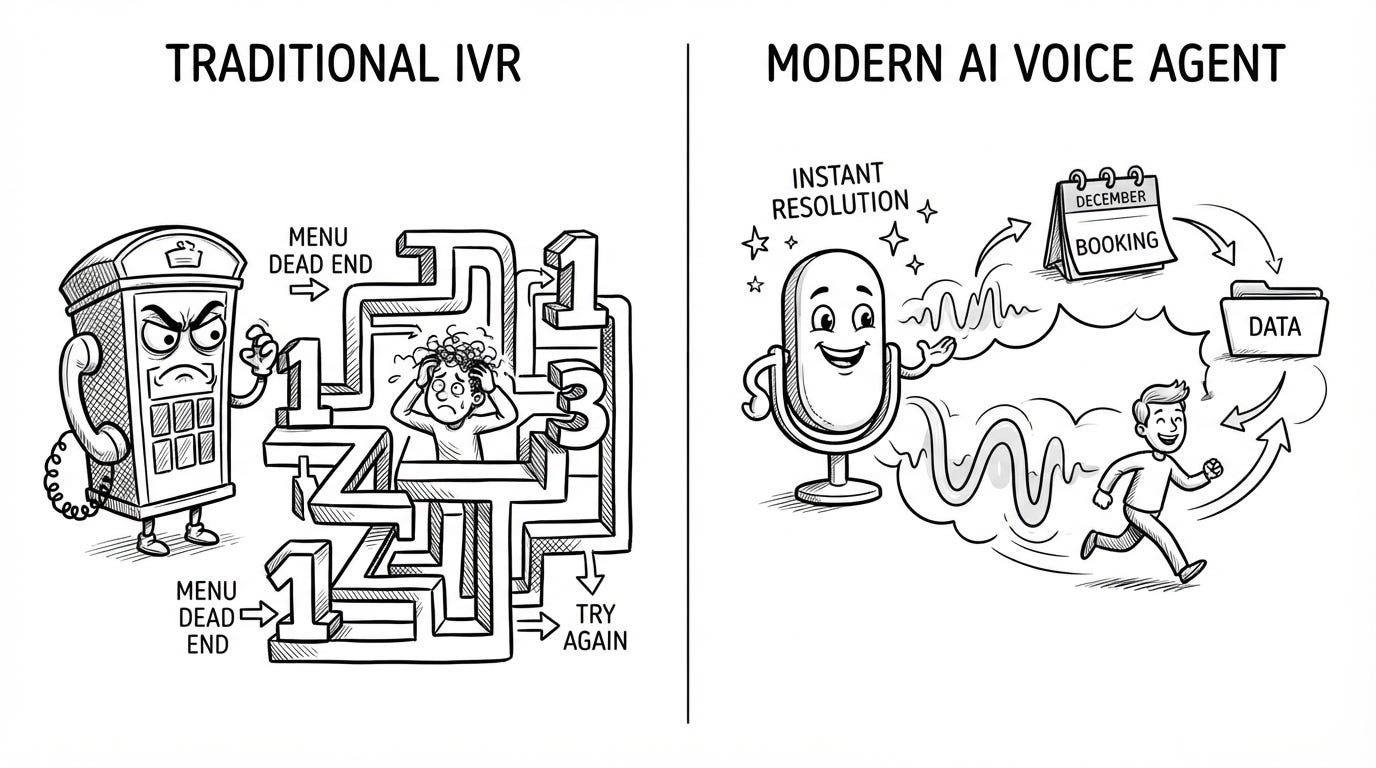
The Emergency HVAC Call You Missed Is Already Your Competitor’s Customer
In HVAC, speed matters more than branding.
The Emergency HVAC Call You Missed Is Already Your Competitor’s Customer
In HVAC, speed matters more than branding.
A homeowner wakes up at 2 a.m. in January to a freezing house. The furnace is dead. Outside, temperatures are falling fast.
In July, another family returns home after a long day to find the air conditioning gone during a record heat wave. The house becomes unlivable within minutes.
In moments like these, consumers do not comparison-shop. They do not read reviews for an hour or fill out multiple quote forms.
They call the first company that answers.
That simple reality has quietly reshaped the economics of the HVAC industry. The businesses winning more emergency jobs are not always the largest operators or the ones with the biggest advertising budgets. Increasingly, they are the ones built for responsiveness — companies that have deployed autonomous AI customer service agents as a permanent layer of their communications infrastructure.
An AI customer service agent for HVAC now functions less like a chatbot and more like a round-the-clock dispatcher: answering inbound calls immediately, qualifying emergencies, scheduling appointments, routing technicians, and following up automatically via voice, SMS, and messaging — without a human ever picking up the phone.
For contractors facing rising labor costs, seasonal call surges, and mounting customer expectations, the shift is becoming difficult to ignore.
The Most Valuable HVAC Leads Arrive Under Pressure
Emergency calls convert differently than ordinary leads.
A homeowner looking to replace a unit next spring may gather estimates and negotiate pricing over several weeks. A restaurant owner whose cooling system fails on a Saturday night does not. The urgency compresses the decision-making process entirely. Speed to answer becomes the only factor that matters.
That dynamic has made response time one of the most important operational metrics in home services — and it is the primary reason HVAC companies are turning to AI voice agents for inbound and outbound customer calls.
The problem is that emergencies rarely happen at convenient times. Systems fail after hours, during weekends, on holidays, and — most critically — during extreme weather events when call volumes spike beyond what any office staff can realistically manage.
Many contractors still rely on voicemail after business hours, creating a delay precisely when customers are least willing to wait. A missed inbound call at midnight is not a lead in the morning. It is a confirmed booking for whoever answered next.
Deploying an AI voice agent for inbound calls eliminates that delay entirely. Calls are answered in seconds, regardless of the time or volume. Customers receive an immediate, professional response. Appointments are confirmed automatically. Urgent situations escalate in real time.
For consumers, the experience feels fast and reassuring — indistinguishable from speaking with a knowledgeable team member. For HVAC operators, it means fewer high-intent leads quietly disappearing into a competitor’s calendar.
The Hidden Cost of After-Hours Silence
Most HVAC owners know they miss some calls. Few realize how much revenue disappears because of it.
The leak almost always occurs outside standard business hours — during evenings, weekends, and the peak-season surges when dispatchers are stretched thin or unavailable altogether.
A customer with no heat at midnight is not leaving a polite voicemail and waiting until morning. They are calling the next number on the list.
This is where AI customer service platforms are beginning to fundamentally reshape operational strategy across the trades. Rather than functioning merely as virtual receptionists, modern AI agents act as always-on communication layers for the business itself — capable of managing inbound and outbound interactions simultaneously, across voice, SMS, and messaging channels, without hold times or gaps in coverage.
Today’s most capable platforms can answer inbound calls immediately, identify emergency situations through natural language, gather service details, prioritize jobs based on urgency, confirm appointments, and send automated SMS follow-ups for any calls that were missed — reducing the chance that a prospect goes cold after a single unanswered attempt.
The operational impact is significant not because AI replaces staff, but because it absorbs the repetitive communication work that overwhelms them during peak demand — freeing your team to focus on the problems that actually require human judgment.
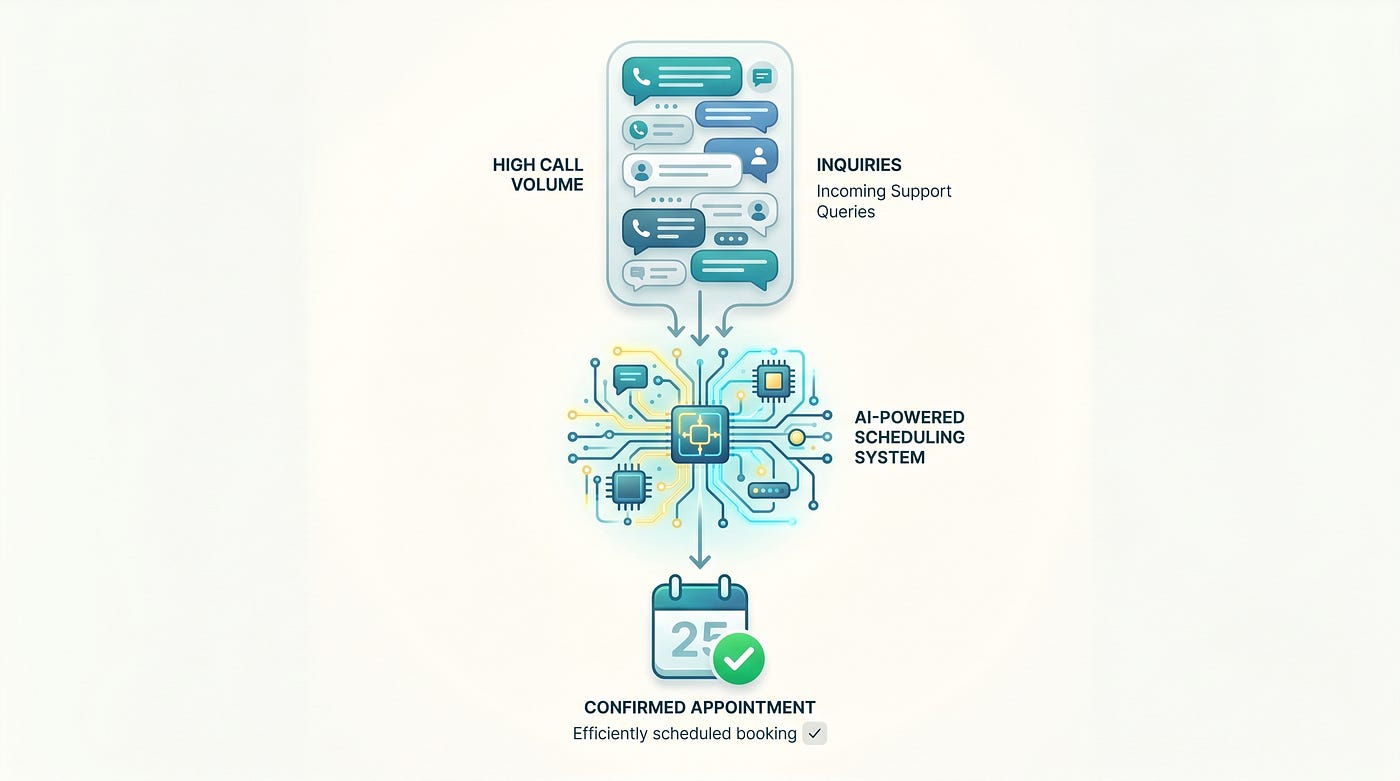
Peak Season Is Where HVAC Operations Break — and AI Holds Them Together
Summer heat waves and winter cold snaps create predictable spikes in demand. They also expose the operational weaknesses of many HVAC companies.
Phone lines back up. Dispatchers juggle frustrated callers and overbooked technicians simultaneously. Hold times climb. Calls are missed. Existing customers become harder to manage while new leads arrive faster than staff can absorb them.
The deep irony is that peak season — the period when HVAC companies generate the most revenue — is often the exact moment when lead conversion rates quietly deteriorate.
Autonomous AI agents are increasingly being deployed as overflow infrastructure during these periods. Unlike human teams, they do not place callers on hold, lose track of callbacks, or struggle when five calls arrive at once. They handle simultaneous inbound and outbound interactions across voice and SMS without degradation in quality or response time.
Behind the scenes, the same system is scheduling confirmations, sending reminders, routing technicians, and managing follow-up outreach — all automatically.
The effect is operational stability during the industry’s most chaotic moments.
For customers, that translates to shorter wait times and faster service. For business owners, it means capturing high-intent demand that would otherwise spill directly to the competitor who picked up.

Dispatch Burnout Is an Industry Problem. AI Customer Service Is Part of the Solution.
Behind most HVAC businesses is a small office team carrying an outsized operational burden.
Dispatchers are expected to coordinate technicians in the field, calm frustrated homeowners on hold, answer the same basic questions dozens of times each day, reschedule appointments, process emergency requests, and keep communication flowing throughout peak hours. During busy seasons, the workload becomes genuinely relentless.
Burnout in these roles is increasingly common — and in an industry already challenged by staffing shortages, losing a dispatcher mid-season is a serious operational risk.
AI tools are not eliminating dispatchers. They are redefining where human attention is most valuable.
Routine interactions — appointment confirmations, basic service inquiries, maintenance reminders, initial lead qualification, outbound follow-up calls and texts — can now be handled by autonomous AI agents for voice and SMS with a level of consistency and professionalism that is difficult to replicate at scale with a stretched human team.
That frees office staff to focus on what genuinely requires judgment, empathy, and operational experience: complex scheduling conflicts, upset customers who need a real conversation, technician coordination on difficult jobs.
For many HVAC businesses, the immediate benefit is not just fewer missed calls. It is a calmer, better-organized operation — one where response times improve, scheduling becomes more consistent, and employees spend less time reacting and more time managing.
The Competitive Advantage Is No Longer Just Technical Skill
Most HVAC companies lose business for operational reasons, not technical ones.
The customer rarely knows during the first phone call which contractor has the most experienced technician or the better installation process. What they notice — and what shapes their decision — is responsiveness.
- Who answered.
- Who called back first.
- Who made booking feel effortless.
Companies deploying AI-powered customer service agents are reducing friction at the exact moment customers are most ready to commit. That means handling inbound emergency calls at 2 a.m., running outbound SMS follow-up sequences for missed calls, automating appointment scheduling and reminders, and maintaining fast response times across every channel — without expanding administrative headcount.
The technology itself is not the story. The shift in customer expectations is.
Consumers in 2026 expect immediate, intelligent responses from every service business they interact with — not voicemail, not a callback tomorrow, not a wait on hold. HVAC companies still operating with after-hours silence are competing against businesses that have deployed autonomous AI agents across voice, SMS, and messaging to stay reachable at all hours.
And in emergency service industries, being reachable often determines who wins the customer before price is ever discussed.
The New Standard in HVAC Customer Service
For decades, HVAC competition centered on reputation, technician quality, and geographic reach. Those factors still matter enormously.
But speed of response has emerged as a new and decisive layer of competitive advantage — one that does not require the best truck fleet or the most experienced crew to win.
The first company to answer the call now frequently becomes the company that gets the job.
An AI customer service agent deployed across voice, SMS, and messaging is not about replacing people. It is about making sure the business remains reachable during the moments that determine revenue — and ensuring that no high-intent lead quietly slips away because a dispatcher was busy, it was 11 p.m., or the phones were overwhelmed during a heat wave.
Because when someone loses air conditioning in the middle of July, they are not searching for the perfect contractor.
They are calling the first one who picks up.
ClientServe AI deploys autonomous AI agents for inbound and outbound customer interactions across voice, SMS, and messaging — built for service businesses that cannot afford to miss a call. Learn how it works →
메타데이터
- post_id
- cc82cedf686b
- slug
- the-emergency-hvac-call-you-missed-is-already-your-competitors-customer-cc82cedf686b
- url
- https://medium.com/@clientserveai/the-emergency-hvac-call-you-missed-is-already-your-competitors-customer-cc82cedf686b
- canonical_url
- https://medium.com/@clientserveai/the-emergency-hvac-call-you-missed-is-already-your-competitors-customer-cc82cedf686b
- author_url
- https://medium.com/@clientserveai
- status
- ok
- fetched_at
- 2026-06-10 12:26:30