Why NATO and EU Markets Are Becoming Critical for Turkish Defense Companies
Turkey’s defense industry has entered a new phase. For many years, the main story was domestic development: reducing foreign dependency…
Why NATO and EU Markets Are Becoming Critical for Turkish Defense Companies
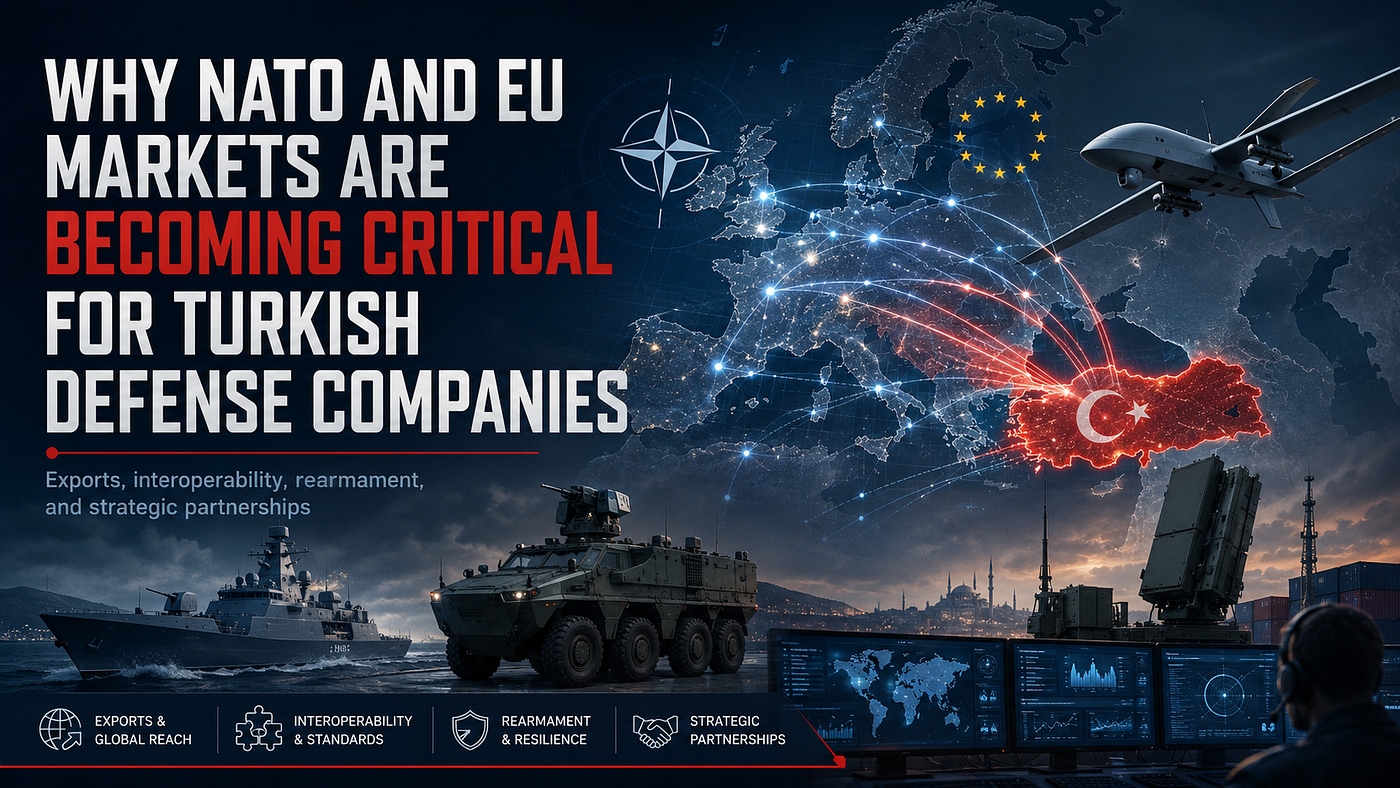
Turkey’s defense industry has entered a new phase. For many years, the main story was domestic development: reducing foreign dependency, producing national platforms, building drones, missiles, armored vehicles, naval systems, radars, communication equipment and electronic warfare capabilities. Today, that story is changing. The Turkish defense sector is no longer focused only on national self-sufficiency. It is trying to become a permanent supplier inside NATO and European defense markets.
This shift is not accidental. Europe is rearming. NATO countries are increasing defense budgets. The war in Ukraine, instability around the Black Sea, rising drone threats, air-defense shortages, ammunition demand and the return of high-intensity warfare have changed the priorities of Western defense planning. European armies need faster production, lower-cost systems, combat-proven platforms and flexible suppliers. Turkish companies are trying to position themselves exactly in that gap.
From Regional Exporter to NATO Supply Chain Player
Turkey’s defense exports were once associated mainly with non-Western markets: the Gulf, Africa, Central Asia and parts of Asia. These markets remain important, but the strategic center of gravity is shifting. NATO and EU-linked markets now matter more because they offer larger budgets, long-term contracts, stronger industrial partnerships and higher reputational value.
Selling to Europe or NATO members is different from selling to an emerging defense market. It requires higher certification standards, interoperability, documentation, sustainment capacity, compliance discipline and political trust. For Turkish companies, success in these markets means more than revenue. It means acceptance into the upper layer of the global defense ecosystem.
This is why NATO and EU markets are becoming critical. They are not simply customers. They are validation mechanisms.
The Demand Problem in Europe
Europe has a defense capacity problem. Many European countries reduced military production capacity after the Cold War. Stockpiles became limited, procurement cycles became slow and the industrial base became optimized for peacetime production rather than large-scale conflict.
The war in Ukraine exposed these weaknesses. Artillery ammunition, air defense missiles, drones, counter-drone systems, armored vehicles, electronic warfare systems and secure communication networks all became urgent priorities. European defense companies are strong, but many are overloaded, expensive or tied to long production queues.
This creates an opening for Turkish firms. Turkey can offer systems that are often cheaper, faster to deliver and more adaptable to customer needs. In defense procurement, speed matters. A system delivered in two years can be more valuable than a more advanced system delivered in eight.
Why Turkish Companies Fit the Current Market
Turkish defense companies have several advantages in the current environment.
First, many Turkish systems are combat-tested. Turkish UAVs, armored vehicles, missiles, electronic systems and naval platforms have been used or exported in real operational environments. Combat exposure gives credibility.
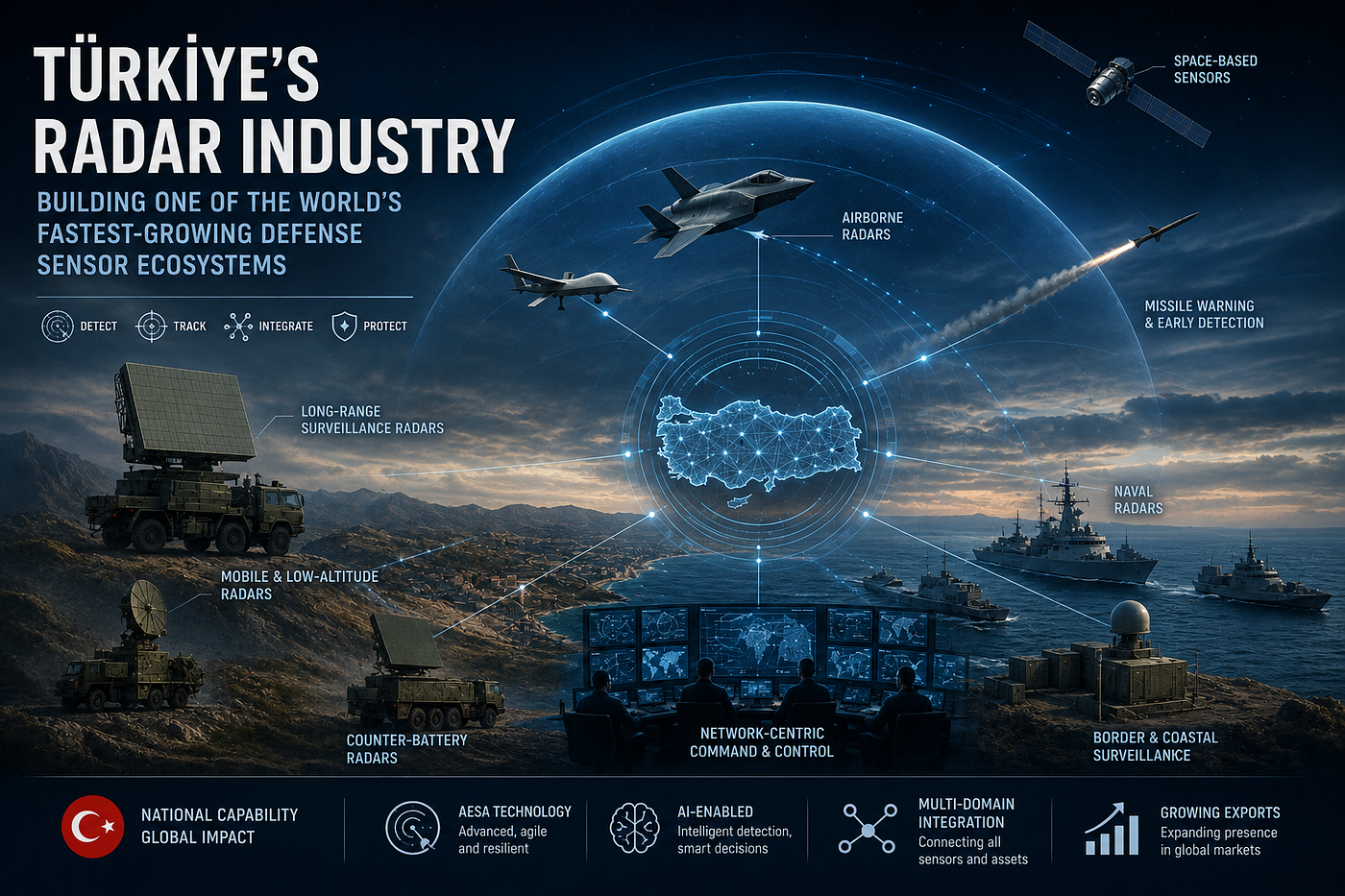
Second, Turkey has developed a strong culture of platform integration. Companies such as ASELSAN, HAVELSAN, ROKETSAN, TUSAŞ, Baykar, STM, FNSS, Otokar, BMC, Meteksan and others do not only produce individual products. They increasingly produce connected ecosystems: sensors, platforms, weapons, data links, command systems and support infrastructure.
Third, Turkish firms are flexible. They are generally more willing to customize systems for different customers than larger Western primes. This matters for countries that need specific configurations, local production, technology transfer or hybrid integration with existing NATO systems.
Fourth, Turkey sits inside NATO. This gives Turkish defense products a different strategic identity compared with non-NATO suppliers. For European countries looking beyond traditional Western suppliers, Turkey offers a middle position: cost-effective and adaptable, but still within the NATO security architecture.
The Importance of Interoperability
The future of Turkish defense exports to NATO and EU markets depends heavily on interoperability. A product is not enough. A drone must share data with NATO command systems. A radio must work inside allied communication architectures. A radar must feed recognized air pictures. A naval platform must integrate with NATO standards. A missile system must connect to a wider command-and-control network.
This is why companies working in electronics, avionics, radar, electro-optics and communications are especially important. The next export wave will not be defined only by visible platforms. It will be defined by the invisible systems that connect those platforms.
ASELSAN’s secure communications, radar and electronic warfare systems; HAVELSAN’s command-and-control software; Meteksan’s radar, data-link and sensor technologies; AYESAŞ’s avionics and mission electronics; MilSOFT’s C4ISR and tactical data-link capabilities all fit this direction.
In NATO and EU markets, the key question is no longer “Can Turkey build a platform?” The harder question is: “Can Turkish systems operate inside a multinational, networked, secure and standardized defense environment?”
Europe Needs More Than Weapons
Europe’s demand is not limited to weapons. It needs production depth. It needs supply-chain resilience. It needs spare parts, ammunition, maintenance, modernization packages, software updates, training systems and lifecycle support.
This creates a long-term opportunity for Turkish companies. A single export contract is useful, but sustainment is more valuable. If Turkish companies can provide maintenance, upgrades, local partnerships and industrial cooperation, they can become embedded suppliers rather than occasional sellers.
This is especially important for armored vehicles, naval platforms, UAVs, communications systems, sensors, ammunition and air-defense components. These are not one-time purchases. They require support ecosystems.
Political Barriers Remain
The opportunity is large, but not frictionless. Turkey is a NATO member, but not an EU member. Some EU defense initiatives favor EU-based companies. Political disputes between Turkey and some European states can affect procurement decisions. Export-control issues, human-rights concerns, regional tensions and alliance politics can still create resistance.
There is also a trust issue. Defense procurement is not only about product performance. It is about political reliability. European buyers want assurance that supply chains will remain stable during crises. Turkish companies must therefore compete not only on technology and price, but also on predictability, compliance and long-term strategic alignment.
This is where the challenge becomes structural. Turkey can build strong products, but deeper access to NATO and EU markets requires institutional confidence.
The Strategic Value for Turkey
For Turkey, success in NATO and EU defense markets would have several consequences.
It would increase export revenue and help finance future R&D. It would improve the reputation of Turkish defense firms. It would make Turkish companies harder to exclude from European defense planning. It would also give Turkey more leverage inside NATO by turning the country from a security consumer into a security supplier.
This matters because defense exports are not only commercial. They are geopolitical instruments. A country that supplies defense systems also builds influence, partnerships and strategic dependency.
If Turkish companies become regular suppliers to NATO and EU customers, Turkey’s role inside the alliance will change. It will no longer be seen only as a large military power on NATO’s southern flank. It will also be seen as an industrial contributor to European security.
The Most Promising Segments
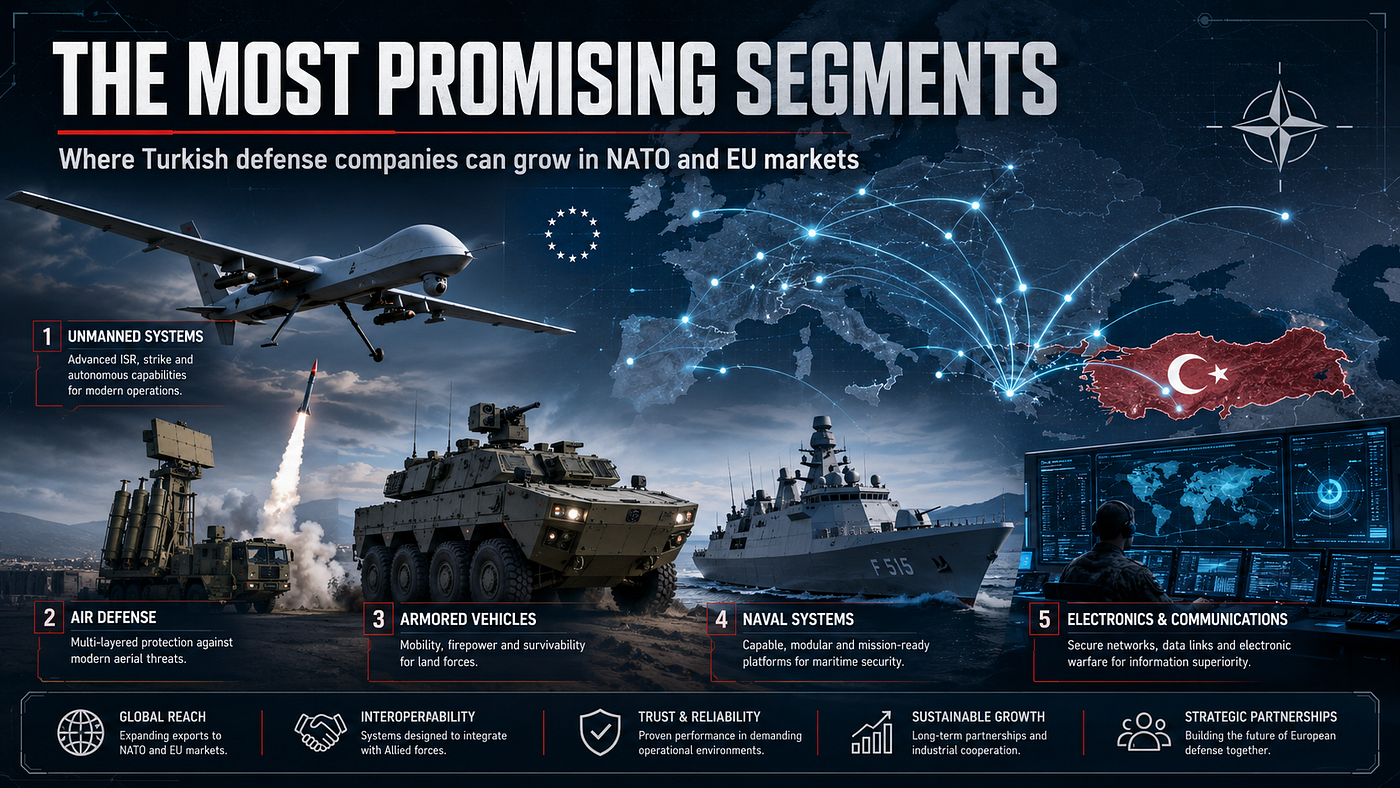
Several Turkish defense segments are especially relevant for NATO and EU markets.
Unmanned systems remain important, especially UAVs, loitering munitions and future unmanned combat aircraft. The drone war in Ukraine has shown that quantity, cost and adaptability matter as much as sophistication.
Air defense is another major opportunity. Europe needs layered air-defense systems, radars, sensors, command systems and counter-drone solutions. Turkey’s Steel Dome architecture may become important not only as a national shield but also as a showcase of integrated Turkish capability.
Armored vehicles and land systems remain strong export candidates. Turkish companies have already proven competitive in this area, especially where buyers need durable, cost-effective and customizable platforms.
Naval systems are also growing in importance. Frigates, patrol vessels, support ships, unmanned surface vessels and naval electronics can give Turkish firms access to European maritime security needs.
Finally, electronics, software and communication systems may become the most strategic layer. Platforms attract attention, but networks define modern warfare.
Conclusion
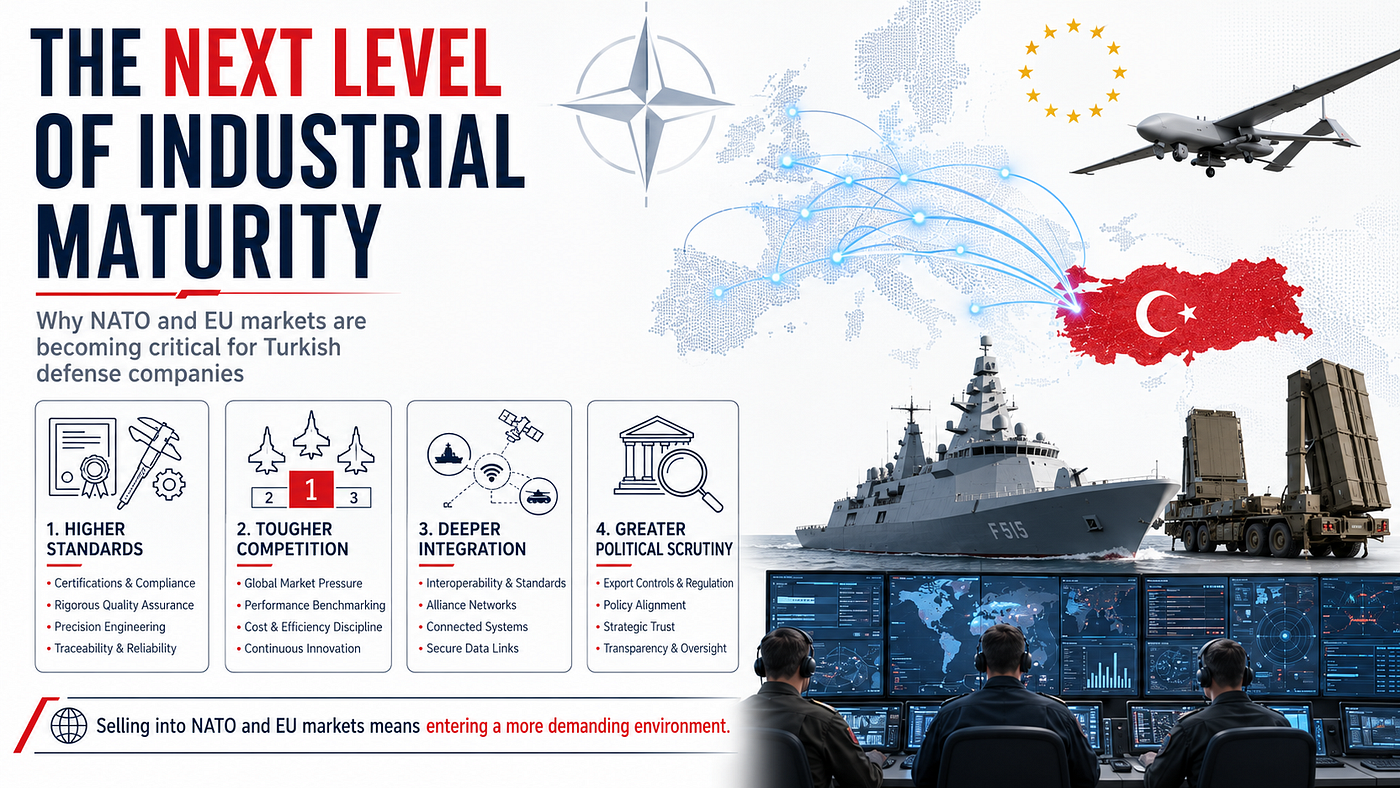
NATO and EU markets are becoming critical for Turkish defense companies because they represent the next level of industrial maturity. Selling to these markets means entering a more demanding environment: higher standards, tougher competition, deeper integration and greater political scrutiny.
But the reward is equally significant. These markets offer scale, prestige, long-term contracts and strategic legitimacy. Turkey’s defense industry has already proven that it can design and export competitive systems. The next test is whether it can become a trusted, interoperable and permanent part of the Western defense supply chain.
The future of Turkish defense exports will not be decided only in Africa, the Gulf or Asia. It will increasingly be decided in NATO procurement offices, European industrial partnerships and multinational defense programs.
For Turkish defense companies, the message is clear: Europe is not just another market. It is the gateway to becoming a global defense-industrial power.
메타데이터
- post_id
- cc8813161639
- slug
- why-nato-and-eu-markets-are-becoming-critical-for-turkish-defense-companies-cc8813161639
- url
- https://medium.com/@onurtatver/why-nato-and-eu-markets-are-becoming-critical-for-turkish-defense-companies-cc8813161639
- canonical_url
- https://medium.com/@onurtatver/why-nato-and-eu-markets-are-becoming-critical-for-turkish-defense-companies-cc8813161639
- author_url
- https://medium.com/@onurtatver
- status
- ok
- fetched_at
- 2026-06-15 20:49:13