PAHALGAM ATTACK: WAY FORWARD FOR PEACE IN SOUTH ASIA
A deadly gun attack, leaving at least 26 people massacred, and injuring a dozen others in the disputed Himalayan region of Jammu and…
PAHALGAM ATTACK: WAY FORWARD FOR PEACE IN SOUTH ASIA
A deadly gun attack, leaving at least 26 people massacred, and injuring a dozen others in the disputed Himalayan region of Jammu and Kashmir, occurred on 22nd April 2025. A rare assault on tourists in an area fraught with decades of insurgency and opposition to India’s rule has left a big question mark on India-Pakistan relationships and the peace prospects of South Asia. We will try to evaluate how we can carve a peaceful way forward amid the crisis; forge peaceful ties and promote regional cooperation on the menace of terrorism, human rights, and curb extremism through meaningful engagement and cooperation.
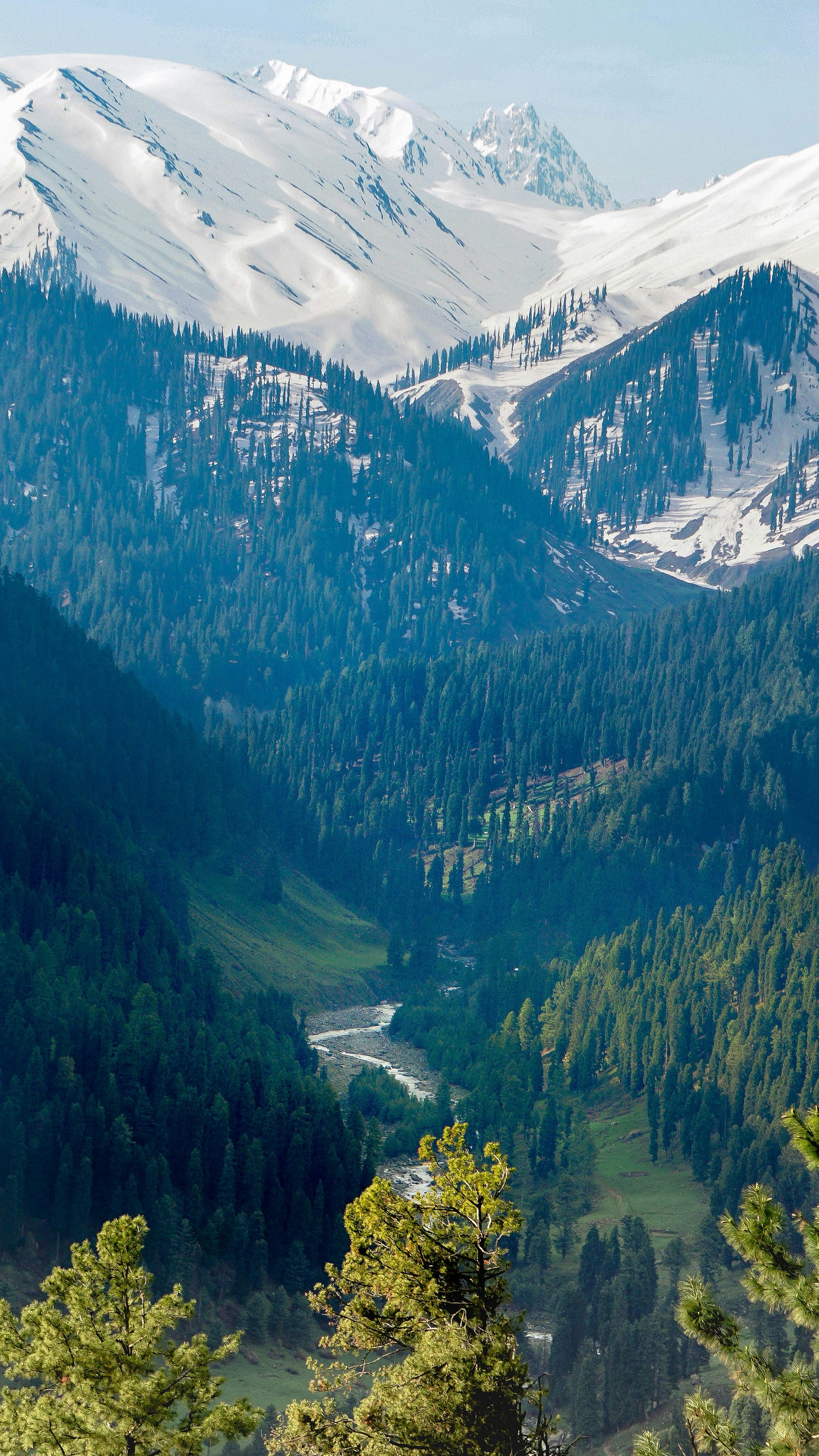
Photo by hellobeekay on Unsplash
The recent attack has left the Indian side with overt aggression towards Pakistan. Even in the past, India has launched limited air strikes over terror incidents in Kashmir. The situation is grave, and the regional tension may ramp up if adequate steps are not taken to mitigate the crisis. It’s important to consider the positions both sides are adopting amid this crisis. A full-scale war or an attack on the foreign territory of an independent nuclear-armed state is not a frivolous matter. Ever since the Modi government has been in power, it has shown micro-aggression towards Pakistani artists, sporting events, etc. This was never the case in the past. In fact, we saw cricket diplomacy at full display in the 80s, but not anymore.

Photo by Arsal Point from Pexels: https://www.pexels.com/photo/cricket-players-on-field-during-a-match-31131693/
However, the Modi government's stance to completely suspend any sporting events, particularly cricket with Pakistan, underlies India's influence on the ICC as one of the biggest stakeholders. It clearly wants to marginalize Pakistan on its behest, despite Pakistan being one of the main ambassadors of sports worldwide. In fact, the India-Pakistan series was termed as the “Asian Ashes”. (famously, the rivalry between England and Australia is referred to as the Ashes due to the fierce competition and historical significance).
Completely eliminating Pakistan from international sport will always be a distant dream for the Modi government, but it does reflect its belligerent and aggressive mindset to intermix politics with sport. Sports are meant to promote peace, and trying to block such healthy exchanges between people is a consistent and conscious effort to sabotage peace in the region. Instead of taking a leaf from history, unfortunately, the Modi government decided to drag both countries into the Stone Age, where cultural exchanges are non-existent. Maybe this is the very reason incidents of terror grow on both sides, as healthy exchanges are becoming a rare occurrence day by day.
The Modi government always looks for a reason to discredit Pakistan, even when there is no apparent reason to thwart diplomatic and cultural ties, and tries to unleash its unruly, misguided Hindutva nationalism once any terror incident occurs. On the other hand, some interesting facts may help highlight the other side of the story.
Whenever Pakistan experiences terror attacks claiming hundreds of lives, such as frequent terror attacks in Baluchistan, the brutal APS school incident in Peshawar (2014) targeting school children from army families, or many other incidents with links to Indian involvement in terms of training, finance, and weapons, the story is entirely different. Such incidents can never become an excuse to launch a full-scale attack on a country, and due to this very reason, the world is not buying India’s strategy to launch full-scale war or even limited incursions in Pakistan. Despite clear proofs of India’s involvement in terror financing and facilitation of terror activities in Pakistan (an Indian naval officer convicted of espionage in 2016, Kulbhushan Jadav, is still in the custody of Pakistan, to which India had requested diplomatic access in the past as well). India underplays its role in spreading and encouraging terrorism across the border. Pakistan has tried to highlight this issue on international forums such as the UN and OIC etc., but the Indian side has never offered an apology or assurance to mitigate the state's involvement in such horrendous terror crimes. India employs a consistent double standard toward terrorism, as stated by Ye Hailin, deputy director of the National Institute of International Strategy of the Chinese Academy of Social Sciences.
“If you look at India’s media and think tank reports, you will find that their descriptions of the terrorist attacks in Baluchistan are completely different from those of the situation in Kashmir,”
On the other hand, Narendra Modi is always an inch away from issuing threats, warnings, and launching limited air strikes within Pakistan’s territory at the drop of a hat. However, this time around, India's tendency to always shift the blame and responsibility of its state security failure on Pakistan has been exposed in front of the world. Even the Indian opposition in the Parliament is not buying its anti-Pakistan narrative and is raising questions on the before and after measures with reference to the Pahalgam attack. The Opposition’s scrutiny recently has centered primarily on the absence of security forces in Baisaran, the tourist meadow near Pahalgam, where the attack took place. The question was formally raised by Congress leader Rahul Gandhi and echoed by several others, including Leader of Opposition in the Rajya Sabha, Mallikarjun Kharge, and Aam Aadmi Party MP Sanjay Singh.
The US president, Donald Trump, has taken a balanced stance by commenting that “I am very close to India and I’m very close to Pakistan, as you know.”
UN Spokesperson Stéphane Dujarric showed deep concern and stated:
“We again urge both the Government of India and the Government of Pakistan to exercise maximum restraint to ensure the situation does not deteriorate further.”
On the diplomatic front, both Iran and Saudi Arabia have contacted their premiers and offered mediation. Pakistan’s foreign minister has called on India to back up its claims of Pakistan’s involvement in the Kashmir attack by presenting evidence. Ishaq Dar said, “India has time and again played the blame game, and if there is proof of Pakistan’s involvement, please share it with us and the world.”
Karnataka Chief Minister Siddaramaiah in India has said that he was not in favor of “war” with Pakistan. He has also advocated for strengthening security in the Kashmir valley to ensure peace. “We are not in favor of war. An environment should be created where people can live peacefully”. Pakistan Prime Minister Shehbaz Sharif has suggested a “neutral investigation” of the terror attack in Pahalgam.
In the wake of the above incidents and the ensuing developments, it is imperative that India revisit its reprehensible strategy of isolation, accusation, aggression, and belligerence, and blatant disregard for human rights and international treaties like UN resolutions on Kashmir or the Indus water treaty. This approach is clearly not delivering the desired outcome for India and is causing it embarrassment inside and outside India.
It’s high time India does some internal accountability, revisits its policy on peaceful relations with the neighbors and ensures fair investigation on any terror incident before pointing fingers. Such irresponsible and mindless aggression is a threat to world peace as two nuclear nations are at loggerheads with each other.
If the Indian government requires any support from the Pakistan government regarding the involvement of any local organization or individuals from Pakistan, it should make a formal request with proof and solid evidence.
The Pakistan government must accept such an offer and provide cooperation on peacebuilding measures in Jammu and Kashmir, alongside any support that might be needed to curb such incidents in the future. A responsible and mature stance from both sides can restore peace in South Asia and the world. Hoping that sanity prevails, and political propaganda doesn’t lead to further chaos and uncertainty among people from Kashmir, India, and Pakistan.
The writer is an international policy analyst and has published a book and
articles worldwide. Subscribe below to receive more articles from the author.
메타데이터
- post_id
- ccf7af5ab0dc
- slug
- pahalgam-attack-way-forward-for-peace-in-south-asia-ccf7af5ab0dc
- url
- https://medium.com/readers-digests/pahalgam-attack-way-forward-for-peace-in-south-asia-ccf7af5ab0dc
- canonical_url
- https://medium.com/readers-digests/pahalgam-attack-way-forward-for-peace-in-south-asia-ccf7af5ab0dc
- author_url
- https://medium.com/@naila992
- status
- ok
- fetched_at
- 2026-07-20 03:42:01