Chemical-Free Raisins: Why Global Buyers Are Switching to Chemical-Free Raisins
The global demand for clean, naturally processed food is rising and raisins are no exception.
Chemical-Free Raisins: Why Global Buyers Are Switching to Chemical-Free Raisins
The global demand for clean, naturally processed food is rising and raisins are no exception.
Across international markets, importers, food manufacturers, and retailers are actively moving away from chemically treated dried fruits. Instead, they are choosing naturally dried, preservative-free raisins that align with modern consumer expectations.
If you’re sourcing raisins for export or large-scale supply, this shift is already shaping buyer preferences.
In this article, we’ll break down what chemical-free raisins are, why demand is accelerating, and what you should verify before placing your next order.
What Are Chemical-Free Raisins?
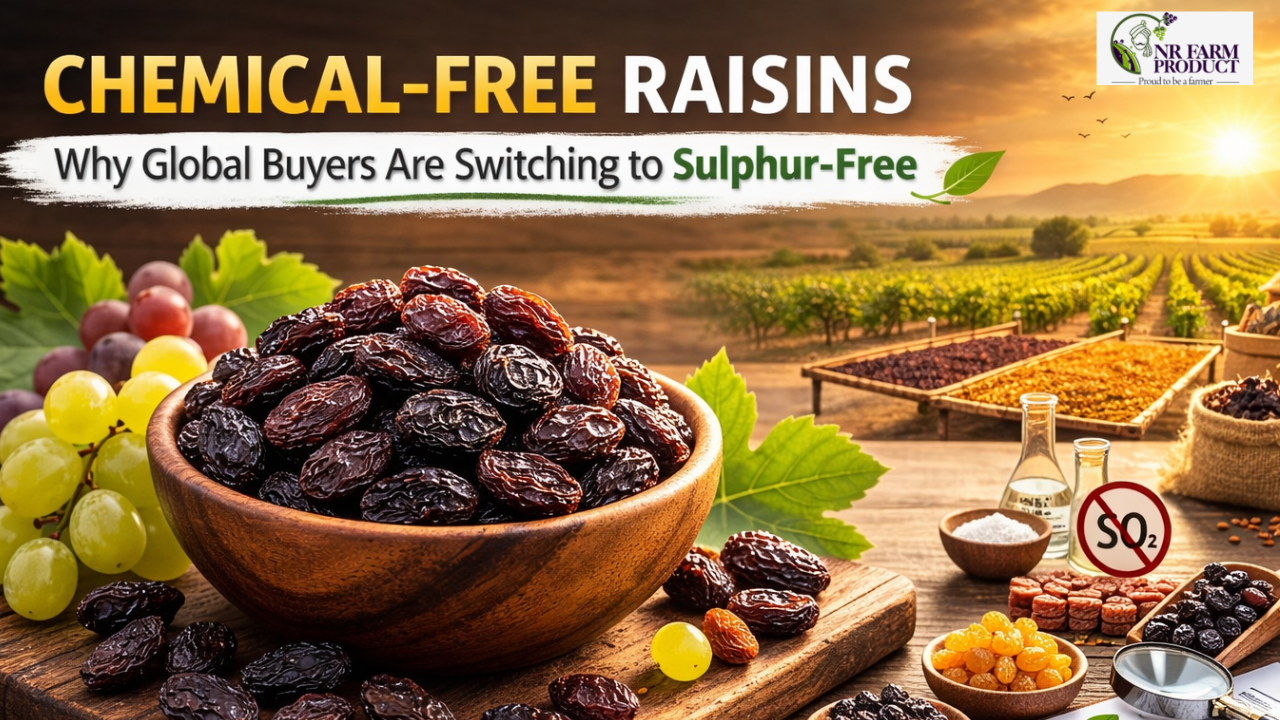
Chemical-free raisins are produced without the use of sulphur dioxide (SO₂) or any artificial preservatives during processing.
In traditional methods, SO₂ is applied to grapes before or during drying. This helps maintain a bright golden or greenish color and extends shelf life. However, it also introduces chemical residues that many markets are now avoiding.
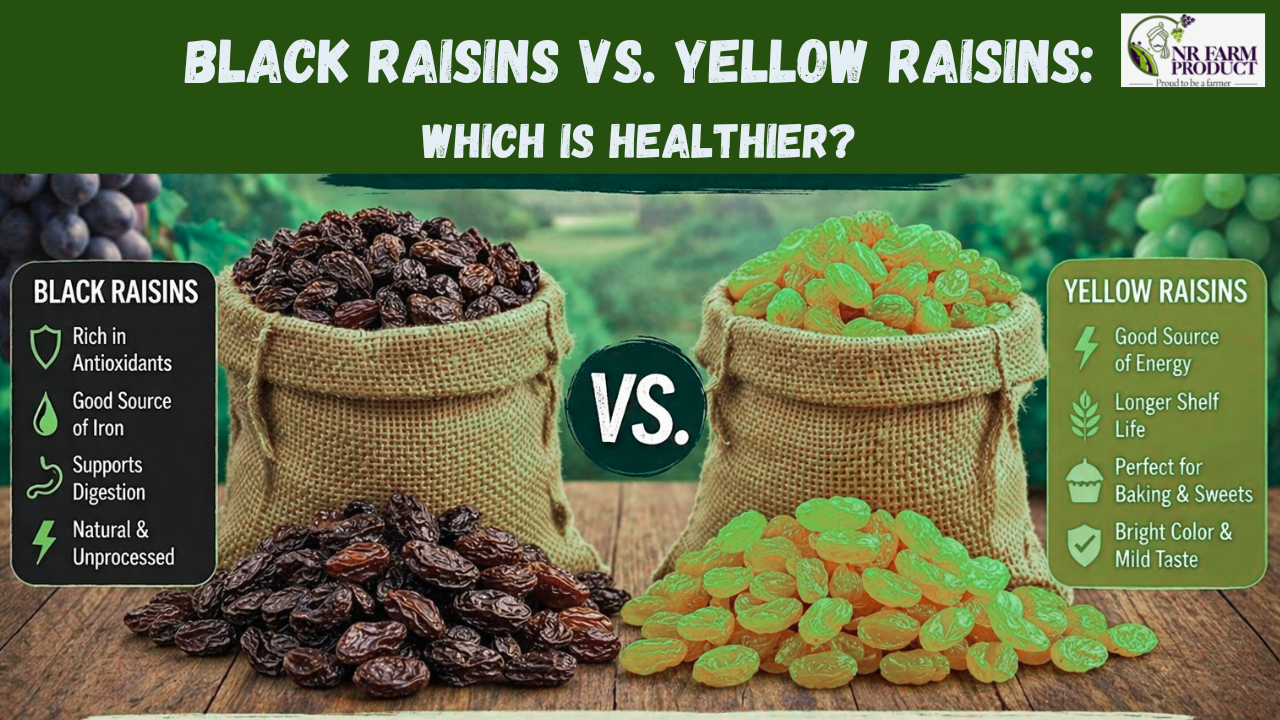
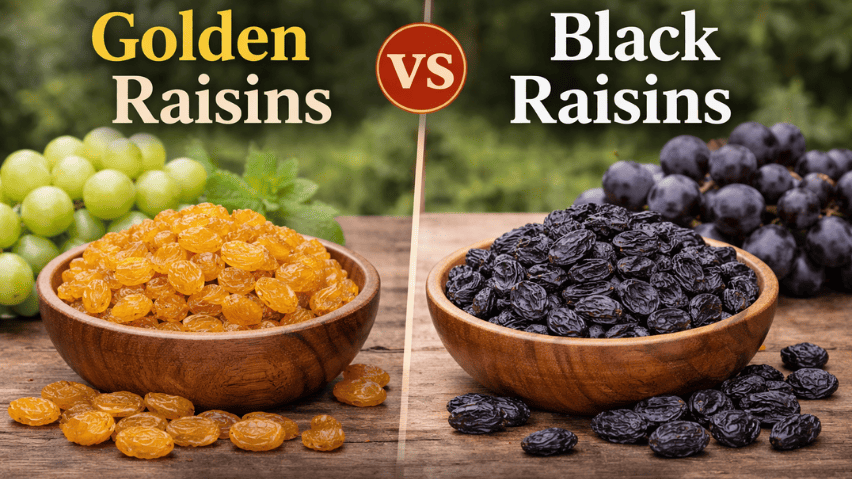
Naturally dried raisins skip this process entirely. They are sun-dried or shade-dried without additives, resulting in a darker color and a more natural product.
For buyers in health-focused, organic, or regulated markets, this difference is becoming critical.
Chemical-Free vs Sulphur-Free vs Organic Raisins
These terms are often confused, but they are not identical:
- Chemical-Free Raisins No artificial chemicals are used during processing. Best for clean-label products and sensitive consumers.
- Sulphur-Free Raisins No SO₂ is used for color retention or preservation. Eliminates allergen concerns and ensures a natural look.
- Organic Raisins Produced without synthetic pesticides or fertilizers and certified accordingly. Targets premium and regulated markets.
It’s important to note: a raisin can be sulphur-free without being organic. However, all certified organic raisins are additive-free.
For most buyers, chemical-free raisins are the starting point, with organic as a premium upgrade.
Why the Global Shift Is Happening
This is not a passing trend it’s a long-term shift in how food markets operate.
1. Clean-Label Demand
Consumers today read ingredient labels carefully. Products containing additives like SO₂ are increasingly being replaced with natural alternatives.
2. Regulatory Pressure
Regions such as the European Union have strict limits on sulphur dioxide in food. Buyers are proactively shifting to avoid compliance risks.
3. Growth of Organic & Natural Foods
The global organic market is expanding rapidly. Raisins are widely used in snacks, cereals, and baked goods industries that demand clean ingredients.
4. Emerging Market Preferences
Markets in the Middle East and Africa are increasingly favoring naturally processed foods that align with local preferences and clean-label expectations.
Health Benefits of Chemical-Free Raisins
For food brands, ingredient quality directly impacts product positioning.
Here’s why additive-free raisins are preferred:
- No risk of sulphite-related allergies
- Retains natural antioxidants and nutrients
- Suitable for children’s food products
- Compatible with organic, vegan, and “free-from” labels
- Free from synthetic residues
For health-conscious brands, this is no longer optional — it’s expected.
How to Identify Chemical-Free Raisins
One of the easiest ways to identify naturally dried raisins is by their color.
- Dark brown to black → Naturally dried, chemical-free
- Bright golden or green → Likely treated with SO₂
If a supplier claims bright-colored raisins are preservative-free, it’s worth verifying carefully.
Why Advanced Sorting Technology Matters
Maintaining consistency in chemical-free raisin batches is challenging.
Even a small mix of treated raisins can compromise quality claims and certifications.
Modern AI-based sorting systems solve this by:
- Detecting subtle color variations
- Removing defective or damaged raisins
- Eliminating foreign particles
Compared to traditional methods, AI sorting ensures higher accuracy and consistency essential for export-quality supply.
What to Check Before Buying
Not all suppliers can back their “chemical-free” claims with proof.
Before placing an order, ensure the following:
- Written declaration of additive-free processing
- Lab test reports confirming SO₂ levels
- Organic certification (if required)
- Valid FSSAI license
- APEDA registration for export
- Pesticide residue reports
- Moisture content within safe limits (~18%)
Important: A claim without lab verification is not reliable.
The NR Farm Products Approach
At NR Farm Products, chemical-free raisins are produced through a fully verified process:
- Natural drying without preservatives
- AI-powered sorting with 99%+ accuracy
- Lab testing for SO₂, residues, and safety
- Export-grade packaging
- Compliance-ready documentation for global buyers in Vietnam, Kenya, Oman, Ethiopia, Kuwait, Nigeria and more.
This ensures consistent quality and smooth international trade.
Final Thoughts
Chemical-free raisins are no longer a niche category, they are becoming the global standard.
For B2B buyers, the strategy is simple:
- Source naturally processed products
- Verify with proper documentation
- Reduce compliance risks
As global markets continue to prioritize clean and transparent sourcing, switching to chemical-free raisins is not just a better choice it’s a necessary one.
Frequently Asked Questions
What is the difference between golden and natural raisins? Golden raisins are treated with SO₂, while natural raisins are dried without chemicals and appear darker.
Are black raisins chemical-free? Yes, black raisins are typically sun-dried without chemical treatment.
Do organic raisins contain sulphur dioxide? No, organic standards prohibit the use of SO₂.
How are raisins dried naturally? Through sun or shade drying using natural heat and airflow.
Are chemical-free raisins safe for asthma patients? They are generally safer since they do not contain sulphites, but medical advice is recommended.
메타데이터
- post_id
- ccf7c7d0e2fd
- slug
- chemical-free-raisins-why-global-buyers-are-switching-to-chemical-free-raisins-ccf7c7d0e2fd
- url
- https://medium.com/@nrfarmproduct/chemical-free-raisins-why-global-buyers-are-switching-to-chemical-free-raisins-ccf7c7d0e2fd
- canonical_url
- https://medium.com/@nrfarmproduct/chemical-free-raisins-why-global-buyers-are-switching-to-chemical-free-raisins-ccf7c7d0e2fd
- author_url
- https://medium.com/@nrfarmproduct
- status
- ok
- fetched_at
- 2026-08-04 09:48:15