What I’ve been reading (, watching, and listening to) this week ending 3 May 2026
The Disaster I Never Imagined Having To Worry About
What I’ve been reading (, watching, and listening to) this week ending 3 May 2026
**The Disaster I Never Imagined Having To Worry About**
[embed]
- Sense Intent
- Know Context
- Know People
- Frame Insights
- Explore Concepts
- Frame Solutions
- Realize Offering
**Building Pi, and what makes self-modifying software so fascinating**
[embed]
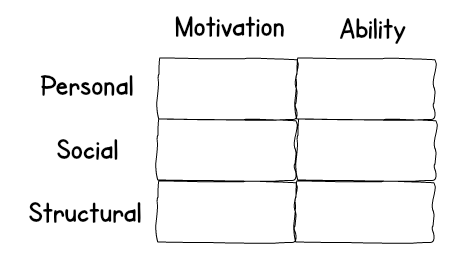
**The Startup Idea Matrix. You can follow my latest writing at… | by Eric Stromberg | Medium**
I’ve found one way to find this idea is to gain broad exposure to different markets until a specific opportunity and mission stands out to you. Of course that is where the real work begins: auditing the industry, talking to customers, learning about its history, and understanding the pain points to validate the idea.
**(5) AI productivity gains: More modest than expected**
We found that as AI tool usage increased by an average of 65%, median PR throughput increased by just under 8%. Most organizations are landing in the 5–15% range — a meaningful gain, but far below the 3x or 10x expectations many leaders are being held to.
**Apocalypse Creep — This American Life**
Today on our program, we have stories of people in what seems like, from the outside, pretty extreme situations. And they have to decide to notice the creep or to ignore it, to act or not to act.
**Are Prediction Markets Good for Anything? — Asterisk**
Might the prediction markets use their billion-dollar valuations to now build out Vitalik Buterin’s vision for “info finance”? Maybe. But I forecast that before they do, Claude will be the only forecaster anyone will ever want to ask about the future.
**Consumers outnumber producers | Seth’s Blog**
The market doesn’t care that much about the hard-won expertise of those that came before. And the shifts create muck and slop and then, over time, quality and taste and expertise often find their footing again.
The best way to complain is to make good stuff.
**Steve Blank AI and Teaching — The Brave New World**
By the third week of the class we observed that the velocity of product development meant that teams could now generate more products than they could validate. The amount of product did not equal the amount of learning. Teams were so overwhelmed with so much information from the AI tools that they lost sight of the goal of customer development. They started to believe that the product itself was the truth.
**Headspace: can our brains get full?**
What is lost, in most cases, is not the memory itself but our ability to retrieve it. A familiar smell, a piece of music, or an unexpected detail can bring something back that seemed entirely gone. The trace remains, but it has slipped out of reach. And the absence of a memory is rarely evidence of a system at capacity — more often, it is the trace of a moment that was never fully stored, or one that has simply not been called upon.
**Trios of Generalists: How to Organise People**
The deepest reason to prefer trios of generalists is that AI is changing the economics of coordination and specialized labour. As mentioned above, if we agree that AI automates tasks regardless of the skill level needed by people who previously did the task, we should expect AI removes much of the value of specialization. That value always came with a cost (coordination), which will remain so long as specialists remain. The logical conclusion is to seek less epecialisation, and since velocity allows it, to also reduce team size to this powerful innate number of three.
**(4) “Software Fundamentals Matter More Than Ever” — Matt Pocock — YouTube**
[embed]
**The Strange New World of AI: My Second Brain Setup**
…on a personal level, I can tell you what AI is doing for me right now. It is making me more productive every day in ways that are concrete and low stress. The Ohno historical problem-solving re-creation, the encyclopedia entries, my website upgrade, this article — none of them would exist without AI assistance. Not because the task was beyond me, but because the administrative work (think waste) was too high. AI is helping to remove that bottleneck.
**Today’s harness is Tomorrow’s Prompt · Tanay Sai**
Harnesses have a short shelf life, and it’s getting shorter. What took an engineering team a quarter last year is a flag on Gemini call today. What needs a multi-agent framework today is a single call next year.
**In the AI Era, Shopify Is Investing in Junior Engineers — Not Cutting Them — CoderPad**
Interns bring intensity, curiosity, and energy — and a cohort of 350 spreads that energy far more effectively than 25 ever could. “Twenty-five engineers will have a harder time impacting us than 350,” Thawar notes. The interns are distributed across teams, not siloed into a single program track.
**Direct democracy and political extremism — Schreiner — Economica — Wiley Online Library**
In our theoretical framework, voters care most about issues for which they have extreme preferences. As a result, the policy questions with the highest degree of polarization among the electorate as a whole dominate voter choices over prospective representatives in elections. Ideologically extreme candidates benefit from being more congruent with voters than moderates on these divisive issues, despite offering a worse fit for their constituents on many of the remaining political issues. Initiatives provide citizens with an instrument to unbundle the most controversial issues so that they are no longer in the scope of legislatures. As a consequence, citizens consider the unbundled issues much less when assessing candidates, and policy preferences of the electorate for the remaining issues are, on average, more moderate. The otherwise successful extreme partisans are then more likely to find themselves ideologically at odds with large parts of the electorate, and the moderate candidates receive higher vote shares compared to regimes without the possibility of initiatives.
**Quality Engineering Is Not Testing — DevelopSense**
Quality engineering may be informed by testing, but “quality engineering” is not a description of what testers do. The term “quality engineering” is a description of is what the people actually designing, building and managing the product do.
The term “quality engineering” applied to testing is misrepresentation. Testing is about investigating, or assessing, or evaluating quality, not engineering it. Again, testing may inform quality engineering, just as auditing informs a government or a business of what might need to change.
**Trace-Based Testing: The Next Step in Observability — The New Stack**
Really, what trace-based testing boils down to is data-driven development — using the data that is inherently included in a trace to create tests and define assertions against, thereby verifying proper system operation with repeatable tests.
메타데이터
- post_id
- ccff2e9a2a0e
- slug
- what-ive-been-reading-watching-and-listening-to-this-week-ending-3-may-2026-ccff2e9a2a0e
- url
- https://medium.com/@jchyip/what-ive-been-reading-watching-and-listening-to-this-week-ending-3-may-2026-ccff2e9a2a0e
- canonical_url
- https://medium.com/@jchyip/what-ive-been-reading-watching-and-listening-to-this-week-ending-3-may-2026-ccff2e9a2a0e
- author_url
- https://medium.com/@jchyip
- status
- ok
- fetched_at
- 2026-06-11 10:13:20