Agent.md: The Missing Layer for Structured, AI-Readable Codebases
As software development evolves alongside artificial intelligence, a new challenge is emerging: how do we make our codebases understandable…
Agent.md: The Missing Layer for Structured, AI-Readable Codebases
As software development evolves alongside artificial intelligence, a new challenge is emerging: how do we make our codebases understandable not just for humans, but also for AI systems? While traditional documentation explains code to developers, modern AI workflows require something more structured, concise, and machine-friendly.
This is where Agent.md comes into play.
Agent.md is an emerging convention used to provide clear, structured instructions and context for AI agents interacting with a codebase. It acts as a bridge between human-written code and AI-driven tools, enabling better reasoning, automation, and collaboration.
This article explains what Agent.md is, why developers are using it, how it works, and how it fits into the future of AI-assisted software development.
What Is Agent.md?
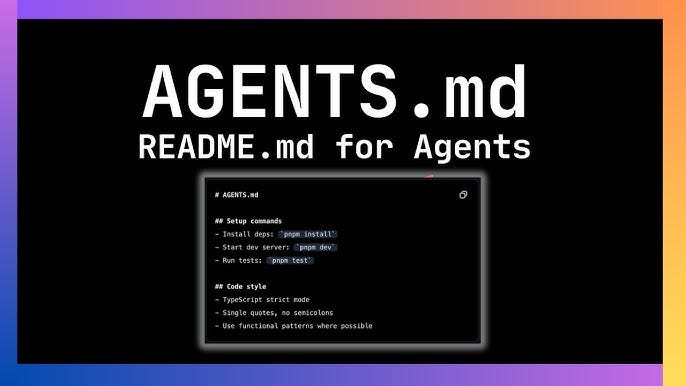
Agent.md is a documentation file designed specifically for AI agents that interact with a project’s codebase. It typically lives alongside files like README.md but serves a different purpose.
While README.md explains a project to human developers, Agent.md explains:
- How the codebase is structured
- What rules or conventions should be followed
- How tasks should be approached
- What tools or dependencies are involved
- What constraints the AI must respect
In simple terms, Agent.md provides context and instructions in a format optimized for AI systems.
Why Are We Writing Agent.md in Codebases?
As AI tools become deeply integrated into development workflows, they are increasingly expected to:
- Generate code
- Refactor existing systems
- Fix bugs
- Write tests
- Navigate large repositories
However, without clear guidance, AI models can misinterpret structure, violate conventions, or produce inconsistent outputs.
Agent.md solves this problem by acting as a source of truth for AI behavior within a project.
Instead of relying solely on prompts or trial-and-error interactions, developers can define rules and expectations once, and allow AI systems to follow them consistently.
This leads to more reliable, predictable, and maintainable outcomes.
What Typically Goes Inside Agent.md?
Agent.md is not standardized yet, but most implementations include structured guidance for AI agents.
It usually contains descriptions of the project architecture, explaining how different modules interact and where specific logic resides. It also outlines coding standards, such as naming conventions, file organization, and preferred design patterns.
In addition, it may include instructions for common tasks, such as how to add new features, where to write tests, or how to handle error cases. Some versions also define constraints, specifying what the AI should avoid, such as modifying certain files or introducing specific dependencies.
By consolidating this information, Agent.md reduces ambiguity and improves consistency across AI-assisted workflows.
How Agent.md Works in Practice
When an AI agent interacts with a codebase, it often relies on contextual information provided through prompts or system instructions. Agent.md enhances this process by serving as a persistent reference.
Instead of re-explaining project rules in every interaction, developers can rely on Agent.md as a foundational guide. The AI reads this file, understands the structure and expectations, and uses that context when performing tasks.
For example, if an AI is asked to add a new feature, it can refer to Agent.md to determine:
- Where the feature should be implemented
- What coding style to follow
- How to structure tests
- Which dependencies are allowed
This makes interactions more efficient and reduces the likelihood of errors.
Benefits of Using Agent.md
One of the most important benefits of Agent.md is consistency. By defining rules explicitly, it ensures that AI-generated code aligns with the project’s standards.
It also improves productivity. Developers no longer need to repeatedly explain context or correct AI outputs, as the system already understands the guidelines.
Another advantage is scalability. As teams grow and projects become more complex, Agent.md helps maintain clarity across multiple contributors, both human and AI.
Additionally, it enhances collaboration. Teams can use Agent.md as a shared reference point, ensuring that everyone — regardless of experience level — follows the same structure and practices.
Agent.md vs Traditional Documentation
Traditional documentation focuses on helping humans understand a system. Agent.md focuses on helping AI systems operate within that system.
While README.md might explain what a project does, Agent.md explains how to work within it. It is more prescriptive than descriptive, emphasizing rules, constraints, and workflows rather than general information.
This distinction becomes increasingly important as AI tools take on more active roles in development.
Where Agent.md Fits in Modern Development
Agent.md is part of a broader shift toward AI-native development environments.
As tools like code assistants, autonomous agents, and workflow orchestrators become more common, the need for structured, machine-readable context grows. Agent.md fills this gap by providing a standardized way to guide AI behavior.
It complements other tools and frameworks used in modern development, such as:
- AI coding assistants
- Agent-based workflows
- Continuous integration pipelines
- Code generation systems
Together, these tools are reshaping how software is built and maintained.
Additional Considerations
Since Agent.md is still an emerging practice, there is no universal format yet. Different teams may structure it differently based on their needs.
It is important to keep the file:
- Clear and concise
- Well-organized
- Updated as the codebase evolves
Overly complex or outdated instructions can reduce its effectiveness.
Conclusion
Agent.md represents a simple but powerful idea: if AI is going to help build software, it needs clear instructions just like a human developer would. By providing structured, project-specific guidance, Agent.md enables more reliable, efficient, and scalable AI-assisted development.
As AI continues to integrate into engineering workflows, files like Agent.md will become increasingly important. They are not just documentation — they are the foundation for how humans and AI collaborate in building the next generation of software systems.
메타데이터
- post_id
- cd1cf56e8648
- slug
- agent-md-the-missing-layer-for-structured-ai-readable-codebases-cd1cf56e8648
- url
- https://medium.com/@erharshraj/agent-md-the-missing-layer-for-structured-ai-readable-codebases-cd1cf56e8648
- canonical_url
- https://medium.com/@erharshraj/agent-md-the-missing-layer-for-structured-ai-readable-codebases-cd1cf56e8648
- author_url
- https://medium.com/@erharshraj
- status
- ok
- fetched_at
- 2026-07-13 10:53:13