Why Every African Business With a Fleet Is Losing Money Without a Fleet Management System
Running a fleet in Africa is not for the faint-hearted. Between unpredictable fuel prices, long-distance hauls across challenging terrain…
Why Every African Business With a Fleet Is Losing Money Without a Fleet Management System
Running a fleet in Africa is not for the faint-hearted. Between unpredictable fuel prices, long-distance hauls across challenging terrain, and the pressure to keep operations profitable, fleet owners across East and Central Africa are constantly fighting to stay ahead. Yet, many businesses are still relying on manual logs, phone calls, and guesswork to manage vehicles worth millions of shillings. The result? Leaking fuel budgets, ghost trips, overworked engines, and drivers operating with zero accountability.
The shift has already begun for those willing to embrace it. A **Fleet Management System** is no longer a luxury reserved for large corporations. It is the backbone of any serious transport or logistics operation in Africa today — and the businesses that have adopted it are already pulling far ahead of those who have not.
The Real Cost of Running a Fleet Without Proper Oversight
Most fleet managers will tell you that their biggest headache is not the vehicles themselves — it is the information gap. When you do not know where your vehicle is right now, when it last had an oil change, how much fuel was actually pumped into it, or whether your driver took a two-hour detour, you are operating in the dark. And in the dark, money disappears fast.
Fuel theft alone accounts for a significant chunk of operational losses for fleet operators across Kenya, Uganda, Tanzania, and beyond. Drivers may top up at unauthorised stations, siphon fuel, or record false mileage figures. Without a system that captures real-time fuel data directly from the pump and cross-references it with vehicle movement, these losses are almost impossible to detect — let alone stop.
Hidden Losses That Drain Your Fleet Budget Every Month
The losses do not stop at fuel. Think about the vehicle sitting idle for three hours at a depot because no one knows it finished a delivery. Think about the truck that missed a service interval because someone forgot to log it, and now needs a gearbox replacement that costs more than five months of service visits. Think about the insurance claim that gets disputed because there is no accurate data on driver behaviour at the time of the accident. Each of these scenarios is a direct drain on profits — and all of them are preventable.
What a Fleet Management System Actually Does for Your Business
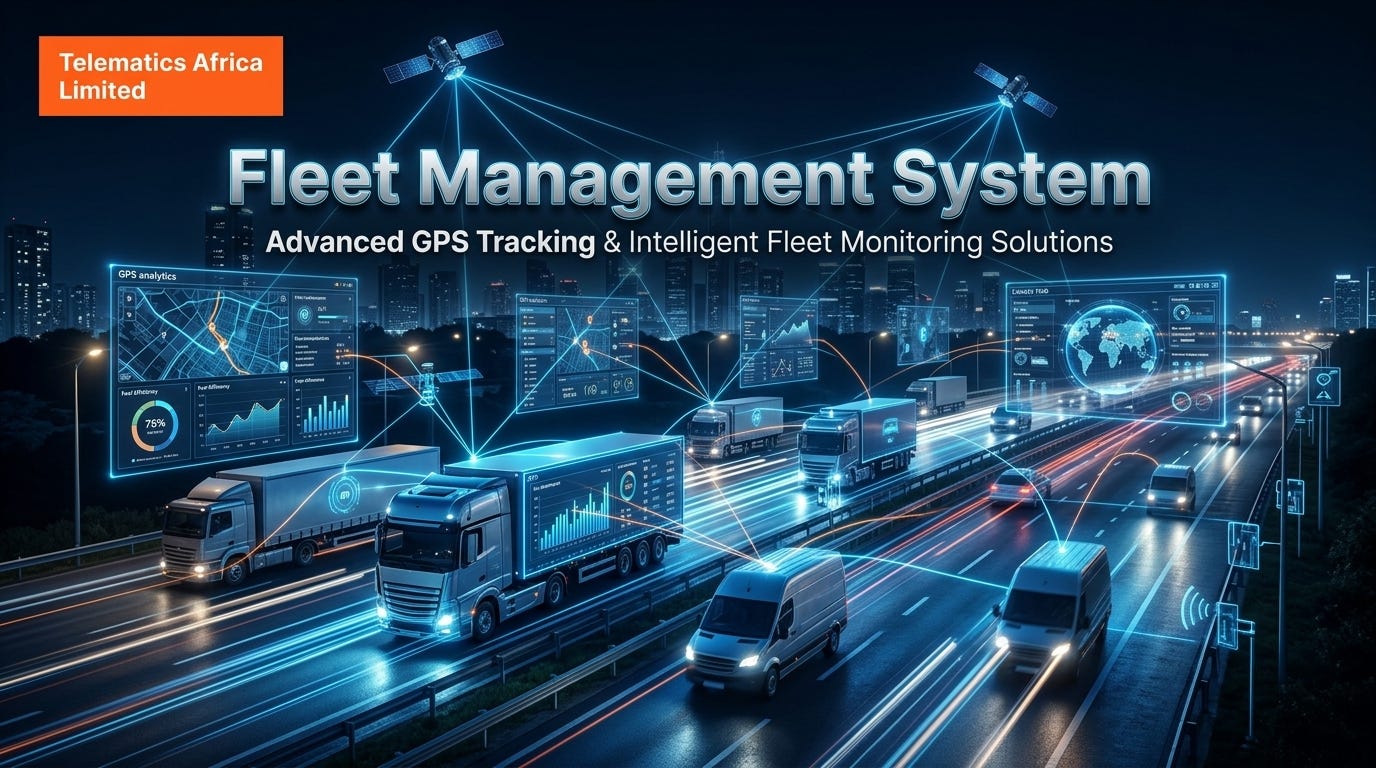
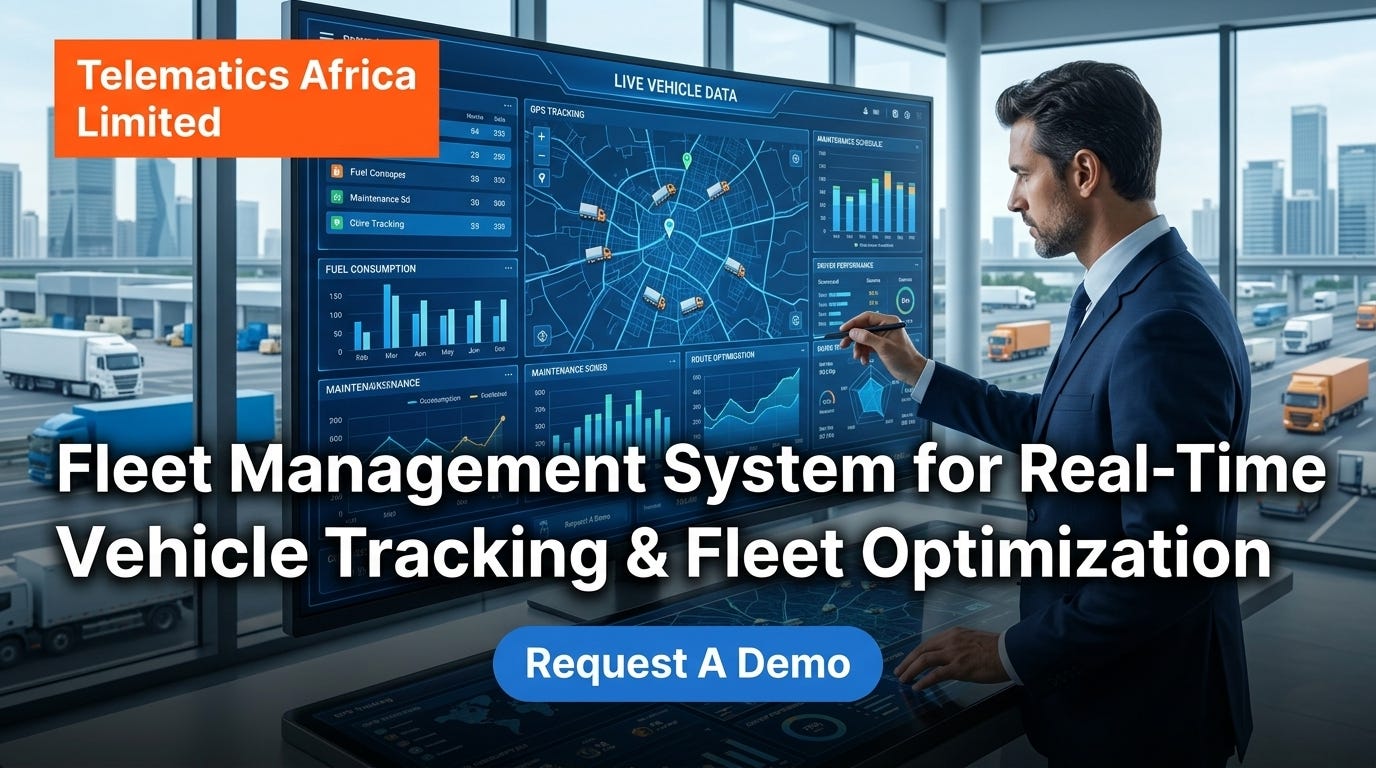
A modern Fleet Management System brings together live vehicle tracking, driver behaviour monitoring, fuel management, workshop scheduling, and reporting — all in one place. It gives fleet managers a single dashboard view of everything happening across their entire fleet, whether the vehicles are parked in Nairobi, on the road to Mombasa, or crossing the border into Uganda.
Real-time tracking means you always know where every vehicle is. Alerts notify you the moment a driver overspeeds, deviates from a planned route, or idles for too long. Service reminders ensure no vehicle misses a scheduled maintenance check. Fuel reports flag discrepancies between what was supposed to be purchased and what actually went into the tank. It is complete visibility — and complete visibility means complete control.
Driver Behaviour Monitoring: Protecting Your People and Your Vehicles
One of the most underappreciated features of a Fleet Management System is what it does for driver accountability. When drivers know their behaviour is being monitored — speeding, harsh braking, sharp cornering, seatbelt use — they tend to drive more carefully. This is not about punishing drivers; it is about building a culture of responsible driving that protects the driver, the cargo, the vehicle, and other road users.
Advanced fleet dash camera systems take this a step further by recording video footage of every journey. In the event of an accident, you have clear evidence of what happened. Insurers receive accurate data, disputes are resolved quickly, and innocent drivers are protected from false claims. For businesses operating across African roads — where road incidents are unfortunately common — this kind of protection is invaluable.
Fuel Management: Where Fleet Businesses Win or Lose
Fuel is typically the single largest operational cost for any fleet in Africa. In a region where fuel prices fluctuate and pump fraud is a known risk, having a system that integrates directly with fuel dispensing equipment is a game-changer. A proper fuel pump management system captures every litre dispensed, records which vehicle it went into, logs the time and the operator, and flags any anomaly automatically.
When combined with vehicle tracking data, you can compare actual fuel consumption against expected consumption based on the distance travelled. If a vehicle shows significantly higher fuel usage than the route should have required, the system surfaces that discrepancy immediately. This level of control can reduce fuel costs dramatically — many businesses across East Africa have reported savings of twenty to thirty per cent on their monthly fuel bills after implementing an integrated fleet management solution.
Service Station and Workshop Management Keeping Vehicles on the Road
Downtime is the silent killer of fleet profitability. Every day a vehicle is off the road is revenue lost and customer commitments missed. A workshop software system that tracks service histories, schedules preventive maintenance, manages spare parts inventory, and records all repair work ensures that vehicles spend the maximum possible time doing what they are supposed to do — working.
When your maintenance schedule is tied directly into your tracking system, service reminders are triggered by actual mileage and engine hours — not calendar dates that may not reflect real usage patterns. This is particularly relevant in African operating environments, where vehicles often work harder than their counterparts in other parts of the world, covering rough terrain and carrying heavy loads that accelerate wear and tear.
The African Context: Why Local Expertise Matters More Than Fancy Software
There is no shortage of fleet technology providers globally, but not every solution is built for African realities. Network connectivity in rural areas, the variety of vehicle types operated, integration with local insurance providers, support for East African regulatory requirements, and on-the-ground technical support are all considerations that a provider without deep regional roots simply cannot address properly.
A provider rooted in the African market understands that a fleet management solution must be robust enough to handle areas with limited GSM coverage, flexible enough to serve everything from a small NGO with a handful of vehicles to a large logistics company managing hundreds of trucks, and supported by a team that can respond quickly when something goes wrong. Software alone is not enough — what businesses across Africa need is a partner who understands their world.
Usage-Based Insurance: A Smarter Way to Protect Your Fleet
One innovation that is quietly transforming how African fleet operators think about insurance is usage-based insurance. Rather than paying a fixed premium regardless of how safely your vehicles are driven, usage-based insurance ties your premiums to actual driver behaviour data captured through your fleet management system. Safe drivers mean lower risk, and lower risk means lower premiums. For businesses that invest in driver training and monitoring, this is a direct financial reward for doing things right.
Making the Move: What to Expect When You Implement a Fleet Management System
Many fleet managers hesitate to adopt new technology because they fear disruption, complexity, or resistance from drivers. In practice, the transition to a Fleet Management System is smoother than most expect — especially when the provider takes a consultative approach, working alongside your team to understand your specific challenges before recommending a solution.
Within the first few weeks of implementation, most businesses begin to see changes. Fuel reports that reveal consumption patterns they never had visibility into before. Alerts that flag driver behaviour they did not know was happening. Service histories that expose how behind on maintenance certain vehicles actually were. The data that surfaces is rarely comfortable at first — but it is always useful.
Over the following months, businesses typically see measurable reductions in fuel costs, fewer unplanned breakdowns, lower accident rates, and a team of drivers that operates with greater professionalism. The return on investment is not theoretical — it shows up in the numbers.
Africa’s fleet industry is growing. Logistics demand is expanding alongside economic development across the continent, and competition among transport and logistics businesses is intensifying. In this environment, the businesses that will thrive are those that operate with precision, not guesswork. A Fleet Management System is not just a tool — it is the foundation of a fleet operation built to last.
Contact Us
Phone : 254 737 555 565
Email : support@telematicsafrica.com
Website : https://www.telematicsafrica.com/
메타데이터
- post_id
- cd4161e07b60
- slug
- why-every-african-business-with-a-fleet-is-losing-money-without-a-fleet-management-system-cd4161e07b60
- url
- https://medium.com/@telematics188/why-every-african-business-with-a-fleet-is-losing-money-without-a-fleet-management-system-cd4161e07b60
- canonical_url
- https://medium.com/@telematics188/why-every-african-business-with-a-fleet-is-losing-money-without-a-fleet-management-system-cd4161e07b60
- author_url
- https://medium.com/@telematics188
- status
- ok
- fetched_at
- 2026-06-27 18:37:17