The Power is in the Operator’s Hands: Saving Megawatts in Grinding Processes
Why Raw and Cement Mill operators are the most critical players in a plant’s energy conservation strategy.
The Power is in the Operator’s Hands: Saving Megawatts in Grinding Processes
Why Raw and Cement Mill operators are the most critical players in a plant’s energy conservation strategy.
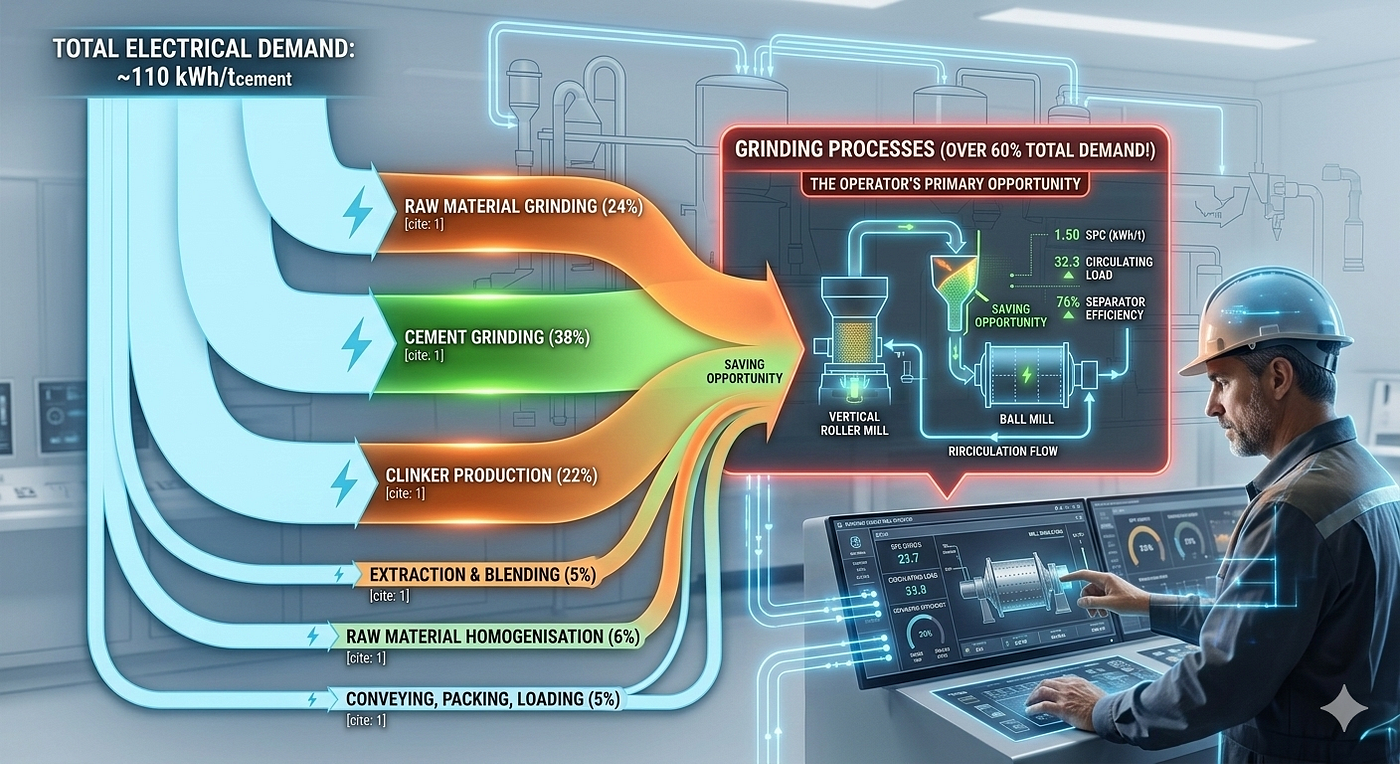
Analysis of Electrical Energy Distribution in Cement Manufacturing. This infographic illustrates that grinding processes account for over 60% of total electrical demand, identifying them as the most significant area for operational efficiency and energy savings.
The 60% Reality Check
In the cement industry, we often talk about Kiln efficiency and fuel consumption. However, if we look at electrical energy demand, the real “Power Hungry” giants are hidden in the grinding sections.
Let’s look at the breakdown of the typical 110 kWh/t demand:
- Cement Grinding: 38%
- Raw Material Grinding: 24%
- Clinker Production: 22%
- The Rest: 16% (Extraction, Homogenization, Packing)
The math is simple: Over 60% of your total electrical bill is consumed by grinding. This means the efficiency of the Raw and Cement Mills doesn’t just affect production — it directly dictates the plant’s bottom line.
The Operator: More Than Just a Monitor
A Mill Operator is often viewed as someone who just ensures the mill is running. But in reality, an expert operator is a Financial Guardian. Every time a mill runs under-loaded or with an improper circulating load, thousands of Kilowatts are wasted.
Strategies for Power Saving (The Architect’s Checklist):
- Optimization of Feed Gradation: Operators must coordinate with the crusher and quarry teams. If the feed size is consistent, the mill doesn’t have to work overtime to grind oversized rocks, reducing the specific power consumption (kWh/t).
- Maintaining the Circulating Load: Efficient separation is key. If the separator is not tuned correctly, “fine” material goes back into the mill, leading to over-grinding. Over-grinding is the silent killer of electrical efficiency.
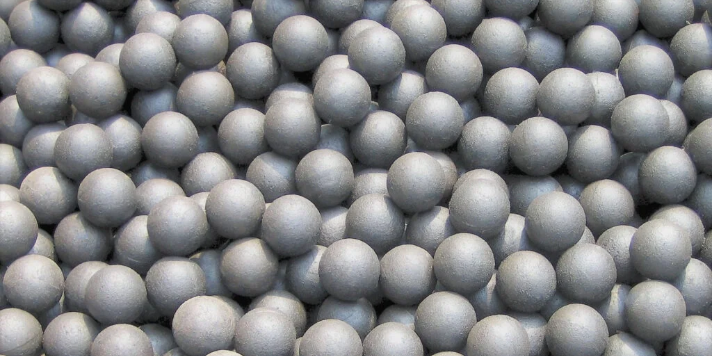
- Ball Charge Management: An operator must recognize the signs of a worn-out ball charge. Running a mill with suboptimal grinding media is like driving a car with a flat tire — you consume more energy to go a shorter distance.
- Operational Timing (Peak Hours): Smart operators manage their silos to ensure that the heaviest grinding happens during “Off-Peak” hours, where electricity tariffs are lower, directly saving the company millions in costs.
Conclusion: A Cultural Shift
We can install the most efficient VFDs and PLCs in the world, but if the operator is not trained to value Specific Power Consumption (SPC / kWh/t), the technology remains underutilized.
To the operators standing at the consoles today: You aren’t just making cement. You are managing the most expensive resource in the plant — Power.

Comprehensive breakdown of electrical energy demand in cement manufacturing. The data indicates that grinding processes — combining Raw Material and Cement grinding — represent 62% of total energy consumption, marking them as the most significant area for potential savings and operational optimization.
Maximize your savings. Start optimizing your cement and raw material grinding processes now.

메타데이터
- post_id
- cd4bc3f627be
- slug
- the-power-is-in-the-operators-hands-saving-megawatts-in-grinding-processes-cd4bc3f627be
- url
- https://medium.com/@industrialcommander/the-power-is-in-the-operators-hands-saving-megawatts-in-grinding-processes-cd4bc3f627be
- canonical_url
- https://medium.com/@industrialcommander/the-power-is-in-the-operators-hands-saving-megawatts-in-grinding-processes-cd4bc3f627be
- author_url
- https://medium.com/@industrialcommander
- status
- ok
- fetched_at
- 2026-07-23 15:42:54