Windmill Palm Care Guide: Growing the Cold-Hardiest Trunking Palm
Youtube Windmill Palm Complete Guide: https://youtu.be/cOOhgmWnqRA
Windmill Palm Care Guide: Growing the Cold-Hardiest Trunking Palm
Youtube Windmill Palm Complete Guide: https://youtu.be/cOOhgmWnqRA
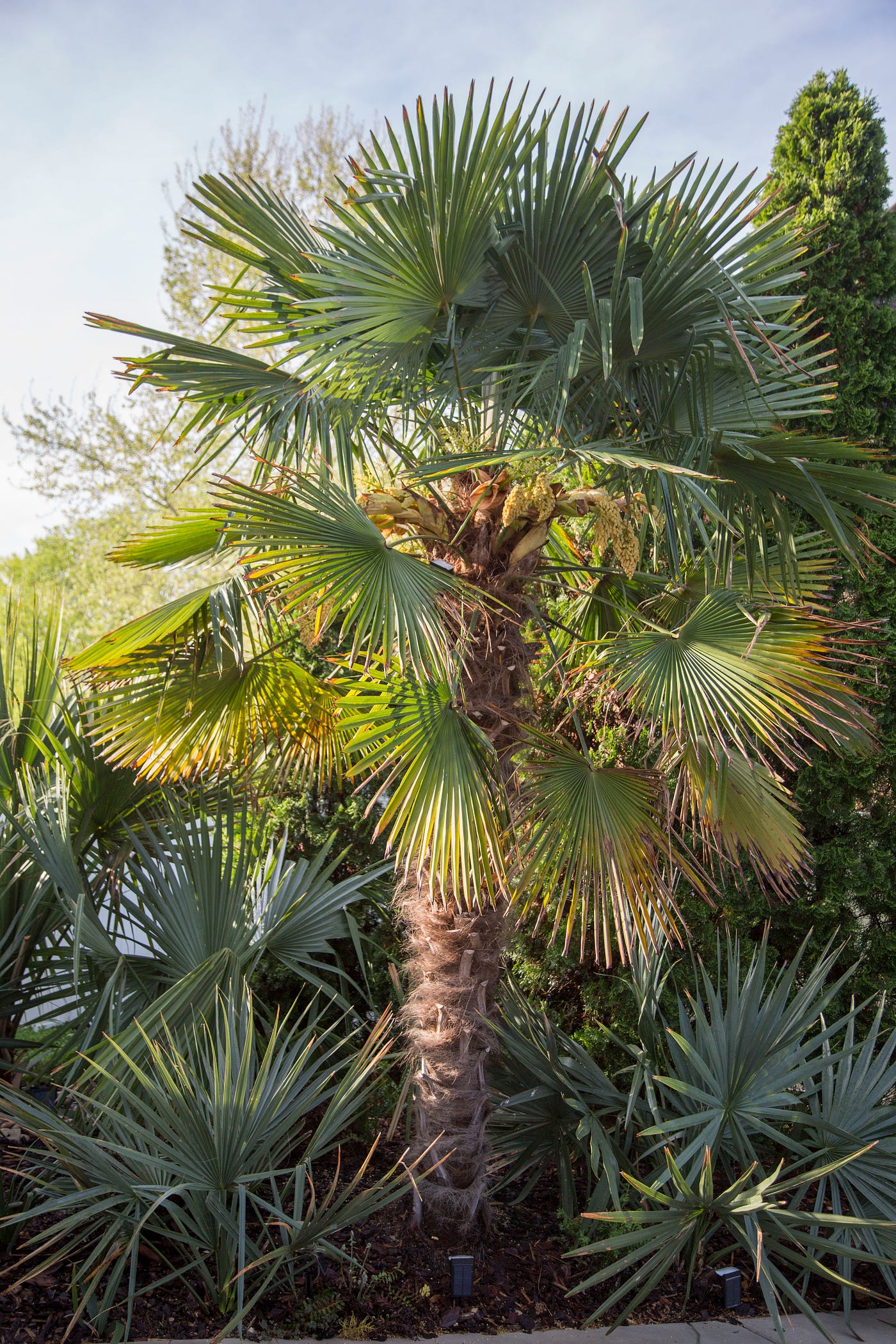
Windmill Palm (Center)
The Windmill Palm (Trachycarpus fortunei) has earned a reputation as the gold standard for gardeners who want a true trunking palm in cooler climates. While a handful of palms may rival or slightly exceed its cold tolerance, few combine hardiness, availability, growth rate, and ease of care the way the Windmill Palm does.
For gardeners in Zones 7 and 8, this palm offers something that once seemed impossible: a tropical look that can survive frost, snow, and winter cold. Given proper care, it can grow into a substantial landscape centerpiece while remaining one of the easiest palms to maintain.
“If you want a trunking palm that can become a large feature in your garden, the Windmill Palm is the one to plant.”
Why the Windmill Palm Is So Popular
The Windmill Palm, also known as the Chinese Windmill Palm, is widely regarded as the most practical cold-hardy trunking palm available. It can be found at many garden centers, grows across a wide geographic range, and adapts to conditions that surprise many gardeners.
Key characteristics include:
- Evergreen foliage year-round
- Fibrous, attractive trunk
- Fan-shaped fronds
- Fast growth compared to many cold-hardy palms
- Adaptability to clay soils
- Excellent cold tolerance for a trunking palm
Its combination of hardiness, growth speed, and availability makes it the benchmark palm for colder regions.
Growth Rate and Mature Size
One reason gardeners favor Windmill Palms is their growth rate.
Under good conditions, established palms can:
- Produce approximately 10–15 fronds annually
- Add about 1 foot of trunk growth per year
- Occasionally exceed that rate in ideal conditions
- Reach heights of 20–40 feet over time
Growth varies significantly depending on climate, soil, water, and overall care. Cooler regions generally experience slower growth, while warm growing seasons and consistent moisture encourage faster development.
A healthy, established Windmill Palm can become a substantial landscape feature in just a few years.
Best Planting Conditions
Sun Exposure
Windmill Palms tolerate both full sun and partial shade.
In most colder climates:
- Full sun is preferred
- Plants often develop a stockier appearance
- Growth tends to be stronger
In hotter regions, partial shade can reduce watering requirements and help moderate summer stress.
Soil Requirements
One of the most surprising qualities of this palm is its adaptability.
Windmill Palms perform well in:
- Clay soil
- Average garden soil
- Moist soils with good drainage
They prefer consistent moisture but do not like standing water.
Planting Tips
When planting:
- Wait until after your area’s frost-free date.
- Dig a hole sized appropriately for the root ball.
- Avoid heavily amending the surrounding soil.
- Plant slightly above grade to prevent water accumulation around the trunk.
Planting slightly high helps reduce winter moisture issues around the crown and roots.
Growing Windmill Palms in Containers
Windmill Palms perform well in pots and can remain container-grown for several years.
For container-grown palms:
- Water regularly during hot weather
- Protect roots from freezing
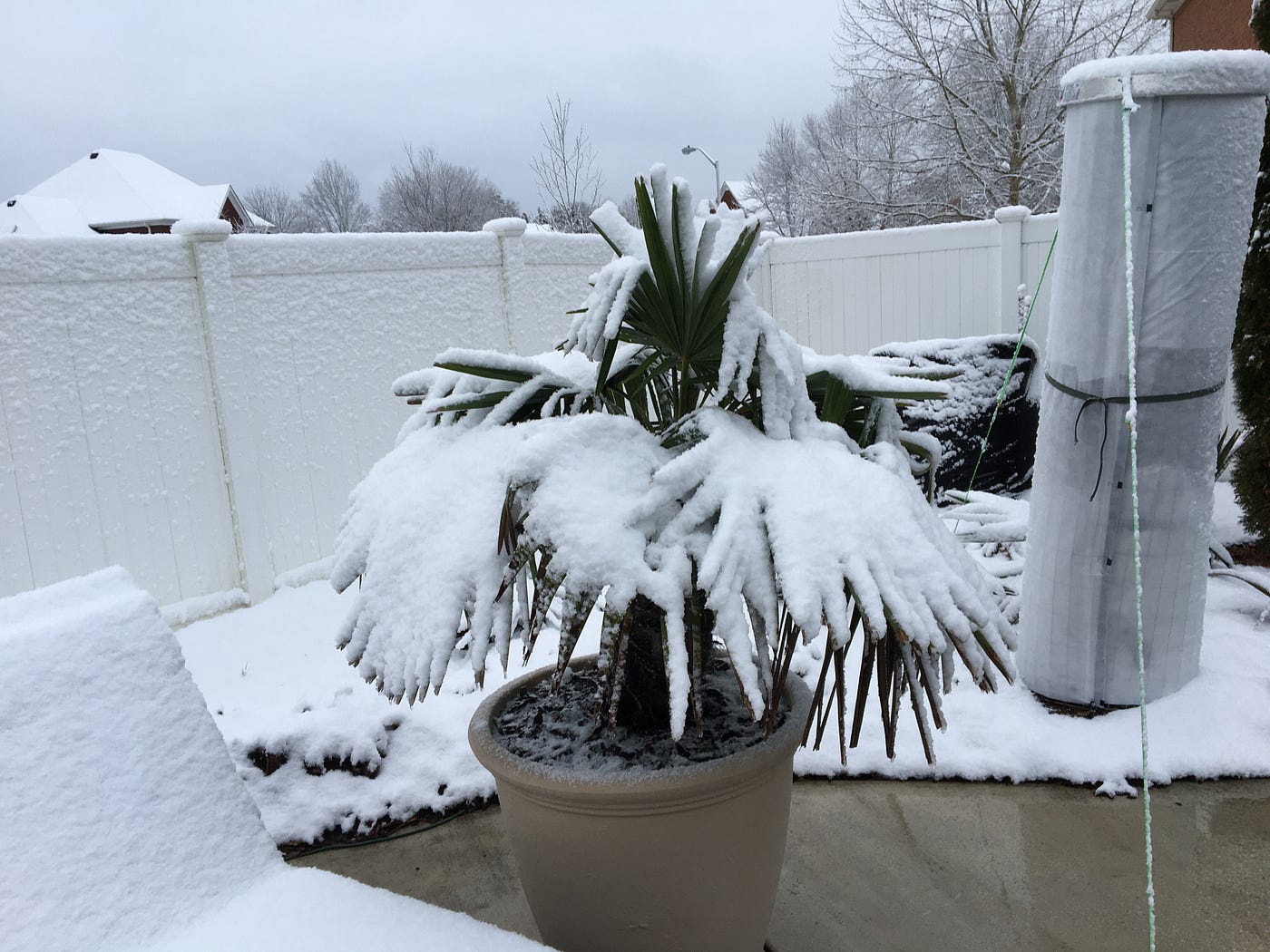
- Move smaller pots indoors when temperatures fall below about 25°F
- Use extra caution during prolonged cold spells
Because roots are more exposed in containers, cold damage often occurs sooner than it would in a palm planted in the ground.

Potted Trachycarpus fortunei
Windmill Palm Cold Tolerance
Cold tolerance depends heavily on palm size and establishment.
Smaller Palms
Young palms with limited trunk development are more vulnerable to cold.
Temperatures in the low 20s can begin causing damage, particularly when combined with freezing rain or ice. These palms generally benefit from winter protection during their first few years.
Established Palms
Once a palm has:
- A substantial trunk
- Multiple years in the ground
- Strong annual growth
Its cold tolerance improves significantly.
General temperature ranges:
- 10–12°F: Frond damage begins
- 5–8°F: Severe damage becomes possible
- Single digits: Risk of losing the entire palm increases
Actual survival depends on duration of cold, moisture conditions, and overall palm health.

What USDA Zones Can Grow Windmill Palms?
Zone 6A and Colder
- Consistent winter protection required
- Box-style protection with supplemental heat recommended
Zone 6B–7A
- Protection needed during many winters
- Frost cloths, wraps, or heated protection often necessary
Zone 7B
- Often grown successfully without protection
- Protection only needed during unusually severe cold events
Zone 8A and Warmer
- Usually grown without winter protection
- Only rare extreme events require intervention
Zone 7B represents one of the best balances between cold hardiness and low-maintenance growth.
Watering for Maximum Growth
Windmill Palms appreciate abundant moisture.
General guidelines:
- Water weekly when temperatures exceed 70°F
- Increase to 2–3 times weekly above 80°F
- Water even more frequently during extended periods above 90°F
Deep watering is preferred over light surface watering.
Always direct water toward the root zone rather than spraying the crown. Wetting the crown unnecessarily can encourage disease problems.
Drip irrigation is particularly effective because it provides consistent moisture while minimizing waste.
Fertilizing Windmill Palms
After planting, wait approximately one month before fertilizing.
For established palms:
- Begin fertilizing when soil temperatures reach about 60°F
- Use a quality palm fertilizer containing micronutrients
- Apply according to product directions
Important nutrients include:
- Nitrogen
- Potassium
- Magnesium
- Iron
- Manganese
- Boron
- Zinc
Quality palm fertilizers provide micronutrients that general-purpose fertilizers often lack.
How to Prune Windmill Palms Properly
Pruning is one of the most misunderstood aspects of palm care.
Follow these rules:
- Remove fronds only when completely brown
- Avoid removing healthy green fronds
- Never cut fronds above horizontal
- Retain as much healthy foliage as possible
Keeping older fronds helps maximize growth and overall palm vigor.
Recognizing Common Problems
Spear Health
The spear is the most important indicator of palm health.
Check for:
- Healthy green color
- Firm attachment
- Normal upward growth
If the spear appears discolored or pulls easily, investigate potential cold or fungal damage.
Nutrient Deficiencies
Possible signs include:
Nitrogen deficiency
- Uniform yellowing of older fronds
Potassium deficiency
- Spotting and discoloration on foliage
Excess fertilizer
- Browning on newer fronds and leaf tips
Most nutrient issues can be prevented with consistent use of a quality palm fertilizer.
Winter Protection Strategies
Protection depends on climate and palm size.
Small Palms
Protect when temperatures approach the low 20s.
Methods include:
- Frost cloth wraps
- Crown protection
- Temporary shelters
Established Palms
Begin considering protection around 12°F.
Protection may involve:
- Wrapping the trunk
- Securing fronds
- Adding supplemental heat during severe cold
Potted Palms
Move indoors or place near a structure during cold weather. Additional insulation around containers can significantly improve root protection.
Final Thoughts
The Windmill Palm remains one of the most rewarding palms for gardeners outside traditional tropical climates. Its ability to tolerate cold, grow rapidly, adapt to challenging soils, and create a true palm-tree silhouette makes it a standout landscape plant.
Whether you’re gardening in Zone 8, pushing the limits in Zone 7, or experimenting farther north with winter protection, Trachycarpus fortunei offers one of the best opportunities to bring a tropical appearance into a colder-climate garden.
If you’re looking for a palm that combines beauty, toughness, and long-term landscape impact, the Windmill Palm deserves a place at the top of your list.

메타데이터
- post_id
- cd529d2c063e
- slug
- windmill-palm-care-guide-growing-the-cold-hardiest-trunking-palm-cd529d2c063e
- url
- https://medium.com/@allensvisions/windmill-palm-care-guide-growing-the-cold-hardiest-trunking-palm-cd529d2c063e
- canonical_url
- https://medium.com/@allensvisions/windmill-palm-care-guide-growing-the-cold-hardiest-trunking-palm-cd529d2c063e
- author_url
- https://medium.com/@allensvisions
- status
- ok
- fetched_at
- 2026-06-20 20:29:01