Water Distiller Troubleshooting — Heating Element Scale & Float Switch Sticking
Introduction to Laboratory Water Distillation Systems
Water Distiller Troubleshooting — Heating Element Scale & Float Switch Sticking
Introduction to Laboratory Water Distillation Systems
A **Water Distiller is commonly used in laboratory environments, pharmaceutical facilities, research units, and industrial testing setups to produce purified water through heating and condensation. A Distiller machine** removes dissolved minerals, salts, and impurities to generate distilled water required for analytical procedures and cleaning applications.
A Distilled Water system for the lab supports activities such as reagent preparation, glassware rinsing, autoclave feeding, and chemical testing workflows. Frequently used search terms include:
- water distiller laboratory
- distilling equipment
- water distiller machine
- distilled water system
- A water distiller uses
Over time, operational challenges such as heating element scaling and float switch sticking may affect performance consistency.
Heating Element Scale Formation in Water Distillers
A common issue in a Water Distiller machine is scale accumulation on the heating element. This occurs due to minerals such as calcium and magnesium present in the feed water.
Causes of scale buildup:
- Hard water usage with high mineral content
- Continuous heating cycles
- Lack of periodic cleaning
- Extended operation without maintenance
Effects on system performance:
- Reduced heating efficiency
- Slower boiling process
- Higher energy consumption
- Irregular steam generation
In a Water Distiller in a laboratory, scale buildup can influence water output consistency and overall workflow stability.
Heating Element Troubleshooting Steps
Proper handling helps restore heating performance in a Distiller machine.
Procedure:
- Disconnect the power supply before inspection.
- Open the heating chamber access area.
- Inspect the heating surface for scale deposits.
- Apply a suitable descaling agent for metal surfaces.
- Rinse thoroughly with clean water.
- Restart the system and observe the heating cycle.
Signs of scaling:
- Delayed boiling response
- White or chalk-like deposits
- Reduced steam output
- Uneven heating behavior
Routine cleaning helps reduce mineral accumulation on heating components.
Float Switch Sticking Issue in Water Distillers
A **Water Distiller laboratory** system often uses a float switch to regulate the water level inside the boiling chamber. This prevents overflow and dry heating conditions.
Causes of float switch sticking:
- Mineral deposits on the float mechanism
- Dirt accumulation in the chamber
- Mechanical obstruction
- Lack of periodic cleaning
Symptoms:
- Continuous water filling
- Failure to stop water inflow
- Irregular chamber level control
- Overflow or dry heating risk
In Distilling equipment, a float malfunction directly affects operational flow control.
Float Switch Troubleshooting Process
Proper maintenance restores the smooth function of the float mechanism in a Water Distiller system.
Steps:
- Turn off the power supply and allow cooling.
- Access the float assembly inside the chamber.
- Check the movement of the float mechanism.
- Clean deposits using mild cleaning agents
- Ensure free movement after cleaning.
- Reassemble and test the water level control.
Warning signs:
- Delayed cutoff response
- Resistance in float movement
- Inconsistent water level regulation
Regular cleaning reduces mechanical blockage.
Water Distiller Uses in Laboratory Environments
A Water Distiller laboratory setup is widely used for producing purified water required in scientific workflows.
Applications:
- Preparation of chemical reagents
- Autoclave and sterilization systems
- Laboratory glassware cleaning
- Analytical testing procedures
- Microbiology applications
A Distilled Water system supports the reduction of ionic contamination in experiments
Distilled Water System Performance Factors
A Distilled Water system for a lab depends on multiple operational elements to maintain consistent output.
Key factors:
- Heating chamber efficiency
- Condenser performance
- Internal cleanliness
- Water feed quality
- Switch mechanism function
Search-related terms:
- laboratory water purification unit
- water distillation system
- lab water production setup
- distilling system maintenance
Performance issues often originate from scale buildup or mechanical blockage.
Water Distiller Machine Maintenance Practices
Regular maintenance of a Water Distiller machine helps maintain steady operation.
Maintenance steps:
- Periodic descaling of the heating chamber
- Cleaning float switch assembly
- Flushing system with purified water
- Inspecting seals and joints
- Checking steam outlet pathways
These steps help maintain stable operation in laboratory environments.
Distilling Equipment Operational Concerns
Distilling equipment used in laboratories may face performance issues due to continuous usage.
Common concerns:
- Mineral scaling on heating surfaces
- Float switch blockage
- Reduced condensation output
- Steam leakage from joints
These issues are often linked to water quality and operational frequency.
Water Distiller Manufacturers and Design Variations
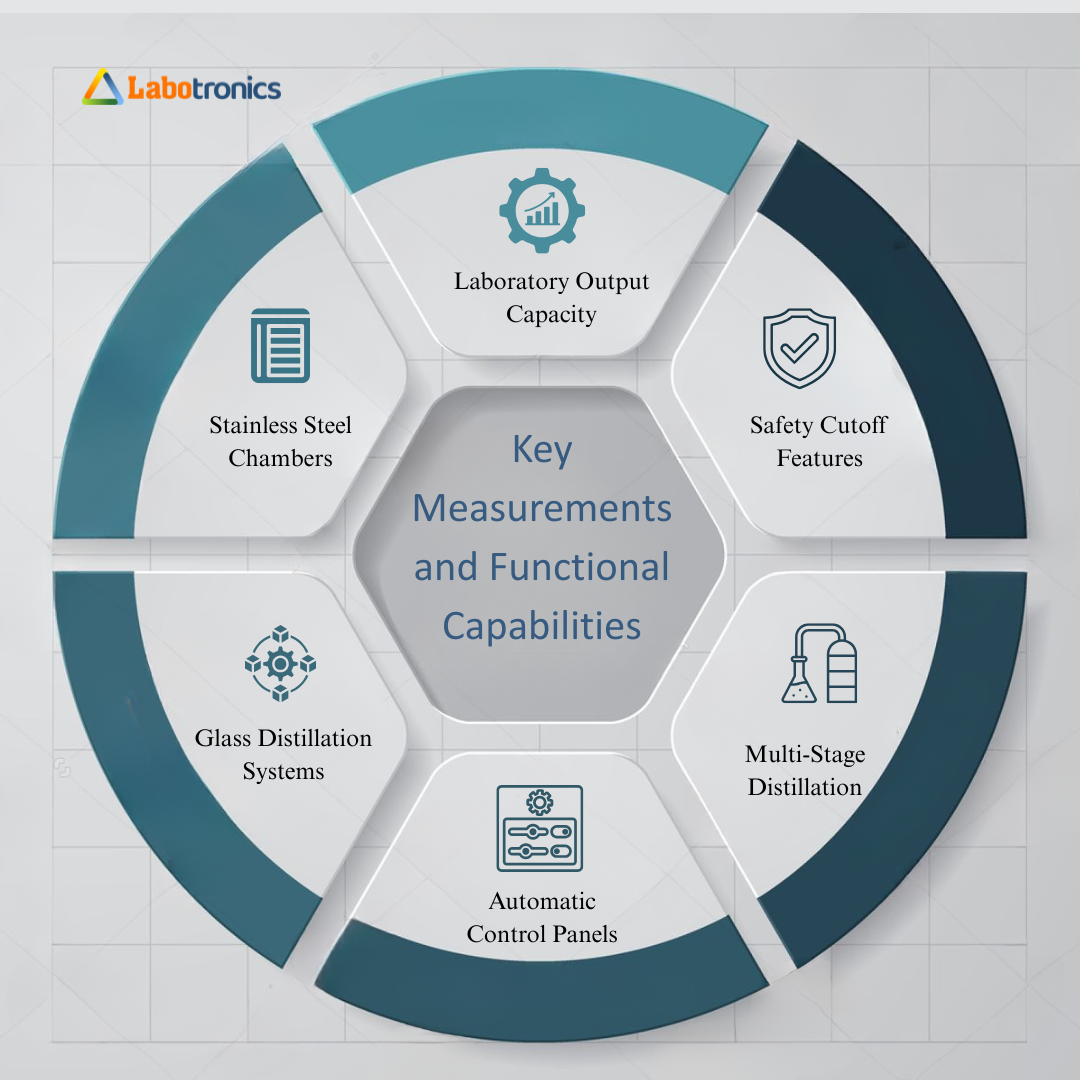
Different **Water Distiller manufacturers** offer systems with variations in design and capacity.
Design differences:
- Stainless steel or glass chambers
- Manual or automatic control systems
- Single or multi-stage distillation
- Safety cutoff mechanisms
A Water Distiller in a laboratory is selected based on the required output volume and workflow requirements.
User Tips and Operational Practices
Proper handling supports the consistent performance of water distillation systems.
1. Use pre-filtered water
Reduces mineral buildup inside the heating chamber.
2. Perform regular descaling
Prevents scale accumulation on heating elements.
3. Inspect float switch movement
Helps identify early blockage conditions.
4. Maintain a steady water supply
Avoid dry heating conditions during operation.
5. Clean condenser pathway
Ensures proper steam condensation flow.
6. Monitor output rate
Changes indicate internal scaling or blockage.
7. Follow cooling before cleaning
Prevents thermal stress on components.
Importance of Troubleshooting in Water Distillation Systems
Addressing heating element scaling and float switch sticking supports consistent operation of laboratory distillation systems. Regular inspection helps maintain steady distilled water output for analytical and cleaning workflows.
Proper maintenance practices reduce interruptions in laboratory water supply and support stable operational flow.
Conclusion
A **Water Distiller, whether used as a Distiller machine, Distilled Water system, or Distilling equipment**, plays an important role in laboratory water purification processes. Issues such as heating element scale formation and float switch sticking can affect performance if not addressed properly.
Routine cleaning, inspection, and operational care help maintain steady function in a Water Distiller laboratory setup and support continuous availability of purified water for scientific applications.
For more information, click here or contact us at
Email: info@labotronics.com
메타데이터
- post_id
- cd5c24ba9573
- slug
- water-distiller-troubleshooting-heating-element-scale-float-switch-sticking-cd5c24ba9573
- url
- https://medium.com/@labotronicsscientific/water-distiller-troubleshooting-heating-element-scale-float-switch-sticking-cd5c24ba9573
- canonical_url
- https://medium.com/@labotronicsscientific/water-distiller-troubleshooting-heating-element-scale-float-switch-sticking-cd5c24ba9573
- author_url
- https://medium.com/@labotronicsscientific
- status
- ok
- fetched_at
- 2026-06-09 15:37:30