Estonian Ambassador to UK: “There Is No Front Line in Hybrid Warfare” — North Sea Energy…
In an exclusive interview with The Press and Journal, Estonia’s ambassador to the UK, Sven Sakkov, delivered a stark warning: the North…
Estonian Ambassador to UK: “There Is No Front Line in Hybrid Warfare” — North Sea Energy Infrastructure Faces Russian Threat
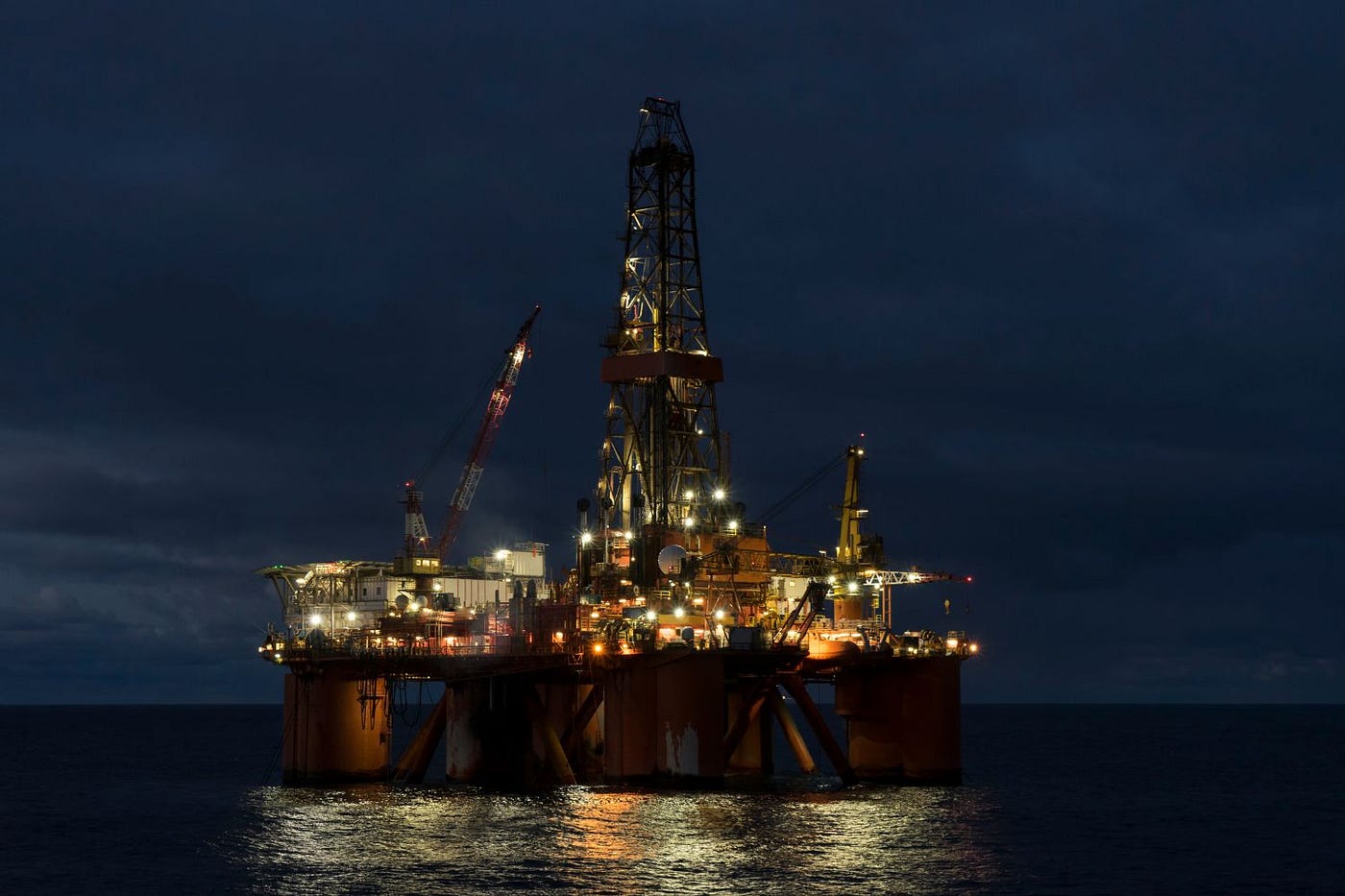
In an exclusive interview with The Press and Journal, Estonia’s ambassador to the UK, Sven Sakkov, delivered a stark warning: the North Sea’s critical infrastructure — subsea cables, pipelines, and offshore energy installations — may be more vulnerable to Russian aggression than many in Scotland realise.
Speaking in Aberdeen during a recent visit, Sakkov drew on Estonia’s unique experience as a small, highly digital nation sharing a 294km border with Russia. His message: geography offers no protection in modern conflict.
“The UK Is Just as Much a Front Line as Estonia”
Sakkov is blunt about the realities of so-called “hybrid warfare” — a term he dislikes for its vagueness but one that dominates security discussions today.
“It’s an omnibus concept that means everything and therefore means nothing,” he explains. “In one case, you have a Russian agent setting up a fake Facebook page to create division in Western society. In another, you have an attack on an energy substation. In between, you have someone murdered in Salisbury.”
The common thread? There is no front line.
“In hybrid warfare, the UK is just as much a front line as Estonia,” Sakkov warns. “The question is not if you’re a target, but whether you’re prepared.”
Why the UK May Be More Vulnerable Than Estonia
As an island nation, the UK depends heavily on undersea infrastructure — power cables, data links, and pipelines running across the seabed. Much of this infrastructure intersects in the North Sea, the heart of Britain’s oil, gas, and offshore renewables industries.
“By definition, when it comes to undersea connections, the UK is probably more vulnerable than Estonia,” Sakkov says. “All your connections go through or under the sea — or through the air.”
Recent Baltic Sea Incidents Raise Alarm
In late 2023, the Balticconnector gas pipeline between Estonia and Finland was damaged after being struck by an anchor. Earlier, electricity cables had been cut in similar circumstances.
Whilst not every incident can be attributed to deliberate sabotage, the pattern has raised alarm — especially with Russian “research vessels” operating near critical infrastructure.
“They are ‘researching,’” Sakkov says, gesturing quotation marks. “The question is: what exactly are they researching?”
How to Protect Subsea Infrastructure
Sakkov argues that protection doesn’t require dramatic or prohibitively expensive solutions. Instead, he points to improved situational awareness — networks of sensors monitoring what’s happening on and beneath the surface.
“If a vessel deploys a remotely operated submersible near a cable or pipeline, that should be detectable,” he explains. “Once you have awareness, you can take appropriate action — whether that’s inspection, deterrence, or protection.”
However, physical protection is only part of the picture. As offshore installations become more automated and remotely operated, cybersecurity becomes inseparable from physical security.
“If work processes are done remotely, you need to ensure the cybersecurity of the entire network,” Sakkov says. “That’s just basic logic.”
Estonia’s Cyber Expertise: Lessons for Aberdeen
This is where Estonia believes it has something distinctive to offer.
Over the past 25 years, Estonia has built one of the world’s most advanced digital societies. Almost all government services are online, underpinned by a universal digital identity system used for everything from banking to voting.
“That brings enormous efficiency,” Sakkov reflects. “But it also brings an obligation — and necessity — to defend it.”
Rather than treating security and usability as a trade-off, Estonia has focused on building systems that are both secure and user-friendly. Citizens use the same digital credentials across services, reducing complexity whilst maintaining strong encryption and two-factor authentication.
Estonia’s 2007 Wake-Up Call
Estonia’s emphasis on cyber defence is rooted in hard experience.
In 2007, Estonia suffered a sustained cyberattack after relocating a Soviet-era war memorial. Government services, banks, and media outlets were targeted — at a time when many countries wouldn’t even have realised they were under attack.
“For us, life already depended on digital systems, so we felt it immediately,” Sakkov says.
The episode proved a turning point for NATO, helping establish cyber defence as a core security issue. Today, Tallinn hosts NATO’s Cooperative Cyber Defence Centre of Excellence, which runs the world’s largest live-fire cyber defence exercise, Locked Shields.
The exercise simulates attacks on IT networks, electricity grids, water systems, air traffic control, and telecommunications — all systems critical to modern society.
“Energy, offshore operations, renewables — these are sectors where Estonia’s cyber security expertise could be directly useful,” Sakkov argues.
Defence Spending and Ukraine
Sakkov is clear that infrastructure protection and cyber resilience cannot be separated from wider defence policy.
Estonia will spend more than 5% of its GDP on defence in 2026, having consistently exceeded NATO’s 2% target for over a decade.
“Deterrence is cheap compared to the alternative,” he says, noting how defence spending in Britain surged in the years leading up to and during the Second World War.
Above all, he argues, European security depends on the outcome of the war in Ukraine.
“If Russia comes out of this war as a victor, European security will be radically worse,” he warns. “Then we really haven’t seen anything yet.”
He cautioned against being distracted by tactics designed to weaken support for Kyiv, such as unexplained drone activity near European military sites.
“The first priority must be supporting Ukraine.”
Why This Matters to the North of Scotland
For communities focused on energy, industry, and local concerns, talk of geopolitics can feel abstract.
But Sakkov’s message is that resilience begins at home — from protecting subsea cables and digital systems to supporting trusted journalism and resisting online manipulation.
“In this kind of conflict, there is no ‘far away,’” he concludes. “We are either small countries or very small countries, and we are safer when we work together.”
For the north of Scotland, which sits at the crossroads of energy, infrastructure, and the North Sea, that lesson may be closer to home than many think.
Key Takeaways for Infrastructure Resilience
✅ No geographic immunity — Hybrid warfare has no front lines; the UK is just as much a target as Estonia
✅ Subsea infrastructure vulnerability — Undersea cables, pipelines, and power links are critical single points of failure
✅ Situational awareness matters — Sensor networks can detect suspicious activity around critical infrastructure
✅ Cyber and physical security are inseparable — Remotely operated offshore installations require robust cyber defences
✅ Estonia’s expertise is transferable — 25 years of digital governance and cyber defence offer lessons for Aberdeen’s energy sector
✅ Deterrence is cheaper than recovery — Estonia spends 5%+ of GDP on defence; the alternative is far more costly
✅ Ukraine’s outcome affects all — If Russia wins, European security will deteriorate dramatically
Discussion Questions
- North Sea vulnerability: How realistic is the threat to UK's undersea infrastructure? Are current protections adequate, or is this an overlooked risk?
2. Estonia’s model: Can a small nation’s approach to cyber security scale to a larger, more complex economy like the UK? What would adoption look like?
3. Hybrid warfare response: If there’s “no front line,” how should nations prioritise defence spending — traditional military vs. cyber vs. critical infrastructure protection?
4. Aberdeen’s role: As a major energy hub, should Aberdeen (and Scotland more broadly) be investing more heavily in infrastructure resilience and cyber defence?
5. Baltic Sea incidents: The Balticconnector pipeline damage and cable cuts — are these accidents, deliberate sabotage, or tests of response capabilities?
6. Ukraine linkage: To what extent should UK energy security policy be tied to supporting Ukraine? Is Sakkov right that Russia winning would fundamentally change the threat environment?
Source: The Press and Journal (exclusive interview) — https://www.pressandjournal.co.uk/fp/politics/6948846/russian-aggression-defence-estonian-ambassador/
Background: Sven Sakkov is Estonia’s ambassador to the UK, former director of the International Centre for Defence and Security in Tallinn, and former director of NATO’s Cyber Centre of Excellence.
What’s your assessment — is the North Sea an overlooked vulnerability, or is this threat overstated?
This is part of an ongoing series on infrastructure resilience and preparedness on r/Fortivus. Previously: Baltic States energy grid synchronisation, NATO 5% defence spending commitment, Singapore supply chain resilience.
메타데이터
- post_id
- cd63ce5d4fec
- slug
- estonian-ambassador-to-uk-there-is-no-front-line-in-hybrid-warfare-north-sea-energy-cd63ce5d4fec
- url
- https://medium.com/fortivus/estonian-ambassador-to-uk-there-is-no-front-line-in-hybrid-warfare-north-sea-energy-cd63ce5d4fec
- canonical_url
- https://medium.com/fortivus/estonian-ambassador-to-uk-there-is-no-front-line-in-hybrid-warfare-north-sea-energy-cd63ce5d4fec
- author_url
- https://medium.com/@viggo.lehtinen
- status
- ok
- fetched_at
- 2026-08-03 14:09:20