Understanding Overfitting
when your drug performs well in lab but fails when used on different peoples.
Understanding Overfitting
when your drug performs well in lab but fails when used on different peoples.
Overfitting is one of the most important concepts every machine learning practitioner needs to understand. Think of it as the difference between memorizing answers and truly understanding concepts — a model that overfits has essentially “memorized” the training data instead of learning the underlying patterns.
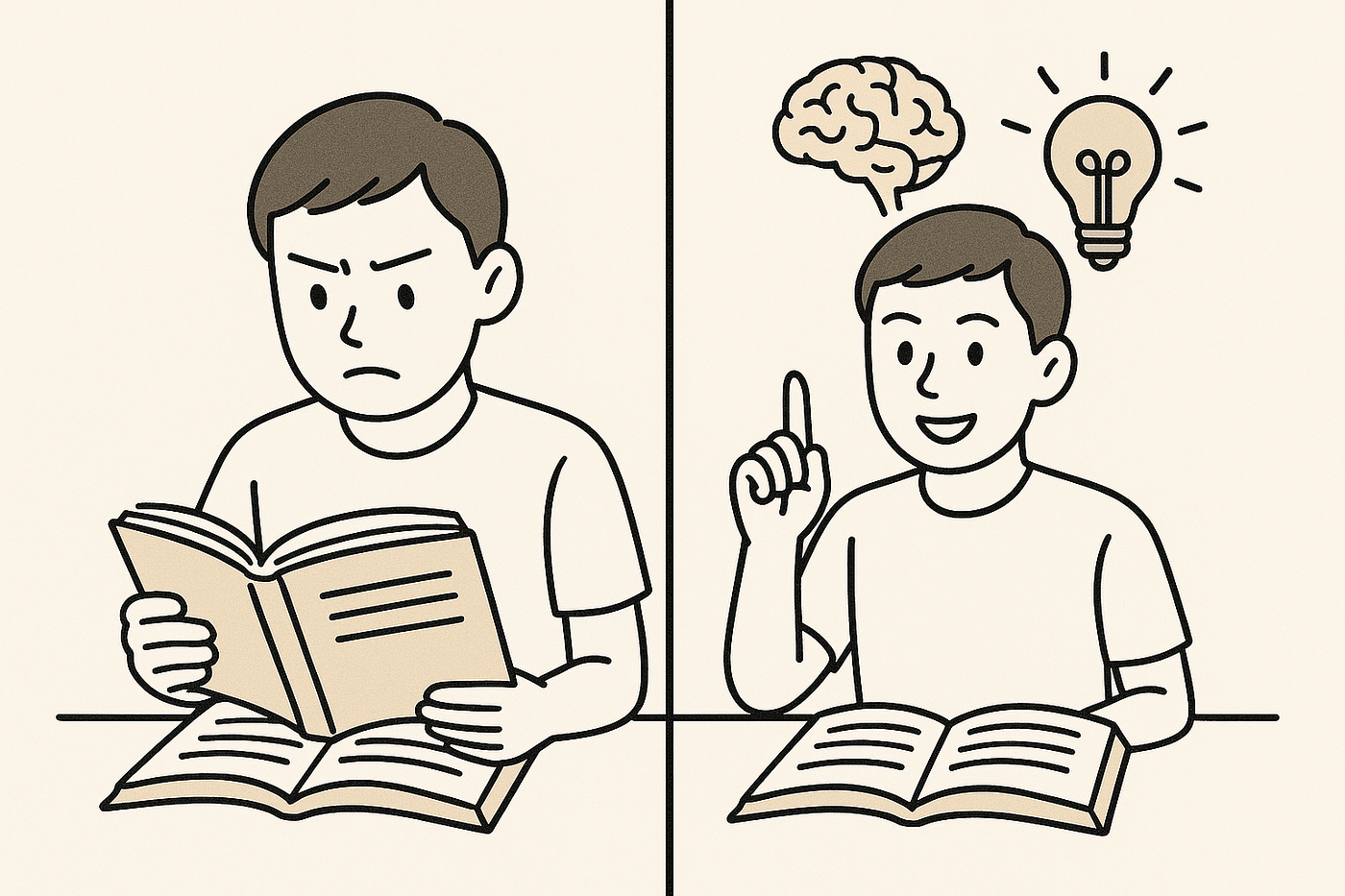
Analogy comparing memorization (overfitting) to understanding (generalization)
What Is Overfitting? The Simple Explanation
- Basic Definition: When your model learns the training data TOO well, including all the noise and random variations
- The Problem: It performs amazingly on training data but fails on new, unseen data
- Simple Analogy: Like a student who memorizes specific exam questions but can’t solve similar problems with different numbers
The Study Analogy
- Memorizer (Overfitted Model):
- Memorizes every practice problem exactly
- Gets 100% on practice tests
- Fails when exam has slightly different questions
- Learner (Good Model):
- Understands underlying concepts
- Gets good scores on practice tests
- Performs well on new, similar problems
Why Overfitting Matters
- Real-World Impact: Your model becomes unreliable when deployed
- Business Consequences:
- Medical diagnosis systems making wrong predictions
- Recommendation systems suggesting irrelevant items
- Financial models making poor investment decisions
- Development Issues: Wasted time and resources on models that don’t work in production
How Overfitting Happens: The Process
Step-by-Step Breakdown
- Step 1: Model starts learning from training data
- Step 2: Initially learns general patterns (good!)
- Step 3: Continues learning and starts picking up noise and random variations
- Step 4: Eventually to generalize to new data
Key Factors That Cause Overfitting
- Model Complexity: Too many parameters relative to data size
- Training Duration: Training for too long
- Insufficient Data: Not enough examples to learn general patterns
- Noisy Data: Random errors that the model tries to learn

Visual comparison of underfitting, good fit, and overfitting in polynomial regression
Visual Understanding: The Curves
The image above shows three scenarios:
- Underfitting (Left): Model is too simple, misses important patterns
- Good Fit (Middle): Model captures the underlying trend without noise
- Overfitting (Right): Model follows every data point, including noise
Identifying Overfitting: Warning Signs
Performance Indicators
- Training Accuracy: Very high (often 95%+)
- Validation Accuracy: Much lower than training
- The Gap: Large difference between training and validation performance
Typical Pattern Over Time
- Training error keeps decreasing
- Validation error starts increasing after a certain point
- The “sweet spot” is where validation error is lowest

Training vs validation error curves demonstrating overfitting behavior
Real-World Examples Made Simple
Example 1: Image Classification
Scenario: Building a cat vs dog classifier
- Training Data: 100 cat photos (all taken indoors), 100 dog photos (all taken outdoors)
- Overfitted Model Learns: “Indoor = Cat, Outdoor = Dog”
- Failure: Shows a cat outdoors → incorrectly predicts “Dog”
- Lesson: Model learned irrelevant features (background) instead of important ones (animal features)
Example 2: House Price Prediction
Scenario: Predicting house prices
- Training Data: 50 houses with very specific details
- Overfitted Model: Memorizes each house’s exact price
- Failure: Can’t price houses with slightly different features
- Lesson: Didn’t learn general pricing patterns
Example 3: Polynomial Curve Fitting
- Low Degree Polynomial: Captures general trend
- High Degree Polynomial: Passes through every single point, including noise
- Result: Perfect on training points, terrible predictions elsewhere
Prevention Strategies: How to Avoid Overfitting
Data-Related Solutions
- More Data: Collect additional training examples
- Data Cleaning: Remove or fix noisy/incorrect data
- Data Augmentation: Create variations of existing data
Model-Related Solutions
- Simpler Models: Use fewer parameters or layers
- Regularization: Add penalties for complex models
Cross-Validation: Test on multiple data splits
Training-Related Solutions
- Early Stopping: Stop training when validation error starts increasing
- Dropout: Randomly ignore some model parts during training
- Ensemble Methods: Combine multiple models
Common Misconceptions Clarified
Myth vs Reality
- Myth: “More data always prevents overfitting”
- Reality: Quality matters more than quantity; noisy data can make overfitting worse
- Myth: “Only complex models overfit”
- Reality: Even simple models can overfit with insufficient or noisy data
- Myth: “100% training accuracy is always good”
- Reality: Often a red flag for overfitting
Key Takeaways: Your Action Items
Quick Checklist
- Always split your data into training, validation, and test sets
- Monitor both training and validation performance
- Stop training when validation performance starts declining
- Choose model complexity appropriate to your data size
- Clean your data before training
- Use cross-validation to get reliable performance estimates
Remember the Golden Rule
A good model is not one that performs perfectly on training data, but one that generalizes well to unseen data.
Final Analogy
Think of training a model like teaching someone to drive:
- Bad Teacher (Overfitting): Only teaches on one specific road
- Good Teacher (Proper Training): Teaches general driving principles that work on any road
메타데이터
- post_id
- cd677b8465bd
- slug
- understanding-overfitting-cd677b8465bd
- url
- https://medium.com/@anandvashishtha/understanding-overfitting-cd677b8465bd
- canonical_url
- https://medium.com/@anandvashishtha/understanding-overfitting-cd677b8465bd
- author_url
- https://medium.com/@anandvashishtha
- status
- ok
- fetched_at
- 2026-07-15 08:12:24




