A PAN-NIGER DELTA NATIONALISM
Since gaining independence in 1960, the Nigerian federation has unfurled itself, revealing parts hitherto unknown, and darker shades of its…
A PAN-NIGER DELTA NATIONALISM

Since gaining independence in 1960, the Nigerian federation has unfurled itself, revealing parts hitherto unknown, and darker shades of its characteristics never before seen.
From 2015 to date, this unfurling has progressed alarmingly, bringing about the demise or near-demise of whatever exists of nationalism within the Nigerian context. The last time the Nigerian federation arrived at this critical point was six years after independence, in 1966, and the outcome was the Nigerian civil war that lasted from 1967 to 1970.
That being said, the present national government which came into office in 2015 will soon clock its sixth year in office, and the country is balanced on its toes right at the edge of a cliff. The socio-political and socio-economic currents that brought Nigeria to a similar point in 1966 are not entirely different from those currently pulling us in the 21st century to a sudden death; crass nepotism, ethnic and religious chauvinism, and political and economic marginalisation of minorities, all of which and more we can simply summarise thus: injustice and an absence of leadership.
An observation of recent happenings in the country shows the ethnic nationalities of the Niger Delta, in the six states of Edo, Delta, Bayelsa, Rivers, Akwa Ibom, and Cross River, are in a similar position as they were in the period from 1966 to 1970. The political trajectory of the country at present is such that has fuelled secessionist groups, who have carved for themselves what they believe should be their own independent nation states; annexing different nationalities of the Niger Delta in the process.
Ironically, the methods that have been applied in this geographical surgery share similarities with those applied by European nations at the Congo Conference—or Berlin Conference—which heralded the European balkanisation and colonisation of Africa; chief of which is the fact that the Africans had no say. This same system, which is deeply rooted in economic and political subjugation and control, is being attempted today under different nomenclature, and its proponents lack the self-awareness to discern the similarities their actions share with earlier actions of Nigeria’s colonial masters. Alternatively, the proponents of this proposed system of colonisation are very much aware. Either way, at the receiving end of this, is the collective of the ethnic nationalities of the Niger Delta, who have not been rated highly enough to have their support for these proposed nations sought.
The audacity of these groups, which has grown over the years, has been catalysed by the actions and inaction of the political, religious, traditional, and intellectual leadership of the Niger Delta who, in order to gain access, have over time taken up acquiescent postures that have created a false impression of the Niger Delta people in the hearts of hostile and belligerent groups within the Nigerian federation; an impression of docility and folly.
This false perception has emboldened these groups and others to aggressively and violently encroach on our space, evidenced by terror attacks on Niger Delta communities in Edo, Rivers and Delta states under the guise of Fulani herders, and attacks on Rivers, Cross River, and Akwa Ibom states by violent non-state actors affiliated to the secessionist group, The Indigenous People of Biafra (IPOB). It has also been the bedrock of the continued economic and political subjugation of the Niger Delta, starkly encapsulated in Nigeria’s constitution and extant laws which have legalised expropriating the resources and land of the people against their wishes.
All these have collectively put the Niger Delta peoples in a position of urgency of action to forestall a situation where the people are limited to poor socio-political options, brought about by a lack of political leadership and organisation reminiscent of the period before the Nigerian civil war. Since the probable outcome of the present political climate will play a determining factor in the continued existence of the ethnic nationalities of the Niger Delta, it has therefore become imperative for actionable steps to be taken.
Consequently, as a means to an end, namely economic and political freedom for the ethnic nationalities of the Niger Delta, an important notion or concept of a Pan-Niger Delta Nationalism—Pan-Niger Deltanism—is proposed.
Pan-Niger Delta Nationalism is a nationalism built on the need for a brotherhood of the ethnic nationalities of the Niger Delta. This idea of brotherhood, which should span socio-political, socio-economic, sociocultural, and religious spheres of our society, will serve as bridges and vital links necessary for uniting our heterogeneous society.
The philosophy of Pan-Niger Deltanism is mutual respect and justice. By this philosophy, Pan-Niger Deltanism does not seek to erase the varying ethnic and national identities of its constituent peoples, but instead seeks to build a protective layer for these nationalities, to ensure their continued existence in the face of violent threats from forces within and without. To ensure its success, this nationalism should be distilled into the educational system using all available means including the school curriculum, and should be made mandatory. Its contents should include the history of the nationalities of the Niger Delta, touching on our differences but emphasising our shared similarities. To entrench this protective identity, sociocultural norms and activities should be created to build on the shared similarities of the nationalities of the region.
Most importantly, with the continued existence of the peoples of the Niger Delta at the core of this new nationalism, Pan-Niger Deltanism must be an integral part of the formation of a Niger Delta Defence Force (NDDF). This defence force must have its ethos geared towards achieving complete integration and acceptance of this nationalism amongst the people. Overseeing its activities should be a Niger Delta Defence Council (NDDC).
Pan-Africanism was proposed as a form of nationalism for people of African descent, to serve as a uniting factor and advance the cause of Africans in a world of deep racial divide. A divide which politically and economically limited the advancement of the black race. In the same vein, Pan-Niger Deltanism is proposed as a form of nationalism for people of Niger Deltan descent to serve as a uniting factor not just to preserve the nationalities of the region, but also to guarantee political and economic advancement of these nationalities. Just as Pan Africanism served as a defence mechanism against slavery and colonialism, Pan Niger Deltanism will serve as a defence mechanism for the nationalities of the Niger Delta against the internal colonialism pervading the Nigerian political landscape, which Pan-Africanism has failed to halt, and which presently poses an existential threat to the region.
Nigeria’s last census—as fraudulent as it is—which puts the combined population of the Niger Delta at over 25 million, goes a long way in showing the human capital available to the region to drive this goal. The failures of the region’s political and economic agitations over the years can also be traced to its heterogeneity, and the lack of a generally acceptable uniting commonality. Pan-Niger Delta Nationalism solves this problem and more, by building on already existing systems of integration established over the years but not sufficiently defined and elaborated upon to make implementation and enforcement possible.
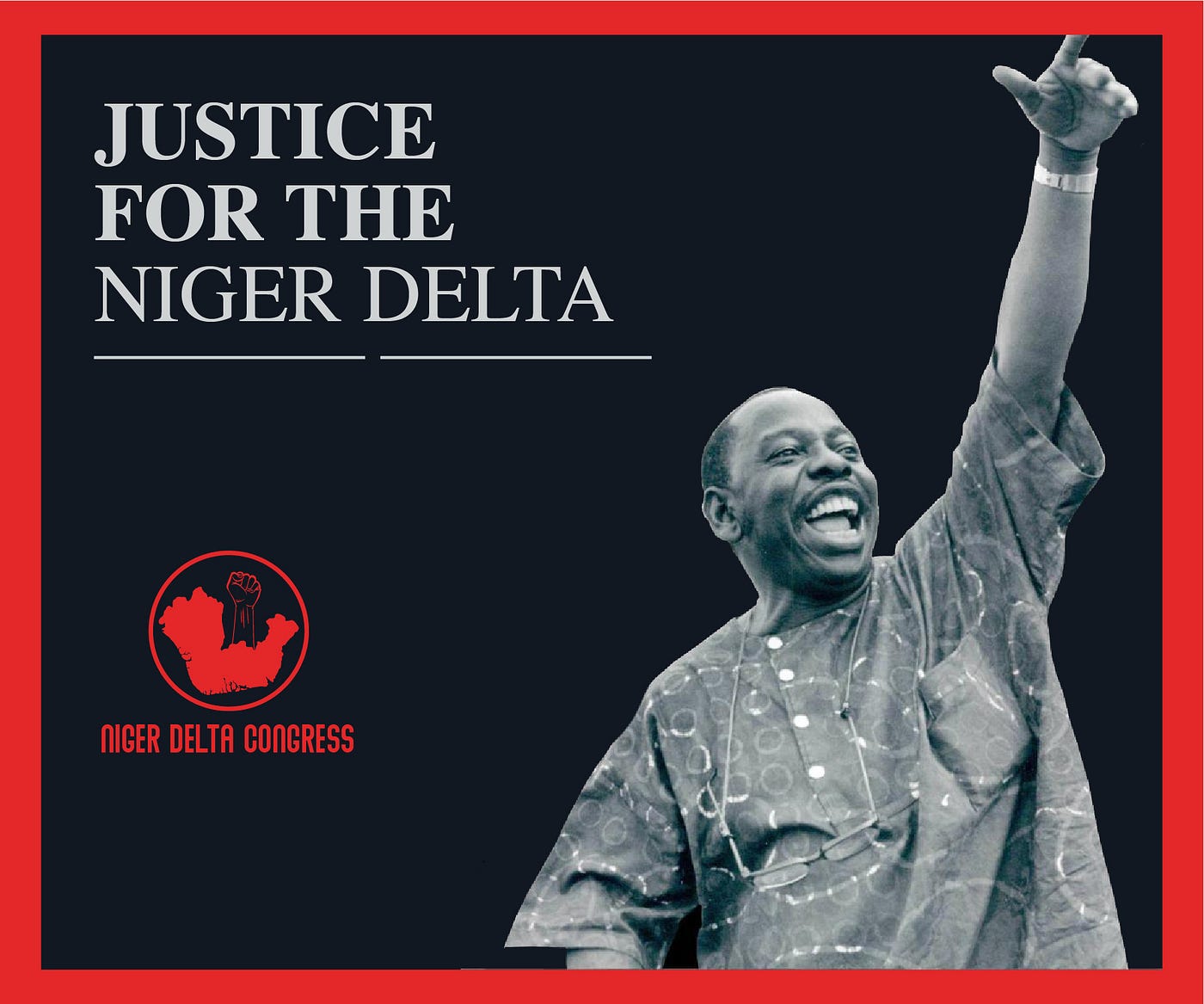
The Niger Delta Congress which was formed for the sole purpose of uniting the nationalities of the region as a means to safeguarding its peoples and their political and economic interests, has as a core mandate, the development of this new Pan-Niger Delta Nationalism. This nationalism not just holds the key to the advancement of the ethnic nationalities of the Niger Delta; above all, it provides a solid ground for the nationalities of the region to negotiate their continued existence within the current Nigerian political framework, or as an independent entity outside the present Nigerian political framework.
메타데이터
- post_id
- cd7d82a2dd54
- slug
- a-pan-niger-delta-nationalism-cd7d82a2dd54
- url
- https://medium.com/@Saatah/a-pan-niger-delta-nationalism-cd7d82a2dd54
- canonical_url
- https://medium.com/@Saatah/a-pan-niger-delta-nationalism-cd7d82a2dd54
- author_url
- https://medium.com/@Saatah
- status
- ok
- fetched_at
- 2026-07-28 07:38:09